
Romania Mountain Resorts Offer Austrian-Style Luxury at 50% Lower Costs in 2026
New luxury mountain resorts in Romania are disrupting the European travel market by blending Alpine-style wellness and private villas with significantly more affordable pricing than Austria or Switzerland.

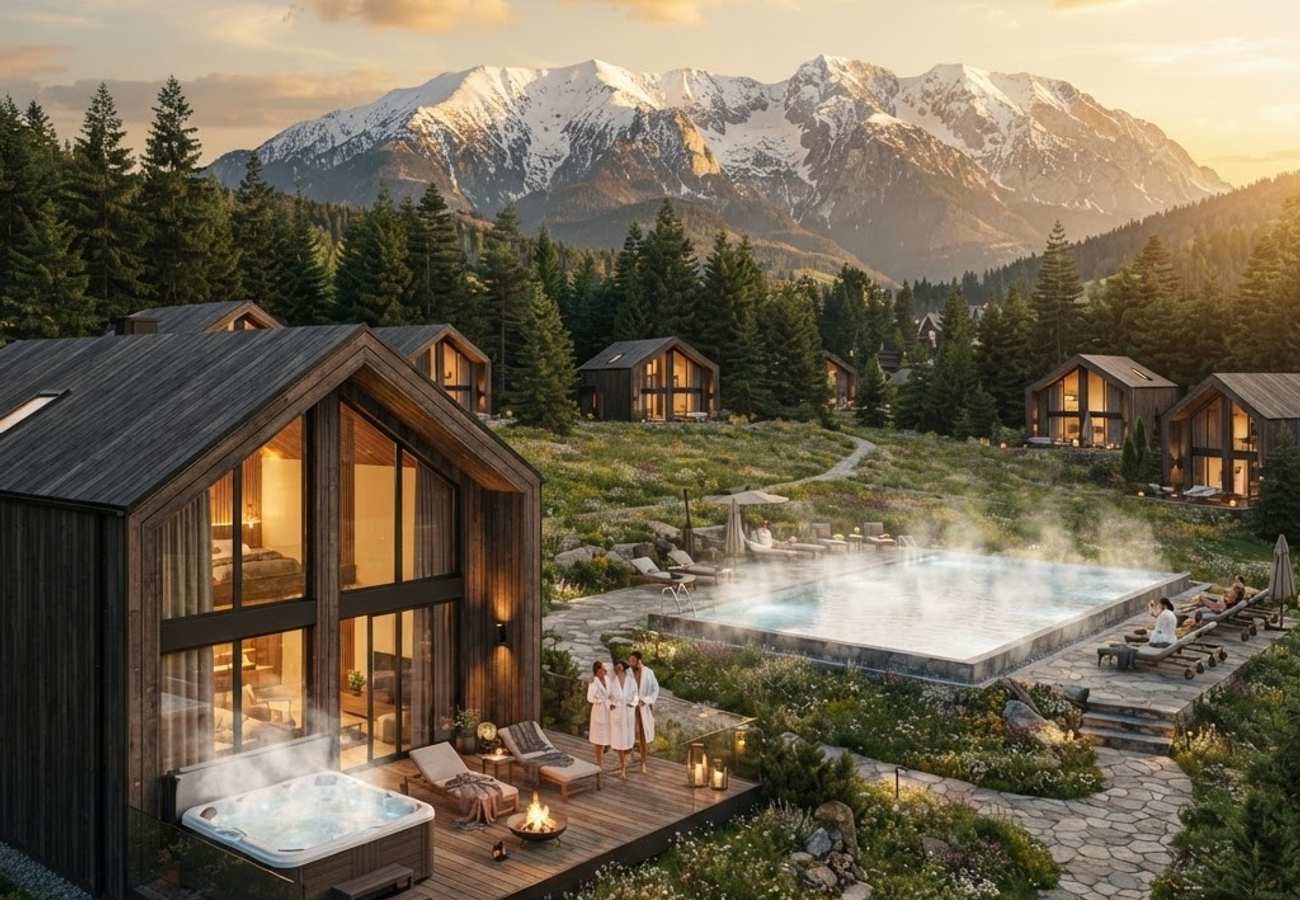
Image generated by AI
Romania is aggressively repositioning its mountain tourism sector by importing the "Alpine Model" from Austria and Switzerland, offering high-end wellness and private villa experiences at nearly half the cost of Western European counterparts.
The shift represents a strategic move to evolve beyond traditional guesthouses and "pensions." Modern travelers now prioritize self-contained environments featuring heated pools, private wellness suites, and all-weather amenities, turning the accommodation itself into the primary destination.
A Strategic Pivot in Mountain Hospitality
For decades, Romanian rural tourism relied on the proximity to nature and low costs. However, the consumer psyche is shifting. Today's travelers—particularly families and high-spending groups—view the property as a core part of the holiday experience rather than just a place to sleep.
To meet this demand, operators are implementing a hybrid model: independent villas clustered around shared, high-end resort facilities. This structure allows guests to enjoy the privacy of a home—complete with kitchens and terraces—while accessing professional-grade sports courts, playgrounds, and spas.
This model is commercially potent because it alters the value perception. Groups can split the cost of a single luxury villa, making a premium experience far more accessible than booking multiple high-end hotel rooms.
Price Comparison: The Romanian Advantage vs. The Alps
While Austria has spent decades perfecting the luxury mountain formula, Romania is leveraging its lower operational costs to compete on value without sacrificing the "feel" of luxury.
In Austria, a two-bedroom Alpine villa with wellness facilities typically starts around €400 per night. In contrast, comparable properties in Romania are available at roughly half that rate. For a group of four, this reduces the nightly cost from approximately €100 per person to about €50.
Comparative Cost Analysis of Mountain Accommodations
| Accommodation Model | Indicative Nightly Cost | Four-Person Equivalent | Main Proposition |
|---|---|---|---|
| Alpine villa in Austria | From about €400 | About €100 per person | Private villa and wellness |
| Comparable Romanian villa | Around half the Austrian rate | About €50 per person | Villa, nature and resort facilities |
| Traditional hotel room | Varies | Usually priced per room | Conventional accommodation |
| Romanian resort villa | Shared across occupants | Cost divided among guests | Privacy plus shared amenities |
Combatting Seasonality with All-Weather Infrastructure
Seasonality has historically been the greatest weakness of Romanian tourism. While summer and winter peaks are strong, the "shoulder" seasons often see a dramatic collapse in occupancy.
The introduction of heated outdoor pools and indoor wellness centers is a direct attempt to flatten this curve. By providing attractions that remain viable regardless of weather, resorts can attract visitors during traditionally dormant months like March.
The disparity in demand is stark. Eurostat data from 2025 reveals a massive gap between peak and off-peak months:
2025 Romanian Tourism Demand Patterns
| Indicator | Romania Data | Tourism Significance |
|---|---|---|
| Total Tourism Nights (2025) | 29.7 million | National accommodation demand |
| August 2025 Nights | About 5.1 million | Peak seasonal demand |
| March 2025 Nights | About 1.6 million | Significantly weaker period |
| August vs. March Variance | About 3.3 times higher | Highlights extreme seasonality |
By integrating all-season facilities, investors are transforming these properties from seasonal rentals into year-round destinations, reducing the financial risk associated with weather-dependent tourism.
Case Study: The Eskaperdo Model
The Eskaperdo Resort in Harghita County (near Vărșag) serves as a blueprint for this new philosophy. Rather than building a monolithic hotel, the development consists of 20 Scandinavian-style villas.
Key features of the Eskaperdo model include:
- Privacy: 15 of the 20 villas feature private jacuzzis.
- Capacity: Each villa includes two bedrooms, two bathrooms, a living room, and a full kitchen, accommodating up to four guests.
- Shared Luxury: A central heated outdoor swimming pool set against mountain scenery.
- Active Recreation: On-site tennis and football courts, bicycle rentals, and direct access to hiking trails.
Value Proposition by Traveler Segment
| Traveler Segment | Resort Features | Practical Advantage |
|---|---|---|
| Families | Multiple bedrooms & playground | Privacy and child-friendly recreation |
| Couples | Private villas & jacuzzis | Greater seclusion |
| Friends | Shared living areas | Better cost distribution |
| Active Travelers | Cycling, tennis, hiking | Easy access to activities |
| Wellness Seekers | Heated pool & jacuzzis | Relaxation in all weather |
| Long-stay Guests | Kitchens & independent living | More flexibility and self-catering |
The Role of Domestic Demand
Despite the push for international appeal, the Romanian market is currently driven by its own citizens. In the first half of 2026, Romanian residents accounted for 78.6% of all accommodation arrivals.
This heavy reliance on domestic travel means that operators must cater specifically to the evolving tastes of the Romanian middle and upper classes, who are increasingly seeking the "European luxury" experience within their own borders.
Romania is no longer just a destination for budget nature trips; it is becoming a viable, high-value alternative to the expensive Alpine resorts of Western Europe.
Related Travel Guides
Disclaimer
This article is for informational and educational purposes only. It does not constitute legal, financial, or professional advice. While we strive to provide accurate and up-to-date information, travel policies, regulations, and conditions change rapidly. Always verify information with official sources before making travel decisions. Nomad Lawyer makes no representations about the accuracy, reliability, completeness, or suitability of the information provided. Readers should consult qualified professionals for advice specific to their circumstances. The views expressed in this article are those of the author and do not necessarily reflect the views of Nomad Lawyer.
Naina Thakur
Contributor & Travel Specialist
Travel enthusiast and legal writer covering visa regulations, responsible tourism, and cultural journeys across global destinations.
Learn more about our team →