
Repositioning Cruises 2026: How to Find Low-Cost One-Way Voyages for Digital Nomads
Repositioning cruises are transforming from industry secrets into primary options for slow travelers and remote workers seeking 50-60% discounts on transoceanic voyages.

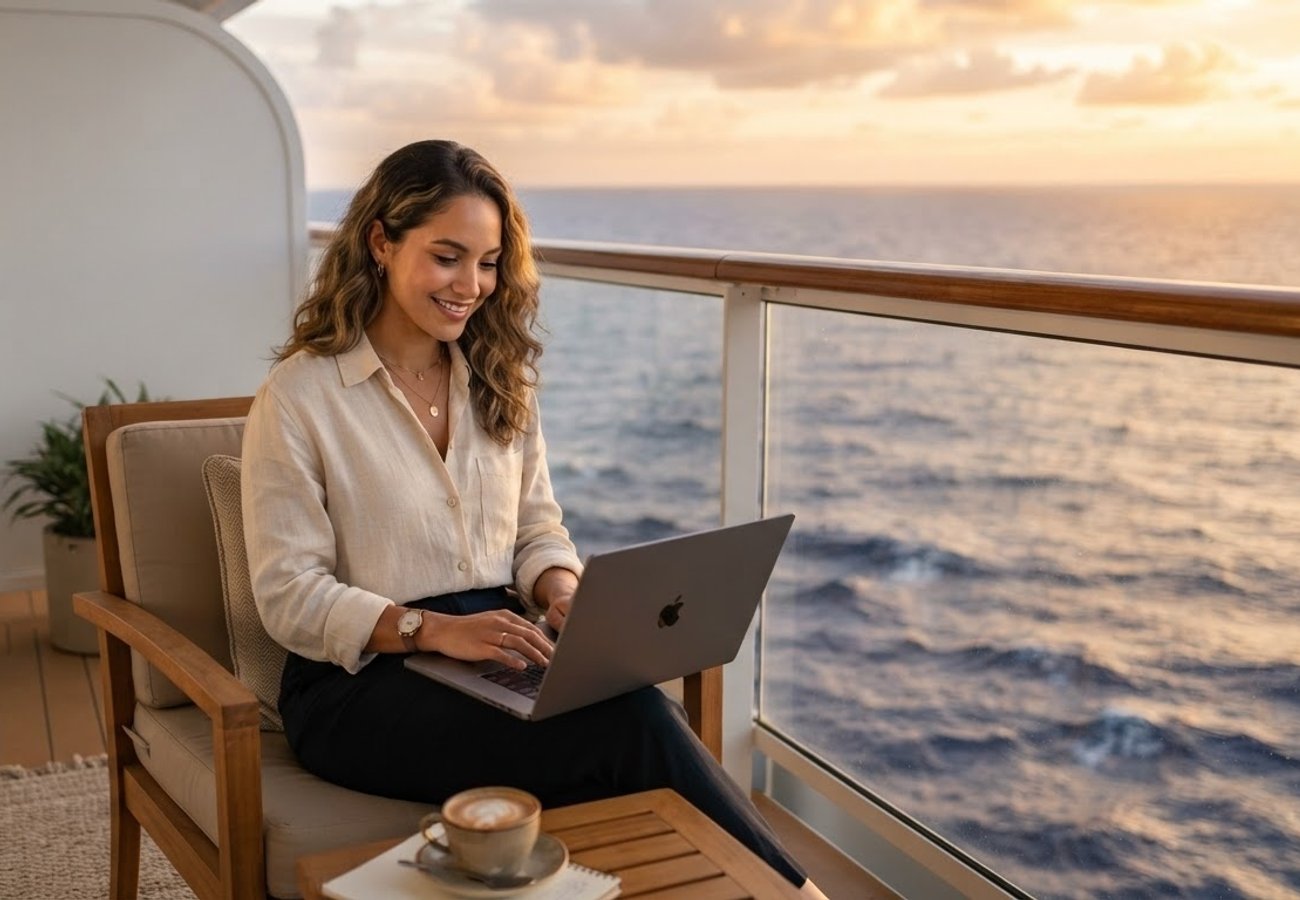
Image generated by AI
Repositioning cruises are shifting from niche operational necessities to high-demand options for budget-conscious explorers. These one-way voyages offer a unique intersection of deep discounts and slow-travel philosophy, making them a prime target for the growing remote-work population.
The Mechanics of Repositioning Voyages
Repositioning cruises occur when a cruise line moves a vessel from one primary region to another to align with seasonal demand. Typical shifts include moving ships from the Caribbean to Europe in the spring or relocating vessels from Alaska to warmer climates in the autumn.
Rather than sailing empty, cruise operators sell these one-way passages to the public. This creates an itinerary driven by the ship's logistical needs rather than a traditional tourist loop.
These journeys are characterized by:
- Intercontinental Routes: Common paths include Florida to Spain (Transatlantic), Japan to the U.S. West Coast (Transpacific), and the Mediterranean to South America.
- Extended Durations: Itineraries often span 14 to 30 nights or more.
- High Sea-Day Ratios: Because the goal is relocation, these trips feature significantly more time at sea than standard cruises.
Financial Incentives and Per-Day Savings
The primary driver for the surge in interest is the aggressive pricing. Because these ships must move regardless of occupancy and incur fewer port fees due to fewer stops, the cost savings are passed to the passenger.
Industry data suggests that per-day rates on repositioning sailings can be 50% to 60% lower than peak-season fares in the Caribbean or Mediterranean. In some instances, entry-level cabins on long-haul crossings are priced under $100 per person per night.
Beyond the base fare, these voyages often include value-added incentives to attract passengers, such as:
- Bundled Wi-Fi and beverage packages.
- Complimentary onboard credits.
- Costs that undercut traditional long-haul business-class airfares when factoring in meals and lodging.
However, travelers must account for the higher cost of one-way airfare and the fact that limited capacity can lead to quick sell-outs.
Exploring Non-Traditional Ports and Shoulder Seasons
Repositioning voyages provide access to destinations rarely seen on standard seven-night itineraries. As ships traverse global shipping lanes, they frequently stop at secondary cities and remote archipelagos.
Recent itineraries have featured stops in:
- Canada’s Atlantic provinces.
- The Canary Islands.
- The Pacific coast of Central America.
- Northern routes via Iceland or Greenland.
These sailings typically occur during shoulder seasons—specifically April, May, September, and November. While this offers the advantage of smaller crowds and cooler temperatures, it introduces variables such as unpredictable weather, choppier seas, and more limited tourist infrastructure at the ports.
A New Frontier for Digital Nomads and Slow Travel
The structure of repositioning cruises mirrors the "slow travel" movement. The abundance of consecutive sea days allows passengers to treat the ship as a floating residence rather than a transit hub.
For digital nomads and location-independent professionals, these crossings serve as an alternative to the stress of back-to-back flights. The onboard experience shifts from high-energy excursion schedules to a more residential atmosphere, focusing on:
- Wellness and Enrichment: Increased emphasis on yoga, spa access, and language classes.
- Unstructured Time: A slower rhythm that supports creative projects or remote work.
- Demographic Shift: A higher concentration of retirees, solo travelers, and long-term nomads.
Connectivity is the critical variable for remote workers. While newer ships have implemented upgraded satellite Wi-Fi to support video calls and streaming, reliability remains inconsistent across different routes and vessel ages.
Determining Suitability: Is a One-Way Voyage Right for You?
Repositioning cruises are a specialized product and are not suitable for every traveler. They require a specific mindset regarding logistics and pacing.
Ideal Candidates
- Seasonal Relocators: "Snowbirds" moving between North America and Europe.
- Flexible Travelers: Those who prioritize the journey over a packed sightseeing checklist.
- Budget Explorers: Travelers seeking to combine international relocation with a luxury experience at a fraction of the cost.
Potential Deal-Breakers
- Strict Timelines: Families tied to school calendars or those unable to commit to multi-week trips.
- Port-Heavy Preferences: Travelers who find extended sea days boring.
- Logistical Constraints: Those unwilling to manage the complexities of one-way flights and international visas.
Repositioning Cruise Comparison: Standard vs. Relocation
| Feature | Standard Cruise | Repositioning Cruise |
|---|---|---|
| Route Structure | Round-trip loop | One-way point-to-point |
| Typical Duration | 3–7 Nights | 14–30+ Nights |
| Average Fare | Peak Market Rate | 40%–50% of Peak Rate |
| Port Frequency | High (Daily or every other day) | Low (Frequent long sea stretches) |
| Primary Appeal | Destination Sightseeing | Low Cost / Slow Travel / Unique Ports |
| Best Timing | Peak Season | Shoulder Season (Apr, May, Sept, Nov) |
Key Takeaways
- Massive Discounts: Savings of 50-60% are common, with some nights costing under $100.
- Slow Travel: Ideal for remote workers due to extended sea days and a relaxed onboard atmosphere.
- Unique Access: Opportunities to visit remote Atlantic and Pacific ports not found on standard loops.
- Logistical Trade-off: Lower cruise fares are often offset by the need for one-way flights and flexible scheduling.
FAQ
What is a repositioning cruise? It is a one-way voyage where a cruise line moves a ship from one region to another (e.g., Caribbean to Europe) to prepare for a new season.
Are repositioning cruises actually cheaper? Yes, per-day rates are significantly lower than standard cruises because there are fewer port fees and a need to fill the ship during a logistical move.
Can I work remotely on a repositioning cruise? Yes, provided the ship has modern satellite Wi-Fi. Many digital nomads use these voyages as a mobile office, though checking specific ship connectivity is recommended.
Do I need a visa for repositioning cruises? Because these cruises often cross international borders and visit multiple countries, visa requirements can be more complex than on a closed-loop cruise. Always check the requirements for every port of call.
Turning a logistical necessity into a luxury adventure is the ultimate travel hack for 2026.
Related Travel Guides
Disclaimer
This article is for informational and educational purposes only. It does not constitute legal, financial, or professional advice. While we strive to provide accurate and up-to-date information, travel policies, regulations, and conditions change rapidly. Always verify information with official sources before making travel decisions. Nomad Lawyer makes no representations about the accuracy, reliability, completeness, or suitability of the information provided. Readers should consult qualified professionals for advice specific to their circumstances. The views expressed in this article are those of the author and do not necessarily reflect the views of Nomad Lawyer.
Raushan Kumar
Founder & Lead Developer
Full-stack developer with 11+ years of experience and a passionate traveller. Raushan built Nomad Lawyer from the ground up with a vision to create the best travel and law experience on the web.
Learn more about our team →