
The Gulf's New Hospitality Frontier: How Ras Al Khaimah Is Leveraging U.S. Hotel Capital for a 3.5 Million Visitor Surge

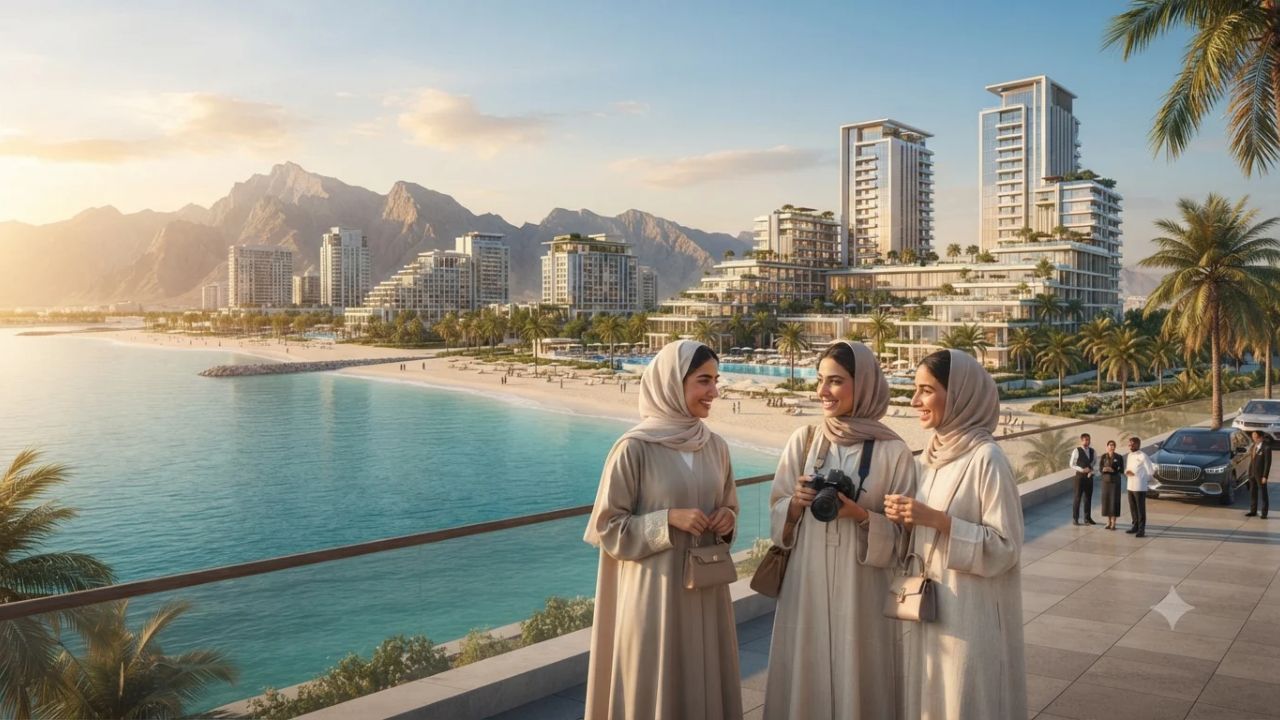
Controlling 6,365 of Ras Al Khaimah’s 12,811 planned and operational hotel keys, American hospitality operators command a decisive 49.7% share of the northern Emirate's lodging pipeline as it accelerates toward an annual target of 3.5 million visitors by 2030. Having logged 1.35 million overnight arrivals in 2025, the fourth-largest emirate in the United Arab Emirates is orchestrating a rapid capital transformation, repositioning its coastal shoreline from a regional weekend retreat into a premier luxury and integrated resort destination.
This aggressive expansion reflects an institutional partnership with North American lodging giants that began over a decade ago. When Waldorf Astoria launched its inaugural UAE property in Ras Al Khaimah in 2013, it signaled that high-end global operators viewed the emirate’s natural geography—spanning mangrove lagoons, Arabian Gulf coastline, and the arid Hajar mountain terrain—as a viable counterweight to Dubai's dense skyscraper enclaves. Today, backed by a reaffirmed "A/A-1" credit rating with a stable outlook from S&P Global Ratings, Ras Al Khaimah is deploying billions in direct investment to construct an interconnected tourism ecosystem centered on master-planned coastal developments.
Strategic Pivot: Decoupling from Oil Through Integrated Master Planning
Rather than permitting fragmented, speculative real estate construction, Ras Al Khaimah's development apparatus—directed by master developer Marjan Group alongside the Ras Al Khaimah Economic Zone (RAKEZ) and RAK Properties—concentrates infrastructure investment within three designated growth corridors: Al Marjan Island, Marjan Beach, and RAK Central. Fourteen global hotel flags are currently signed or operating across these zones, creating an integrated business, residential, and leisure hub designed to sustain economic returns over the next thirty years.
To expand this capital pipeline, a high-level sovereign delegation commenced a twenty-one-day investment roadshow across the United States running from September 20 through October 10. Targeting five major commercial and gaming centers—Miami, Detroit, Las Vegas, Salt Lake City, and New York—the delegation features representatives from the Office of the Ruler’s International Relations Department, Innovation City, the Department of Knowledge, and the Government Media Office. By directly pitching institutional real estate syndicates and entertainment operators, the emirate seeks to diversify its concession partners beyond standard management contracts into long-term equity joint ventures.
This outreach aligns with strategic regional connectivity. Situated less than sixty minutes by road from Dubai International Airport (DXB)—the world’s busiest international aviation gateway—and positioned within a four-hour flight envelope for roughly one-third of the global population, Ras Al Khaimah functions as both an easy overland extension for Dubai transit passengers and an emerging primary gateway served directly by Ras Al Khaimah International Airport.
Asset Allocation: Room Inventory, Master-Plan Districts, and Foreign Direct Investment
The commercial anchor of the emirate's transformation is the multi-billion-dollar Wynn Al Marjan Island, scheduled to open its doors in 2027 as the UAE’s first legally chartered integrated resort. The scale of the property and its surrounding portfolio illustrates the sheer density of incoming room capacity:
| Project & District | Key Inventory / Specifications | Operational Launch | Strategic Brand Role & Target Market |
|---|---|---|---|
| Wynn Al Marjan Island (Al Marjan Island) | 1,530 rooms, 22 dining venues, 12 pools, 550m beach | Scheduled 2027 | UAE's first integrated resort; primary US foreign direct investment anchor |
| Janu Al Marjan Island (Al Marjan Island) | Luxury ultra-boutique keys | In development | Sister brand of Aman; high-net-worth wellness and social luxury |
| Waldorf Astoria RAK (Al Hamra) | 350 luxury rooms and suites | Operational (2013) | Historic brand pioneer; primary corporate and leisure beach asset |
| The Ritz-Carlton (Al Wadi / Al Hamra) | Desert pool villas and beachfront keys | Operational | Ultra-luxury dual-property eco-desert and coastal enclave |
| Total American Portfolio | 6,365 hotel keys | Combined Pipeline | 49.7% of total emirate inventory (12,811 keys overall) |
Encompassing over 60 hectares of reclaimed marine territory, Wynn Al Marjan Island stands as one of the largest single deployments of American foreign direct investment in the UAE. With 1,530 keys, twenty-two dining establishments, a dedicated 550-meter private beachfront, and extensive conference facilities, the complex serves as the catalyst for surrounding luxury flags, including the newly announced Janu Al Marjan Island under the Aman umbrella.
According to development metrics monitored by the Ras Al Khaimah Tourism Development Authority (RAKTDA), achieving the 2030 target of 3.5 million visitors requires more than doubling current operational room capacity. By locking in U.S. hospitality operators to manage nearly half of the emirate's total 12,811-key inventory, municipal planners ensure immediate integration into global loyalty engines such as Marriott Bonvoy and Hilton Honors, establishing direct booking channels into affluent North American and European feeder markets.
Expert Analysis: Dubai Displacement, Integrated Gaming Dynamics, and Regional Yield Escalation
From an aviation and asset-yield perspective, Ras Al Khaimah’s reliance on U.S. operators represents a calculated gamble on regulatory differentiation. As the UAE prepares for legal commercial gaming under federal frameworks established by the General Commercial Gaming Regulatory Authority (GCGRA), Ras Al Khaimah has positioned itself as the country’s first-mover jurisdiction.
The pricing pressure this creates means hotel room rates across Al Marjan Island are poised to decouple from traditional seasonal leisure discounting. Historical UAE hotel data demonstrates that luxury beachfront resorts experience steep occupancy drops and aggressive tariff cuts during the blistering summer months from June through August. However, integrated entertainment complexes with extensive indoor amenities and gaming facilities operate on high-frequency, year-round visitation patterns, supporting average daily rates (ADR) that rival prime beachfront enclaves on Dubai’s Palm Jumeirah.
For travelers booking this route, the direct consequence is that the era of Ras Al Khaimah serving as a low-cost, budget-friendly beach alternative to Dubai is coming to an abrupt close. As ultra-luxury inventory from Wynn, Janu, and expanded Ritz-Carlton concepts commands top-tier tariffs, mid-tier leisure travelers who previously relied on the emirate for affordable all-inclusive resort getaways will face compressed availability and escalating service surcharges.
Additionally, airport logistics are shifting. While travelers historically landed at Dubai International Airport and took highway shuttles north along the E311 corridor, the influx of international high-rollers and convention delegations is prompting charter carriers and regional Gulf airlines to add scheduled capacity directly into Ras Al Khaimah International Airport. For global hospitality investors and travelers alike, Ras Al Khaimah is successfully shedding its secondary-destination status, constructing a commercially autonomous resort enclave that challenges the traditional hierarchy of Arabian Gulf tourism.
Key Takeaways
- American brands control half the market: U.S. hotel management operators will operate 6,365 of Ras Al Khaimah's 12,811 planned and operational rooms, dominating the lodging pipeline.
- Wynn 2027 launch anchors master development: Wynn Al Marjan Island will deliver 1,530 keys across 60 hectares, featuring 22 restaurants and a 550-meter beach as the nation's premier integrated resort.
- Targeting 3.5 million annual visitors by 2030: Building on 1.35 million overnight visits in 2025, the emirate is executing a massive capacity expansion supported by an "A/A-1" sovereign credit rating from S&P Global.
- Three-week U.S. investment mission underway: Sovereign entities are touring Miami, Detroit, Las Vegas, Salt Lake City, and New York from September 20 to October 10 to court institutional hospitality capital.
- Average daily room rates will climb: The transition toward integrated gaming, luxury wellness, and convention hospitality will permanently eliminate budget-tier seasonal discounting across Al Marjan Island.
FAQ: Ras Al Khaimah Hospitality and Travel Logistics 2026
What is the opening timeline for Wynn Al Marjan Island?
Wynn Al Marjan Island is scheduled to open in 2027. It spans 60 hectares on Al Marjan Island, featuring 1,530 luxury rooms, 22 restaurants, and 12 swimming pools.
How far is Ras Al Khaimah from Dubai International Airport?
Ras Al Khaimah is situated approximately 45 to 60 minutes by road from Dubai International Airport (DXB) via modern multi-lane highway corridors including the E311 and E611.
Why are American hotel operators dominating the Ras Al Khaimah market?
U.S. hospitality giants provide established global loyalty networks, international marketing reach, and proven management expertise in running high-volume luxury and integrated entertainment resorts.
What visitor numbers is Ras Al Khaimah targeting by 2030?
After recording 1.35 million overnight visitors in 2025, the Ras Al Khaimah Tourism Development Authority aims to expand annual visitation to 3.5 million tourists by 2030.
By anchoring its coastline to American hospitality capital, Ras Al Khaimah is redrawing the luxury geography of the Middle East.
Related Travel Guides
Disclaimer
This article is for informational and educational purposes only. It does not constitute legal, financial, or professional advice. While we strive to provide accurate and up-to-date information, travel policies, regulations, and conditions change rapidly. Always verify information with official sources before making travel decisions. Nomad Lawyer makes no representations about the accuracy, reliability, completeness, or suitability of the information provided. Readers should consult qualified professionals for advice specific to their circumstances. The views expressed in this article are those of the author and do not necessarily reflect the views of Nomad Lawyer.
Raushan Kumar
Founder & Lead Developer
Full-stack developer with 11+ years of experience and a passionate traveller. Raushan built Nomad Lawyer from the ground up with a vision to create the best travel and law experience on the web.
Learn more about our team →