
Queensland Overseas Tourism Slump: Gold Coast and Cairns Face Declining Air Arrivals
New ABS data reveals a sharp contraction in Queensland's international visitor arrivals for 2026, impacting Gold Coast and Cairns revenue as aviation bottlenecks and global economic pressures mount.

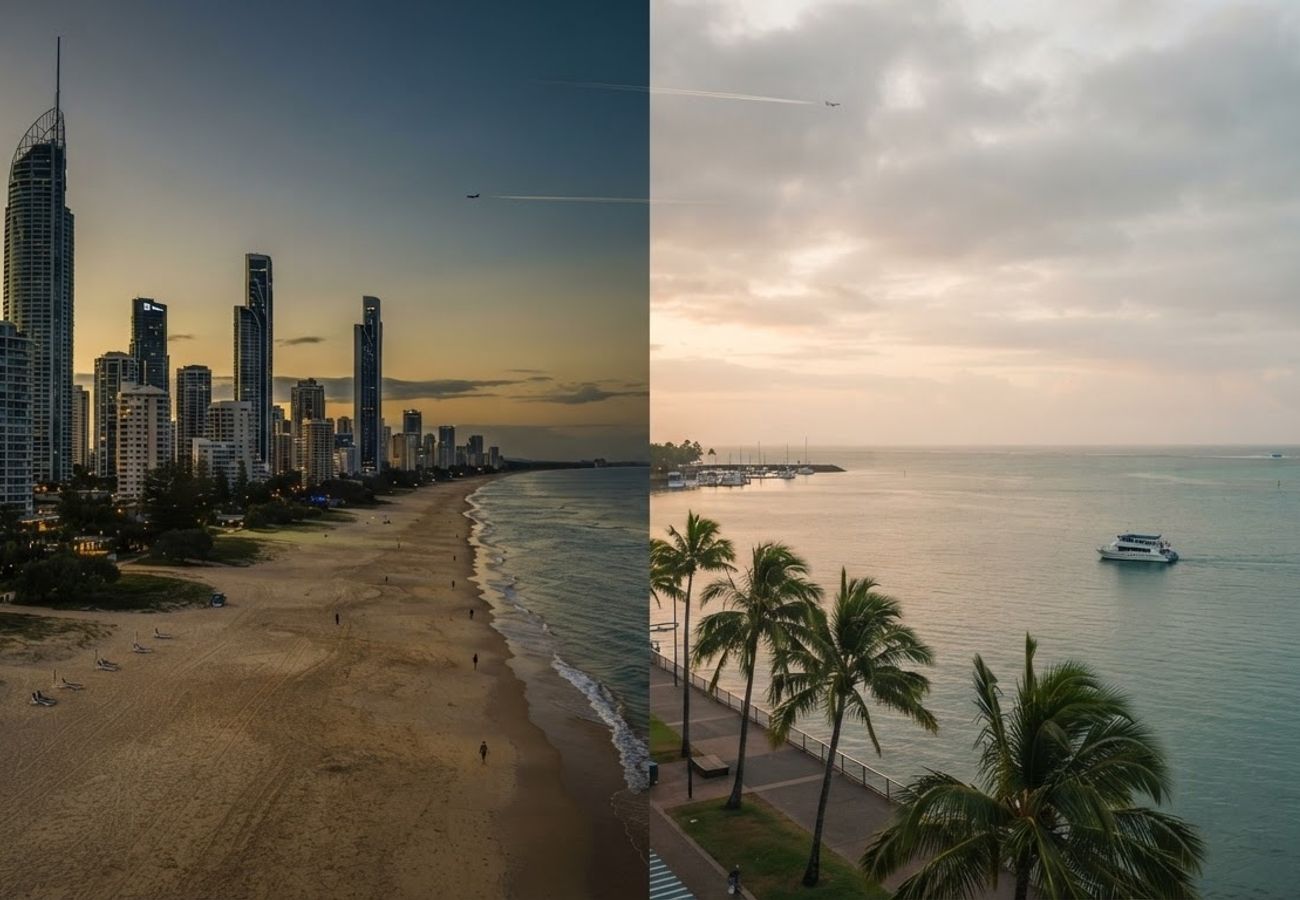
Image generated by AI
Short-term international visitor arrivals to Australia fell by 9.2 per cent year-on-year in June 2026, leading to declining air arrivals and revenue contractions across Queensland's Gold Coast and Cairns.
The Local Trend Revealed: Regional Leisure Tourism Vulnerabilities
The transborder visitor economy in Queensland is navigating a mid-year correction. While the year ending March 2026 set records with 2.4 million international visitors injecting $8.2 billion into the state, the second and third quarters have presented severe headwinds. A combination of geopolitical friction, persistent aviation capacity bottlenecks, and rising long-haul airfares has led to a distinct international visitor contraction.
According to the Australian Bureau of Statistics (ABS) Overseas Arrivals and Departures report released on August 14, 2026, short-term visitor arrivals to Australia totaled 566,910 in June 2026—representing a 9.2 per cent decrease compared to the same month in 2025. Total arrivals across all categories reached 1,557,570 (down 3.7 per cent year-on-year). While the 2025-26 financial year concluded as the second-highest on record with 9,101,120 arrivals (an 8.3 per cent annual increase), the final three months of the period recorded significantly lower levels relative to pre-pandemic benchmarks. Because Queensland relies heavily on discretionary leisure tourism rather than corporate arrivals, destinations like the Gold Coast and Cairns are experiencing immediate revenue drops.
Queensland Inbound Tourism and Economic Indicators (2026)
| Region / Market Segment | Financial Performance (YE March 2026) | Mid-Year Contraction Indicators | Key Demographic Shifts (2026) |
|---|---|---|---|
| Brisbane (Metropolitan Hub) | $4.1 Billion in international spend | Outperformed regional averages | Maintained stability due to corporate and business sectors |
| Gold Coast (Leisure Center) | $1.5 Billion in international spend | 0.8% decline in dwelling values (August) | Double hit: domestic nights down 1.2% to 378 million |
| Tropical North Queensland (Cairns) | $1.3 Billion in international spend | 0.16% decline in Cairns dwelling values (July) | Slowing bookings and local cash flow challenges (TTNQ report) |
| Indian Source Market | N/A | 18.7% drop nationally (May); 32.8% drop in QLD | Plummeted from 5,910 to 3,970 arrivals in Queensland |
| US Source Market | High-yielding resort spend | 1.6% decline in arrivals (February) | Pronounced fatigue in trans-Pacific travel bookings |
Cultural & Environmental Value: Transition to Niche and High-Yield Experiences
For the traveler, the real impact of the Queensland tourism slump is the opportunity to practice high-yield, low-impact travel that directly supports regional ecosystems and local operators. Rather than relying on high-volume mass tourism, operators in Cairns and the Whitsundays are shifting focus to sustainable, educational travel experiences that protect the Great Barrier Reef and the Daintree Rainforest.
In coordination with regional bodies like Tourism Tropical North Queensland (TTNQ) and the Australian Travel Industry Association (ATIA), these programs aim to increase average spend per visitor. By booking directly with local eco-lodges, utilizing low-emission transport, and supporting Indigenous-led tours, travelers help offset the volume deficit while financing localized reef restoration and forest conservation.
This targeted approach is particularly important as the domestic travel market shows signs of fatigue. While domestic travel contributed $37.3 billion in early 2026, domestic visitor nights fell by 1.2 per cent according to a Horwath HTL report. Furthermore, Australians are traveling outbound in record numbers—making over 12.6 million overseas trips in the year to February—often choosing competitive Asian markets over domestic destinations.
Destination Specialist Local Insider Tips
To help you explore Queensland comfortably and sustainably during this period of market correction, travel specialists suggest the following tips:
- Target the Shoulder Seasons: Visit the Gold Coast or Cairns during late autumn (April to May) or early spring (September) to find lower accommodation rates as hotels adjust RevPAR strategies.
- Savor Moreton Bay Bugs and Coral Trout: Experience local regional gastronomy. Try fresh Moreton Bay Bugs (flathead lobsters) grilled with garlic butter on the Gold Coast, or sample sustainably sourced Coral Trout in Cairns.
- Explore the Currumbin Valley Hinterland: Skip the crowded beaches of Surfers Paradise and visit the Currumbin Valley rock pools for a quieter, eco-friendly nature experience.
- Support Local Reef Operators: Book your Great Barrier Reef tours directly with family-owned, certified advanced eco-tourism operators to ensure your spending remains within the local community.
- Observe Strict Leave No Trace Principles: When visiting sensitive ecosystems like the Daintree Rainforest or Frankland Islands, stay on designated boardwalks to protect unique native flora and fauna.
Long-Term Outlook: Diversification and Route Stabilization
The long-term outlook for Queensland's visitor economy relies on stabilizing international aviation capacity and diversifying market segments. The state government’s 2026-27 budget, handed down by Treasurer David Janetzki in June, extended the 50 per cent payroll tax rebate on apprentice and trainee wages through to June 30, 2027 (costing $64 million) to support hospitality workforce retention.
As Tourism and Events Queensland (TEQ) aligns its marketing expenditures with its 'Destination 2045' masterplan (which recorded $45.5 billion in Total Visitor Expenditure early in the year), rebuilding direct routes to key markets will remain a priority. By leveraging resilient markets like New Zealand (representing 17.5 per cent of June arrivals) and China (which contributed $1.6 billion in March spend), Queensland is positioned to transition toward a more sustainable and balanced regional tourism model.
Related Travel Guides
Disclaimer
This article is for informational and educational purposes only. It does not constitute legal, financial, or professional advice. While we strive to provide accurate and up-to-date information, travel policies, regulations, and conditions change rapidly. Always verify information with official sources before making travel decisions. Nomad Lawyer makes no representations about the accuracy, reliability, completeness, or suitability of the information provided. Readers should consult qualified professionals for advice specific to their circumstances. The views expressed in this article are those of the author and do not necessarily reflect the views of Nomad Lawyer.
Raushan Kumar
Founder & Lead Developer
Full-stack developer with 11+ years of experience and a passionate traveller. Raushan built Nomad Lawyer from the ground up with a vision to create the best travel and law experience on the web.
Learn more about our team →