
Qatar and Saudi Arabia Lead GCC Transit Revolution with High-Speed Rail and Metro Expansions 2026
Qatar and Saudi Arabia are redefining Gulf mobility through massive investments in driverless metros, high-speed rail, and electric bus networks, leveraging FIFA World Cup legacies to drive a car-free urban vision.

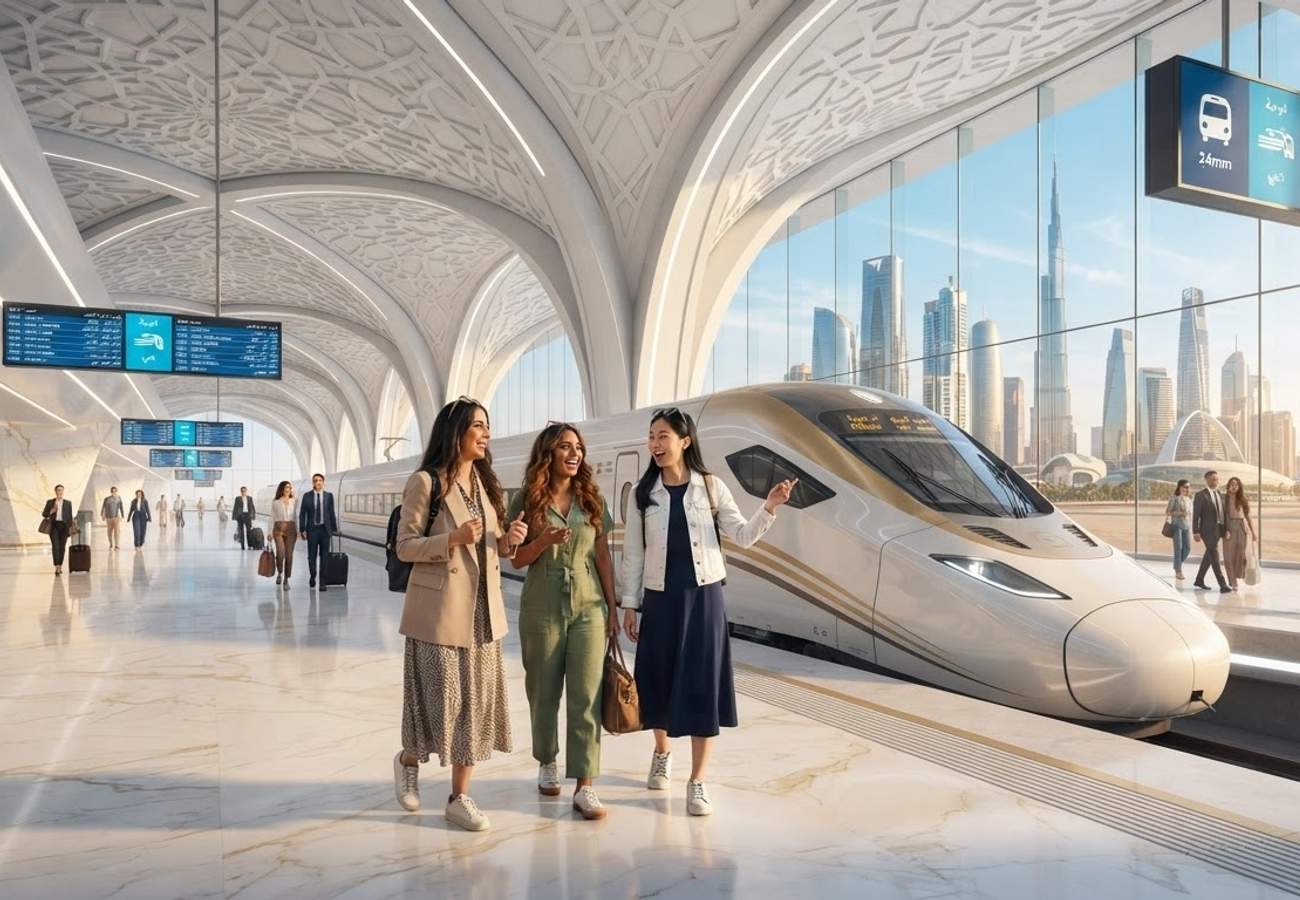
Image generated by AI
The Gulf Cooperation Council (GCC) is witnessing a fundamental shift in urban mobility, led by the aggressive infrastructure expansions of Qatar and Saudi Arabia. By utilizing global sporting events as catalysts, these nations are transitioning from car-dependent societies to hubs of sustainable, high-tech public transit.
Qatar has already established a blueprint for this transformation following the 2022 FIFA World Cup, while Saudi Arabia is currently scaling its networks in preparation for the 2034 tournament and the broader mandates of Vision 2030.
Strategic Infrastructure Scaling in the Gulf
The integration of autonomous metro systems, electric bus fleets, and cross-border rail links is reshaping how residents and international travelers navigate the region. The goal is a seamless, sustainable ecosystem that reduces road congestion and enhances regional trade.
A pivotal development in this regional connectivity is the 2,117-kilometre GCC Railway. While the UAE's Etihad Rail is currently the most operationally advanced section—primarily handling domestic freight—the broader network is approximately 50% complete with a target finish date of 2030.
The primary hurdle remaining for full passenger operations is the harmonization of customs and regulatory policies across the six member states. Once resolved, the network is projected to move 6 million passengers and 201 million tonnes of freight annually by 2030.
Qatar's Post-World Cup Transit Legacy
Qatar’s approach to the 2022 FIFA World Cup was not merely about temporary capacity, but about creating a permanent urban legacy. The result is a sophisticated, driverless transit system that serves as the backbone of Doha's mobility.
The Doha Metro remains the center-piece of this strategy, utilizing three primary corridors—the Red, Gold, and Green lines—to link Hamad International Airport with business districts and residential hubs. To complement this, the Lusail Tram network provides essential "last-mile" connectivity within the smart city of Lusail.
Qatar is continuing to expand this footprint with the construction of the Blue Line, a 17.5 km semi-circular extension designed to bridge the gap between West Bay and Airport City North.
Saudi Arabia's Roadmap to 2034
Saudi Arabia is mirroring Qatar's success by accelerating its transport overhaul ahead of the 2034 FIFA World Cup. The focus is on massive capacity increases and the integration of entertainment districts into the urban fabric.
The Riyadh Metro is expanding its autonomous network, including a new seventh line connecting the city to the Qiddiya entertainment district. Simultaneously, the Kingdom is upgrading its aviation gateways, with King Salman International Airport and Jeddah Airport targeting annual capacities of 100 million and 90 million passengers, respectively.
Within the NEOM region, a US$1.5 billion contract has been awarded for a 57-kilometre high-speed rail connector to link stadiums and urban hubs with the national grid.
GCC Transit Development Specifications
The following table details the current status and projections for the most critical transit projects in the region as of July 2026.
| Category | Project / Development | Key Updates (July 2026) | Timeline / Capacity |
|---|---|---|---|
| Saudi Arabia | Riyadh Metro Upgrades | New 7th line connecting city to Qiddiya district | Completion by 2034; 3.6M passengers/day |
| Saudi Arabia | King Salman Intl Airport | Major expansion for World Cup demand | 100 million passengers annually |
| Saudi Arabia | Jeddah Airport Expansion | Capacity increase for visitor arrivals | 90 million passengers annually |
| Saudi Arabia | NEOM High-Speed Rail | 57km connector linking stadiums and hubs | US$1.5 billion project underway |
| Qatar | Doha Metro Blue Line | Semi-circular extension (West Bay to Airport City North) | 17.5 km; completion by end of 2026 |
| Qatar | Lusail Tram Purple Line | Extension to Al Sa’ad Plaza and Lusail Boulevard | Under construction |
| Qatar & KSA | Riyadh–Doha High-Speed Rail | 785km direct electric railway agreement (Dec 2025) | Completion within six years |
| GCC Region | GCC Railway Project | 2,117km network; approximately 50% complete | Target completion by 2030 |
| UAE | Etihad Rail | Most advanced GCC segment; domestic freight active | Currently operational |
| GCC Region | Network Performance | Full regional passenger and freight mobility | 6M passengers / 201M tonnes freight by 2030 |
Transitioning to Sustainable Mobility
The shift toward a "car-free" vision is supported by a massive investment in green technology. Qatar, for example, deployed a network of 3,000 buses for the World Cup, including hundreds of high-capacity electric vehicles.
By establishing permanent park-and-ride facilities and integrating driverless rail with electric busing, these nations are reducing the carbon footprint of urban travel. This systemic change ensures that the infrastructure built for a few weeks of sporting competition provides decades of environmental and economic value.
The Gulf is no longer just building stadiums; it is rebuilding the very way people move across borders.
Key Takeaways
- Event-Driven Growth: FIFA World Cups in 2022 (Qatar) and 2034 (Saudi Arabia) are serving as the primary accelerators for multi-billion dollar transit projects.
- Cross-Border Connectivity: A new 785km high-speed electric rail will link Riyadh and Doha, while the 2,117km GCC Railway aims for 2030 completion.
- Urban Innovation: Qatar's driverless Doha Metro and Saudi's autonomous Riyadh Metro are shifting the region away from private vehicle reliance.
- Aviation Scaling: Saudi Arabia is targeting massive capacity leaps, with Riyadh and Jeddah airports aiming for a combined 190 million annual passengers.
FAQ
What is the status of the GCC Railway? The 2,117-kilometre project is roughly 50% complete, with the UAE's Etihad Rail being the most operational segment. Full completion is targeted for 2030.
When will the Doha Metro Blue Line be completed? The 17.5 km Blue Line extension, connecting West Bay to Airport City North, is expected to be finished by the end of 2026.
How are Saudi Arabia and Qatar connecting their cities? In December 2025, both nations signed an agreement to construct a 785-kilometre high-speed electric railway linking Riyadh and Doha, expected to be completed within six years.
Related Travel Guides
Disclaimer
This article is for informational and educational purposes only. It does not constitute legal, financial, or professional advice. While we strive to provide accurate and up-to-date information, travel policies, regulations, and conditions change rapidly. Always verify information with official sources before making travel decisions. Nomad Lawyer makes no representations about the accuracy, reliability, completeness, or suitability of the information provided. Readers should consult qualified professionals for advice specific to their circumstances. The views expressed in this article are those of the author and do not necessarily reflect the views of Nomad Lawyer.
Kunal K Choudhary
Co-Founder & Contributor
A passionate traveller and tech enthusiast. Kunal contributes to the vision and growth of Nomad Lawyer, bringing fresh perspectives and driving the community forward.
Learn more about our team →