
Qatar Expands Visa-Free Access to 95 Countries to Drive Tourism GDP to 12% by 2030
Qatar has expanded its visa-free entry list to 95 nations, including Hungary and Poland, as it leverages a 6.3% monthly growth in arrivals to diversify its economy.

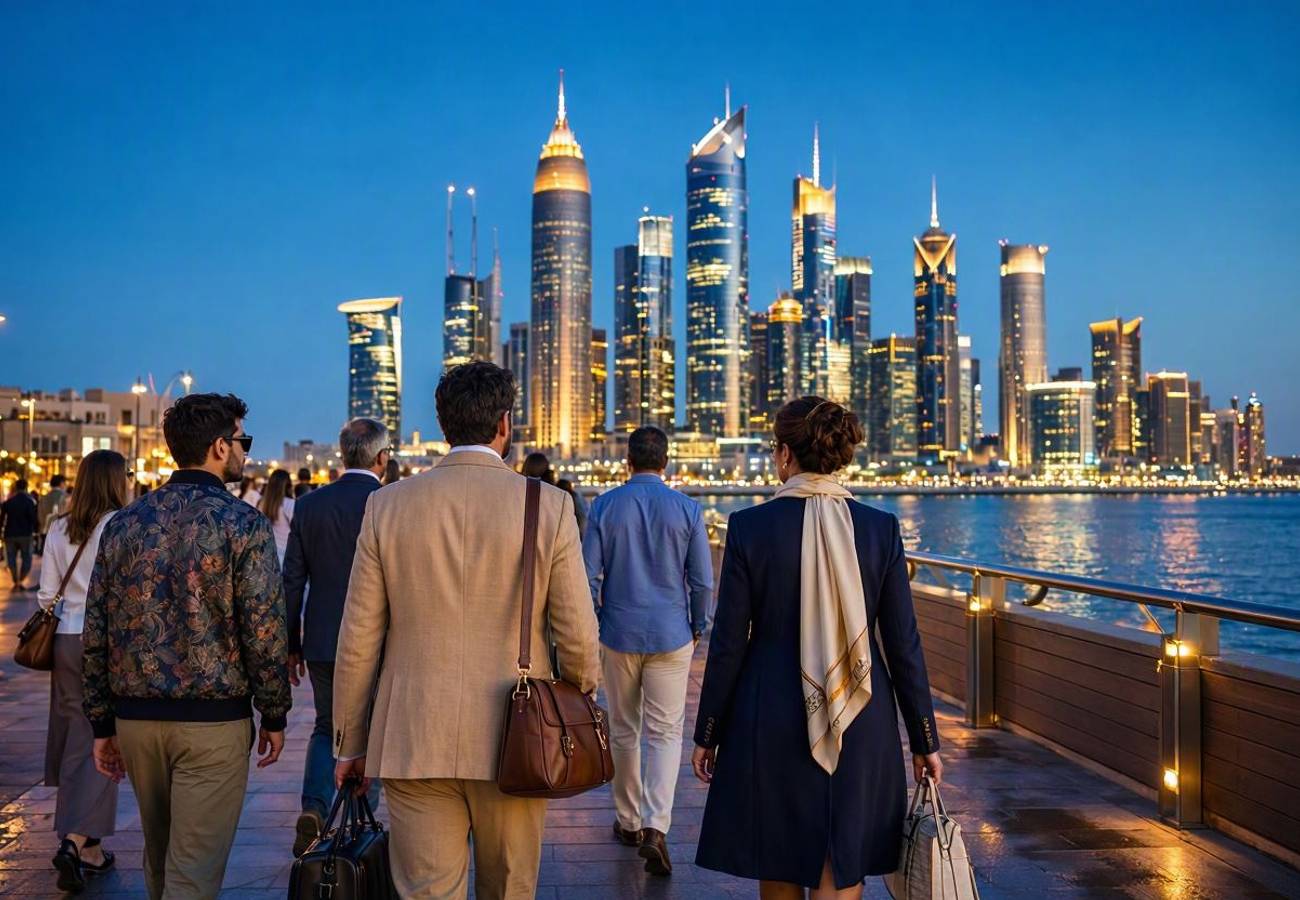
Image generated by AI
International arrivals in Qatar rose 6.3% between July and August 2026, climbing from 285,000 to 303,000 visitors in a single month. This acceleration is the latest indicator of a broader strategic shift as the Gulf state aggressively expands its visa-free regime to 95 countries—adding nations such as Hungary and Poland—to transition from an event-driven destination to a sustainable global tourism hub.
The Tourism Pivot in Numbers
The data from the first eight months of 2026 reveals a state in the midst of a structural economic transition. Between January and August 2026, Qatar recorded 2.338 million international arrivals. While the 2022 FIFA World Cup provided the initial global visibility, the current growth is driven by a diversified source market.
The Gulf Cooperation Council (GCC) remains the primary engine of growth, accounting for 958,000 visitors, or 41% of the total. However, long-haul markets are showing resilience, with Asia and Oceania contributing 20.9% and Europe mirroring that at 20.8%. This balanced distribution is essential for Qatar's goal of increasing tourism's contribution to its GDP from 8% in 2024 to 12% by 2030.
Financial data from 2024 provides the baseline for this ambition: the sector generated QAR 55 billion in total contribution, with international visitor spending alone reaching QAR 40 billion. To sustain this, Qatar is leveraging its aviation infrastructure, specifically Hamad International Airport (DOH), which now possesses the capacity to process over 65 million passengers annually.
Comparative Market Analysis: 2024 vs. 2026
The shift in Qatar's tourism strategy is evident when comparing the "event-peak" era of 2022-2024 against the "accessibility-led" growth of 2026. The expansion of visa-free access to 95 territories—including the United States, Canada, and various EU member states—represents a move to lower the friction of entry for high-spending long-haul travelers.
| Metric | 2024 Baseline | 2026 Status/Target | Shift |
|---|---|---|---|
| GDP Contribution | 8% | 12% (by 2030) | +4% Target |
| Annual Visitors | 5 Million+ | 2.338M (Jan-Aug) | Sustained Momentum |
| Visa-Free Nations | Limited | 95 Countries | Significant Expansion |
| Airport Capacity | Scaling | 65 Million+ Passengers | Infrastructure Peak |
| Tourism Revenue | QAR 55 Billion | Scaling toward 2030 Goal | Growth Trend |
This expansion aligns with global trends reported by the World Travel & Tourism Council (WTTC), where ease of mobility is directly correlated with increased average length of stay and higher per-capita spending.
What This Means for Travelers
For the individual traveler, the expansion to 95 visa-free countries removes one of the most significant barriers to visiting the Middle East. If you hold a passport from the US, Poland, Hungary, or any of the other 92 listed nations, the logistical overhead of visiting Doha has effectively vanished.
Actionable Booking Advice:
- Leverage the Hub: With Qatar Airways reporting a massive 41.8 million passengers and QAR 83.75 billion in revenue for the 2025/26 financial year, the airline continues to offer some of the most competitive connectivity into Doha. Travelers should look for "stopover" packages that allow for a 2-3 day city break.
- Transit Strategy: Since Hamad International Airport (DOH) handles the vast majority of traffic, prioritize hotels with direct transit links. For ultra-luxury, the Raffles Doha (30km from DOH) is accessible via the Metro Red Line to Legtaifiya, avoiding peak Doha traffic.
- Timing: The 6.3% growth in August arrivals suggests that "shoulder season" travel is becoming more popular. Booking 6-12 weeks in advance for luxury properties like the Mandarin Oriental, Doha, is recommended as occupancy rates rise.
Aviation and Infrastructure Trajectory
The synergy between the state's visa policy and its aviation assets is a calculated move. Qatar Airways is not just a carrier but a revenue engine, posting a post-tax profit of QAR 7.08 billion (US$1.94 billion) in the 2025/26 cycle. This financial strength allows for the continued subsidization and expansion of routes that feed the tourism sector.
While Doha International Airport (DIA) and Al Khor Airport exist, they serve niche or specialized roles. The concentration of resources at Hamad International ensures that the "arrival experience" is streamlined, which is a key metric tracked by IATA for improving passenger satisfaction in global hubs.
FAQ: Qatar Travel 2026
Do I still need a visa for Qatar in 2026? If you are a citizen of one of the 95 visa-free countries—including the US, UK, Canada, and most of the EU—you no longer require a visa for entry. Always verify your specific passport status via the official government portal before departure.
Is Doha an expensive destination for short-term visits? While luxury hotels like Raffles and Mandarin Oriental target high-net-worth individuals, the expansion of tourism infrastructure has increased the variety of hospitality options. Visitor spending is high, but accessibility has improved across all budget tiers.
Which airport will I likely land at? Almost all commercial international flights land at Hamad International Airport (DOH). Doha International (DIA) and Al Khor Airport are used for limited or specialized operations and are not the primary gateways for tourists.
Qatar is no longer just a stopover between East and West; it is now a destination by design.
Related Travel Guides
Disclaimer
This article is for informational and educational purposes only. It does not constitute legal, financial, or professional advice. While we strive to provide accurate and up-to-date information, travel policies, regulations, and conditions change rapidly. Always verify information with official sources before making travel decisions. Nomad Lawyer makes no representations about the accuracy, reliability, completeness, or suitability of the information provided. Readers should consult qualified professionals for advice specific to their circumstances. The views expressed in this article are those of the author and do not necessarily reflect the views of Nomad Lawyer.
Preeti Gunjan
Contributor & Community Manager
A passionate traveller and community builder. Preeti helps grow the Nomad Lawyer community, fostering engagement and bringing the reader experience to life.
Learn more about our team →