
Qatar Airways Cuts 20 Long-Haul Routes: Full List of Discontinued Destinations, Cardiff Impact, and Transit Guide

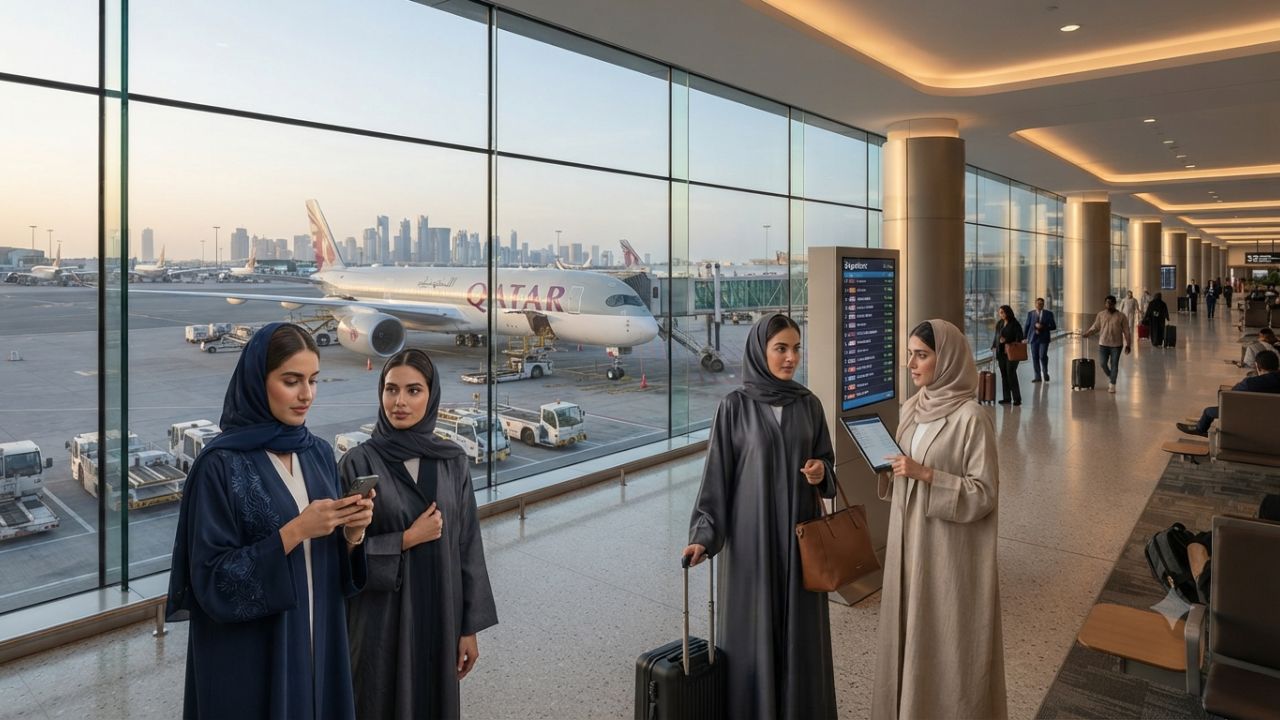
Image credit: Qatar Airways
Doha-based flag carrier Qatar Airways has permanently withdrawn scheduled passenger services across 20 international markets since 2016, consolidating widebody capacity around its core transit hub at Hamad International Airport (DOH). Fresh aviation schedule analytics from Cirium Diio reveal that management eliminated underperforming secondary destinations across Europe, Asia, Africa, and the Americas to protect overall network yields and aircraft utilization.
While the 2020 global health crisis triggered 13 of these route suspensions, strategic exits continued steadily through 2026—including recent cancellations in Hamburg (HAM), Venice (VCE), and Kano (KAN). The commercial realignment deprives several regional markets, such as Wales' Cardiff Airport (CWL), of direct Middle East connections, forcing international travelers onto codeshare feeders and rail links.
Operational Strategy Shift: From Secondary Expansion to Trunk Yield Consolidation
Over the past decade, Qatar Airways pivoted from rapid secondary airport map expansion toward strict yield discipline and front-cabin profit maximization. Operational records from the UK Civil Aviation Authority (CAA) highlight that the Cardiff (CWL) route recorded an average load factor of just 59 percent in 2019. Low passenger load factors on secondary city pairs make long-range widebody rotations unsustainable without consistent high-yield corporate ticket sales.
| Strategic Metric | Historical Strategy (2016–2019) | Modern Operational Strategy (2020–2026) |
|---|---|---|
| Expansion Model | Rapid secondary city network expansion | Strict yield consolidation on high-density trunk routes |
| Fleet Allocation | Sub-fleet deployment across thin regional markets | Heavy deployment of twin-engine Airbus A350 & Boeing 787 |
| Route Viability | Dependent on regional airport financial incentives | Driven by self-sustaining premium and cargo yields |
| Connection Patterns | Dispersed secondary point-to-point operations | Concentrated high-volume transit banks through Doha |
Source: Cirium Diio & UK Civil Aviation Authority (CAA).
Complete Breakdown of 20 Discontinued Qatar Airways Routes (2016–2026)
The 20 withdrawn destinations span secondary commercial hubs in Europe, leisure markets in Southeast Asia, and regional gateways in South America and Africa.
| Destination City | Country | Region | IATA Code | Exit Year | Primary Aircraft Type |
|---|---|---|---|---|---|
| U-Tapao (Pattaya) | Thailand | Asia | UTP | 2018 | Boeing 787-8 Dreamliner |
| Gaborone | Botswana | Africa | GBE | 2020 | Airbus A350-900 |
| Rabat | Morocco | Africa | RBA | 2020 | Boeing 787-8 Dreamliner |
| Buenos Aires | Argentina | Americas | EZE | 2020 | Boeing 777-200LR |
| Chiang Mai | Thailand | Asia | CNX | 2020 | Boeing 787-8 Dreamliner |
| Da Nang | Vietnam | Asia | DAD | 2020 | Boeing 787-8 Dreamliner |
| Krabi | Thailand | Asia | KBV | 2020 | Boeing 787-8 Dreamliner |
| Langkawi | Malaysia | Asia | LGK | 2020 | Boeing 787-8 Dreamliner |
| Yangon | Myanmar | Asia | RGN | 2020 | Airbus A319 / A330 |
| Cardiff | United Kingdom | Europe | CWL | 2020 | Boeing 787-8 Dreamliner |
| Gothenburg | Sweden | Europe | GOT | 2020 | Boeing 787-8 Dreamliner |
| Pisa | Italy | Europe | PSA | 2020 | Airbus A320 / A330 |
| St. Petersburg | Russia | Europe | LED | 2022 | Boeing 787-8 Dreamliner |
| Windhoek | Namibia | Africa | WDH | 2023 | Boeing 787-8 Dreamliner |
| Medan | Indonesia | Asia | KNO | 2024 | Boeing 787-8 Dreamliner |
| Toulouse | France | Europe | TLS | 2024 | Airbus A330-200 |
| Lyon | France | Europe | LYS | 2025 | Boeing 787-8 Dreamliner |
| Kano | Nigeria | Africa | KAN | 2026 | Boeing 787-8 Dreamliner |
| Hamburg | Germany | Europe | HAM | 2026 | Boeing 787-8 Dreamliner |
| Venice | Italy | Europe | VCE | 2026 | Boeing 787-8 Dreamliner |
Source: Cirium Diio Schedule Analytics.
Macroeconomic and Operational Drivers of Route Cancellations
Airline network planners face escalating operational pressures that make secondary outstations financially unviable:
- Jet Fuel Volatility: Rising fuel costs rapidly erode thin profit margins on low-fare tourist routes, whereas high-density trunk routes absorb cost increases through premium business ticket pricing.
- Fleet Maintenance Delays: Global engine maintenance backlogs and aerospace supply chain bottlenecks ground modern widebodies, forcing carriers to prioritize high-revenue city pairs over marginal frequencies.
- Belly Cargo Yields: Secondary leisure outstations produce minimal outbound air cargo volume compared to primary financial hubs, which generate steady commercial freight revenue.
- Airport Landing Fees: Fixed regional airport operational costs carry a disproportionately heavy burden relative to low average passenger yields.
Alternative Routing and Transit Options for Displaced Travelers
Passengers traveling to or from discontinued regional destinations can utilize oneworld alliance partner feeds, inter-city rail partnerships, and domestic connection hubs:
| Discontinued Destination | Optimal Hub Gateway | Alternative Transit Mode | Recommended Alliance Partner |
|---|---|---|---|
| Cardiff (CWL) | London Heathrow (LHR) | Great Western Railway express train | British Airways / oneworld |
| Lyon (LYS) | Paris Charles de Gaulle (CDG) | SNCF high-speed TGV rail connection | SNCF Train + Air partnership |
| Gothenburg (GOT) | Stockholm Arlanda (ARN) | Domestic scheduled shuttle flights / SJ rail | Finnair / British Airways |
| Pattaya (UTP) | Bangkok Suvarnabhumi (BKK) | Direct highway coach or private transfer | Bangkok Airways codeshare |
| Chiang Mai (CNX) | Bangkok Suvarnabhumi (BKK) | High-frequency domestic flight | Bangkok Airways / Qatar Airways |
| Medan (KNO) | Jakarta Soekarno-Hatta (CGK) | Regional domestic flight connection | Garuda Indonesia / codeshare |
| Toulouse (TLS) | Paris Charles de Gaulle (CDG) | High-speed rail or feeder flight | Air France / rail codeshare |
Fleet Allocation by Aircraft Family
Qatar Airways redistributes its airframe fleet across specific long-haul corridor missions based on operating characteristics:
| Aircraft Family | Typical Route Mission | Operational Strength | Commercial Vulnerability |
|---|---|---|---|
| Airbus A350-900 / -1000 | Ultra-long-haul trunk corridors | Superior fuel burn & belly cargo capacity | Excessive capacity for thin leisure markets |
| Boeing 787-8 / -9 Dreamliner | Mid-to-long-haul secondary routes | Flexible passenger capacity with long range | High cabin real estate requires strong yields |
| Airbus A330-200 / -300 | Medium-haul high-density sectors | High operational reliability on mature routes | Higher fuel burn vs composite widebodies |
| Airbus A319 / A320 Family | Thin niche regional feeder routes | Low trip cost for emerging regional markets | Limited range & passenger appeal on long routes |
Qatar Airways 20 Long-Haul Route Cuts FAQ: October 2026
Why did Qatar Airways cancel its direct flights to Cardiff Airport (CWL)? Qatar Airways suspended Cardiff flights in 2020 after UK CAA data showed an average load factor of 59 percent in 2019, which failed to generate the premium front-cabin yields required for long-haul Dreamliner operations.
Which European cities lost direct Qatar Airways service between 2020 and 2026? European destinations removed from the schedule include Cardiff, Gothenburg, Pisa, St. Petersburg, Toulouse, Lyon, Hamburg, and Venice.
How can Welsh travelers connect to Qatar Airways flights now? Welsh travelers can access Qatar Airways' global network via Great Western Railway express train services from South Wales to London Heathrow (LHR) or connecting flights through Manchester (MAN).
Will Qatar Airways reinstate services to discontinued secondary destinations? Qatar Airways has shifted its commercial strategy toward consolidating frequencies on high-yielding major trunk routes and utilizing oneworld codeshare partners for secondary feeder connections.
Why This Matters for Passengers and Aviation Strategy in 2026
For international travelers and airport authorities, Qatar Airways' 20-route consolidation demonstrates the commercial shift toward hub-to-hub trunk density. By funneling secondary traffic through codeshares and rail intermodal links, global carriers optimize fleet efficiency while maintaining comprehensive international connectivity through Hamad International Airport.
Related Travel Guides
Disclaimer
This article is for informational and educational purposes only. It does not constitute legal, financial, or professional advice. While we strive to provide accurate and up-to-date information, travel policies, regulations, and conditions change rapidly. Always verify information with official sources before making travel decisions. Nomad Lawyer makes no representations about the accuracy, reliability, completeness, or suitability of the information provided. Readers should consult qualified professionals for advice specific to their circumstances. The views expressed in this article are those of the author and do not necessarily reflect the views of Nomad Lawyer.
Kunal K Choudhary
Co-Founder & Contributor
A passionate traveller and tech enthusiast. Kunal contributes to the vision and growth of Nomad Lawyer, bringing fresh perspectives and driving the community forward.
Learn more about our team →