
Qatar Airspace Reopens Now: Germany, US, UK, India and Six More Nations Restore Global Flight Routes via Doha as Hamad Airport Revival Accelerates 2026 Travel Recovery
Qatar's Civil Aviation Authority has authorised the phased reopening of its airspace, restoring Hamad International Airport — which handled over 45 million passengers in 2023 — as a critical east-west transit hub for airlines across Europe, America, and Asia.

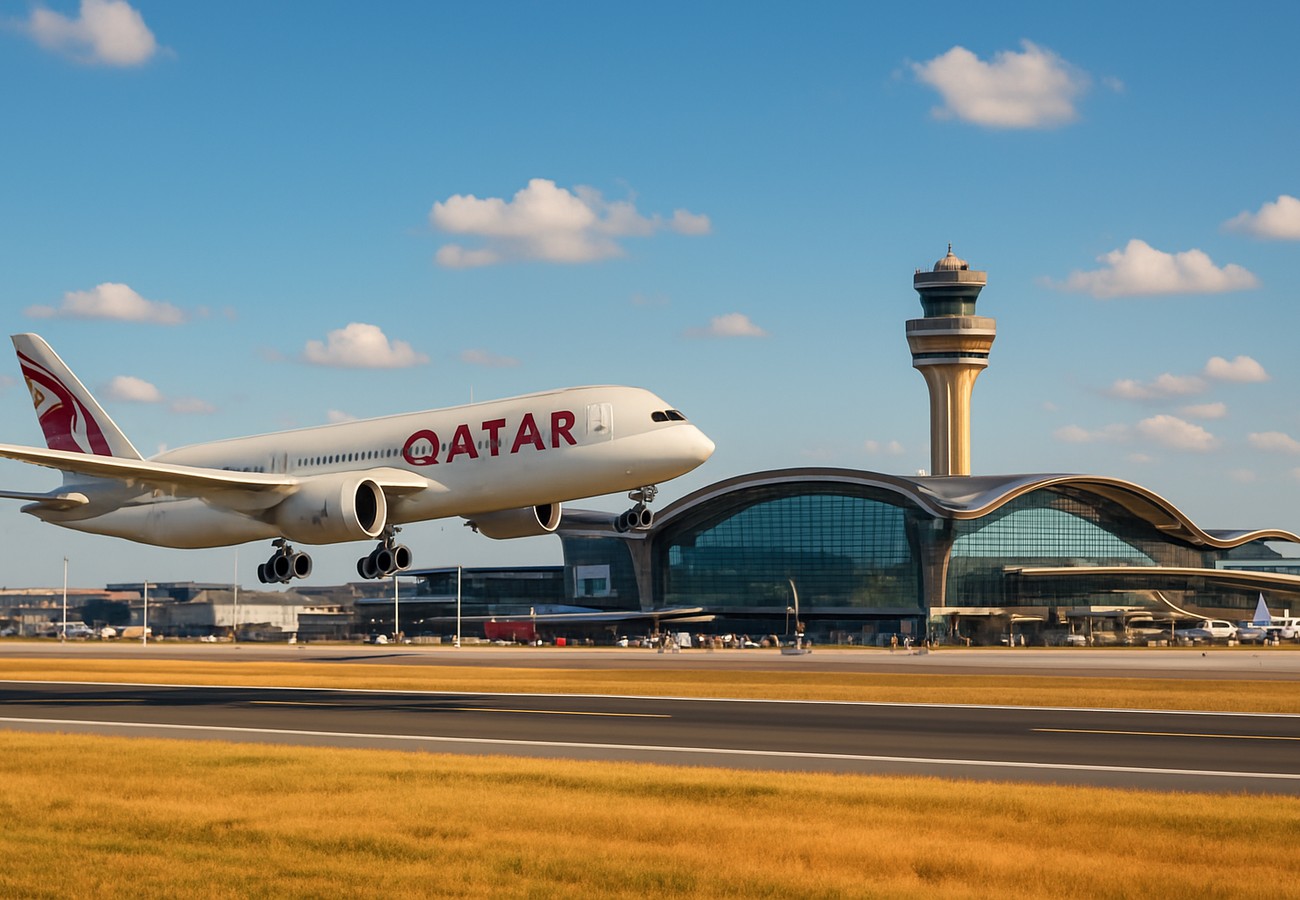
Image generated by AI
Qatar Airspace Reopens Now: Germany, US, UK, India and Six More Nations Restore Global Flight Routes via Doha as Hamad Airport Revival Accelerates 2026 Travel Recovery
Quick Summary
- Qatar's Civil Aviation Authority has formally authorised the phased reopening of its airspace for foreign airlines.
- Hamad International Airport handled over 45 million passengers in 2023, making it one of the world's most critical transit hubs.
- Nations including Germany, US, UK, Spain, Saudi Arabia, UAE, and India are the primary immediate beneficiaries of restored Doha connectivity.
- The move directly supports ICAO projections that global passenger traffic will surpass pre-pandemic levels by 2025.
DOHA, Qatar — Qatar's Civil Aviation Authority has issued a formal aviation notice authorising the phased reopening of Qatari airspace to foreign airlines, marking a decisive turning point in global aviation recovery. The decision restores Hamad International Airport's critical role as a primary east-west transit hub, reconnecting high-demand intercontinental routes between Europe, North America, and Asia that had been significantly disrupted. The move follows a comprehensive safety and operational assessment conducted with national authorities in line with International Civil Aviation Organization (ICAO) standards.
Why Qatar's Airspace Reopening Is a Global Aviation Milestone
Hamad International Airport is not just a regional facility — it is a load-bearing pillar of global aviation architecture. In 2023, the airport processed over 45 million passengers, positioning it among the world's elite transit hubs. By reopening this critical node, the Qatar Civil Aviation Authority has instantly restored efficient east-west flight corridors that had forced airlines into costly, time-consuming rerouting.
The practical gains are significant:
- Reduced flight times on Asia-Europe and Asia-Americas routes.
- Lower fuel consumption per flight as routes shorten.
- Improved cargo throughput between Asia and Europe, particularly for high-value and time-sensitive goods.
- Greater airline scheduling flexibility across Gulf carriers and international partners.
Country-by-Country Impact: Who Benefits and How
Germany: Frankfurt and Munich Regain Optimal Asian Routing
Germany's export-driven economy is directly plugged into air freight networks. According to Destatis (Germany's Federal Statistical Office), German airports handle over 4.7 million tonnes of air freight annually. The restored Doha transit link reactivates optimal routing from Frankfurt and Munich to Asia and the Middle East, cutting unnecessary detours that added both time and cost. Lufthansa and partner airlines benefit from improved network synchronisation, while German leisure and business travellers regain seamless long-haul access.
United States: Long-Haul Efficiency and 66 Million Visitor Demand
The US Department of Transportation identifies international aviation as a core economic driver. With over 66 million international visitors recorded in 2023 (National Travel and Tourism Office), demand for efficient global routing is immense. Doha's reopening reduces congestion on alternative long-haul corridors and directly improves travel times for both US-outbound passengers and inbound international visitors. Pharmaceutical and electronics cargo flows — typically time-critical — also benefit from restored Doha transit capacity.
United Kingdom: Heathrow Strengthens Its Intercontinental Network
According to the UK Civil Aviation Authority, UK airports processed over 272 million passengers in 2023. Heathrow's intercontinental capability becomes measurably more resilient with Doha operational again, reducing dependence on longer alternative routings to Asia-Pacific. Business travellers benefit from reliable schedules; leisure travellers gain access to more competitive fares. The UK's position as a leading global aviation hub is meaningfully reinforced.
Spain: 85 Million Tourists and Growing Gulf Demand
Spain's Ministry of Industry and Tourism confirmed the country welcomed over 85 million international tourists in 2023, placing it among the world's top travel destinations. Qatar's reopening restores efficient routing from Madrid and Barcelona to Gulf and Asian markets. High-spending tourists from the Gulf and Asia now have smoother, faster connections into Spain — a direct stimulus for the country's tourism-driven economy.
Saudi Arabia: Vision 2030's Aviation Backbone
The Kingdom's General Authority of Civil Aviation has consistently emphasised the importance of integrated regional airspace management. Saudi Arabia's Vision 2030 targets 100 million tourists annually by 2030 — an ambition that relies on frictionless regional connectivity. Qatar's reopening reduces congestion on Gulf routes and supports religious and leisure travel flows. Airlines operating in Saudi airspace gain route efficiency through reduced rerouting across the Gulf corridor.
UAE: Redistribution Eases Pressure on Dubai's 86 Million Passengers
Dubai International Airport handled over 86 million passengers in 2023 — among the highest volumes of any single airport globally. With Doha re-entering the equation as an active transit hub, regional traffic distributes more evenly. This directly eases operational strain on UAE infrastructure, gives airlines greater flexibility in scheduling and route planning, and opens more routing options for the millions of travellers transiting the Gulf annually.
India: 376 Million Domestic Passengers and a Gulf Transit Lifeline
India's Ministry of Civil Aviation reported that Indian airports processed over 376 million passengers in 2023–24. A substantial share of Indian international travel — particularly to Europe and North America — relies on Gulf hubs like Doha as vital transit points. Qatar's reopening shortens connection times and restores reliable routing for millions of Indian expatriate workers in the Gulf, as well as the country's rapidly growing leisure and business travel segments.
What This Means for Travelers Right Now
The restoration of Doha as an active transit hub has immediate, tangible implications for passengers:
- Shorter journey times on routes previously forced to detour around disrupted Gulf airspace.
- More competitive fares as airlines restore direct capacity via the Doha hub rather than operating costlier alternative routings.
- Improved baggage and connection reliability as flight schedules normalise around restored networks.
- Greater choice of carriers and connections for Asia-Europe and Asia-Americas itineraries.
For travelers planning long-haul trips — particularly between Europe and Asia, or the US and the Indian subcontinent — monitoring Qatar Airways and partner airline schedules in the coming weeks is advisable as restored capacity comes online.
The Bigger Picture: ICAO's 2025 Recovery Projection
The International Civil Aviation Organization has projected that global passenger traffic will exceed pre-pandemic levels by 2025. Qatar's airspace reopening is a direct structural contributor to that trajectory. By restoring cargo logistics efficiency, improving passenger flows, and reducing airline operating costs, the Doha hub revival injects meaningful momentum into global aviation recovery — not just for Qatar, but for the interconnected network of nations and carriers that depend on it.
Conclusion
Qatar's airspace reopening is not an isolated bilateral development — it is a globally significant event that instantly recalibrates aviation connectivity for millions of passengers across seven major economies and beyond. With Hamad International Airport back at full operational capacity and the Qatar Civil Aviation Authority providing formal ICAO-compliant authorisation, the east-west air bridge is restored. For travelers, airlines, and trade networks across Germany, the US, the UK, Spain, Saudi Arabia, the UAE, and India, the message is clear: Doha is open — and global aviation is the better for it.
FAQ: Qatar Airspace Reopening 2026
Q: Why did Qatar's airspace close and when did it reopen? A: Qatar's airspace faced disruption due to geopolitical tensions in the Middle East. The Qatar Civil Aviation Authority issued a formal aviation notice authorising phased reopening in April 2026, following a comprehensive safety and operational assessment.
Q: Which airlines are most affected by the Qatar airspace reopening? A: Airlines with major Asia-Europe and Asia-Americas operations benefit most, including Lufthansa (Germany), carriers operating from Heathrow (UK), and US-based international operators. Qatar Airways itself also benefits from restored airspace access for its own network.
Q: How many passengers does Hamad International Airport handle? A: Hamad International Airport handled over 45 million passengers in 2023, making it one of the world's busiest and most strategically important transit hubs.
Q: How does Qatar's airspace reopening affect flight prices? A: As airlines restore more direct routings via Doha rather than costly alternatives, fares on affected long-haul corridors — particularly Asia-Europe routes — are expected to become more competitive over the coming weeks.
Q: What is ICAO's projection for global air travel recovery? A: The International Civil Aviation Organization projects that global passenger traffic will exceed pre-pandemic levels by 2025. Qatar's airspace reopening directly supports this recovery trajectory by restoring a key east-west transit node.
Disclaimer
This article is for informational and educational purposes only. It does not constitute legal, financial, or professional advice. While we strive to provide accurate and up-to-date information, travel policies, regulations, and conditions change rapidly. Always verify information with official sources before making travel decisions. Nomad Lawyer makes no representations about the accuracy, reliability, completeness, or suitability of the information provided. Readers should consult qualified professionals for advice specific to their circumstances. The views expressed in this article are those of the author and do not necessarily reflect the views of Nomad Lawyer.
Raushan Kumar
Founder & Lead Developer
Full-stack developer with 11+ years of experience and a passionate traveller. Raushan built Nomad Lawyer from the ground up with a vision to create the best travel and law experience on the web.
Learn more about our team →