
Airbus A380 Revival: How Global Carriers Are Competing to Define Premium Aviation in 2026
Breaking airline news and aviation industry updates for 2026.

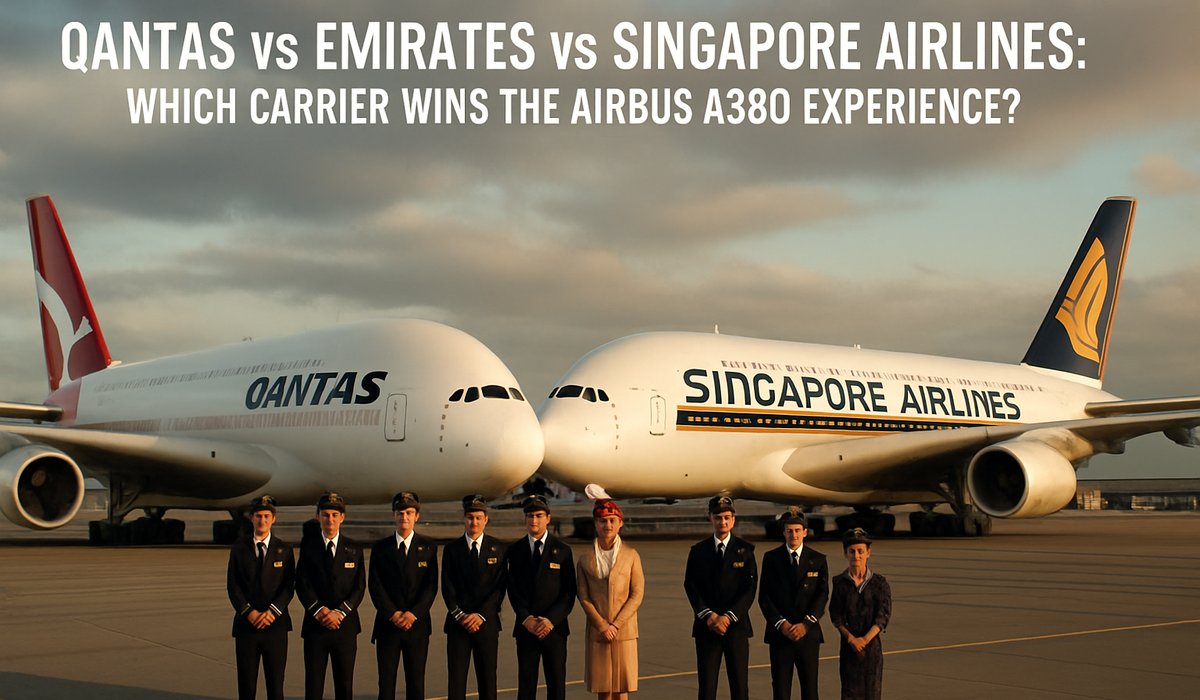
Image generated by AI
Airbus A380 Revival: How Global Carriers Are Competing to Define Premium Aviation in 2026
Qantas, Emirates, and Singapore Airlines battle for supremacy as the world's largest passenger aircraft makes an unexpected comeback
The Double-Deck Renaissance
The Airbus A380, once written off as a commercial liability destined for retirement, has engineered a dramatic turnaround in 2026, emerging as the defining platform for ultra-premium air travel. As major international carriers recommit to operating the superjumbo jet, an intensifying rivalry is taking shape around which airline can deliver the most compelling onboard experience—reshaping expectations for long-haul travel across the aviation industry.
This unexpected resurgence comes as airlines face mounting pressure to justify elevated ticket pricing in an era of rising jet fuel costs and expanded baggage charges. The A380's return signals that carriers are betting on experiential differentiation rather than cost-cutting to compete in premium segments.
Competing Visions of Luxury
Three powerhouse operators—Qantas, Emirates, and Singapore Airlines—are leading this charge, each reimagining how the aircraft's vast 555-seat capacity can be leveraged for passenger comfort rather than simple revenue maximization.
Qantas has positioned its A380 service as the pinnacle of Australian hospitality, emphasizing cabin design and personalized service delivery. The carrier views the aircraft as an opportunity to reclaim market share on ultra-competitive Asia-Pacific routes, where airlines traditionally compete fiercely on both fares and amenities.
Emirates, which has maintained the world's largest A380 fleet, continues refining its approach with first-class luxury suites and premium bars. The Dubai-based carrier sees the superjumbo as non-negotiable for its global flagship positioning, particularly on Middle Eastern hubs where passenger volumes justify the aircraft's operating economics.
Singapore Airlines, meanwhile, emphasizes technological integration and seamless cabin environments across its A380 operations. The carrier's strategy focuses on modernizing the customer journey from booking through arrival, leveraging the aircraft's size for operational flexibility.
Industry-Wide Implications
The A380's comeback reflects broader shifts in the aviation industry. Despite elevated jet fuel prices and mounting airline fees across baggage, seat selection, and ancillary services, carriers recognize that premium passengers—particularly on ultra-long-haul routes—remain willing to pay for exceptional experiences. This contrasts sharply with budget-conscious economy segments, where cost remains paramount.
The competition also underscores how major carriers are differentiating themselves in an increasingly commoditized marketplace. As fuel surcharges and dynamic baggage pricing become standard, the tangible quality of the flight experience itself has become the primary battleground for premium-fare competition.
Looking Ahead
The A380 revival demonstrates that aviation's future won't be defined solely by efficiency metrics or cost reduction, but by the willingness of leading carriers to invest in passenger experience as a revenue driver. Which airline ultimately wins this high-stakes competition may determine competitive dynamics across global aviation for the next decade.
FAQ: Airbus A380 Travel & Premium Airlines
Q: Why did airlines abandon the Airbus A380, and what changed in 2026? A: The A380 faced challenges during the 2010s due to high operating costs, limited airport infrastructure, and changing airline strategies favoring smaller wide-body jets. The 2026 revival reflects renewed demand for premium experiences and improved operational efficiency among major carriers.
Q: How do baggage fees and ancillary charges affect A380 ticket pricing? A: While jet fuel prices and airline fees add to overall travel costs, premium A380 fares remain competitive for luxury-seeking passengers who value the enhanced onboard experience over cost savings.
Q: Which airline offers the best A380 experience in 2026? A: Qantas, Emirates, and Singapore Airlines each excel in different areas—Qantas emphasizes service quality, Emirates offers luxury amenities, and Singapore Airlines prioritizes technology integration.
Q: Are A380 tickets more expensive than other long-haul flights? A: Premium A380 cabins command higher fares, but economy sections remain competitively priced, allowing airlines to diversify revenue across passenger segments.
Q: Will other airlines resume A380 operations? A: Industry interest appears limited to the three major operators, as most carriers continue favoring smaller, more flexible aircraft for route networks and fuel efficiency considerations.
Related Travel Guides
External Resources
Disclaimer
This article is for informational and educational purposes only. It does not constitute legal, financial, or professional advice. While we strive to provide accurate and up-to-date information, travel policies, regulations, and conditions change rapidly. Always verify information with official sources before making travel decisions. Nomad Lawyer makes no representations about the accuracy, reliability, completeness, or suitability of the information provided. Readers should consult qualified professionals for advice specific to their circumstances. The views expressed in this article are those of the author and do not necessarily reflect the views of Nomad Lawyer.
Kunal K Choudhary
Co-Founder & Contributor
A passionate traveller and tech enthusiast. Kunal contributes to the vision and growth of Nomad Lawyer, bringing fresh perspectives and driving the community forward.
Learn more about our team →