
Qantas Project Sunrise A350-1000ULR Rolls Out With Engines: Sydney-London Nonstop Flights by Late 2026
Qantas A350-1000ULR (MSN 707) completes engine installation at Toulouse. Project Sunrise nonstop flights Sydney-London, Sydney-New York launching late 2026.

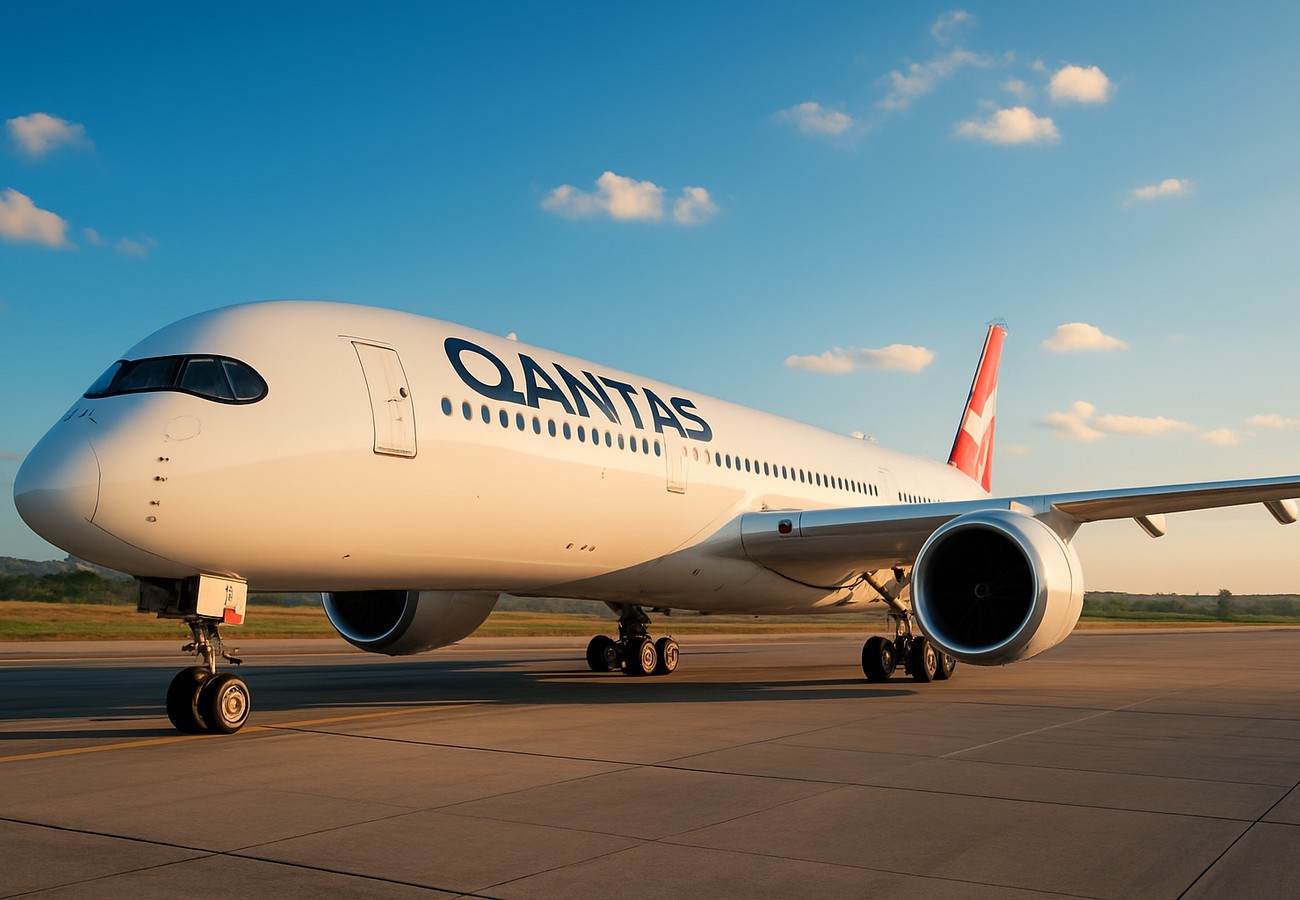
Image generated by AI
Qantas Achieves Major Milestone as First Project Sunrise Aircraft Nears Completion
Qantas Airways has reached a critical juncture in its ambitious Project Sunrise initiative, with the airline's first Airbus A350-1000ULR now fully equipped with engines at Toulouse-Blagnac Airport in France. The aircraft, registered under test designation F-WZNK and carrying serial number MSN 707, represents a transformative leap toward establishing the world's longest commercial nonstop flights connecting Australia with Europe and North America.
This development marks nearly a decade of strategic planning since Qantas first unveiled Project Sunrise in 2017. With delivery anticipated by late 2026, the airline is positioned to revolutionize ultra-long-range aviation and redefine global connectivity for premium travelers.
The Engineering Marvel: Building the World's Most Capable Jet
The journey to this milestone began with the fuselage assembly of MSN 707 in November 2025. The aircraft has now progressed to a critical testing phase at the Airbus facility in Toulouse, where powerful Rolls-Royce Trent XWB-97 engines have been installed—marking one of the final stages before flight trials commence.
Aircraft Specifications and Performance Capabilities
The A350-1000ULR configuration delivers exceptional range and fuel efficiency through advanced engine technology. Key specifications include:
- Length: 242 feet (73.7 meters)
- Wingspan: 212 feet
- Cruising Speed: Mach 0.85 (approximately 652 miles or 1,049 kilometers per hour)
- Estimated Flight Times:
- Sydney to New York JFK: Approximately 22 hours
- Sydney to London Heathrow: 20-22 hours
These routes will establish the longest scheduled flight operations in global civil aviation history, eliminating the need for intermediate stopovers that currently plague long-haul travel from Australia.
From Vision to Reality: Project Sunrise's Evolution
When Qantas Airways introduced Project Sunrise in 2017, industry skepticism was widespread regarding the commercial viability of such extreme distances. However, through rigorous testing, research partnerships, and technological advancement, the concept has evolved into operational reality.
The airline formally committed to the program by placing orders for up to twelve A350-1000ULR aircraft in 2022, ensuring access to the most advanced aviation technology available. This strategic investment addresses a fundamental challenge for Australian aviation: geographic isolation has historically limited direct international connectivity.
Transforming Global Connectivity
Project Sunrise flights will eliminate layovers on routes such as Sydney–New York, which currently require transit through Auckland Airport in New Zealand. This innovation promises:
- Direct hemisphere-spanning access
- Significantly reduced total travel time
- Enhanced passenger convenience and reduced fatigue
- Strengthened bilateral connectivity between Australia, the United Kingdom, and the United States
- Stimulated inbound tourism to Australia
Aviation analysts predict that these nonstop connections will reshape competitive dynamics across the Asia-Pacific, European, and North American regions, particularly for premium passenger segments seeking convenience and elevated service standards.
Cabin Design: Prioritizing Passenger Wellbeing on Ultra-Long Flights
While performance metrics are impressive, Qantas has equally prioritized onboard comfort and passenger wellness—critical considerations for flights exceeding 20 hours.
Seating Configuration and Capacity
The A350-1000ULR will accommodate 238 seats across four distinct classes:
- First Class: 6 seats
- Business Class: 52 seats
- Premium Economy: 40 seats
- Economy: 140 seats
Over 40 percent of available seating is allocated to premium classes, emphasizing spaciousness and exclusivity over maximum capacity.
Innovative Wellness Features
Collaborations with Caon Design, celebrity chef Neil Perry, and the University of Sydney's Charles Perkins Centre have created a cabin concept specifically designed for passenger wellbeing during ultra-long flights. Notable features include:
Dedicated Wellbeing Zone: A specially designed space where travelers can stretch, hydrate, and perform light movements to counteract the physiological effects of extended sitting periods.
Advanced Lighting Technology: The aircraft integrates twelve different lighting scenes—including Sunrise, Sunset, and Awake modes—to simulate natural circadian progressions and ease adaptation to destination time zones.
Connectivity and Entertainment: Continuous WiFi and Bluetooth connectivity allow seamless synchronization between personal devices and the advanced seatback entertainment system, enhancing passenger engagement throughout the flight.
Expanding the Fleet: A Comprehensive Modernization Strategy
Project Sunrise represents only one component of Qantas Airways' broader fleet modernization initiative. The airline's comprehensive expansion strategy includes:
Ultra-Long-Range Operations
Beyond the twelve A350-1000ULR aircraft dedicated to Project Sunrise, Qantas has ordered 24 additional A350-1000 aircraft, providing operational flexibility for expanded ultra-long-range services.
Regional and Short-to-Medium Haul Expansion
The introduction of the Airbus A321XLR has reshaped Qantas' regional strategy. With four aircraft already operational and forty-four more on order, the A321XLR enables cost-effective operations on thinner regional and international routes across Australia and Asia. The aircraft will commence international service between Brisbane and Manila, Philippines later in 2026, symbolizing the airline's expanding regional footprint in Southeast Asia.
Integrated Fleet Composition
Qantas' existing fleet includes:
- Airbus A330-200 and A330-300 aircraft
- Airbus A380-800 superjumbos
- Boeing 737-800 narrowbody jets
- Boeing 787-9 Dreamliners
This integrated network is designed to meet diverse passenger needs—from domestic shuttle operations to intercontinental luxury travel.
Strategic Impact on Global Aviation and Tourism
The implications of Project Sunrise extend far beyond Qantas' operational capabilities. Industry analysts predict significant reshaping of long-haul travel patterns across competing carriers in the Asia-Pacific, European, and North American regions.
Business and Economic Benefits
Direct flights from Australia to central Europe and the eastern United States could:
- Capture premium passenger segments seeking convenience and high service standards
- Strengthen business travel connectivity between Australia, the United Kingdom, and the United States
- Enhance trade relations and bilateral economic cooperation
- Stimulate inbound tourism to Australia by reducing journey fatigue and total travel time
What This Means for Travelers
Project Sunrise represents a paradigm shift in long-haul travel from Australia. Passengers can expect:
- Elimination of stopovers on routes to London and New York, reducing total journey time by 6-8 hours compared to current routing
- Enhanced comfort through dedicated wellness zones and advanced cabin technology specifically designed for ultra-long flights
- Premium service standards with over 40 percent of seating allocated to premium classes
- Improved connectivity to major global business and cultural hubs without intermediate stops
- Reduced jet lag through advanced lighting technology that supports natural circadian rhythms
For business travelers, the time savings and reduced fatigue could significantly impact productivity and quality of life. For leisure travelers, direct access to London and New York opens new possibilities for extended international experiences without the exhaustion of multiple connections.
The Final Approach: Aviation History in the Making
As ground testing proceeds at the Airbus facility in Toulouse, Qantas Airways anticipates delivery of its first A350-1000ULR by year-end 2026—marking the culmination of nearly a decade of innovation and strategic planning. The delivery of MSN 707 will inaugurate a new era in commercial flight performance and passenger comfort.
Once fully operational, Project Sunrise aircraft will establish unprecedented nonstop connections between Sydney Kingsford Smith Airport and two of the world's most influential city centers: London Heathrow and New York JFK. With comprehensive attention to passenger wellbeing, cutting-edge technology, and environmental efficiency, Qantas is positioned to transform perceptions of what long-haul travel can achieve for both passengers and the aviation industry.
As additional A350-1000ULR jets roll out in the coming years, industry expectations point toward route expansion into other key European and North American destinations. The journey from Australia to the world will soon be faster, more comfortable, and undeniably historic—an evolution driven by ingenuity, persistence, and the enduring ambition of one of the world's most recognized airlines.
For the latest information on Project Sunrise developments and Qantas fleet updates, visit the official Qantas website or consult IATA's aviation industry resources for comprehensive air transport data.
Related Travel Guides
Disclaimer
This article is for informational and educational purposes only. It does not constitute legal, financial, or professional advice. While we strive to provide accurate and up-to-date information, travel policies, regulations, and conditions change rapidly. Always verify information with official sources before making travel decisions. Nomad Lawyer makes no representations about the accuracy, reliability, completeness, or suitability of the information provided. Readers should consult qualified professionals for advice specific to their circumstances. The views expressed in this article are those of the author and do not necessarily reflect the views of Nomad Lawyer.
Kunal K Choudhary
Co-Founder & Contributor
A passionate traveller and tech enthusiast. Kunal contributes to the vision and growth of Nomad Lawyer, bringing fresh perspectives and driving the community forward.
Learn more about our team →