
How Qantas Conquered Wellington's Impossible Runway With the Boeing 747SP in 1982
Discover how Qantas used Boeing's radical 747SP variant to break through Wellington Airport's notorious 6,000-foot runway limitation and pioneer ultra-long-range widebody service.

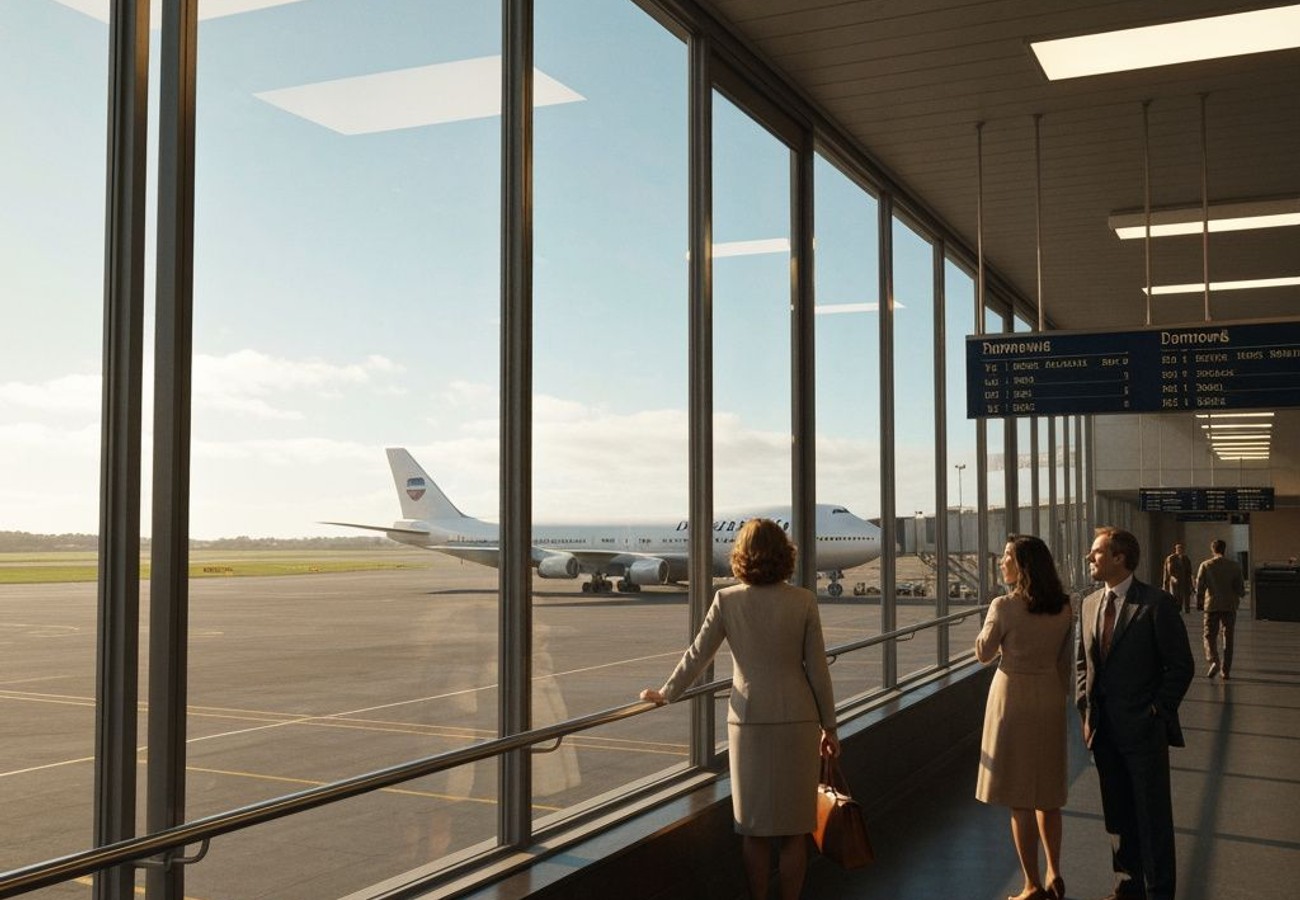
Image generated by AI
The Tasman Problem Nobody Could Solve
Wellington Airport in New Zealand presented one of aviation's most frustrating paradoxes for international carriers: a capital city capital utterly isolated by physics. The runway stretched less than 6,000 feet (1,829 meters)—hemmed in by water on both ends and surrounded by unforgiving terrain. For Qantas, Australia's flag carrier, this created a transportation nightmare.
By the late 1970s, demand for business and political travel between Sydney and Wellington was exploding. Yet Qantas remained locked out of the market with traditional widebody aircraft. A standard Boeing 747-200B attempting departure with a full passenger load and trans-Tasman fuel reserves would violate critical safety margins under engine-out scenarios. The airline faced an impossible choice: sacrifice capacity with smaller narrowbody aircraft or accept the commercial suicide of refusing to serve New Zealand's capital.
Then Boeing offered a radical answer: the 747SP—a jumbo stripped down, engineered up, and weaponized for exactly this kind of operational nightmare.
When "Shorter" Meant "Stronger"
The Boeing 747SP (Special Performance variant) emerged in the early 1970s as a solution to a different problem entirely. Airlines wanted to operate ultra-long-range routes with thinner passenger loads—think Pan Am flying New York to Tokyo nonstop. Rather than design an entirely new aircraft, Boeing's engineers chose aggressive structural subtraction.
They removed approximately 47 feet (14.3 meters) of fuselage, eliminating entire sections forward and aft of the wing. This surgical deletion achieved a staggering weight reduction: 45,000 to 50,000 pounds (20,411 to 22,679 kg) lighter than the standard 747-200B.
Here's the engineering coup: Boeing maintained the full classic wingspan of 195 feet 8 inches (59.64 meters) while shrinking the fuselage to just 184 feet 9 inches (56.31 meters). The result was an aircraft with a radically improved power-to-weight ratio—exactly what Wellington's short runway demanded.
| Specification | 747-200B | 747SP | Difference |
|---|---|---|---|
| Fuselage Length | 231 ft 10 in (70.66 m) | 184 ft 9 in (56.31 m) | -47 feet |
| Wingspan | 195 ft 8 in (59.64 m) | 195 ft 8 in (59.64 m) | Identical |
| Empty Weight | Baseline | Reduced 45,000-50,000 lb | -22,679 kg savings |
The Aerodynamic Gamble That Worked
Cutting 47 feet of fuselage created a serious problem: the tail lost directional authority. A shorter fuselage meant less aerodynamic leverage, threatening stability during low-speed flight and critical landing phases. Boeing's solution was counterintuitive and dramatic.
They installed a 65-foot-10-inch (20.06-meter) vertical stabilizer—a towering tail fin visibly larger than standard 747s. They also replaced the complex triple-slotted trailing-edge flaps with highly efficient single-slotted flaps, eliminating heavy underwing fairings and further reducing drag.
These modifications delivered unexpected performance bonuses. The 747SP achieved a record service ceiling of 45,100 feet (13,746 meters)—the highest of any subsonic commercial airliner of its era. More critically for regional operations, the streamlined flap design and enlarged tail surfaces gave pilots exceptional low-speed handling and superior braking performance. For short-field operations at Wellington, this meant pilots could execute steep approaches and rapid decelerations with confidence.
Reddit: "The 747SP looks like someone shrunk a 747 with a water gun. But that stubby fuselage and tall tail were pure genius for hot-and-high runways." — r/aviation
Qantas Deploys the Secret Weapon (1982)
In the early 1980s, Qantas took delivery of two Boeing 747SP aircraft: VH-EAA and VH-EAB. These weren't incremental improvements—they were revolutionary. The airline immediately deployed them onto the Sydney-Wellington corridor, shattering the capacity ceiling that had constrained the route for years.
But operating a heavy jet from a sub-6,000-foot runway meant unforgiving constraints. Flight dispatchers became engineers themselves, balancing every passenger against fuel load requirements. The 747SP typically flew the Tasman in a premium-heavy configuration carrying between 276 and 331 passengers—substantially fewer than the 400-plus passengers on standard jumbos, but catastrophically more than the narrow-body alternatives that previously dominated the route.
The aircraft's exceptional thrust-to-weight ratio allowed high-power short-field departures that conventional jumbos couldn't attempt. VH-EAA and VH-EAB could accelerate rapidly, lift off before reaching the tarmac limits, and climb steeply away from Wellington's surrounding terrain. The 747SP didn't just meet the runway constraint—it conquered it.
The Operational Legacy Nobody Remembers
What made this operational arrangement truly significant was what it enabled beyond Wellington itself. Once Qantas proved the 747SP could handle the most restrictive runway in its trans-Tasman network, the aircraft opened possibilities across the Pacific. The ultra-long-range capability combined with enhanced short-field performance created a flexibility that traditional widebody aircraft simply couldn't match.
The 747SP demonstrated a principle that would influence aircraft design for decades: sometimes the path to performance improvement runs backward through engineering constraints, not forward into raw size. Modern ultra-long-range twins like the Airbus A321XLR operate on the same philosophy—optimized economics through weight discipline rather than structural expansion.
Yet the 747SP remains largely forgotten in contemporary aviation discourse. Airlines abandoned the type in the 2000s as fuel prices climbed and twin-engine reliability improved. The aircraft that pioneered impossible routes and proved that radical redesign could solve unsolvable problems quietly exited the commercial fleet.
Qantas eventually retired VH-EAA and VH-EAB, replacing them with more conventional aircraft once Wellington's runway underwent expansion. But for a critical decade, those two shortened jumbos represented something aviation rarely achieves: a perfect engineering solution to an impossible operational problem.
The best aircraft innovations often look strange because they're solving problems nobody else dared attempt.
Related Travel Guides
Disclaimer
This article is for informational and educational purposes only. It does not constitute legal, financial, or professional advice. While we strive to provide accurate and up-to-date information, travel policies, regulations, and conditions change rapidly. Always verify information with official sources before making travel decisions. Nomad Lawyer makes no representations about the accuracy, reliability, completeness, or suitability of the information provided. Readers should consult qualified professionals for advice specific to their circumstances. The views expressed in this article are those of the author and do not necessarily reflect the views of Nomad Lawyer.
Raushan Kumar
Founder & Lead Developer
Full-stack developer with 11+ years of experience and a passionate traveller. Raushan built Nomad Lawyer from the ground up with a vision to create the best travel and law experience on the web.
Learn more about our team →