
Pokhara Rebounds as Clear Skies Reveal the Annapurnas: Autumn Himalayan Travel Guide
Following four days of monsoon rain, crisp autumn skies over Pokhara reveal unobstructed views of Machhapuchhre, Annapurna, and Dhaulagiri, signaling peak trekking season.

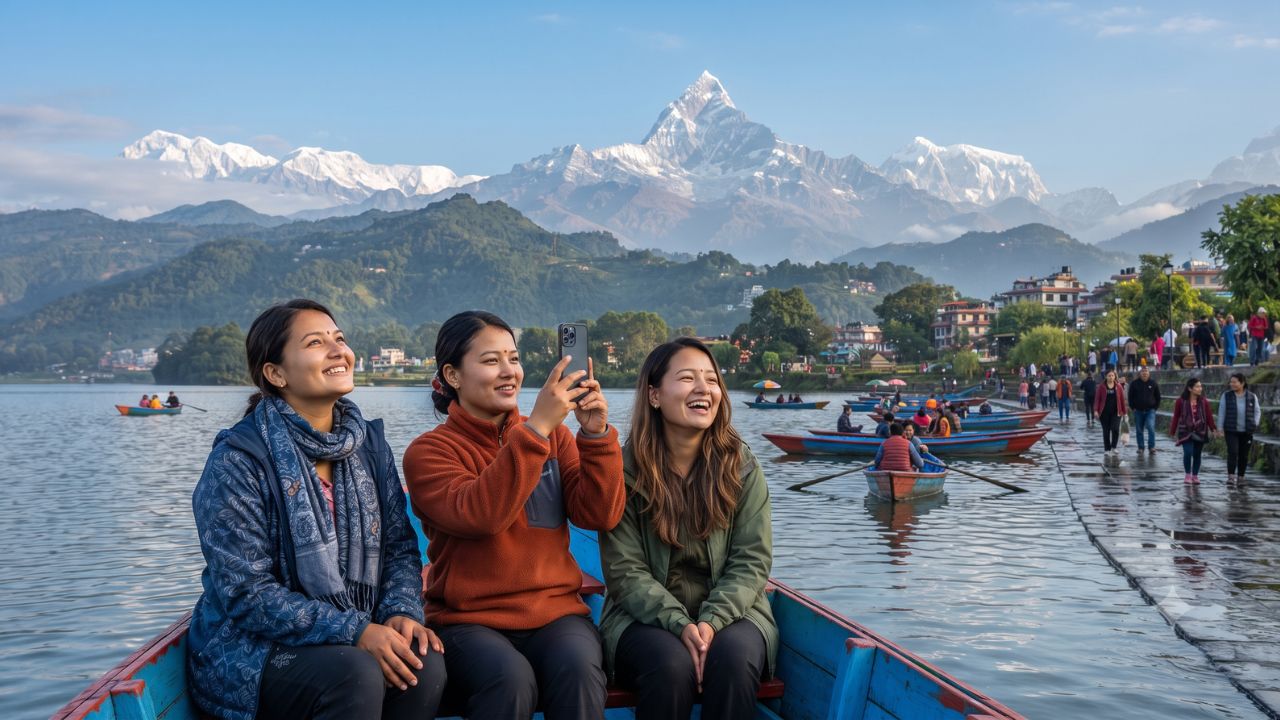
Image generated by AI
Few places on earth offer a sheerer vertical rise than Pokhara, where subtropical banana groves at 820 meters elevation give way to 8,000-meter snow-capped massifs just thirty kilometers to the north. After four consecutive days of relentless monsoon rain clouds, crystal-clear post-monsoon skies have returned across Gandaki Province, reopening unobstructed panoramas of Machhapuchhre (Fishtail Peak), the Annapurna range, and Dhaulagiri to launch the peak autumn 2026 travel season.
Post-Monsoon Revival: Clear Skies Reveal Machhapuchhre and the Annapurnas
The transition into late September marks the start of Nepal's premier trekking and sightseeing window. The atmospheric clearing washed away haze, delivering sharp mountain visibility that has reinvigorated outdoor activities across the lakeside valley.
Outdoor pursuits and regional excursions have resumed full operations:
- Phewa Lake Waterways: Traditional wooden rowboats (doongas) once again cross glassy waters, reflecting the snowy pyramid of Machhapuchhre (6,993 meters) and ferrying visitors to the island shrine of Tal Barahi.
- Ridge Viewpoints: Morning observation decks at Sarangkot, the World Peace Pagoda (Shanti Stupa), and the newly constructed Shiva statue at Pumdikot draw dawn photographers for golden sunrise alpenglow across Annapurna I (8,091 meters) and Dhaulagiri (8,167 meters).
- Adventure Aviation: Thermal paragliding tandems and ultralight flights taking off from Sarangkot ridge have resumed flights over the Seti River gorge.
Verified route safety alerts and cultural event schedules are published directly by the Nepal Tourism Board.
What Makes Pokhara's Himalayan Setting Unique
Unlike high-altitude mountain towns that require rigorous acclimatization, Pokhara allows travelers to experience Himalayan vistas from warm, temperate lakeside cafes:
- Abrupt Elevation Contrast: The valley floor sits at a comfortable 820 meters, allowing lush subtropical forests, orange orchards, and terraced rice paddies to flourish beneath glaciated Himalayan walls.
- Gateway to the Annapurna Sanctuary: The town serves as the primary staging depot for world-class trekking routes coordinated through the Department of National Parks and Wildlife Conservation, including the Annapurna Base Camp, Poon Hill, and Mardi Himal circuits.
- Calm Secondary Lakes: Beyond central Phewa Lake, eastern waters like Begnas Lake and Rupa Lake provide tranquil, unmotorized sanctuaries surrounded by traditional Gurung farming communities.
Visitor Insider Tips
- Catching Sunrise Alpenglow: Arrive at the Sarangkot observation ridge by 05:15 AM. Mountain peaks capture the first orange sunlight twenty minutes before the valley floor experiences dawn. Hire a local taxi from the Baidam lakeside strip for around 1,500 to 2,000 NPR return.
- Authentic Thakali Dining: For dinner, skip western pizza cafes and head to traditional eateries along Pokhara's Old Town or northern lakeside to order an authentic Thakali Thali. This traditional set meal includes slow-cooked mountain mutton, buckwheat flatbreads, aromatic jimbu herb lentils, and spicy pickled radish.
- Transit Strategy Between Kathmandu and Pokhara: The 200-kilometer overland journey along the Prithvi Highway frequently experiences construction slowdowns. Opt instead for a 25-minute domestic flight connecting Tribhuvan International Airport with Pokhara International Airport, monitored under the Civil Aviation Authority of Nepal.
- Escape to Begnas Lake: If central Baidam feels too commercial, book a boutique lodge on the wooded ridges overlooking Begnas Lake, located 15 kilometers east of central Pokhara, for quiet nature walks and organic coffee tasting.
Cultural and Environmental Context
The lakeside environment of Pokhara relies on delicate aquatic ecosystems that face ongoing pressures from urban runoff and water hyacinth weed growth. Municipal authorities and local boatman cooperatives carry out regular lakebed restoration and wetland conservation along Phewa's western shores.
In addition, sustainable tourism across the Annapurna Conservation Area Project (ACAP) mandates that lodge operations in nearby villages like Ghandruk, Dhampus, and Landruk use solar water heaters and ban single-use plastic bottles. Travelers help safeguard this delicate mountain habitat by purchasing boiled filtered water from designated community stations and supporting local Gurung and Magar village homestays.
FAQ: Visiting Pokhara in Autumn 2026
Why is autumn the best time of year to visit Pokhara?
Autumn from late September to November delivers dry, cloudless skies, comfortable daytime temperatures (22°C to 26°C), and exceptional mountain visibility.
Which mountain peaks are visible from Pokhara?
Viewpoints across Pokhara offer clear vistas of Machhapuchhre (6,993m), Annapurna I (8,091m), Annapurna South, Annapurna II, and Dhaulagiri (8,167m).
How long does it take to travel from Kathmandu to Pokhara?
A domestic flight takes approximately 25 minutes, while overland tourist buses take 7 to 9 hours depending on Prithvi Highway road conditions.
Do I need a trekking permit to stay in Pokhara?
No permits are needed to stay in Pokhara city or explore Phewa Lake, though an ACAP permit and TIMS card are mandatory if venturing onto mountain trekking trails.
Watching morning sunlight turn the snows of Machhapuchhre into gold over Phewa Lake reminds travelers why Pokhara remains the jewel of the Himalayas.
Disclaimer
This article is for informational and educational purposes only. It does not constitute legal, financial, or professional advice. While we strive to provide accurate and up-to-date information, travel policies, regulations, and conditions change rapidly. Always verify information with official sources before making travel decisions. Nomad Lawyer makes no representations about the accuracy, reliability, completeness, or suitability of the information provided. Readers should consult qualified professionals for advice specific to their circumstances. The views expressed in this article are those of the author and do not necessarily reflect the views of Nomad Lawyer.
Raushan Kumar
Founder & Lead Developer
Full-stack developer with 11+ years of experience and a passionate traveller. Raushan built Nomad Lawyer from the ground up with a vision to create the best travel and law experience on the web.
Learn more about our team →