
Town Feels Like 1990s Italy: Piran's Hidden Adriatic Secret Discovered
Piran, Slovenia feels like Italy decades ago—authentic Adriatic charm hardly anyone knows about in 2026. This medieval peninsula offers Venetian architecture, Italian bilingualism, and zero tourist crowds.

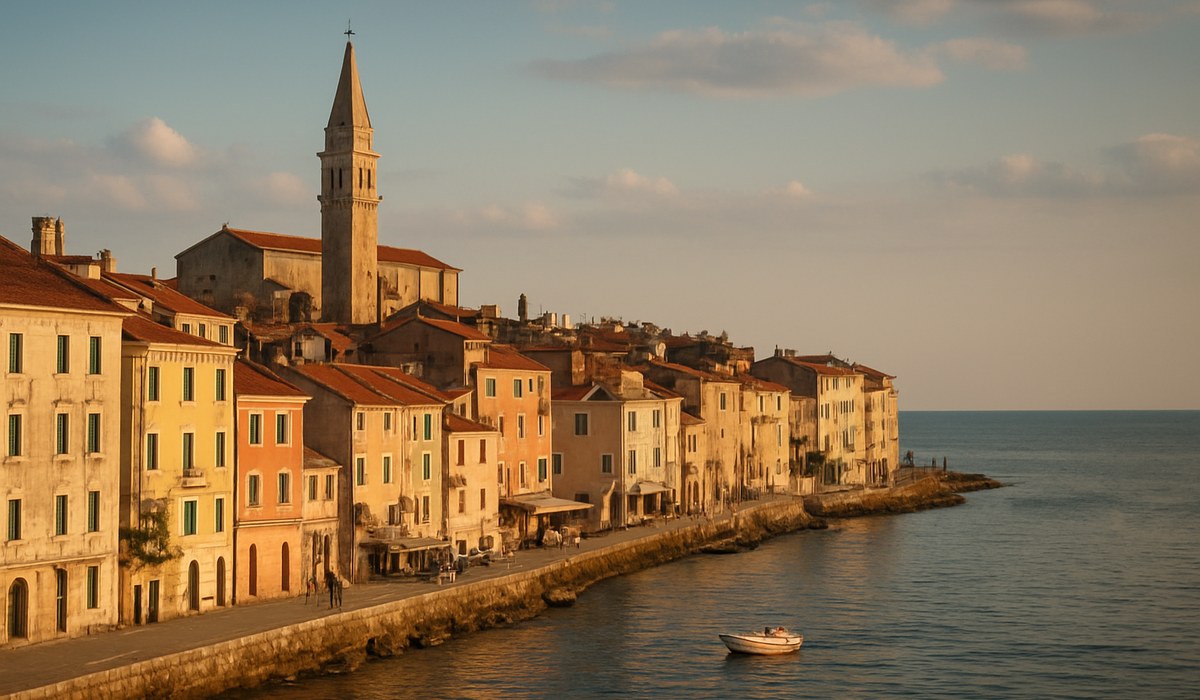
Image generated by AI
Piran Emerges as Europe's Best-Kept Adriatic Destination
Piran, Slovenia has quietly become the Adriatic's most authentic medieval gem, where this town feels like Italy frozen in time two decades ago. The compact peninsula, located 90 minutes by bus from Ljubljana and 45 minutes from Trieste, Italy, remains largely undiscovered by mass tourism in 2026. Visitors report wandering empty Venetian Gothic alleys, sampling fresh sardines at working harbors, and hearing Italian spoken naturally on street corners—a cultural blend that has nearly vanished from crowded Italian coastal towns. The discovery challenges the assumption that authentic European charm requires crowds or premium prices.
Venetian Architecture Speaks Louder Than Tourist Guides
This town feels like stepping directly into medieval Venice, minus the canal-based infrastructure and overwhelming visitor numbers. Piran's old town crowns a small peninsula with terracotta roofs, arched doorways, and the distinctive winged lion of St. Mark visible on corner facades. The town's 500-year history under Venetian rule produced architectural DNA that hardly anyone outside travel enthusiast circles discusses anymore. Tartini Square anchors the medieval core, framed by 19th-century townhouses and the red-stoned Venetian House with its signature Gothic windows. St. George's Church campanile rises from the hillside, visible across the Adriatic from the Italian coast. Unlike Cinque Terre or Venice proper—both transformed into Instagram destination hotspots—Piran's streets remain functional living spaces where locals still hang laundry between balconies and elderly residents chat in Venetian dialect. The medieval town walls still encircle the peninsula, offering panoramic views across to Trieste for just a few euros entry.
Bilingual Culture Anchors Piran's Italian Identity
The streets themselves broadcast Piran's unusual cultural position through dual-language signage and seamless code-switching between Slovene and Italian. Elderly men transition mid-conversation from one language to another with the ease of locals who've lived this reality for decades. This linguistic duality, common across Italian coastal towns during the mid-20th century, has nearly vanished—except here. Bakeries, fish markets, and harbor-side trattorias operate in this comfortable bilingualism, making Piran feel authentically European rather than artificially curated for tourism. The town's restaurant menus list both Slovenian gnocchi and fuži pasta alongside jota, the traditional bean-and-sauerkraut stew unique to the region. This culinary blend reflects centuries of shared cultural heritage that hardly anyone in mainstream travel media talks about, despite its significance for understanding authentic Mediterranean life. The Italian language heard daily in Piran represents a living connection to pre-war Adriatic communities, making it a linguistic time capsule that serious travelers increasingly seek out.
Morning Routines Untouched by Modern Tourism Pressure
Early mornings in Piran reveal a rhythm entirely absent from Europe's overtouristed destinations. Cafés open without crowds. Espresso at harbourside establishments costs less than major Italian train stations, arriving with water service and genuine greetings in Italian-accented Slovene. Locals occupy marble-paved Tartini Square reading newspapers while fishermen unload fresh sardines and scampi into plastic crates. No rolling luggage. No selfie sticks. No surge pricing. This authenticity extends through the day—a 15-minute walk covers the entire peninsula, yet visitors encounter more cats stretched in doorways than organized tour groups. Slovenia's underdeveloped coastline has historically overshadowed Piran compared to Croatian islands and Italian beaches, but this obscurity has paradoxically preserved the town's character intact. Family-run guesthouses still display hand-painted "sobe" (rooms) signs in windows rather than digital booking platforms. The local market operates seasonally, where vendors accept cash and switch languages based on customer origin, pricing produce closer to inland Slovenia than fashionable Italian riviera standards.
Medieval Walls Frame Centuries of Adriatic Living
Climbing the narrow lanes from the town center leads to surviving medieval ramparts that crown the hillside. The few-euro entrance fee, paid in cash to an unhurried caretaker, provides access to panoramic viewpoints over terracotta roof clusters piled like scales. From these vantage points, the town's authentic sounds rise unfiltered: bicycle bells, dog barks, kitchen sounds, and melodic Italian dialect echoing between balconies. This acoustic landscape mirrors the pre-digital era when European small towns weren't designed for tourism optimization. The walls themselves document Piran's strategic Venetian importance—a coastal fortress protecting salt production and maritime trade routes. Cape Madona, the peninsula's rocky terminus, hosts local fishermen during evening hours, continuing centuries-old practices largely abandoned elsewhere. The architectural vocabulary visible from the walls tells Piran's intertwined Italian and Slovenian history—facades reference 15th-century Venetian proportions while building materials reflect local Slovenian limestone traditions. Unlike the gentrified waterfront developments that have consumed authentic Mediterranean communities, Piran's harbor still functions as a genuine fishing port where daily unloading routines dominate morning schedules.
Fresh Markets and Seasonal Rhythms Persist
Piran's open-air market operates on genuine seasonal supply rather than year-round tourist expectations. Spring and early summer bring crates of sunshine-perfumed tomatoes, glossy eggplants, peaches carrying road dust, and local anchovies. Vendors switch fluidly between Slovene and Italian depending on customer origin. A paper bag of cherries costs few euros; basil bunches sell for less than bus fares. These prices reflect local economic realities rather than destination markup—a direct contrast to Italian Riviera establishments charging premium rates. The harbor's working waterfront delivers another market dimension: fresh seafood arrives daily, priced according to catch quantity rather than tourism demand. Restaurants built directly above fishing operations maintain relationships with suppliers dating back generations. This supply-chain transparency vanishes in heavily touristed towns where middle-man logistics obscure source origins and production costs. Visitors eating at Piran establishments consume fish caught by identifiable fishermen hours earlier, creating genuine connection between production and consumption—an experience that hardly anyone can access anymore in fashionable Mediterranean destinations that have industrialized their food systems.
Traveler Impact and Accessibility Data
| Metric | Piran, Slovenia | Venice, Italy | Cinque Terre, Italy |
|---|---|---|---|
| Annual visitors (2025) | ~90,000 | 2.6 million | 1.2 million |
| Average daily crowd in peak season | Under 500 | 50,000+ | 15,000+ |
| Budget hotel nightly rate | €45–65 | €120–180 | €95–150 |
| Espresso price | €1.20–1.50 | €2.50–4.00 | €2.00–3.50 |
| Walking distance across old town | 12 minutes | 45 minutes | Varies by trail |
| Tourist office multilingual staff | 3 languages | 8+ languages | 6+ languages |
| Days per year below capacity | 280+ | <60 | <100 |
What This Means for Travelers
Piran offers a rare opportunity to experience Mediterranean culture before mass tourism standardized it into theme-park iterations. Consider these concrete strategies:
-
Time your visit for shoulder seasons (May or September) when this town feels like Italy decades ago without summer crowds. April through June and September through October provide warm weather with 70–80% fewer visitors than July–August peaks.
-
Budget €50–70 daily for accommodations and meals, significantly below Italian coastal standards. A week in Piran costs comparable to three days in Venice or Cinque Terre.
-
Rent apartments in the old town rather than hotels—guesthouses listed on Airbnb and local tourism sites maintain authentic character by hosting long-term residents alongside short-term visitors.
-
Learn basic Italian phrases before arriving. While Slovene dominates official contexts, Italian fluency by locals means conversations naturally flow in Italian for tourists. This cultural integration enhances experiences dramatically compared to tourist-scripted interactions elsewhere.
-
Plan harbor meals during early morning hours (7–9 a.m.) when fishermen unload daily catch. Restaurants haven't yet pivoted to tourist service rhythms, making interactions genuinely local.
-
Skip hired guides and follow hand-drawn maps from the local tourism office. Piran's compact geography means genuine discovery happens through wandering rather than structured tours.
Frequently Asked Questions
How does this town feel like Italy compared to actual Italian coastal destinations? Piran maintains the unhurried rhythm, bilingual culture, and architectural authenticity that Italian seaside towns possessed before 1990s tourism infrastructure development. Street-level interactions happen in Italian dialect. Menus feature regional pasta styles. Fishermen still work harbors daily. These daily-life elements have disappeared from Venice, Cinque Terre, and the fashionable Amalfi Coast, making Piran the closest remaining parallel to Mediterranean life pre-globalization.
Is Piran accessible for travelers without a car in 2026? Yes. Regular bus service connects Ljubljana (2 hours) and Trieste (45 minutes) directly to Piran. Within the town itself, walking covers everything—the entire old town spans less than 15 minutes across. Ferries to nearby Venetian islands and Croatian coast operate seasonally. No car necessary, though having one enables exploring inland Slovenian wine regions or day trips into Italy.
What does Piran cost compared to other Adriatic destinations? Piran typically costs 30–40% less than equivalent Italian coastal towns and 15–25% less than popular Croatian islands. Budget €60–80 for mid-range accommodation, €12–18 for restaurant meals, and €1.50 for coffee. This pricing structure reflects local wages and supply chains rather than destination markups, making extended stays financially accessible compared to tourism-dependent economies.
Will Piran remain undiscovered or will tourism eventually transform it? Piran's location on Slovenia's tiny coastline and limited accommodation infrastructure (roughly 1,000 beds total) create natural capacity ceilings. Slovenian tourism policy emphasizes sustainable development over growth maximization. However, increasing mention in travel media suggests growing awareness. Travelers prioritizing authentic experiences should visit within the next 2–3 years before inevitable infrastructure expansion occurs.
Related Travel Guides
- US Birthright Citizenship Ruling: Supreme Court Overturns Executive Order
- France and Spain Lead Europe's 2026 Experience-Led Tourism Shift Toward Culture and Cuisine
- Kuwait, UAE, Saudi Arabia, Iraq, China, Singapore Face Deepening Shipping Crisis as Strait of Hormuz Drone Strike on Singapore-Flagged Vessel Ever Lovely Amplifies Global Energy and Travel Industry Alarm
Disclaimer
Disclaimer
This article is for informational and educational purposes only. It does not constitute legal, financial, or professional advice. While we strive to provide accurate and up-to-date information, travel policies, regulations, and conditions change rapidly. Always verify information with official sources before making travel decisions. Nomad Lawyer makes no representations about the accuracy, reliability, completeness, or suitability of the information provided. Readers should consult qualified professionals for advice specific to their circumstances. The views expressed in this article are those of the author and do not necessarily reflect the views of Nomad Lawyer.
Raushan Kumar
Founder & Lead Developer
Full-stack developer with 11+ years of experience and a passionate traveller. Raushan built Nomad Lawyer from the ground up with a vision to create the best travel and law experience on the web.
Learn more about our team →