
Pierre South Dakota 2026: Missouri River Paddling, Oahe Dam Trails, and Prairie Heritage
Pierre and Fort Pierre combine Missouri River paddling along The Dam Run with 21 miles of prairie cycling, Lakota heritage, and Oahe Dam sunsets.

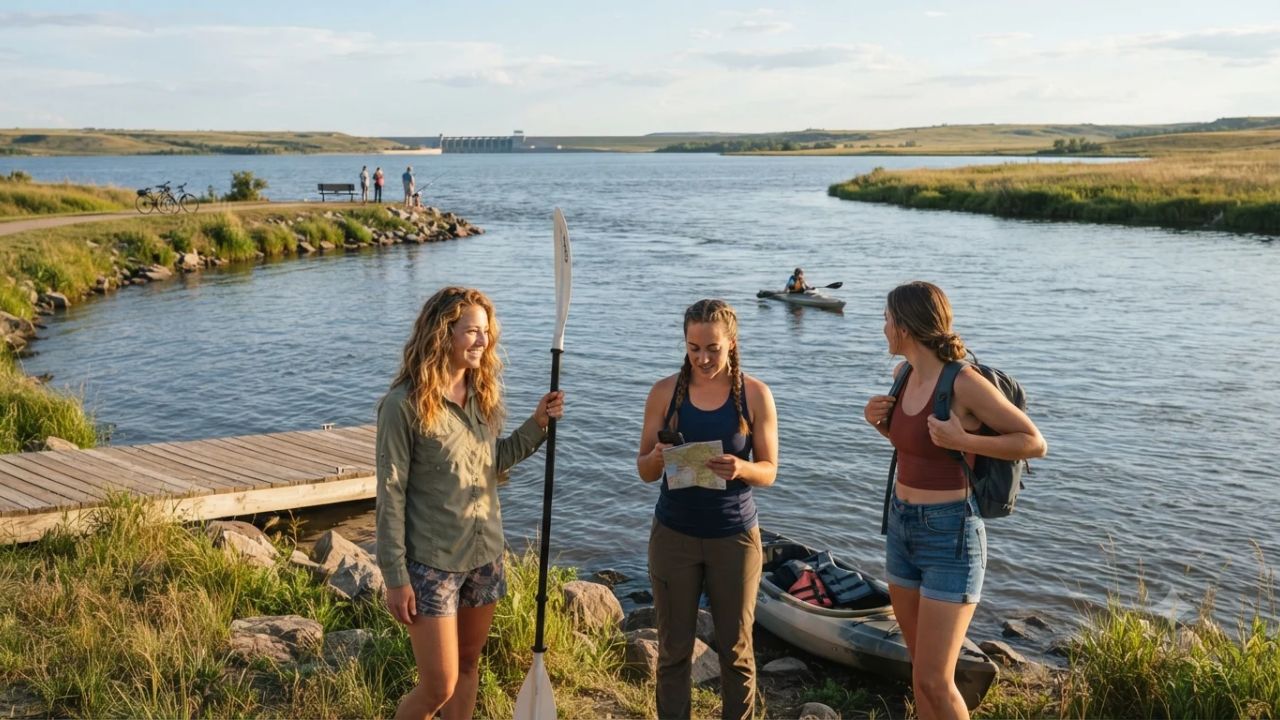
With a population of under 14,000 residents, Pierre is the second-smallest state capital in the United States, yet it sits bordered by over 2,250 miles of freshwater shoreline between Lake Oahe and Lake Sharpe. Positioned along the Missouri River in central South Dakota, this twin-town destination—paired with historic Fort Pierre across the water—offers independent road trippers an uncrowded alternative to mass-market national park circuits. Travellers can spend their mornings inspecting Greco-Roman stained glass inside the State Capitol, kayak the scenic "Dam Run" downriver past cottonwood sandbars in the afternoon, and watch bald eagles gather below the colossal wall of Oahe Dam at dusk.
Promoted through Travel South Dakota, the region blends expansive Great Plains waterways with deep Indigenous history, offering an accessible base for active cycling, angling, and prairie heritage exploration.
River Adventures and the Missouri Water Trail
The Missouri River defines the geographic and recreational pulse of central South Dakota. Flowing between the massive earth-rolled structure of Oahe Dam to the north and Lake Sharpe to the south, the river corridor provides continuous outdoor recreation managed by South Dakota Game, Fish and Parks.
The premier aquatic excursion is "The Dam Run," a popular paddling route that puts in below Oahe Dam and traces the natural river current downstream toward the LaFramboise Island causeway. Kayakers and canoeists glide past limestone bluffs, riparian willow groves, and sandbars that host migrating white pelicans, great blue herons, and river otters.
| Outdoor Adventure Asset | Geographic Route / Location | Typical Duration & Distance | Key Activity & Seasonal Window |
|---|---|---|---|
| The Dam Run River Paddle | Oahe Tailrace to LaFramboise Causeway | 8 miles (2.5 to 3.5 hours) | Kayaking, canoeing, wildlife viewing (May–September) |
| Pierre–Fort Pierre Trail | Oahe Dam through Pierre to Fort Pierre | 21 miles total paved trail | Cycling, longboard commuting, running (April–October) |
| Oahe Downstream Area | Directly below Oahe Dam powerhouse | Multi-loop recreational park | Riverside camping, walleye fishing, winter eagle watching |
| LaFramboise Island Nature Area | Missouri River island causeway | 5 miles of unpaved dirt loops | Mountain biking, birdwatching, autumn foliage walks |
Beyond open-water paddling, the Oahe Downstream Recreation Area provides protected riverside campsites, disc golf courses, and boat ramps. During late autumn and winter, the turbulent, ice-free waters below the dam turbines attract hundreds of wintering bald eagles (Haliaeetus leucocephalus), creating a prime location for wildlife photographers.
The 21-Mile Riverfront Trail System and Twin-Town Character
A major asset for active travellers is the interconnected 21-mile paved bike trail network following the contours of the Missouri River. Connecting Oahe Dam to the north with downtown Pierre and crossing the bridges into Fort Pierre, the route allows visitors to explore the entire urban and riparian corridor without relying on motor vehicles.
Crossing the river creates an immediate contrast in regional identity:
1. Pierre: Civic Architecture and Living History
On the eastern bank, Pierre houses the South Dakota State Capitol, completed in 1910, featuring native limestone, Terrazzo tile flooring, hand-painted murals, and a copper dome. Downtown streets are lined with the Trail of Governors, a walking tour showcasing life-size bronze statues of past state governors. Cultural context is anchored by the South Dakota State Historical Society at the Cultural Heritage Center, which preserves the living histories of the Oceti Sakowin (Dakota, Nakota, and Lakota nations).
2. Fort Pierre: Frontier Roots and Western Rodeo Legacy
On the western bank, Fort Pierre reflects the sporting traditions of the Great Plains. The Casey Tibbs South Dakota Rodeo Center honors the nine-time world champion bronc rider and chronicles the evolution of competitive rodeo. Nearby on the bluffs, the Verendrye Monument marks the spot where French-Canadian explorers François and Louis-Joseph de La Vérendrye buried an inscribed lead plate in 1743 claiming the upper Missouri region for France.
| Cultural & Heritage Attraction | Location & Urban Setting | Signature Feature / Exhibition | Recommended Time Investment |
|---|---|---|---|
| South Dakota State Capitol | Capitol Avenue, Central Pierre | 1910 Greco-Roman architecture, stained glass, murals | 1.5 hours (Self-guided or guided) |
| Trail of Governors | Downtown Pierre street corners | 30+ life-size bronze governor statues with historic plaques | 1 to 2 hours (Walkable urban route) |
| Cultural Heritage Center | Governors Drive, Pierre | Oceti Sakowin Indigenous culture, pioneer artifacts | 2 hours (Comprehensive museum galleries) |
| Casey Tibbs Rodeo Center | Verendrye Drive, Fort Pierre | Historic saddles, bronc riding memorabilia, river overlook | 1.5 hours (Includes outdoor bluff views) |
| Verendrye Site Monument | Fort Pierre river bluffs | 1743 French exploration historic marker and monument | 30 minutes (Panoramic Missouri views) |
Visitor Insider Tips
- Rent E-Bikes for the Oahe Dam Ride: Pick up an electric or hybrid bicycle in downtown Pierre to tackle the 21-mile riverfront path up to Oahe Dam, avoiding fatigue from afternoon headwinds across the open prairie.
- Time River Paddling with Dam Discharges: Check water release schedules from the U.S. Army Corps of Engineers before launching kayaks on The Dam Run; moderate flows provide an effortless drift down to LaFramboise Island.
- Sample Fresh Missouri River Walleye: Order locally sourced pan-fried or blackened walleye at riverside taverns in Fort Pierre, accompanied by regional craft beers brewed with South Dakota wheat.
- Capture Golden Hour at Oahe Dam Overlook: Head to the public overlook on the east crest of Oahe Dam thirty minutes before sunset, when the expansive waters of Lake Oahe reflect brilliant orange and violet tones against the rolling grassland hills.
Cultural and Environmental Context
The Missouri River basin around Pierre holds deep cultural significance for the Great Sioux Nation. Before the construction of the Pick-Sloan Flood Control Act dams in the mid-20th century, fertile bottomlands supported Indigenous farming and seasonal encampments. The filling of Lake Oahe and Lake Sharpe permanently altered the river valley's hydrology, flooding ancestral lands while creating modern water storage, hydroelectric power, and recreational fisheries.
Today, state authorities and tribal nations collaborate on water quality monitoring, fishery conservation, and cultural interpretation. Angling regulations maintain sustainable catch limits for walleye, northern pike, and smallmouth bass, while habitat restoration projects along LaFramboise Island protect native cottonwood stands from invasive species.
FAQ: Visiting Pierre and Fort Pierre 2026
What is the best time of year to visit Pierre?
June through September offers ideal weather for paddling, camping, and cycling along the Missouri River, while late October and November provide exceptional birdwatching for wintering bald eagles.
How do I get to Pierre from major transport hubs?
Pierre Regional Airport (PIR) connects daily via scheduled flights to Denver International Airport (DEN). By road, Pierre is reached via US Highway 14 or US Highway 83, situated roughly 3 hours west of Sioux Falls and 2.5 hours east of Rapid City.
Are permits required for paddling on the Missouri River?
No special permits are required for non-motorized watercraft like kayaks and canoes. However, paddlers must carry US Coast Guard-approved personal flotation devices (PFDs) and sound signaling devices.
Is the South Dakota State Capitol open on weekends?
Yes, the Capitol building is open to the public daily for self-guided exploration, allowing weekend visitors to view the rotunda, legislative chambers, and historical artwork.
Related Travel Guides
- Pacific Coast Passenger Rail 2026: California and Washington Station Modernization
- European Aviation 2026: Summer Airport Passenger Traffic and Regional Growth
- North Wales Film Tourism 2026: Six-Day Screen Adventure Route
- Eastern Europe Travel 2027: Bieszczady Trails and Slow Rail Expeditions
Where endless prairie skies meet the rolling currents of the Missouri, Pierre delivers an authentic, unhurried American river frontier.
Disclaimer
This article is for informational and educational purposes only. It does not constitute legal, financial, or professional advice. While we strive to provide accurate and up-to-date information, travel policies, regulations, and conditions change rapidly. Always verify information with official sources before making travel decisions. Nomad Lawyer makes no representations about the accuracy, reliability, completeness, or suitability of the information provided. Readers should consult qualified professionals for advice specific to their circumstances. The views expressed in this article are those of the author and do not necessarily reflect the views of Nomad Lawyer.
Naina Thakur
Contributor & Travel Specialist
Travel enthusiast and legal writer covering visa regulations, responsible tourism, and cultural journeys across global destinations.
Learn more about our team →