
Philippines Tourism Records 4.4 Million Foreign Arrivals as 387 Billion Peso Hotel Pipeline Expands Across Key Airport Gateways

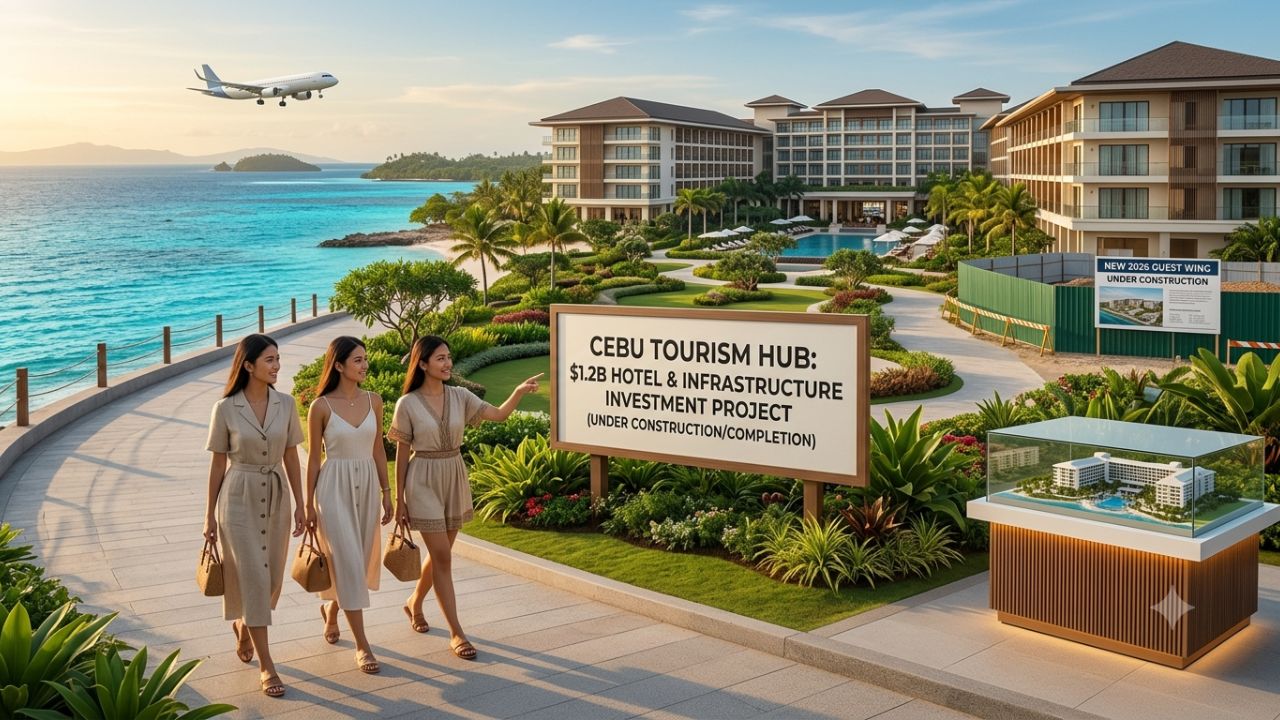
Foreign visitor arrivals to the Philippines reached approximately 4.4 million during the first eight months of 2026, registering modest growth over the 4.38 million travelers recorded during the same period in 2025, even as institutional hotel developers commit a record 387 billion Philippine pesos (US$6.2 billion) in new accommodation projects across the archipelago.
While top-line inbound recovery continues at a measured pace amid elevated jet fuel prices and rising long-haul airfares, hospitality investors are taking a long-term strategic view. According to the 2026 Accommodation Pipeline Report, jointly published by Leechiu Property Consultants and the Philippine Hotel Owners Association (PHOA), the country’s active accommodation pipeline has expanded to 45,884 hotel rooms across 213 properties slated for completion between 2026 and 2032.
This surge in hospitality capital represents a 14 percent increase in total room inventory and a 35 percent jump in individual hotel properties compared to 2024 benchmarks. Significantly, developers are concentrating nearly 70 percent of all pipeline rooms in destinations directly connected to international airport gateways—including Metro Manila, Cebu, Clark, Panglao, and Davao—illustrating a structural alignment between commercial aviation access and private hospitality investment.
Inbound Tourism Performance: Analyzing the 4.4 Million Foreign Arrivals
The 4.4 million international arrivals logged between January 1 and August 31, 2026, confirm steady, albeit restrained, post-pandemic momentum for the Philippine Department of Tourism. While the total represents an incremental gain over the 4.38 million visitors recorded during the corresponding eight-month stretch of 2025, the rate of expansion reflects mounting headwinds across key overseas markets.
Industry analysts highlight several operational pressures tempering international visitor volumes:
- Elevated Airfare and Fuel Surcharges: Higher aviation fuel costs have inflated long-haul and regional airfares, prompting price-sensitive travelers in East Asia and Europe to curtail discretionary island holidays.
- Regional Currency Shifts: Volatility across regional Asian currencies against the United States dollar has affected outbound vacation budgets, causing travelers to shorten trip durations.
- Intense Regional Rivalry: Competing Southeast Asian nations, including Thailand, Malaysia, and Vietnam, have intensified marketing campaigns and introduced reciprocal visa exemptions, capturing an increased share of regional leisure travelers.
Despite these challenges, the modest gain in headline arrivals demonstrates the underlying resilience of Philippine leisure travel, supported by expanding direct flight frequencies and improved terminal processing.
Shifting Source Markets: South Korean Contraction vs. China and India Expansion
The composition of foreign arrivals to the Philippines underwent significant realignment during the first eight months of 2026, exposing the vulnerability of relying heavily on a single dominant source market while highlighting emerging growth corridors.
1. South Korea Faces a 22 Percent Contraction
South Korea, which has historically served as the Philippines' largest and most dependable international feeder market, recorded a sharp 22 percent decline in visitor volume during the January-to-August monitoring period.
This downturn has sent ripples across primary resort economies:
- Resort Hub Exposure: South Korean travelers have long formed the financial bedrock of beachfront resorts, diving schools, Korean dining establishments, and golf facilities across Cebu, Boracay, and Panglao Island in Bohol.
- Aviation Capacity Adjustments: Charter operations and scheduled low-cost carrier services connecting Incheon and Busan to provincial Philippine airports experienced lower passenger load factors, prompting frequency rationalizations.
- Economic Pressures at Home: Domestic cost-of-living adjustments within South Korea, paired with heavy outbound travel toward closer, weaker-yen destinations in Japan, redirected hundreds of thousands of prospective vacationers.
2. Emerging Momentum from China and India
Offsetting the South Korean downturn, visitor arrivals from China and India demonstrated encouraging expansion, though both markets are growing from comparatively low post-pandemic baselines.
- China: Improved diplomatic dialog, targeted visa facilitation, and the phased restoration of direct flights between secondary Chinese metropolises and Manila, Cebu, and Kalibo have stimulated group and independent leisure travel.
- India: Inbound travel from India has expanded rapidly, supported by electronic visa processing, chartered wedding parties, and the introduction of direct commercial flight links connecting Delhi and Mumbai with Manila.
While growth from China and India has provided a welcome buffer, the absolute volume has not yet expanded sufficiently to fully bridge the numerical deficit created by the 22 percent drop in South Korean arrivals, underscoring the urgent necessity for the Department of Tourism to diversify promotional efforts across Southeast Asia, Australasia, and North America.
The 387 Billion Peso Accommodation Pipeline: Long-Term Developer Confidence
While short-term visitor growth remains measured, the private sector is investing heavily in the future of Philippine hospitality. The 2026 Accommodation Pipeline Report reveals unprecedented capital allocation by domestic conglomerates and international hotel operators.
Key Pipeline Metrics (2026–2032 Outlook)
| Development Indicator | Recorded Metric (2026 Report) | Comparison vs. 2024 | Strategic Significance |
|---|---|---|---|
| Total Capital Investment | 387 billion Philippine pesos (~US$6.2B) | Substantial expansion | Massive institutional vote of confidence in long-term tourism yield |
| Total Hotel Rooms in Pipeline | 45,884 rooms | +14% increase | Substantial expansion in national branded accommodation capacity |
| Total Hotel Properties Planned | 213 properties | +35% increase | Capital dispersing across diverse geographic tiers and hotel niches |
| Share Near International Gateways | Approximately 70% | High concentration | Direct alignment with scheduled international and domestic aviation hubs |
| Primary Project Completion Horizon | 2026 through 2032 | Multi-year pipeline | Phased delivery preventing sudden nationwide oversupply |
The 35 percent jump in individual properties alongside a 14 percent increase in room counts indicates that developers are building a diversified mix of boutique lifestyle resorts, select-service airport hotels, and midscale regional business properties rather than relying exclusively on massive mega-resorts.
Leading national property developers, including Megaworld Corporation, Ayala Land Hospitality, SM Prime Holdings, and Robinsons Land, are partnering with global hotel flags such as Marriott International, Accor, Hilton, IHG, and Radisson Hotel Group to introduce internationally branded inventory into both established and emerging destinations.
Gateway Connectivity: Why 70 Percent of Hotel Rooms Cluster Near Airports
The concentration of nearly seven out of every ten pipeline rooms in destinations served by direct international flights illustrates that aviation accessibility is the primary determinant of hotel investment viability.
1. Metro Manila: The Primary Corporate and MICE Epicenter
Metro Manila accounts for the largest share of urban hotel investment. With the ongoing privatization and rehabilitation of Ninoy Aquino International Airport (NAIA) by the New NAIA Infra Corp consortium, developers are anticipating improved passenger handling efficiency. Planned properties in Pasay, Parañaque (Entertainment City), Makati, and Bonifacio Global City (BGC) cater to international corporate travelers, MICE delegates, and transit passengers connecting to provincial islands.
2. Cebu and Lapu-Lapu City: Island Gateway to the Visayas
Mactan-Cebu International Airport (MCIA) has set the benchmark for airport operations in the Philippines. As the nation’s second-largest aviation hub, MCIA offers extensive direct long-haul and regional connections to South Korea, Japan, Singapore, Hong Kong, and the Middle East. Hotel developers in Lapu-Lapu City and Cebu City are expanding luxury beach resorts and upscale urban properties to capture international leisure travelers seeking direct access to diving and marine tourism without transiting through Manila.
3. Clark and New Clark City: The Northern Luzon Commercial Corridor
Clark International Airport (CRK) in Pampanga has emerged as a premier modern gateway serving Central and Northern Luzon. Supported by the Subic-Clark-Tarlac Expressway and the North-South Commuter Railway project, the Clark Freeport Zone and New Clark City are attracting substantial hospitality capital, focusing on business hotels, golf resorts, and event venues catering to regional conferences and industrial executives.
4. Panglao Island (Bohol): Ecotourism and Beachfront Expansion
Served by the eco-friendly Bohol-Panglao International Airport (TAG), Panglao has evolved into one of the country's most sought-after leisure destinations. Direct charter flights from regional capitals and scheduled domestic connections from Manila and Cebu have spurred significant resort construction along Alona Beach and the Doljo coast, blending five-star accommodations with world-class marine sanctuaries.
5. Davao City: Southern Commercial Gateway
Francisco Bangoy International Airport (DVO) anchors hospitality investment in Mindanao. New hotel developments in Davao City target business travelers, government assemblies, and ecotourists exploring Mount Apo and the Gulf of Davao.
National Tourism and Hotel Pipeline Data Overview
The following tables synthesize official visitor arrival figures alongside developer pipeline metrics for the Philippines:
Foreign Tourist Arrivals to the Philippines (January–August)
| Monitoring Metric | Jan–Aug 2025 | Jan–Aug 2026 | Change (Absolute / %) | Market Dynamics |
|---|---|---|---|---|
| Total Foreign Visitor Arrivals | 4.38 million | ~4.40 million | +20,000 (+0.46%) | Modest recovery; restrained by travel and fuel costs |
| South Korea Source Market | Historical #1 source | Down 22% YoY | -22.0% | Heavy contraction; redirected travel toward Japan |
| China Source Market | Low baseline | Positive growth | Expanding | Supported by restored direct flights and visa easing |
| India Source Market | Emerging corridor | Positive growth | Expanding | Direct air links and electronic visa facilitation |
Hotel Pipeline Breakdown by Key Gateway Corridors (2026–2032)
| Gateway Destination | Primary Airport Connection | Key Market Drivers | Dominant Hotel Formats |
|---|---|---|---|
| Metro Manila | Ninoy Aquino Int'l (NAIA) / Bulacan | Corporate HQ, Government, MICE, Transit | Luxury 5-star, business hotels, airport suites |
| Cebu & Lapu-Lapu | Mactan-Cebu Int'l (MCIA) | Beach resorts, diving, regional corporate | 5-star beachfront resorts, urban lifestyle hotels |
| Clark & New Clark City | Clark Int'l (CRK) | MICE, sports tourism, logistics hub | Convention hotels, golf resorts, select-service |
| Panglao (Bohol) | Bohol-Panglao Int'l (TAG) | Eco-resorts, diving, leisure beachgoers | Boutique eco-lodges, integrated beach resorts |
| Davao City | Francisco Bangoy Int'l (DVO) | Mindanao commerce, regional assemblies | Full-service business hotels, serviced apartments |
Domestic Tourism: The Essential Safety Valve for Hotel Occupancy
While international arrival growth remains flat, the domestic travel market provides a powerful stabilizer for the Philippine hotel industry. Comprising more than 115 million citizens spread across 7,641 islands, domestic travel generates tens of millions of annual trips.
Key factors driving domestic travel demand include:
- Rise of Weekend Staycations: Urban professionals in Metro Manila, Metro Cebu, and Davao increasingly spend weekends at branded city hotels for leisure, culinary dining, and wellness retreats.
- Expanding Middle Class: Rising disposable incomes across regional administrative centers have stimulated internal family travel during public holiday long weekends, Holy Week, and the Christmas season.
- Bleisure Travel: Corporate travelers routinely extend business trips in Clark, Iloilo, Bacolod, and Cagayan de Oro into multi-day leisure getaways.
By serving both domestic travelers and foreign visitors, hotel operators can maintain resilient occupancy rates even during periods when international demand slows.
Practical Logistics Guide for International Travelers Visiting the Philippines
International visitors planning trips to the Philippines can optimize their journeys by navigating entry protocols and domestic transport networks effectively:
1. Mandatory Digital Entry Registration (eTravel)
- Registration Protocol: All international travelers, regardless of nationality, must complete the Philippine government’s official eTravel portal registration within 72 hours prior to arrival.
- QR Code Verification: The system generates a personalized QR code that must be presented to immigration authorities upon arrival. The official eTravel portal is entirely free of charge; travelers should avoid unofficial third-party websites charging fraudulent processing fees.
2. Strategic Airport Routing to Avoid Manila Congestion
- Direct Provincial Gateways: To minimize connection delays, international travelers heading to beach destinations should look for direct flights into Mactan-Cebu (MCIA) or Clark (CRK) rather than transferring through Manila’s NAIA, which operates with four separate, non-connected terminals requiring highway transfers.
- Island Transfers: When connecting from Manila to island destinations like Boracay (via Caticlan MPH) or Palawan (via Puerto Princesa PPS or El Nido ENI), ensure a minimum terminal transfer buffer of 3.5 to 4 hours.
3. Seasonal Weather Considerations
- Dry Season (November to April): The optimal window for beach holidays, scuba diving, and island-hopping across the Visayas and Palawan.
- Southwest Monsoon / Habagat (June to October): Brings frequent afternoon rain showers and occasional tropical typhoons. Travelers visiting during this period should book flexible airline tickets and monitor weather advisories from the Philippine Atmospheric, Geophysical and Astronomical Services Administration (PAGASA).
Strategic Outlook: Connecting Infrastructure to Sustainable Tourism Growth
The Philippine hospitality sector stands at a critical juncture. The commitment of 387 billion pesos across 45,884 pipeline rooms demonstrates tremendous investor belief in the country's natural beauty, cultural warmth, and commercial potential.
However, translating this massive room inventory into profitable, sustainable occupancy requires urgent national coordination:
- Accelerating Visa Reforms: Expanding electronic visa systems and considering visa-free access for high-spending Indian tourists will be essential to diversify the foreign visitor base away from over-reliance on single markets.
- Expanding Secondary Airport Capacity: Upgrading runway lighting, taxiways, and terminal facilities at regional island airports will allow airlines to operate direct international flights into Palawan, Siargao, and Iloilo.
- Enhancing Service Value: With travel costs elevated worldwide, Philippine hospitality operators must ensure that service excellence, sustainable environmental stewardship, and competitive pricing provide compelling value for international guests.
As new properties open across Manila, Cebu, Clark, and Bohol between now and 2032, the Philippines has an extraordinary opportunity to establish itself as one of Asia's premier hospitality powerhouses.
Related Travel Guides
Disclaimer
This article is for informational and educational purposes only. It does not constitute legal, financial, or professional advice. While we strive to provide accurate and up-to-date information, travel policies, regulations, and conditions change rapidly. Always verify information with official sources before making travel decisions. Nomad Lawyer makes no representations about the accuracy, reliability, completeness, or suitability of the information provided. Readers should consult qualified professionals for advice specific to their circumstances. The views expressed in this article are those of the author and do not necessarily reflect the views of Nomad Lawyer.
Raushan Kumar
Founder & Lead Developer
Full-stack developer with 11+ years of experience and a passionate traveller. Raushan built Nomad Lawyer from the ground up with a vision to create the best travel and law experience on the web.
Learn more about our team →