Philippines Expands Medical Tourism with Healthcare Investments and NAIA Terminal 3 Concierge: Latest Update

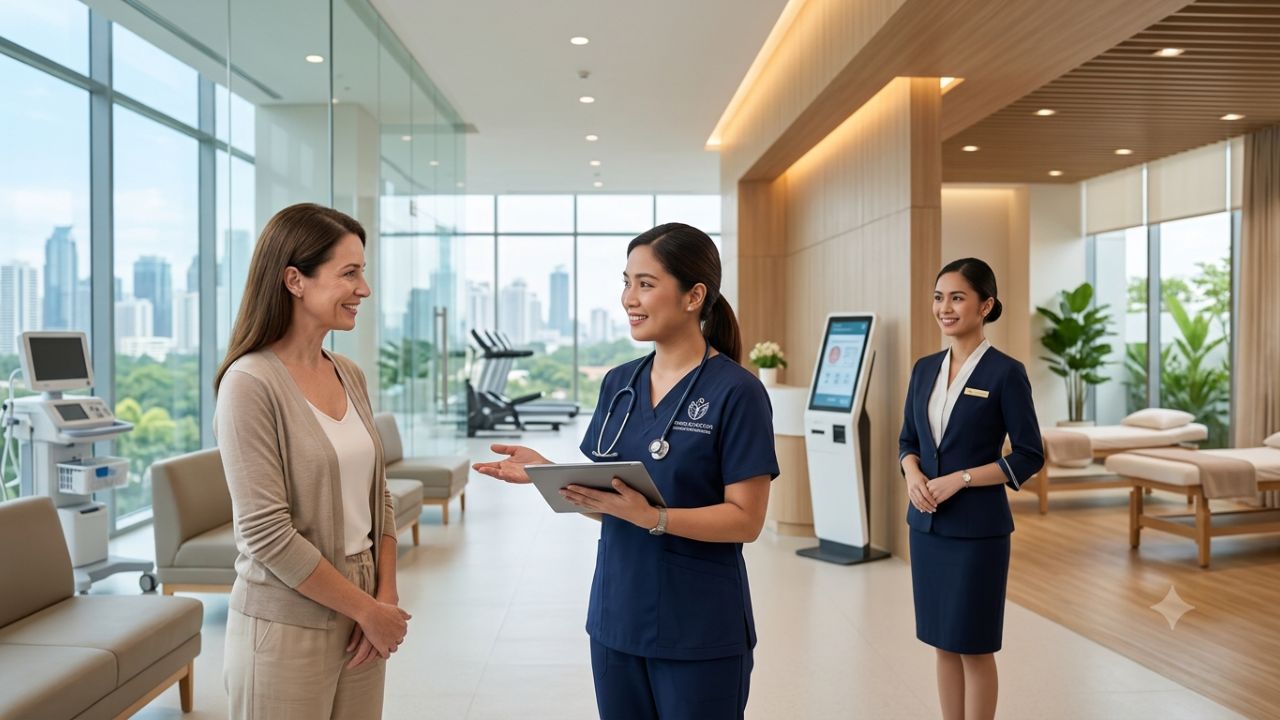
The Philippines Department of Tourism launched an integrated healthcare investment push to attract international medical travelers.
Positioning the archipelago as a premier regional destination for clinical treatments, specialized rehabilitation, and traditional holistic healing, the Philippine Department of Tourism (DOT) has unveiled an aggressive multi-sectoral strategy to expand medical tourism through private-sector healthcare investments and dedicated international patient services. The national initiative, formally detailed during the 15th Arangkada Philippines Forum 2026 at the Marriott Grand Ballroom in Pasay City, bridges accredited hospitals, serviced apartment operators, and wellness resorts to capture a larger share of the global healthcare travel market while upgrading domestic medical infrastructure across provincial regions.
Underpinning this expansion is the establishment of a specialized Medical Concierge and Lounge at Ninoy Aquino International Airport (NAIA) Terminal 3 in Manila, engineered to provide arriving international patients and accompanying family members with streamlined hospital transfers, multilingual orientation, and certified hospitality bookings. By uniting world-class clinical accreditation—including six Joint Commission International (JCI) accredited hospitals—with a burgeoning national wellness economy valued at $47.3 billion USD, the Philippines is actively transforming medical travel from an isolated healthcare transaction into an integrated, high-yield tourism ecosystem.
The Integrated Healthcare Strategy: DOT Unveils Multi-Sector Blueprint
Historically, medical travel in Southeast Asia operated within disconnected commercial silos, with overseas patients navigating hospitals, hotels, and ground transportation independently. Under the updated framework spearheaded by the Philippine Department of Tourism, authorities are coordinating public-private partnerships that link clinical providers directly with hospitality operators, airline carriers, and digital health technology platforms.
The primary objective is extending visitor lengths of stay and distributing economic yield across auxiliary tourism sectors. Rather than departing immediately following clinical procedures, international patients are encouraged to recuperate within certified wellness resorts, serviced residences, and boutique regional retreats. This holistic model generates substantial commercial demand for diagnostic laboratories, medical translators, private nursing agencies, and adapted transport providers across urban centers and rural provinces.
Government representatives emphasized that while state agencies facilitate regulatory coordination and international marketing, clinical delivery remains the exclusive responsibility of certified physicians and accredited institutions, ensuring that patient safety and clinical integrity remain paramount.
Accreditation Benchmarks: 13 Hospitals, 6 JCI Centers, and 63 Spas
To instill international confidence and assist prospective medical travelers in verifying provider credentials, the Department of Tourism maintains a rigorous accreditation framework. According to official DOT registry data compiled as of September 2026, the country’s certified healthcare and wellness network comprises:
- 13 Accredited Full-Service Hospitals: Providing tertiary emergency care, complex surgical suites, and specialized inpatient recovery.
- 6 JCI-Accredited Medical Centers: Certified by Joint Commission International (JCI), representing the global gold standard in clinical governance, surgical safety, and infection control.
- 21 Accredited Ambulatory Clinics: Performing outpatient procedures, minimally invasive day surgeries, and diagnostic screenings.
- 10 Accredited Dental Clinics: Delivering restorative dentistry, cosmetic veneers, and advanced implantology.
- 63 Certified Spas and Wellness Sanctuaries: Offering therapeutic post-treatment recovery and natural healing modalities.
| Healthcare & Wellness Category | DOT-Accredited Establishments (Sept 2026) | Primary Clinical / Wellness Specialization | Key International Patient Advantage |
|---|---|---|---|
| Tertiary Hospitals | 13 Accredited Facilities | Oncology, cardiology, orthopedics, general surgery | Full emergency coverage and multi-specialty care |
| JCI-Accredited Hospitals | 6 Gold-Standard Centers | Complex surgical interventions, robotic surgery | Globally audited safety and infection control protocols |
| Ambulatory Surgical Clinics | 21 Outpatient Facilities | Minor surgeries, endoscopy, day procedures | Rapid turnaround times and lower facility overheads |
| Specialized Dental Clinics | 10 Accredited Clinics | Cosmetic dentistry, dental implants, oral rehabilitation | Significant cost savings compared to Western dental care |
| Certified Wellness Spas | 63 Licensed Establishments | Traditional Filipino hilot, herbal hydrotherapy | Restorative post-operative recovery in tranquil settings |
| National Wellness Economy | $47.3 Billion USD (GWI 2024 Data) | Holistic living, preventive wellness, nutrition | Ranked 23rd globally and 8th in the Asia-Pacific region |
Clinical Specializations and Traditional Hilot Therapy
The Philippine medical tourism blueprint balances cutting-edge Western clinical medicine with deep-rooted indigenous healing traditions. Priority medical investment segments actively promoted to global travelers include:
- Traditional Filipino Hilot Therapy: An ancient touch-based healing modality utilizing warm virgin coconut oil and heated banana leaves to relieve muscle tension, improve circulation, and accelerate post-operative rehabilitation.
- Cosmetic and Restorative Dentistry: High-precision veneer fabrication, full-mouth restorations, and dental implant procedures performed by internationally trained dental surgeons at competitive price points.
- Ophthalmology and Advanced Eye Care: Laser vision correction (LASIK), cataract replacements, and corneal surgeries utilizing modern optical instrumentation.
- Reproductive Medicine and Fertility Programs: In-vitro fertilization (IVF), genetic screening, and fertility consultations managed by certified reproductive endocrinologists.
- Longevity, Physical Therapy, and Rehabilitation: Comprehensive preventive executive health screenings, metabolic profiling, and tailored physical therapy regimens designed for retirees and active travelers.
By incorporating traditional wellness into structured post-operative care, the country introduces overseas visitors to authentic Filipino culture while sustaining rural suppliers of organic herbal products and therapeutic oils.
Arrival Logistics: NAIA Terminal 3 Medical Concierge and Patient Lounge
A major operational bottleneck for international medical patients has historically been airport navigation upon arrival. To eliminate transit friction, the Department of Tourism partnered with airport authorities and private healthcare operators to inaugurate the dedicated Medical Concierge and Lounge at Ninoy Aquino International Airport (NAIA) Terminal 3 in Manila, overseen by the Manila International Airport Authority (NAIA).
Staffed by trained hospitality and healthcare coordinators, the lounge assists arriving medical tourists by verifying treatment appointments, arranging certified wheelchair-accessible airport transfers, and connecting patients directly with accredited lodging providers. Furthermore, the facility assists accompanying family members with hotel bookings, local SIM card provisioning, and guided city tours, ensuring the patient's support network experiences a seamless arrival.
Economic Multipliers: Job Creation Beyond Metro Manila
The commercial ripple effect of the healthcare tourism push extends far beyond major metropolitan medical centers. Medical travelers typically spend up to three times more than standard leisure visitors due to extended dwell times, specialized dietary requirements, and private transport needs.
During the 15th Arangkada Philippines Forum 2026 on 9 October, policymakers emphasized that expanding medical travel directly benefits provincial economies. As regional hubs in Cebu, Clark, and Davao develop specialized diagnostic clinics and wellness retreats, employment expands across allied health professions, nursing, hotel management, culinary services, and digital telemedicine support.
Practical Advice for International Medical Travelers in the Philippines
Patients planning medical or wellness travel to the Philippines should incorporate essential planning measures:
- Verify Official DOT and JCI Accreditations: Prior to booking procedures, verify that your chosen hospital or ambulatory clinic holds active accreditation from the Department of Tourism or Joint Commission International.
- Coordinate Pre-Travel Teleconsultations: Arrange digital consultations with your attending Philippine physician to review medical histories, diagnostic scans, and anticipated recovery timelines before purchasing flight tickets.
- Utilize the NAIA Terminal 3 Medical Lounge: Upon landing at Manila's international terminal, visit the Medical Concierge Desk in Terminal 3 for coordinated hospital transport and partner hotel check-ins.
- Clarify Accompanying Family Arrangements: Choose serviced apartments or suite-style hotels situated near your treating hospital to ensure accompanying caregivers have access to kitchen facilities and comfortable resting areas.
- Review Medical Travel Insurance Policies: Confirm that your travel health insurance policy explicitly covers overseas elective procedures, medical complications, and aeromedical repatriation if required.
Looking Ahead: Building a Competitive Healthcare Future
As international travel patterns increasingly prioritize health, longevity, and restorative wellness, the Philippines' integrated approach establishes a formidable platform for sustainable growth. By pairing globally accredited surgical centers with culturally authentic healing traditions and frictionless airport concierge services, the nation is building a resilient, competitive medical tourism industry that benefits international patients and local communities alike.
Frequently Asked Questions
What government agency oversees medical tourism in the Philippines?
The Philippine Department of Tourism (DOT) leads the development, accreditation, and international promotion of the country’s medical and wellness tourism sector.
How many hospitals in the Philippines hold JCI accreditation?
As of official DOT data from September 2026, the Philippines features six hospitals accredited by Joint Commission International (JCI), alongside 13 DOT-accredited hospitals and 21 ambulatory clinics.
What is the purpose of the NAIA Terminal 3 Medical Concierge?
The Medical Concierge and Lounge at Ninoy Aquino International Airport Terminal 3 assists arriving medical travelers by coordinating hospital transfers, accommodation check-ins, and accredited tourism services.
What traditional wellness therapies are available to medical tourists?
A core focus is traditional Filipino hilot healing, a therapeutic massage practice utilizing coconut oil and warm banana leaves to assist in physical rehabilitation, circulation, and post-treatment recovery.
Related Travel Guides
This article is for informational purposes. Flight routes, passenger regulations, visa rules, and transit advisories are subject to change by airlines and aviation authorities. Readers are advised to verify schedules and travel documentation with relevant carriers and border agencies before departure.
Related Stories

Global Wellness Tourism Market Hits $7.5 Trillion as Holistic Travel Trends Surge in 2026

Zen Awakening Festival 2026: Florida's Transformational Music, Mindfulness, and Arts Gathering in Fruitland Park