
Philadelphia Dominates the Hospitality Market as Hotel Occupancy Rates Break 2026 Records
Obliterating competing cities, Philadelphia has triggered a massive boom in municipal tax generation as its hotel occupancy rates aggressively skyrocket driven by massive corporate tourism.

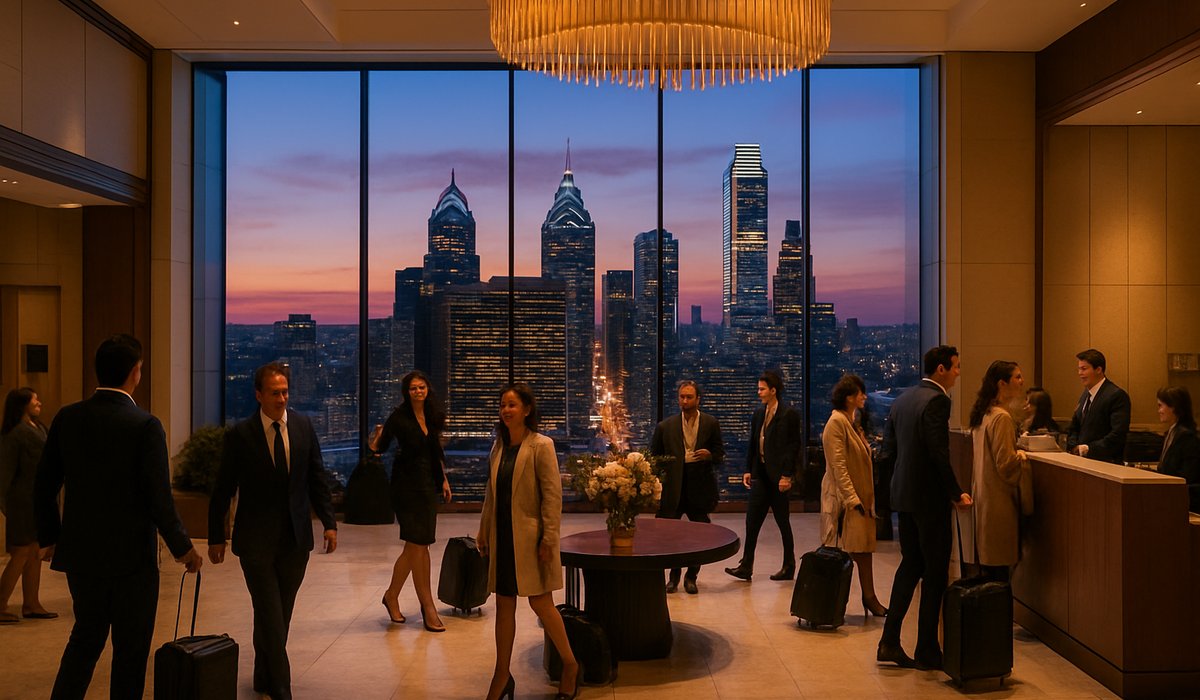
Image generated by AI
The Birthplace of America Defeats the Sunbelt in the Hospitality Wars
Flipping the traditional American tourism narrative completely on its head, Philadelphia has emerged as an absolute, undisputed powerhouse in the 2026 hospitality sector, aggressively outperforming legacy Sunbelt destinations like Orlando, New Orleans, and Las Vegas. Capitalizing heavily on a massive resurgence in highly concentrated corporate conventions, sprawling historical leisure tourism, and elite regional dining, Philadelphia's hotel occupancy rates have completely skyrocketed. This immense surge in booked beds has subsequently triggered a colossal windfall in total visitor spending and municipal tax generation, effectively fortifying the city's economic baseline for the next decade.
Historically, cities relying on massive convention center infrastructure—like Chicago or Baltimore—have struggled to recapture prep-pandemic corporate spending. Philadelphia aggressively solved this problem by heavily subsidizing its downtown security infrastructure and leaning hard into its unbeatable geographical advantage. Sitting perfectly between the financial superpowers of New York and Washington D.C., Philadelphia operates as a highly affordable, hyper-accessible "middle ground" for massive multinational mega-corporations looking to host 10,000-person summits without paying crushing Manhattan hotel premiums.
The Economics of a Sold-Out City
When a massive city like Philadelphia achieves near-maximum hotel occupancy, the economic ripple effect is phenomenally violent.
The immediate benefit isn’t merely the profit secured by the Hilton or Marriott; it is the massive, unavoidable municipal "Hotel Occupancy Tax" directly harvested by the local government. In Philadelphia, this hotel tax generation currently drives millions of dollars directly back into aggressive infrastructure repairs, street cleaning operations, and public arts funding. Furthermore, a hotel guest fundamentally cannot sleep without eating, meaning Philadelphia's legendary culinary scenes—from Rittenhouse Square down to South Street—are experiencing relentless, record-breaking dinner reservations.
Analyzing the Philadelphia Tourism Surge
| Economic Tourism Metric | How Philadelphia is Winning | Impact on the Traveler |
|---|---|---|
| Hotel Occupancy Rates | Beating Las Vegas / Orlando curves | Very difficult to find last-minute competitive rates |
| Corporate Conventions | Central East Coast proximity | Massive influx of suited professionals filling restaurants |
| Tax Generation | Maximum yield on lodging taxes | Better funded municipal tourism and transit sectors |
What Guests Get
- Corporate tourism mechanics — understanding that a massive convention dropping 15,000 corporate lawyers into a city for three days fundamentally drives more concentrated wealth than a month of casual summer backpackers.
- Geographic supremacy — grasping that Philadelphia's massive success is heavily tied to Amtrak; you can legally run a massive East Coast convention without anyone needing to rent a car.
- Urban evolution insight — seeing how a gritty, historical American city seamlessly transitions into a highly polished, elite hospitality powerhouse capable of defeating Miami.
What This Means for Travelers
If you are planning to visit Philadelphia in 2026: You must radically alter your traditional booking timeline. Do not assume you can casually secure a Center City hotel room three weeks before your trip. The massive convention schedule heavily blocks out massive clusters of hotels (specifically those adjacent to the Pennsylvania Convention Center). You must book your accommodations identically to how you book international flights—at least three to four months in advance to secure reasonable leisure pricing.
Embrace the robust transit infrastructure: Because hotel prices are aggressively spiking directly in the city core, budget-conscious travelers should heavily utilize the Southeastern Pennsylvania Transportation Authority (SEPTA) regional rail network. By booking a slightly cheaper hotel in the immediate suburbs or near the airport, you can completely sidestep the corporate price gouging while utilizing rapid transit to enter Center City seamlessly in less than twenty minutes.
FAQ: Philadelphia's Tourism Economy
Why are convention planners choosing Philly over New York? Simply put, absolute mathematics. A five-star catering hall and 5,000 hotel rooms in Philadelphia physically cost a corporation roughly 40% less than the exact same logistical footprint in Manhattan.
Is Center City Philadelphia safe for tourists? Yes. To protect its massive hospitality economy, the city has relentlessly deployed heavy, hyper-visible security grids across the primary tourist corridors, rendering areas like Rittenhouse Square and Old City highly secure for pedestrian traffic.
What is a Hotel Occupancy Tax? Also known universally as an "Urban Destination Fee" or "Bed Tax," this is a specific, legally mandated tax (often ranging from 11% to 15%) added directly onto your nightly room rate that goes straight to the local government, not the hotel.
Related Travel Guides
Disclaimer
This article is for informational and educational purposes only. It does not constitute legal, financial, or professional advice. While we strive to provide accurate and up-to-date information, travel policies, regulations, and conditions change rapidly. Always verify information with official sources before making travel decisions. Nomad Lawyer makes no representations about the accuracy, reliability, completeness, or suitability of the information provided. Readers should consult qualified professionals for advice specific to their circumstances. The views expressed in this article are those of the author and do not necessarily reflect the views of Nomad Lawyer.
Raushan Kumar
Founder & Lead Developer
Full-stack developer with 11+ years of experience and a passionate traveller. Raushan built Nomad Lawyer from the ground up with a vision to create the best travel and law experience on the web.
Learn more about our team →