
Paris Travel Boom: Louvre and Eiffel Tower Guide Historical Landmarks
Paris leads global urban tourism as visitors flock to the Eiffel Tower, the restored Notre-Dame Cathedral, and the Louvre Museum.
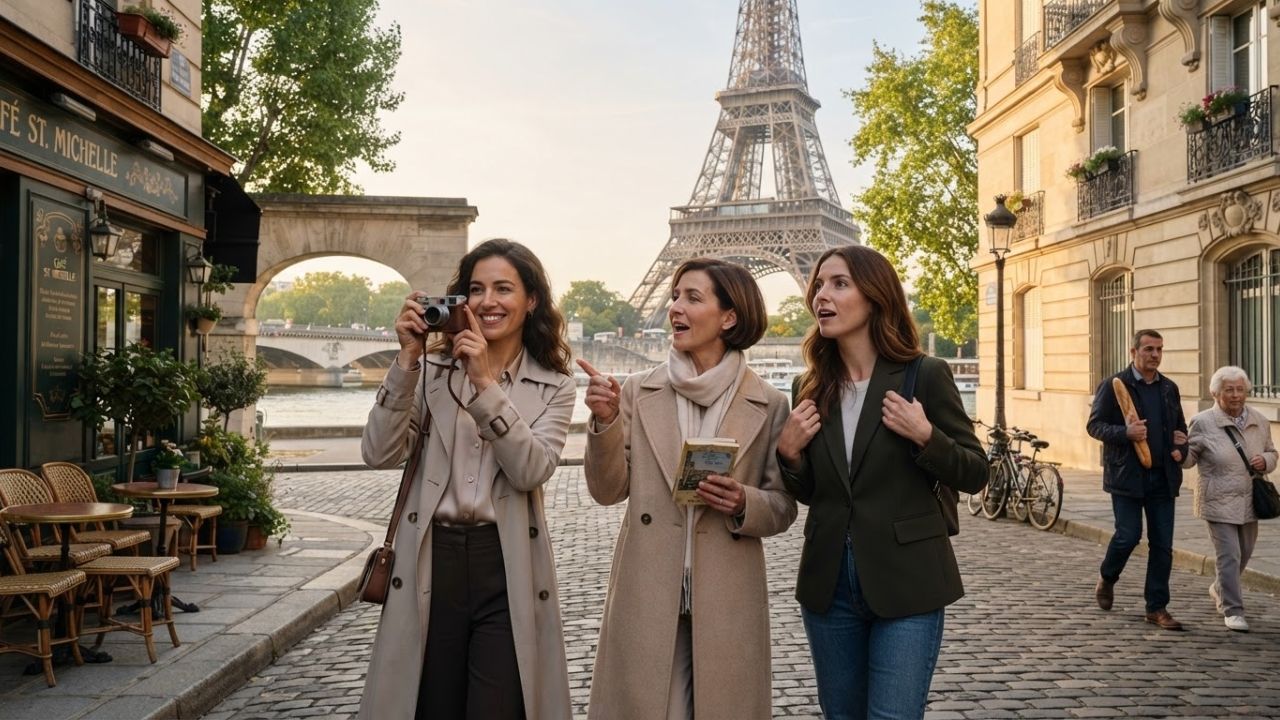
Image generated by AI
Symbolizing centuries of European art and architectural engineering, Paris’s leading monuments—including the iconic Eiffel Tower and the restored Notre-Dame Cathedral—remain global tourism anchors.
The Core Transit Update
Urban transit networks and high-capacity metro systems along the River Seine are managing record passenger numbers. The French capital leverages its walkable design to link world-famous monuments with lesser-known historic quarters.
Key municipal routes connect visitors to the Eiffel Tower (constructed by Gustave Eiffel for the 1889 World's Fair), the Louvre Museum (housed in the former royal palace), and the Gothic Notre-Dame Cathedral on Île de la Cité (restored following the 2019 fire). Regional RER transit lines link the city center to the Palace of Versailles (developed by Louis XIV), while local bus routes climb to the hilltop Sacré-Cœur Basilica in Montmartre. To ease congestion at primary sites, the municipal tourism board is directing travelers toward hidden architectural gems like Sainte-Chapelle, the Panthéon, Opéra Garnier, and the historic Père Lachaise Cemetery.
Paris Landmarks & Hidden Treasures
Planning an urban walk across the French capital requires comparing monument locations and checking transit connections. The following tables outline the leading Paris landmarks and detail hidden architectural treasures.
| Paris Landmark | Stated Architect / Period Context | Primary Location / Neighborhood | Key Visitor Experience & Viewpoint |
|---|---|---|---|
| Eiffel Tower | Gustave Eiffel (1889 World’s Fair) | Champ de Mars | Panoramic views over the River Seine |
| Louvre Museum | Royal Palace complex with glass pyramid | Right Bank center | Home to Mona Lisa & Venus de Milo |
| Notre-Dame | 12th-century Gothic architecture | Île de la Cité | Medieval stonework and stained glass |
| Arc de Triomphe | Napoleon commission (1806) | Place Charles de Gaulle | View over the 12 radiating avenues |
| Versailles | Louis XIV royal residence | Versailles (suburb day-trip) | Hall of Mirrors & French formal gardens |
| Sacré-Cœur | Montmartre basilica hill summit | Montmartre | Village-like streets & city panoramas |
Principal historic and cultural landmarks in Paris.
| Hidden Paris Treasure | Key Architectural & Design Style | Stated Cultural & Historic Purpose |
|---|---|---|
| Sainte-Chapelle | 13th-century medieval Gothic | Famous for soaring stained-glass windows |
| Panthéon | Neoclassical dome temple | Final resting place of French historic figures |
| Opéra Garnier | 19th-century Beaux-Arts | Masterpiece linked with French performing arts |
| Père Lachaise | Garden-style cemetery design | Historic graves of famous writers & artists |
Lesser-known historic landmarks and heritage sites in Paris.
Traveler Logistics Guide
From a ground-level perspective, the best way to navigate this is to buy the Paris Visite travel pass online before arrival to secure unlimited rides on the Metro, bus, and RER networks, as individual paper ticket queues at central stations like Châtelet or Gare du Nord can exceed 45 minutes during morning rush hours. Checking ticket rules is recommended.
To plan your Paris exploration:
- Allow Safe Connecting Windows: When scheduling museum tours (like the Louvre or Musée d'Orsay), allow at least a three-hour window between your arrival at Paris Charles de Gaulle Airport (CDG) and your ticket slot to navigate the RER B suburban rail line.
- Book Eiffel Tower Summit Early: Tower ticket sales open 60 days in advance. Secure your summit elevator timeslots immediately to avoid disappointment.
- Observe Notre-Dame Entry Protocols: The cathedral island (Île de la Cité) features tight visitor security cordons. Avoid carrying large backpacks or metal items.
- Use RER C for Versailles: Take the RER C suburban train directly to Versailles Château Rive Gauche station. Avoid taking local city buses, which take significantly longer.
Infrastructure Impact Assessment
The expansion of car-free zones along the banks of the River Seine and the optimization of high-frequency Metro routes protect Paris’s historic stonework from vehicle emissions and moisture degradation.
By directing traveler spending to local neighborhood bistros, licensed tour operators, and public museums, the urban tourism framework funds monument restoration, supports preservation jobs under national heritage directions, and ensures that medieval, royal, and modern architecture remains preserved.
Related Travel Guides
Disclaimer
This article is for informational and educational purposes only. It does not constitute legal, financial, or professional advice. While we strive to provide accurate and up-to-date information, travel policies, regulations, and conditions change rapidly. Always verify information with official sources before making travel decisions. Nomad Lawyer makes no representations about the accuracy, reliability, completeness, or suitability of the information provided. Readers should consult qualified professionals for advice specific to their circumstances. The views expressed in this article are those of the author and do not necessarily reflect the views of Nomad Lawyer.