
Paraguay's Hydro-Powered Electric Highway Revolution: Inside the $5.5B Ruta Verde and Bioceanic Eco-Corridor
Paraguay transforms travel with a $5.5B highway master plan, featuring 100% hydro-powered EV fast chargers on Ruta PY02 and the Bioceanic Chaco corridor.

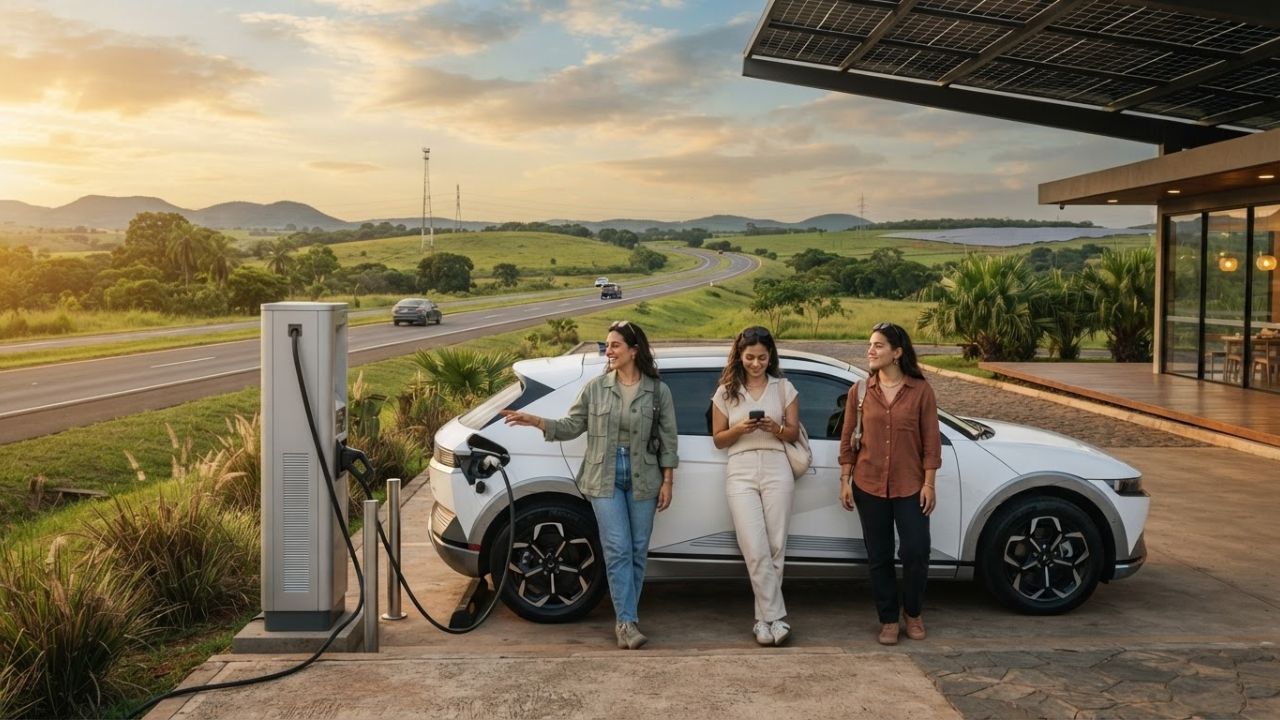
Image generated by AI
Harnessing a 100% clean hydroelectric national grid fed by colossal dams like Itaipú, Paraguay is deploying a historic US$5.5 billion transportation master plan that pairs 150 kW ultra-fast EV charging corridors with the transcontinental Corredor Bioceánico, transforming this once-isolated heartland into the green transit crossroads of South America.
From Red Dirt Roads to Continental Superhighways
For generations of overland explorers, road-tripping through inland Paraguay was synonymous with potholed asphalt, treacherous red-clay washouts, and exhausting delays.
Today, that reputation has been replaced by one of the most ambitious engineering turnarounds in the Americas.
Orchestrated by the Ministry of Public Works and Communications (MOPC), Paraguay’s USD 5.5 billion national transportation master plan represents approximately 4% of national GDP, directly fueling an annual economic expansion rate of 3.7%.
By pairing private concessions with multilateral funding—including over $200 million from the Inter-American Development Bank (IDB) for the Gran Chaco corridor and over $300 million supported by the Japan International Cooperation Agency (JICA) for Highway PY20—the nation has replaced narrow two-lane bottlenecks with four-lane divided expressways.
Crucially, Paraguay is not merely laying asphalt. It is capitalizing on an unmatched natural advantage: a national electricity grid powered 100% by clean renewable hydroelectric energy from the Itaipú Dam, Yacyretá Dam, and Acaray Dam.
Through the pioneering "Ruta Verde" (Green Route) electromobility initiative, the country has built the most decarbonized long-distance highway charging network in the Western Hemisphere.
[100% Clean Hydroelectric Grid: Itaipú, Yacyretá & Acaray Dams]
                                │
                                ▼
         ["Ruta Verde" High-Power Electromobility Network]
         • 50 kW to 150 kW+ DC Fast Chargers Every 60-70 km
         • 80% Recharge in 20-30 Minutes from River Currents
                                │
        ┌───────────────────────┴───────────────────────┐
        ▼                                               ▼
[Ruta PY02 & PY01 Expressways]              [Corredor Bioceánico (PY15)]
• 149 km Duplication to Ciudad del Este     • Transcontinental Atlantic-to-Pacific
• Saves >60 Mins to Brazilian Border        • Saves 14 Days off Asian Sea Trade
• Bypasses Cut Weekend Delays by 45%        • Jaguar & Tapir Subterranean Underpasses
The Civil Engineering Pillars of the Highway Transformation
Paraguay’s highway modernization revolves around three transformational trunk routes and a revolutionary private retail ecosystem:
| Infrastructure Axis | Engineering Scope & Metrics | Travel Time & Strategic Impact | Sustainable Feature |
|---|---|---|---|
| Ruta PY02 Express Duplication | 149 km widened between Ypacaraí & Caaguazú by Rutas del Este | Slices transit between Asunción & Ciudad del Este by >60 minutes | Continuous 4-lane expressway with solar-lit junctions |
| Ruta PY01 Southern Concession | 108 km duplicated from Ypané (Cuatro Bocas) to Quiíndy | Eliminates congestion toward Encarnación & Argentine border | Elevated viaducts routing heavy freight away from towns |
| Corredor Bioceánico (PY15) | Transcontinental overland corridor across the wild Gran Chaco | Shaves 14 full days off maritime trade between Brazil & Asia | Subterranean wildlife underpasses for jaguars & tapirs |
| The "Ruta Verde" Network | High-capacity DC fast chargers (50 kW to 150 kW+) every 60–70 km | 80% battery recharge in 20–30 minutes | Powered 100% by domestic river currents, zero fossil fuels |
| Next-Gen Highway Plazas | Built by Petrobras/Nextar, Shell/Enex, Puma Energy & Copetrol | Contactless mobile payments growing at ~40% annually | Dual-zone design: solar canopies for cars, separate logistics |
Bypassing Historic Bottlenecks: Unlocking the Lake Ypacaraí Circuit
The primary commercial artery connecting Asunción with the eastern border hub of Ciudad del Este is Ruta PY02.
Under a landmark public-private partnership managed by Rutas del Este, engineers duplicated 149 kilometers and constructed sweeping bypass expressways around chronic bottleneck communities, including Ypacaraí, Caacupé, Eusebio Ayala, Itacurubí de la Cordillera, and Coronel Oviedo.
The dramatic Caacupé bypass cuts through the rugged Cordillera de los Altos, treating motorists to panoramic views across the Lake Ypacaraí basin while reducing peak weekend travel delays by up to 45%.
Similarly, the 108-kilometer upgrade of Ruta PY01 from Ypané to Quiíndy provides seamless weekend access to the holiday resort haven of San Bernardino, as well as the artisan craft towns of Luque and Areguá.
The Corredor Bioceánico: Slicing the Gran Chaco
In the semi-arid northern wilderness, the Corredor Bioceánico (Highway PY15) is altering continental geopolitics.
Connecting deep-water Atlantic ports in Brazil with Pacific shipping terminals in northern Chile and Peru, the highway allows freight convoys to bypass the stormy Cape Horn sea passage, slashing container shipping times to Asian markets by up to two full weeks.
Recognizing the ecological sensitivity of the Gran Chaco biome, engineers incorporated specialized subterranean wildlife fauna underpasses and elevated eco-bridges near Mariscal Estigarribia and Loma Plata.
These corridors allow endangered mammals—including elusive jaguars, giant anteaters, and lowland tapirs—to migrate across ancestral territories without risking fatal collisions with multi-axle freight transports.
In remote desert sectors, service plazas operate completely off-grid, utilizing rooftop solar photovoltaic arrays coupled with high-capacity battery energy storage systems (BESS).
A Boom in Regional Eco-Tourism: 1.06 Million Visitors
This infrastructure revolution is paying massive dividends for Paraguay’s tourism sector.
The country now welcomes over 1.06 million international tourist arrivals annually, generating approximately $766 million in direct visitor spending—propelled by a 53% surge in visitors from neighboring Brazil, Argentina, and Bolivia.
Travelers can now comfortably make spontaneous weekend journeys from Asunción to:
- Ybycuí National Park: Exploring dense Atlantic rainforest, natural crystalline swimming pools, and the restored 19th-century blast furnace at the La Rosada Historical Iron Foundry.
- Monday Falls (Saltos del Monday): Marveling at a thunderous 40-meter-high, 120-meter-wide cascade crashing into the Paraná River basin near Hernandarias.
- The Spiritual Shrine of Caacupé: Touring the monumental Sanctuary Basilica of Our Lady of the Miracles, the spiritual beating heart of the nation.
Local Insider Guidance for Road-Tripping Paraguay
To experience the world's most decarbonized highway network firsthand, apply these local travel secrets:
- Embrace the National Ritual of Tereré: No road trip in Paraguay is complete without tereré (recognized by UNESCO as Intangible Cultural Heritage). Before hitting Ruta PY02, stop at a street stall in Asunción’s Mercado 4 to purchase an insulated thermos, a carved leather guampa (drinking vessel), and a metal bombilla straw. Fill the thermos with ice water and crushed medicinal herbs (yuyos refrescantes like mint, burrito, and cedrón) to sip invigorating yerba mate as you drive.
- Sample Fresh Chipa Barrero in Eusebio Ayala: When driving Ruta PY02, stop at traditional roadside chiperías in Eusebio Ayala (such as Chipería Leticia or María Ana). Pick up hot-from-the-clay-oven chipa almidón—a savory, gluten-free bread crafted from cassava starch, fresh farm cheese, eggs, and anise seeds.
- Indulge in Lakefront Strawberries and Pottery in Areguá: Take the scenic bypass around Lake Ypacaraí to the colonial town of Areguá. Browse cobblestone streets filled with artisan terracotta ceramics and enjoy fresh local strawberries served in tall cups of whipped cream (frutillas con crema).
- Dine on Grilled River Surubí in San Bernardino: Spend the evening at a lakeside terrace in San Bernardino sampling surubí a la teja (locally caught tiger shovelnose catfish baked with melted cheese, bell peppers, and white wine over a terracotta roof tile), paired with a cold Pilsen beer.
- Electric Vehicle Road-Trip Planning: If renting an EV in Asunción, download national charging apps like Bancard / PagoMóvil. With 50 kW to 150 kW DC chargers spaced every 60 to 70 kilometers along Ruta PY02 and PY01, you can recharge to 80% in the time it takes to enjoy a coffee and a slice of mbeju cheese flatbread.
Long-Term Outlook: Green Transit as a National Brand
By turning its abundant river currents into ultra-fast highway charging and constructing wildlife-sensitive transcontinental expressways, Paraguay has leapfrogged conventional transportation development.
The landlocked nation has demonstrated that economic productivity, continental trade, and zero-emission travel can thrive in harmony—turning Paraguay’s highways into a visionary model for the future of travel across the Americas.
Frequently Asked Questions: Paraguay's Electric Highway Network
How are Paraguay's highway EV chargers powered? All EV chargers along the "Ruta Verde" draw power from Paraguay's 100% clean, renewable national hydroelectric grid, generated by the Itaipú, Yacyretá, and Acaray hydroelectric dams.
How fast do the "Ruta Verde" highway charging stations charge? The network features high-speed direct current (DC) fast chargers ranging from 50 kW to over 150 kW, capable of recharging an electric vehicle battery to 80% capacity in 20 to 30 minutes.
How much has travel time been reduced between Asunción and Ciudad del Este? The 149-kilometer duplication of Ruta PY02 between Ypacaraí and Caaguazú has reduced total driving time by more than 60 minutes while cutting town bottleneck delays by up to 45%.
What is the Corredor Bioceánico? The Corredor Bioceánico (Highway PY15) is a transcontinental highway traversing the Gran Chaco that connects Atlantic ports in Brazil with Pacific ports in Chile and Peru, saving shipping fleets up to 14 days of travel time to Asian markets.
Related Travel Guides
Disclaimer
This article is for informational and educational purposes only. It does not constitute legal, financial, or professional advice. While we strive to provide accurate and up-to-date information, travel policies, regulations, and conditions change rapidly. Always verify information with official sources before making travel decisions. Nomad Lawyer makes no representations about the accuracy, reliability, completeness, or suitability of the information provided. Readers should consult qualified professionals for advice specific to their circumstances. The views expressed in this article are those of the author and do not necessarily reflect the views of Nomad Lawyer.
Preeti Gunjan
Contributor & Community Manager
A passionate traveller and community builder. Preeti helps grow the Nomad Lawyer community, fostering engagement and bringing the reader experience to life.
Learn more about our team →