
Pacific Northwest Travel Guide 2026: Comparing Food Culture, Urban Parks, and Sustainable Tourism in Portland, Seattle, Vancouver, and Bend

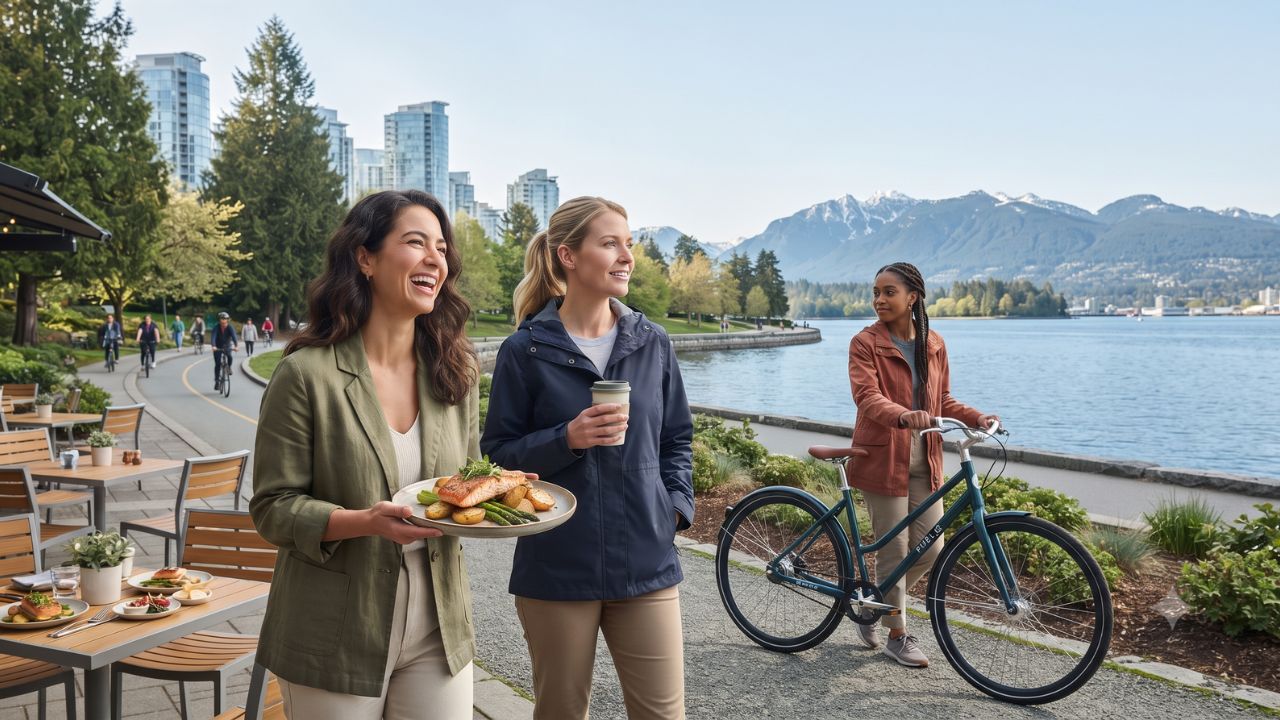
While many travelers treat the Pacific Northwest as a single rainy expanse of evergreen forests and coffee roasters, its four primary hubs operate on wildly divergent ecological and economic models. In Portland, visitors poured $1.18 billion directly into neighborhood restaurants and food cart pods in 2024, while Bend channels 64.6% of its 10.4% visitor room tax straight into municipal public services to protect Central Oregon from overtourism pressures. Across the international border, Vancouver ties its tourism footprint to a formal municipal food strategy spanning 72 specific actions and 12 Michelin-starred establishments, whereas Seattle leverages 6,441 acres of public parkland to absorb 39.7 million annual countywide visitors.
Rather than competing on superficial attractions, these four destinations demonstrate how culinary craft, public parkland, and localized transport infrastructure shape modern travel choices. From coastal waterfronts to high-desert river valleys, each city delivers a distinct answer to how tourism interacts with local environments.
Four Distinct Economic Models Across the Pacific Northwest Corridor
The scale of tourism spending across the Cascadia corridor highlights vastly different visitor dynamics. Seattle and Portland anchor major metropolitan economies, Vancouver blends international business events with coastal leisure, and Bend serves as an active mountain community balancing visitor influx with environmental preservation.
| Destination | Annual Visitor Volume | Economic Impact & Spending | Parkland & Green Footprint | Key Environmental & Policy Marker |
|---|---|---|---|---|
| Portland, OR | 12.3M+ overnight trips (2024) | $5.5B spending ($1.18B dining, $1.4B transport) | 11,677+ acres (7,895 acres natural area, 1.2M trees) | 1.8M shared micromobility trips (2,400 e-bikes, 248 hubs) |
| Seattle, WA | 39.7M visitors (King County, 2025) | $8.8B spending (68,623 jobs, $840M tax generated) | 6,441 acres (489+ parks, 120 miles of trails) | Transport represents 56% emissions; VMT down 10% from 2022 |
| Vancouver, BC | 187 supported events (2024) | $544M event output ($283M GDP, $87M tax, 4,010 jobs) | 250+ parks covering 11% of municipal land | Formal food policy with 72 actions; 12 Michelin stars (2025) |
| Bend, OR | High-desert regional tourism hub | 10.4% room tax (64.6% allocated to General Fund) | Proximity to Deschutes National Forest & Cascade peaks | Transport drives 44% emissions (1.3M metric tonnes in 2021) |
In Seattle and King County, tourism supports 68,623 regional jobs and generates $840 million in combined state and municipal tax revenues. Meanwhile, Destination Vancouver reported that 187 municipal-supported gatherings in 2024 created $544 million in economic output, with 82% of that total generated by direct visitor spending. In Bend, keeping visitor dollars within local agricultural and independent supply chains allows approximately 70 cents of every dollar spent on regional dining to remain circulating within Central Oregon communities.
What Makes Each Gateway Distinct: Food, Urban Forests, and Trails
Understanding the specific personality of each destination prevents travelers from planning redundant itineraries. Each hub specializes in a distinct intersection of gastronomy and geography.
Portland: Food Cart Micro-Economies and Giant Urban Canopies
Portland connects regional agriculture with hyper-localized neighborhood dining. Over 12.3 million overnight travelers spent $5.5 billion in 2024, with food and restaurant spending alone reaching $1.18 billion. Culinary culture here thrives outside formal luxury dining rooms, spreading across neighborhood micro-districts, street cart pods, and small craft producers.
This culinary density operates inside an expansive urban tree canopy. Portland Parks & Recreation oversees 11,677 acres across five watersheds, including 7,895 acres of protected natural zones and more than 1.2 million park trees. The municipal street inventory tracks 252,000 street trees, a count that expanded by 15% over the past decade. With the BIKETOWN bike-share system and scooter fleets logging 1.8 million trips across 2,400 e-bikes and 248 stations, moving between farm-to-table dinners and forested trails requires zero personal car usage.
Seattle: Metropolitan Scale Wrapped in Coastal Wilderness
Seattle operates at the largest economic scale in the region, generating $8.8 billion in visitor spending throughout King County in 2025. Yet wilderness remains stitched into the city core. City of Seattle Parks and Recreation stewards 6,441 acres across 489 distinct public parks, incorporating 120 miles of walking and running trails that account for roughly 12% of the city land area.
At Discovery Park, a 534-acre preserve situated on Magnolia bluff, visitors walk through sea cliffs, open meadows, tidal beaches, and mature evergreen groves without leaving city limits. Seattle also published its inaugural progress evaluation for the Seattle Food Action Plan in 2026, creating structural municipal guidelines for urban farming, localized distribution, and organic waste diversion.
Vancouver: High-End Gastronomy and Strict Procurement Codes
Across the Canadian border, Vancouver combines coastal marine geography with the Pacific Northwest's most codified culinary framework. The 2025 MICHELIN Guide Vancouver featured 12 Michelin-starred establishments across a total selection of 76 restaurants spanning 22 distinct culinary genres, including prominent Indigenous dining spaces and sustainable Pacific seafood rooms.
The municipal government enforces a 72-point food strategy requiring local procurement to source ingredients grown, raised, or harvested strictly within British Columbia. Backed by 250 municipal parks occupying 11% of the city surface, travelers can kayak around False Creek, stroll through Stanley Park, and dine at certified sustainable seafood tables in a single afternoon.
Bend: Mountain Recreation and Municipal Reinvestment
Bend trades maritime salt air for dry ponderosa pine forests and volcanic peaks. Central Oregon's tourism economy relies on direct proximity to Mount Bachelor, the Deschutes River, and extensive singletrack mountain biking networks.
Rather than letting tourism proceeds vanish into private extraction, the city applies a 10.4% visitor room tax, dedicating 64.6% directly to the municipal General Fund for fire services, road maintenance, and community amenities, with the remainder funding sustainable destination management.
Visitor Insider Tips for Low-Impact Travel
- Transit and Regional Movement: Avoid renting a car for Portland, Seattle, and Vancouver. Take the Amtrak Cascades rail line between Portland Union Station, Seattle King Street Station, and Vancouver Pacific Central. Use Seattle's Link light rail directly from Sea-Tac Airport to downtown, and ride Vancouver's SkyTrain TransLink network across English Bay and Richmond.
- Neighborhood Dining Bases: In Portland, base yourself in the Central Eastside or Division Street to walk between independent micro-roasters and food pods. In Vancouver, head to Commercial Drive or Mount Pleasant for regional bakeries and Indigenous culinary menus. In Seattle, explore the International District and Ballard for seafood chowders and Asian-Pacific cuisines.
- Bend Outdoor Etiquette: When visiting Bend through Travel Oregon corridors, pack layers for rapid high-desert temperature swings. Rent gravel or mountain bikes from local shops along the Deschutes River Trail, and carry reusable water containers to cut single-use plastic waste on trailheads.
- Avoiding Peak Crowds: Visit Seattle's Pike Place Market before 9:00 AM on weekdays to see fishmongers and floral stalls without sidewalk gridlock. For Stanley Park's seawall in Vancouver, cycle counterclockwise during early morning light to avoid tour group congestion.
Cultural and Environmental Context: Balancing Access and Emissions
Tourism growth across the Pacific Northwest brings clear environmental challenges, particularly regarding transport emissions. In Seattle, transit and private vehicle travel account for 56% of core greenhouse-gas emissions, even as vehicle miles travelled declined by 10% compared to 2022 levels and overall municipal emissions dipped by roughly 6%.
In Bend, transportation represents 44% of local greenhouse-gas output, where community emissions reached 1.3 million metric tonnes in the 2021 inventory following a 28% rise in transport emissions between 2016 and 2021. To counter this, Bend is executing an EV readiness framework, deploying rapid charging infrastructure, and developing multi-modal transit hubs connecting local bus lines with trail shuttle networks.
By prioritizing localized regional suppliers, riding electric rail connections, and supporting municipal conservation funds, travelers directly help preserve the wild watersheds and coastal forests that make Cascadia an exceptional global destination.
FAQ: Traveling the Pacific Northwest in 2026
What is the best way to travel between Portland, Seattle, and Vancouver? The Amtrak Cascades passenger train connects Portland, Seattle, and Vancouver daily. It offers scenic coastal and river views, avoids Interstate 5 highway traffic, and stops at central downtown rail stations in all three cities.
Do international travelers need different travel documents for Vancouver? Yes. Crossing from Washington State into British Columbia requires a valid passport, along with an Electronic Travel Authorization (eTA) or tourist visa for international visitors who are not Canadian or US citizens.
How does Bend differ from Portland and Seattle? Bend is located east of the Cascade Mountains in Central Oregon's high desert. It offers sunny, dry weather, alpine skiing, river sports, and craft breweries, unlike the coastal, rain-forested environments of Seattle and Portland.
Are food carts in Portland easy to navigate for visitors? Yes. Portland hosts hundreds of food carts organized into permanent neighborhood clusters called pods, such as Cartopia and Hawthorne Asylum. Most carts accept digital payments, offer outdoor seating, and feature diverse global cuisines.
Related Travel Guides
- Global Tourism Shifts and Regional Travel Dynamics Across Key International Markets
- US Tourism Deficit and Overseas Visitor Patterns Across Regional Hotspots
- Pacific Northwest Rail and Coastal Road Trip Planning Discussions on Reddit
The true spirit of Pacific Northwest exploration lives in the quiet transition between neighborhood coffee counters, mist-shrouded municipal trails, and high-desert river bends.
Disclaimer
This article is for informational and educational purposes only. It does not constitute legal, financial, or professional advice. While we strive to provide accurate and up-to-date information, travel policies, regulations, and conditions change rapidly. Always verify information with official sources before making travel decisions. Nomad Lawyer makes no representations about the accuracy, reliability, completeness, or suitability of the information provided. Readers should consult qualified professionals for advice specific to their circumstances. The views expressed in this article are those of the author and do not necessarily reflect the views of Nomad Lawyer.
Raushan Kumar
Founder & Lead Developer
Full-stack developer with 11+ years of experience and a passionate traveller. Raushan built Nomad Lawyer from the ground up with a vision to create the best travel and law experience on the web.
Learn more about our team →