
Ottawa Airport Chaos: Jazz, Porter, Air Canada Cancel 36 Flights Across Toronto, Montreal, Boston Routes
Major disruption at Ottawa Macdonald-Cartier International Airport as five airlines cancel 36 flights with widespread delays affecting North American travel.

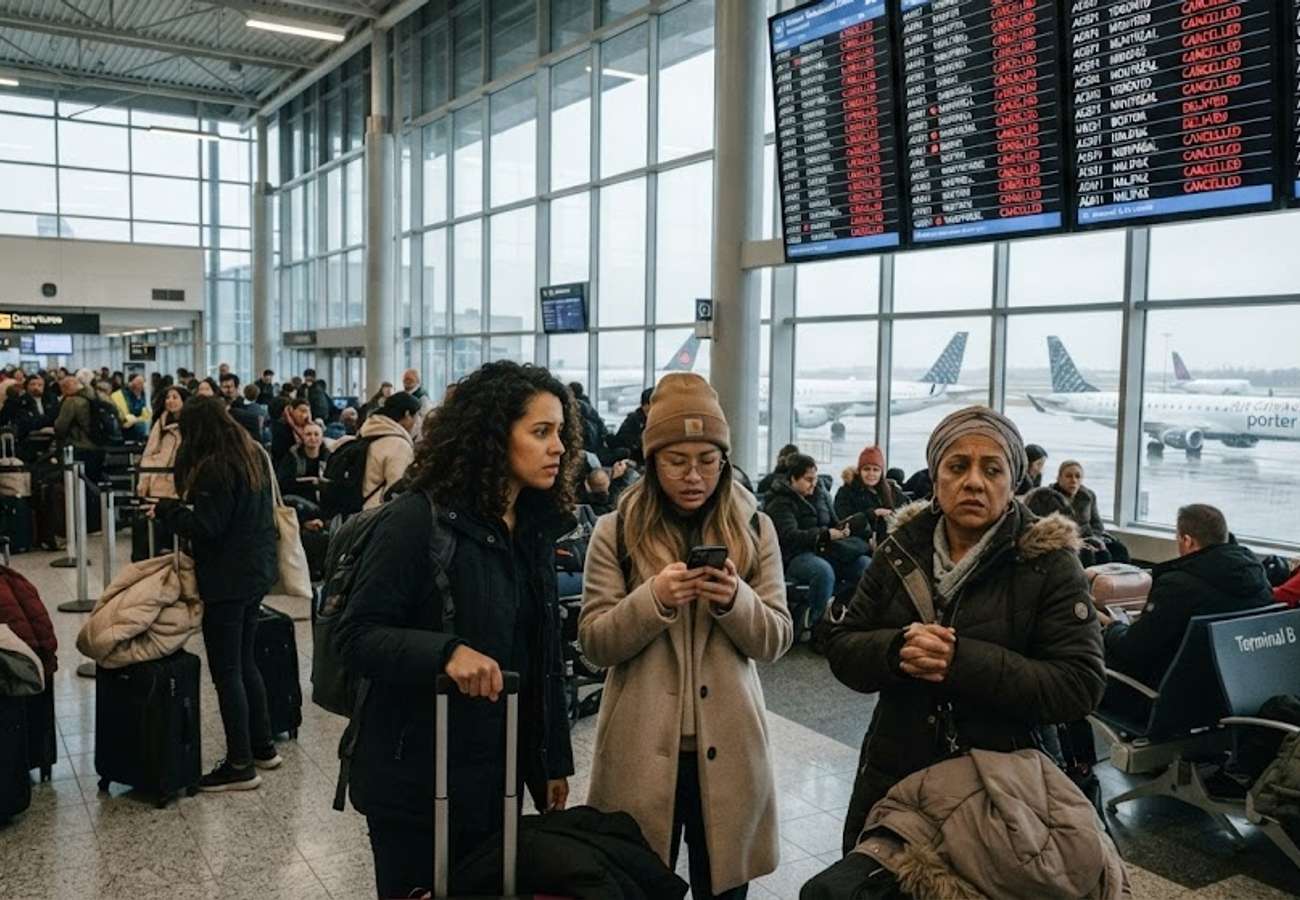
Image generated by AI
Mass Disruption Unfolds at Canada's Capital Airport
Ottawa Macdonald-Cartier International Airport ground to a halt on July 2, 2026, as five major airlines simultaneously cancelled 36 flights, leaving thousands of passengers stranded across North America. The cascading disruption rippled through domestic and international routes, trapping travellers heading to Toronto, Montreal, Boston, London, Deer Lake, and beyond in a nightmare of missed connections and sudden rebookings.
This wasn't a single incident—it was a coordinated collapse of service that exposed how fragile air travel infrastructure remains when operational challenges strike simultaneously.
The Airlines Behind the Breakdown
Jazz (Air Canada Jazz) bore the heaviest burden, cancelling 13 flights with an additional 5 delayed departures. Porter Airlines followed closely with 12 cancellations and a staggering 19 delays, essentially paralyzing their schedule. Air Canada itself cancelled 4 flights with 7 more delayed, while PAL Airlines and Air Canada Rouge contributed 4 and 3 cancellations respectively.
Reddit: "Booked with Jazz for a morning departure to Toronto. Got notification at 6 AM my flight was gone. Now stuck at airport with no rebooking for 48 hours." — r/travel
The scale of disruption reveals a systemic issue rather than isolated operational hiccups. Five carriers experiencing simultaneous meltdowns suggests shared infrastructure problems, weather events, or staffing shortages rippling across the airport's operations.
Geographic Scope: Wider Than Ottawa
The cancellations didn't remain contained. Toronto City Centre recorded 7 cancellations (a 63% cancellation rate), while Montreal experienced 3 cancellations. Smaller regional airports including Greater Fredericton, Halifax, and Greater Moncton reported individual cancellations. Cross-border routes to Boston, Newark, Washington, and Chicago felt the impact, while transatlantic services to London and Paris added an international dimension to what started as a domestic crisis.
Eastern Canadian aviation hubs absorbed the most severe damage, but the disruption's tentacles reached across the United States and overseas.
Flight Cancellation Breakdown by Carrier
The data paints a stark picture of operational strain:
| Airline | Cancelled Flights | Delayed Flights |
|---|---|---|
| Jazz (ACA) | 13 | 5 |
| Porter Airlines | 12 | 19 |
| Air Canada | 4 | 7 |
| PAL Airlines | 4 | 5 |
| Air Canada Rouge | 3 | 1 |
What Happened to Your Flight? A Passenger's Survival Guide
If you're stuck in this mess, action beats panic. Here's exactly what to do.
Monitor Real-Time Updates Obsessively
The moment you suspect trouble, check your email, SMS, and the airline's app simultaneously. Airlines notify cancellations through multiple channels, but not always instantly. Visit the airline's website directly—their app updates faster than airport announcements.
Don't rely solely on the airport announcement system. Download the FlightAware app for real-time tracking independent of airline communications. You'll know your flight status before the airline officially admits it.
Contact Customer Service—But Smart
Heading to the airport? Go directly to the airline's service desk. Stuck at home? Use their online chat or phone line to avoid airport queues entirely. The chat system typically responds faster than phone queues, which can exceed 45 minutes during widespread disruptions.
Reddit: "Called Air Canada's customer service line 6 times. Each hold lasted over an hour. Switched to the chat app and got rebooked in 12 minutes. Game changer." — r/travel
Ask directly about the next available flight, compensation policies, and whether the airline will cover hotels if rebooking extends beyond a reasonable timeframe. EU regulation requires compensation up to €600 for certain cancellations, and Canadian carriers often match these standards.
Know Your Rights Before Negotiating
Airline cancellation policies vary drastically. Many Canadian carriers offer automatic rebooking on the next available flight, meal vouchers for extended delays, and accommodation for overnight waits. Some provide compensation only if the cancellation was within their control.
Research your specific airline's policy before contacting them. You'll negotiate from a position of knowledge rather than desperation.
Explore Alternative Transportation
If the airline can't rebook you within 24 hours, consider booking independently on a competitor airline. Yes, this costs money upfront, but many carriers will reimburse documented expenses related to cancellations within their control. Keep receipts.
Also consider trains via VIA Rail for Toronto-Montreal-Ottawa routes, or buses for regional alternatives. These options often move faster than rebooking queues during system-wide disruptions.
The Bigger Picture: Why Ottawa Collapsed
The 36 simultaneous cancellations at Ottawa Macdonald-Cartier International Airport expose a critical vulnerability in Canadian aviation. When multiple carriers experience operational strain simultaneously—whether from weather, staff shortages, ground equipment failures, or system issues—the entire airport buckles.
The concentration of cancellations at Ottawa suggests the root cause likely originated with airport infrastructure, air traffic control, or shared ground services rather than individual airline issues. The fact that five independent carriers were affected simultaneously rules out isolated maintenance events or crew scheduling problems at individual airlines.
The Ripple Effect Across North America
Passengers heading to Boston, Montreal, Toronto, and beyond didn't just lose their flights—they lost connections. A cancelled morning flight from Ottawa to Toronto creates a domino effect: the Toronto-bound passenger misses their Boston connection, the Boston passenger loses their hotel booking, and the ripple spreads across North American networks.
This is why major disruptions at secondary hubs like Ottawa create outsized impact on the entire continent.
What Airlines Are Doing—And What They're Not
Airlines are managing rebookings, providing meal vouchers for delays exceeding certain thresholds, and working overtime to clear backlogs. What they're not doing universally is proactive compensation. Many passengers aren't receiving the full compensation they're entitled to because they don't know to demand it.
Don't wait for airlines to volunteer compensation. Review your flight circumstances, check your airline's policy against your specific route, and file claims if applicable.
Real-Time Updates and Future Travel
All operational information originated from FlightAware's official tracking network, which captures real-time cancellation and delay data. Schedules remain subject to change as airlines continue managing recovery operations.
If you're booked on flights through affected airports or airlines in coming weeks, build extra buffer time into connections. Assume 2-3 hour delays rather than expecting schedules to run normally. Flexibility isn't optional—it's survival.
The Lesson for Nomadic Professionals
For location-independent workers and frequent travellers, the Ottawa disruption reinforces a hard truth: assume every flight is vulnerable. Build slack into your schedules. Book early departures when possible. Maintain relationships with airline representatives who can expedite rebookings. Keep backup accommodation bookings flexible until flights confirm.
The travellers who navigated this crisis smoothly weren't the ones expecting smooth operations—they were the ones prepared for exactly this scenario.
Stay vigilant, monitor in real-time, and never trust an airline schedule without a backup plan.
Related Travel Guides
Disclaimer
This article is for informational and educational purposes only. It does not constitute legal, financial, or professional advice. While we strive to provide accurate and up-to-date information, travel policies, regulations, and conditions change rapidly. Always verify information with official sources before making travel decisions. Nomad Lawyer makes no representations about the accuracy, reliability, completeness, or suitability of the information provided. Readers should consult qualified professionals for advice specific to their circumstances. The views expressed in this article are those of the author and do not necessarily reflect the views of Nomad Lawyer.
Kunal K Choudhary
Co-Founder & Contributor
A passionate traveller and tech enthusiast. Kunal contributes to the vision and growth of Nomad Lawyer, bringing fresh perspectives and driving the community forward.
Learn more about our team →