
Air Canada's Ultra-Exclusive Fleet: Why Six Routes Feature All-Business Class A320s With Just 70 Seats
Breaking airline news and aviation industry updates for 2026.

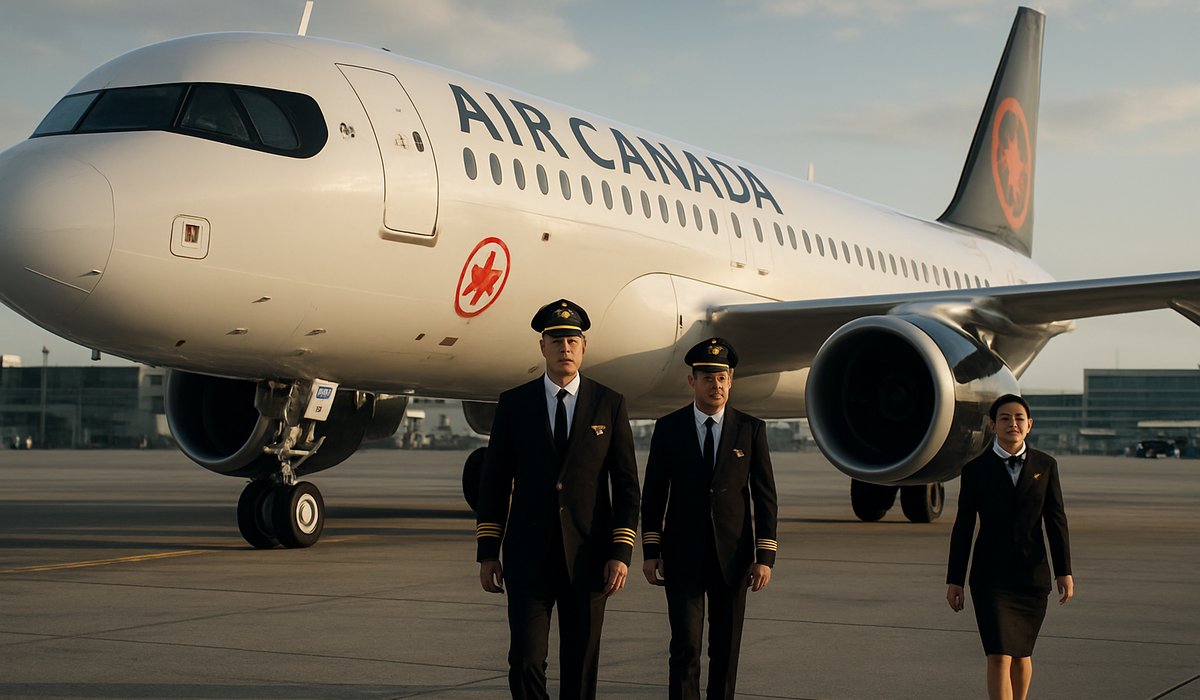
Image generated by AI
Air Canada's Ultra-Exclusive Fleet: Why Six Routes Feature All-Business Class A320s With Just 70 Seats
The Canadian carrier is reshaping premium travel economics with a niche narrowbody strategy targeting high-yield corporate and charter markets
Air Canada's Unconventional Business Class Gambit
Air Canada has quietly built one of the aviation industry's most distinctive narrowbody operations, deploying a specialized fleet of Airbus A320 aircraft stripped of economy seating and configured exclusively for premium travelers. The airline's Air Canada Jetz division operates four A320s configured with merely 70 Business Class seats—a stark contrast to the 140-plus passenger capacity found on standard A320 configurations deployed across the carrier's mainline network.
This strategic pivot represents a fundamental departure from conventional capacity management, targeting high-margin revenue streams through private charters, corporate group travel, professional sports teams, and entertainment industry clients who prioritize comfort and exclusivity over cost efficiency.
A Radical Reimagining of Narrowbody Economics
The transformation of Air Canada's A320s represents a calculated response to shifting premium travel demand patterns. By eliminating economy seating entirely, the airline maximizes per-seat revenue potential—a critical metric as jet fuel prices and operational costs continue pressuring airline margins globally.
The six-route deployment focuses on markets where business travel demand and corporate budgets support premium pricing structures. This configuration allows Air Canada to command significantly higher fares while reducing turnaround times typically associated with managing mixed-cabin operations, thereby improving aircraft utilization rates on premium-heavy routes.
Targeting High-Yield Segments in a Competitive Market
Air Canada Jetz's exclusive positioning capitalizes on an underserved market segment: organizations requiring dedicated charter capacity without the expense of full widebody aircraft deployment. The narrowbody platform delivers operational efficiency—lower fuel consumption, reduced crew requirements, and accessibility to airports where widebody operations face infrastructure constraints—while maintaining the Business Class experience corporate clients expect.
This strategy aligns with broader industry trends, where carriers increasingly pursue segmentation and yield optimization rather than competing primarily on volume. Airlines worldwide have aggressively restructured baggage charges, seat selection fees, and ancillary revenue programs following volatile fuel price cycles and geopolitical disruptions affecting operating costs.
Strategic Implications for the Aviation Sector
Air Canada's narrowbody premium experiment signals a maturing market response to economic pressures reshaping aviation economics. Rather than absorbing rising jet fuel expenses through higher published fares—which risk demand destruction—carriers are engineering fleet utilization and seating configurations to maximize revenue per available seat mile, a critical performance metric in today's cost-conscious operating environment.
The success of this model may influence how competitors across North America and Europe approach premium capacity deployment on point-to-point routes where demand for all-business configurations justifies the revenue sacrifice from foregone economy seats.
Frequently Asked Questions
What is Air Canada Jetz and how does it differ from mainline Air Canada? Air Canada Jetz operates four exclusively all-Business Class A320 aircraft configured with 70 premium seats each, contrasting sharply with mainline A320s carrying 140+ passengers in mixed cabins. The division primarily services private charters, corporate groups, sports teams, and entertainment clients rather than scheduled public routes.
Why would an airline remove economy seating from an A320? Eliminating economy capacity allows carriers to capture premium per-seat revenue, reduce operational complexity from mixed-cabin management, and access markets where all-business demand justifies higher fares. This yields stronger revenue metrics than filling additional economy seats at lower yields.
How do narrowbody all-business configurations impact airline profitability? These specialized deployments maximize revenue per available seat mile on premium-focused routes while reducing fuel consumption compared to widebody alternatives. However, they sacrifice volume capacity, requiring sustained high load factors and premium pricing to remain profitable.
Which routes does Air Canada operate with these all-business A320s? Air Canada Jetz deploys across six specific routes, though the airline doesn't publicly detail exact routings. Services focus on markets demonstrating strong corporate and charter demand between major North American and international business centers.
Is this trend likely to spread among other North American carriers? While the model remains niche, other carriers may explore similar configurations as jet fuel prices and operational cost pressures incentivize yield-focused fleet strategies over pure capacity growth strategies.
Related Travel Guides
Flight Delay Compensation Guide 2026
Understanding Airline Route Changes
Airport Security Process Updated (2026)
External Resources
Disclaimer
This article is for informational and educational purposes only. It does not constitute legal, financial, or professional advice. While we strive to provide accurate and up-to-date information, travel policies, regulations, and conditions change rapidly. Always verify information with official sources before making travel decisions. Nomad Lawyer makes no representations about the accuracy, reliability, completeness, or suitability of the information provided. Readers should consult qualified professionals for advice specific to their circumstances. The views expressed in this article are those of the author and do not necessarily reflect the views of Nomad Lawyer.
Raushan Kumar
Founder & Lead Developer
Full-stack developer with 11+ years of experience and a passionate traveller. Raushan built Nomad Lawyer from the ground up with a vision to create the best travel and law experience on the web.
Learn more about our team →