
Oneworld Deploys Alliance-Wide Digital Check-In Across Member Airlines Including Malaysia Airlines

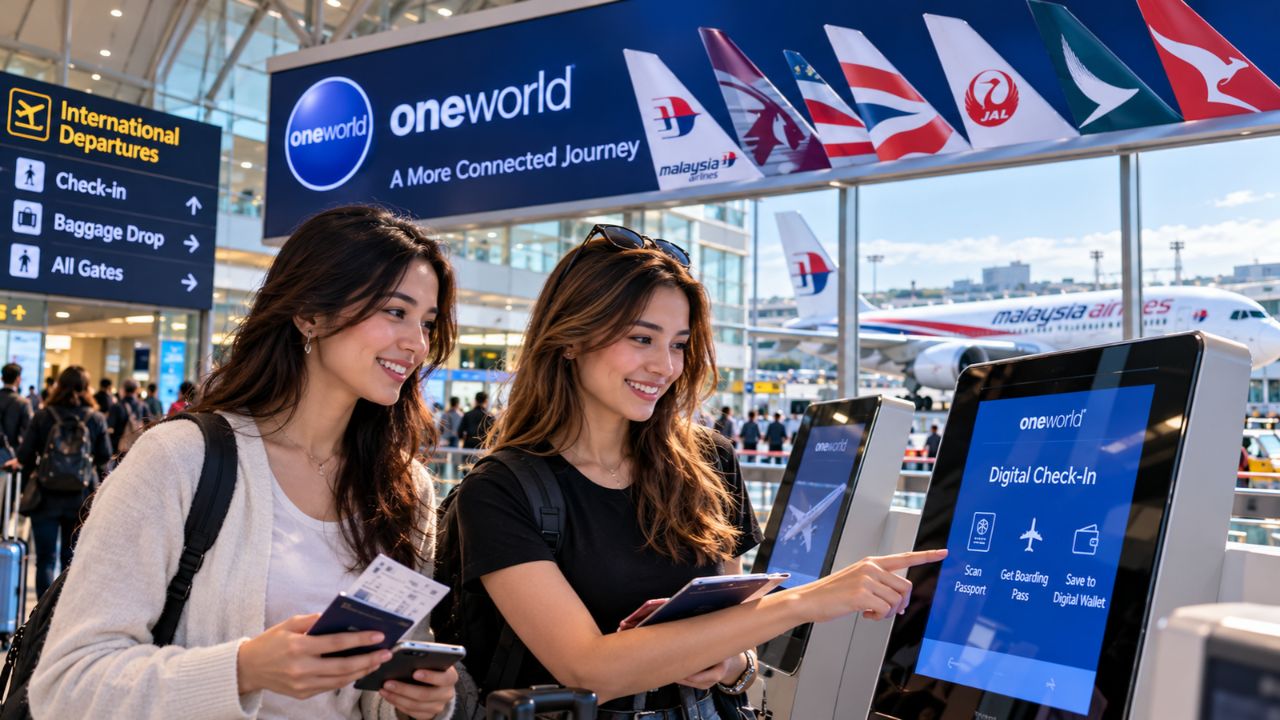
Uniting member airlines across a single operational digital interface on 12 October 2026, the oneworld Alliance has officially deployed its multi-carrier digital check-in platform across its global carrier network. The deployment marks the operational delivery of an alliance-wide digital architecture first planned in 2019, empowering passengers traveling on multi-airline itineraries—such as those connecting through Malaysia Airlines at Kuala Lumpur International Airport—to scan passports, generate partner boarding passes, and store credentials in mobile digital wallets through a single carrier application. By linking previously isolated airline Passenger Service Systems (PSS), the platform directly targets the friction of international interline connections.
Behind the commercial announcement lies a clear divide between verified software capabilities and broader consumer expectations. While the system standardizes document capture and eliminates the need to download multiple competing airline applications, it does not introduce universal seat selection across partner cabins, deploy universal biometric boarding, or eliminate airport physical transfer desks. For passengers traveling through major Southeast Asian transit gateways, understanding what this technical integration can and cannot accomplish is essential for managing connection windows.
The Architecture of Interline Check-In: From 2019 Blueprint to 2026 Deployment
International journeys involving multiple airlines have historically confronted passengers with fragmented digital experiences. A traveler booking an itinerary originating on Malaysia Airlines in Melbourne and connecting onto British Airways in London or Qatar Airways in Doha typically had to interact with separate digital portals, wait for separate 24-hour check-in windows, and repeatedly input passport information into disparate databases.
The enhanced oneworld platform resolves this data isolation by creating a standardized application programming interface (API) layer between member airlines. Under technical standards aligned with the International Air Transport Association (IATA), the operating carrier can now securely transmit passenger name records (PNRs), machine-readable passport data, and ticket coupons directly to connecting alliance partners.
When a passenger checks in using their preferred airline application, optical character recognition (OCR) scans the passport biographical page, validates document integrity, and issues digital boarding passes for every supported leg of the journey, allowing travelers to save the complete sequence of boarding passes directly into Apple Wallet or Google Wallet.
The integration holds immediate geographic significance for Kuala Lumpur International Airport (KLIA), the primary operating fortress of Malaysia Airlines. Serving as a transit bridge between Australasia, Southeast Asia, Europe, and the Indian subcontinent, KLIA relies heavily on transit passengers transferring between regional feeder flights and long-haul partner routes. A standardized digital check-in process reduces check-in counter queuing, prevents document re-entry bottlenecks, and establishes greater schedule predictability for tight flight transfers.
Separating Operational Reality From Marketing Claims
To navigate the new system effectively, travelers must decouple verified digital enhancements from unsubstantiated industry rumors. Speculation suggesting that the oneworld update abolishes transit counters, permits universal seat changes on partner metal, or introduces facial recognition boarding across the alliance is factually inaccurate.
| Digital Capability / Touchpoint | Verified Operational Status (12 Oct 2026) | Technical Delivery Mechanism | Passenger Limitation & Action Required |
|---|---|---|---|
| Multi-Carrier Check-In | Fully Operational | Shared alliance API bridging partner PSS systems | Operates only on single-ticket interline bookings |
| Passport Data Pre-Validation | Fully Operational | Mobile optical character recognition (OCR) scanning | Manual physical checks still required at select visa checkpoints |
| Digital Wallet Boarding Passes | Fully Operational | Apple Wallet and Google Wallet integration | Available only if operating carrier and departure airport support mobile gates |
| Cross-Carrier Seat Selection | Unsupported | Restricted by individual airline seat-fee architectures | Seat maps and paid seat upgrades require visiting operating airline app |
| Alliance-Wide Biometric Boarding | Not Implemented | Individual airport biometric trials operate independently | Physical passport and digital or paper boarding pass must be presented |
| Abolition of Transfer Desks | Inaccurate Claim | Traditional physical airside counters remain active | Essential for missed connections, visa checks, and retagging |
| Through-Checked Baggage | Unchanged | Governed by traditional IATA interline baggage accords | Passengers must re-claim bags if transiting international-to-domestic |
The software does not provide an open gateway to modify seat assignments across partner fleets. Legacy airlines guard their seat monetization strategies aggressively, charging variable fees for extra-legroom seats and forward cabin rows. Because the oneworld digital link does not reconcile different ancillary pricing models, seat changes on connecting legs remain locked behind the operating carrier's proprietary website or airport check-in desk.
Similarly, physical airside transfer counters remain indispensable for managing flight cancellations, rebooking disrupted passengers, and inspecting physical entry visas required by sovereign border authorities.
Expert Analysis: Data Harmonization and the Limits of Alliance Automation
The launch of oneworld's digital check-in demonstrates how global airline alliances are shifting from passive marketing pacts into coordinated technology networks. In an era where ultra-long-haul point-to-point routes threaten to bypass traditional transit hubs, alliances must reduce connection friction to protect their hub-and-spoke economics.
For travelers booking this route, the direct consequence is a streamlined pre-departure preparation window combined with strict operational boundaries. Sinking passport data into a single carrier app saves significant time during online check-in, particularly for travelers on multi-leg itineraries through Kuala Lumpur, London Heathrow, or Tokyo Narita. However, travelers must recognize that holding a digital boarding pass in a mobile wallet does not exempt them from sovereign document scrutiny. If an onward destination requires a physical electronic travel authority, paper visa sticker, or health certification, departure gate agents will still enforce document verification stops, generating unexpected gate holding delays for unprepared passengers.
The pricing pressure this creates means that full-service alliance carriers will leverage digital convenience to justify fare premiums over unaligned budget competitors. Low-cost long-haul carriers operating in Southeast Asia offer disconnected point-to-point flights that require self-transfers, re-checking baggage, and clearing immigration between legs.
By offering automated multi-carrier digital check-in alongside interline baggage protection, oneworld carriers position their network as a premium, low-friction alternative. Yet, this convenience comes at a commercial cost: carriers are shifting passenger service tasks onto consumer smartphones, allowing airlines to reduce physical ground staffing at transfer hubs while capturing higher margins on complex interline fares.
Key Takeaways
- Alliance-Wide Activation: Oneworld deployed its shared digital check-in platform across all member airlines on 12 October 2026, fulfilling a strategic roadmap initiated in 2019.
- Streamlined Document Flow: Passengers can scan passports and generate digital wallet boarding passes for connecting partner flights through a single member airline app.
- Strategic Hub Impact: Malaysia Airlines’ integration strengthens Kuala Lumpur International Airport’s competitiveness as an international transfer hub for multi-carrier itineraries.
- Clear Software Limits: The platform does not support cross-carrier seat selection, universal biometric check-in, or the closure of physical airport transfer desks.
- Interline Baggage Untouched: Baggage acceptance and through-tagging remain subject to traditional bilateral interline agreements and destination customs regulations.
FAQ: Oneworld Multi-Carrier Digital Check-In 2026
What did the oneworld alliance launch on 12 October 2026?
Oneworld launched an alliance-wide digital check-in platform that allows passengers flying multi-carrier itineraries to scan passports and obtain digital boarding passes for partner flights through one airline app.
Can I select seats on a partner airline using this platform?
No. The platform does not provide universal seat selection across partner airlines. Seat selection and paid seat upgrades must still be managed directly with the airline operating that specific flight.
Does this digital check-in eliminate airport transfer desks?
No. Airport transfer counters remain operational and necessary for managing irregular operations, flight disruptions, baggage issues, and mandatory travel document checks.
Do I still need to carry my physical passport?
Yes. Digital passport scanning simply pre-validates passenger data. Sovereign immigration authorities and airline gate staff still require physical passports to be inspected before international boarding.
[While oneworld's technical integration modernizes multi-carrier flight check-in, seasoned travelers know that software convenience never replaces careful transit planning.]
Related Travel Guides
Disclaimer
This article is for informational and educational purposes only. It does not constitute legal, financial, or professional advice. While we strive to provide accurate and up-to-date information, travel policies, regulations, and conditions change rapidly. Always verify information with official sources before making travel decisions. Nomad Lawyer makes no representations about the accuracy, reliability, completeness, or suitability of the information provided. Readers should consult qualified professionals for advice specific to their circumstances. The views expressed in this article are those of the author and do not necessarily reflect the views of Nomad Lawyer.
Naina Thakur
Contributor & Travel Specialist
Travel enthusiast and legal writer covering visa regulations, responsible tourism, and cultural journeys across global destinations.
Learn more about our team →