
Oman Heatwave Alert: 49°C Peak Temps Force Dusk-to-Dawn Travel Strategy
Oman's Barka region hits 49.1°C as early summer heatwave grips the Sultanate. Tourists and residents reshape travel routines around cooler dawn and dusk hours. Essential safety guidance inside.

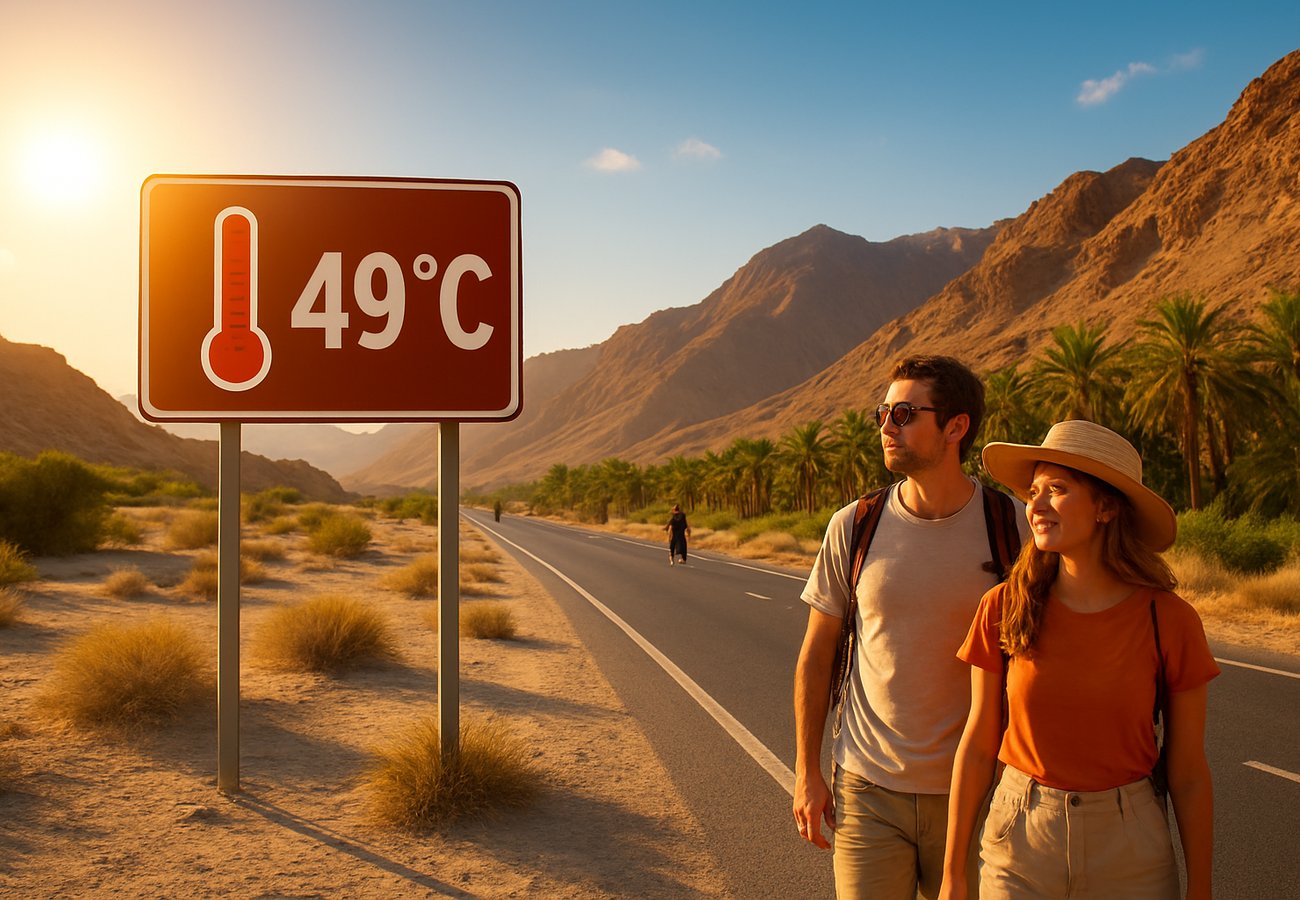
Image generated by AI
Oman's Fiery Reality: Record Heat Shatters Travel Expectations
I've covered heat-related travel disruptions across the Middle East for years, but what's unfolding in Oman right now represents a dramatic shift in how extreme weather is reshaping tourism patterns. The Omani Civil Aviation Authority (CAA) just confirmed that three coastal and inland towns have smashed temperature records—and the numbers are staggering.
Barka recorded 49.1°C, Suwaiq hit 48.8°C, and Wadi Al Maawil peaked at 48.0°C in a single 24-hour period in early June. These aren't outlier readings. They're part of a coordinated heatwave that's simultaneously baking multiple governorates across northern Oman, with stations in Saham and Bidbid reporting highs just under 48°C.
The meteorological forecast from the Directorate General of Meteorology already warned that temperatures could reach the "late 40s"—and that prediction is now playing out in real time across the Sultanate.
How Tourists Are Rewriting Their Itineraries
What struck me most wasn't the heat itself, but how quickly the tourism ecosystem adapted. Residents and visitors aren't abandoning Oman's stunning coastal destinations. Instead, they're embracing what locals are calling a "dusk-to-dawn travel rhythm."
Here's the practical shift: Tour operators are now promoting early-morning fort visits, harbour walks, and dhow-viewing stops before 10 a.m., when the mercury begins its relentless climb. By midday, families and tour groups retreat to air-conditioned museums, indoor souks, and hotel spa facilities. Evening activities resume once the sun dips below the horizon and sea breezes return.
Reddit: "Visited Barka last summer at 47°C. The locals laughed at us for trying noon exploration. Dawn walks and evening dhow rides changed everything." — r/travel
Hotels along Barka and Suwaiq are now emphasizing shaded pools, heritage tours conducted inside climate-controlled facilities, and strategically timed shore excursions. Cruise passengers docking for stopover visits are being advised by ground handlers to keep excursions short and to prioritize air-conditioned transfers between shaded promenades.
The Safety Advisory That Every Traveler Needs to Read
Authorities aren't mincing words here. The CAA's official guidance is unambiguous: treat these temperatures with caution, period.
The core directives are straightforward but non-negotiable:
- Stay hydrated constantly. Drink water far more than you think you need.
- Avoid direct sun exposure during peak afternoon hours (roughly 12 p.m. to 4 p.m.).
- Seek shade or air-conditioned environments whenever possible.
- Wear light, breathable clothing and UV-protective headgear.
- In coastal towns like Barka and Suwaiq, factor in that humidity amplifies perceived heat—it feels worse than the thermometer reads.
For overland travelers planning road trips between wilayats, the Directorate General of Meteorology warns of secondary hazards. Dust rising over desert and open areas reduces visibility, while low clouds and fog patches occasionally appear at dawn in South Al Sharqiyah, Al Wusta, and Dhofar. Monitor official bulletins before departing, and avoid driving during dust episodes.
Climate Realities Reshaping Oman's Tourism Calendar
What's happening in Barka isn't a one-off anomaly. The CAA's own climate analyses show that temperatures across several parts of Oman are now more frequently reaching the upper 40s Celsius. This trend has arrived earlier each year.
The broader implication for travelers is significant: Oman is quietly repositioning its tourism calendar. Peak summer is no longer marketed as a time for desert hiking or extensive outdoor exploration. Instead, the industry is pivoting toward shoulder-season travel (April-May and September-October) for adventure activities, while summer is being rebranded as the season for short coastal breaks, resort stays, and curated cultural experiences—all built around climate reality.
The Sultanate remains committed to year-round tourism, but the packaging has fundamentally shifted. What was once considered "off-peak" summer is becoming a distinct travel product: one designed for high daytime temperatures rather than despite them.
On the Ground: How Omanis Are Adapting
Stepping back from official data, the human response in Barka, Suwaiq, and Wadi Al Maawil reveals something deeper about resilience. Residents haven't retreated indoors. Instead, they've reshaped their social rhythms.
Family gatherings, seaside walks, and coffee-shop meetups have shifted to evening hours, when the Arabian Sea breeze returns and the sky glows with amber and violet light. Hotel teams and tourism workers quietly adjust service patterns—staggering shift times, emphasizing indoor experiences during peak heat, and ensuring guests still experience genuine Omani hospitality even as the climate tests its limits.
One local guide told me: "The heat is honest. It forces you to slow down, to respect the day, and to gather when it's cool. That's when Oman's real beauty shows."
Planning Your Oman Summer Trip: A Practical Checklist
If you're committed to visiting during this period, follow this framework:
Morning Window (5 a.m. to 10 a.m.): Concentrate outdoor cultural experiences here—forts, traditional markets, harbor walks, and photo opportunities.
Midday Retreat (10 a.m. to 5 p.m.): Museum visits, indoor shopping, spa treatments, hotel pool time, and rest.
Evening Renaissance (5 p.m. onward): Waterfront café terraces, dhow cruises, corniche promenades, and evening explorations when temperatures drop.
Overland Excursions: Structure wadi and valley visits for sunrise or late afternoon, with professional guides who understand heat protocols.
Hydration and Protection: Pack electrolyte supplements, SPF 50+ sunscreen (reapply hourly if outdoors), wide-brimmed hats, and light layers. The sun at 48°C isn't forgiving.
For international travelers, booking with established tour operators who understand heat-adapted itineraries is essential. They'll know which sites are genuinely accessible during summer and which require rescheduling.
What the Meteorological Outlook Says Next
The CAA's latest bulletin suggests conditions will remain mainly clear, with ongoing dust activity in desert and open areas and occasional fog at dawn. The "late 40s" range will persist across multiple locations.
This isn't temporary. It's the new seasonal reality. Travelers planning Oman visits for June, July, or August should approach those months as a different kind of adventure—one defined by timing, respect for climate, and willingness to embrace slower, more intentional exploration.
The message from officials and tourism stakeholders is consistent: Summer travel to Oman remains possible and rewarding, but only with respect for the climate, careful planning, and a genuine commitment to the dusk-to-dawn rhythm that transforms extreme heat from a barrier into a gateway.
The heat doesn't stop Oman's magic—it just demands you meet it on its own terms.
Related Travel Guides
Disclaimer
This article is for informational and educational purposes only. It does not constitute legal, financial, or professional advice. While we strive to provide accurate and up-to-date information, travel policies, regulations, and conditions change rapidly. Always verify information with official sources before making travel decisions. Nomad Lawyer makes no representations about the accuracy, reliability, completeness, or suitability of the information provided. Readers should consult qualified professionals for advice specific to their circumstances. The views expressed in this article are those of the author and do not necessarily reflect the views of Nomad Lawyer.
Kunal K Choudhary
Co-Founder & Contributor
A passionate traveller and tech enthusiast. Kunal contributes to the vision and growth of Nomad Lawyer, bringing fresh perspectives and driving the community forward.
Learn more about our team →