
Oceania Aviation Crisis: Christmas Flight Costs Surge Amid Capacity Shortfalls
Record-high Christmas homecoming flight costs hit Sydney, Auckland, and Melbourne as 2026 data reveals a 2.5% drop in seat capacity.

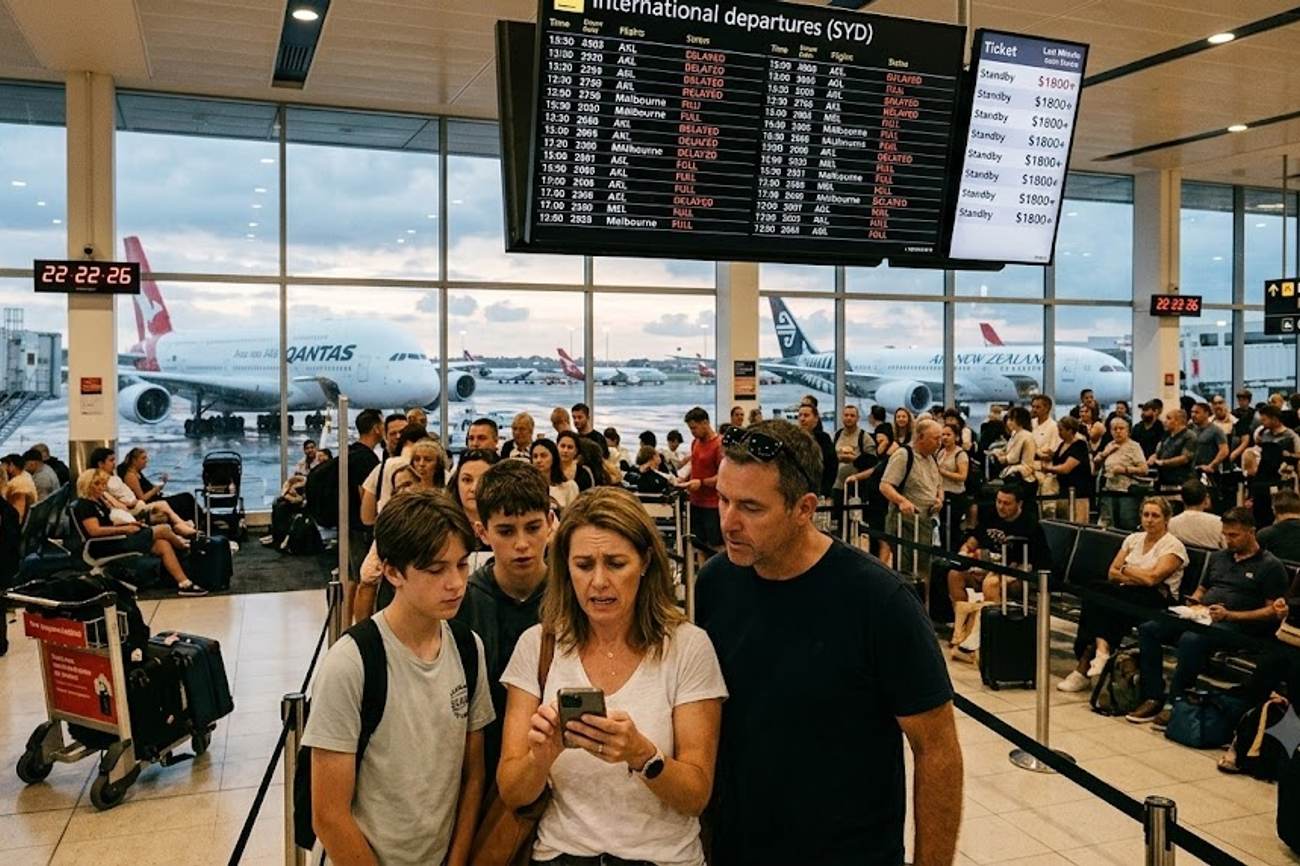
Image generated by AI
Supply-Demand Imbalance Hits Trans-Tasman Routes
The aviation corridors connecting Sydney, Melbourne, Perth, Brisbane, and Auckland are facing a severe structural deficiency. As the 2026 festive season approaches, a widening gap between available aircraft seating and passenger volume is driving airfares upward.
In Oceania, flying is a regional necessity rather than a luxury. The Trans-Tasman corridor—specifically the routes between Auckland, Sydney, and Melbourne—remains one of the world's busiest international links. However, current data suggests that the market can no longer support the traditional surge of December travelers.
The Economic Shift in Holiday Travel
The "Christmas homecoming" is a critical mass movement of people, driven by a highly inelastic demand curve. Because these reunions are culturally non-negotiable for many, passengers are often forced to accept extreme pricing to maintain family traditions.
This financial pressure is exacerbated by a shift in market competition. The previous equilibrium, where low-cost carriers capped price ceilings, has eroded. Corporate consolidation and the disappearance of independent budget airlines have allowed algorithmic yield management to replace affordable, last-minute fare options.
2026 Statistical Breakdown: Capacity vs. Demand
Verified data from the Australian Department of Infrastructure, Transport, Regional Development, Communications and the Arts reveals a stark contradiction: demand is rising while the physical means to transport passengers is shrinking.
According to the Bureau of Infrastructure and Transport Research Economics (BITRE), the industry is grappling with a contraction in Available Seat Kilometres (ASKs). This bottleneck ensures that as the December window closes, remaining seats are sold at maximum price tiers.
Simultaneously, load factors have climbed, meaning aircraft are operating at near-maximum capacity. For travelers, this means promotional economy fares vanish early, leaving only premium or flexible fares available for late bookers.
Aviation Metrics Comparison (June 2025 vs. June 2026)
| Metric | June 2025 | June 2026 | Change |
|---|---|---|---|
| Domestic Capacity (ASKs) | 7.10 Billion | 6.92 Billion | -2.5% |
| Passenger Load Factor | 80.1% | 81.5% | +1.4% |
Regulatory Intervention and Oversight
The spike in homecoming costs has evolved into a political flashpoint in both Australia and New Zealand. Transport ministries and consumer watchdogs are now investigating whether capacity is being artificially restricted to inflate yields.
The Australian Competition and Consumer Commission (ACCC) is currently monitoring the domestic sector, which is largely operated as a duopoly. The commission's focus remains on ensuring that dominant carriers are not manipulating supply to exploit the critical December travel window.
Key Takeaways
- Capacity Drop: Available seat kilometres (ASKs) fell by 2.5% year-over-year, reaching 6.92 billion in June 2026.
- Higher Occupancy: Passenger load factors increased to 81.5%, leaving almost no room for budget-tier seating.
- Market Consolidation: The decline of budget competitors has removed the "price ceiling," leading to higher baseline fares.
- Regulatory Heat: The ACCC and New Zealand authorities are scrutinizing airlines for potential artificial capacity restrictions.
FAQ
Why are Christmas flights so expensive in 2026? A combination of a 2.5% decrease in available seat capacity and a rise in passenger load factors to 81.5% has created a supply shortage during peak demand.
Which cities are most affected by these price hikes? The most significant pressure is seen in major hubs including Sydney, Melbourne, Brisbane, Perth, and Auckland.
Are there still budget options available for the holidays? Due to high load factors, promotional fares are exhausting much faster than in previous years, often selling out months in advance.
Related Travel Guides
Disclaimer
This article is for informational and educational purposes only. It does not constitute legal, financial, or professional advice. While we strive to provide accurate and up-to-date information, travel policies, regulations, and conditions change rapidly. Always verify information with official sources before making travel decisions. Nomad Lawyer makes no representations about the accuracy, reliability, completeness, or suitability of the information provided. Readers should consult qualified professionals for advice specific to their circumstances. The views expressed in this article are those of the author and do not necessarily reflect the views of Nomad Lawyer.
Kunal K Choudhary
Co-Founder & Contributor
A passionate traveller and tech enthusiast. Kunal contributes to the vision and growth of Nomad Lawyer, bringing fresh perspectives and driving the community forward.
Learn more about our team →