
New York City and Major US Hubs Expand EV Charging Networks to Transform American Tourism in 2026
New York City and other major US urban centers are aggressively expanding curbside and fast-charging EV infrastructure to support a new era of sustainable tourism and connected mobility.

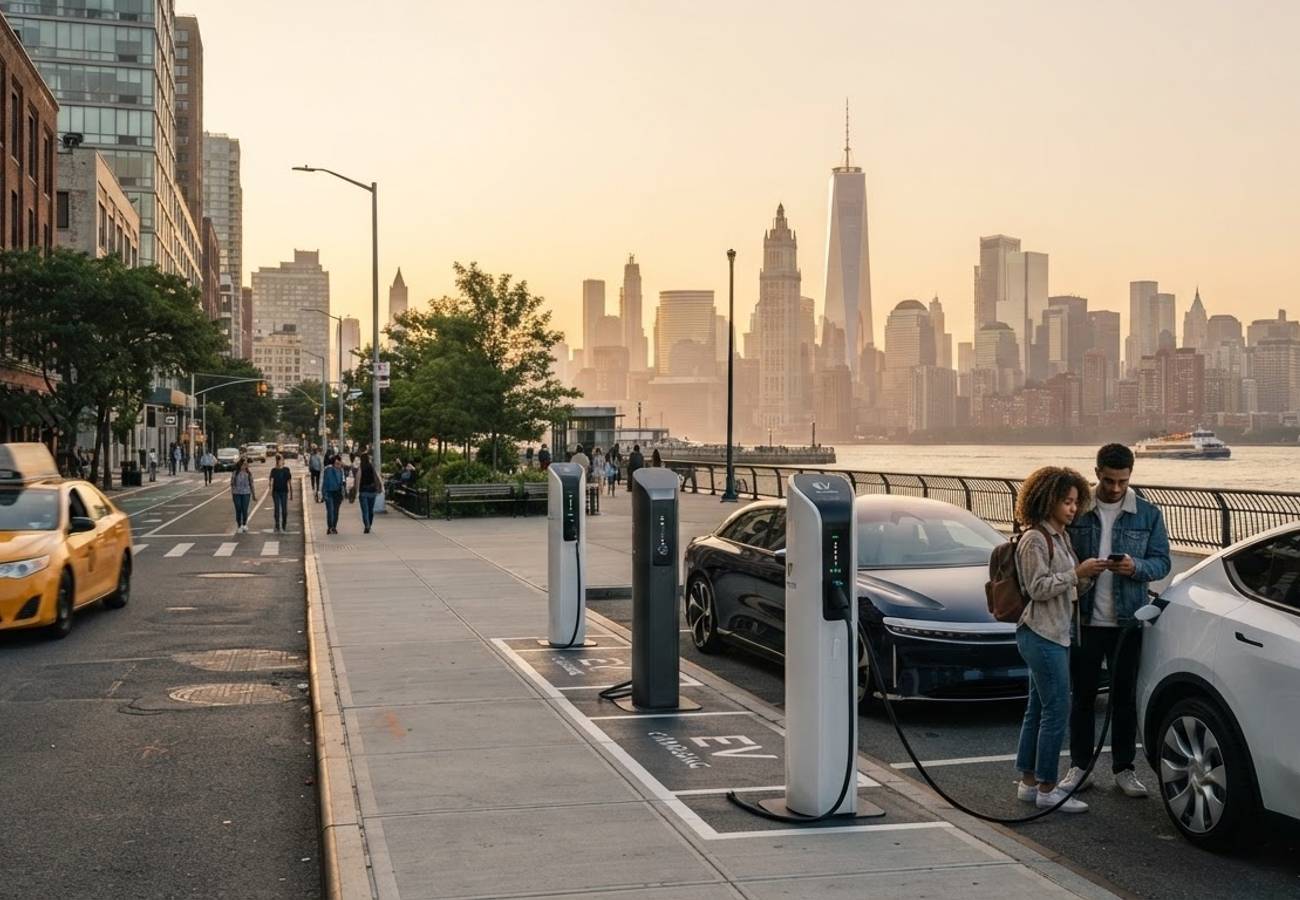
Image generated by AI
US cities are dismantling the barriers to electric travel by integrating charging ports directly into the urban fabric. From NYC's multi-million dollar grants to San Francisco's massive hubs, the shift toward "ambient charging" is making EV road trips a viable reality for millions of tourists.
The landscape of American tourism is undergoing a fundamental shift as major metropolitan areas accelerate the deployment of electric vehicle (EV) infrastructure. By moving away from the traditional "gas station" model and toward a distributed network of curbside chargers and fast-charging hubs, cities like New York, Los Angeles, and San Francisco are ensuring that sustainable mobility is no longer a luxury for those with home garages, but a standard for every visitor.
This infrastructure push addresses a critical pain point for the modern traveler: range anxiety. As more tourists opt for electric rental cars or ride-hailing services, the availability of reliable, public power becomes a primary driver of destination choice.
Strategic Shift in Urban Charging Models
The current expansion represents a pivot toward "integrated charging." Rather than requiring drivers to detour to specific charging plazas, cities are placing power sources where travelers already spend their time—hotels, municipal parking lots, airports, and curbsides.
This strategy is being implemented across a broad spectrum of US cities, including:
- East Coast Hubs: Boston, Philadelphia, Baltimore, and Pittsburgh.
- West Coast Centers: San Francisco, Los Angeles, Sacramento, and Portland.
- Sun Belt Cities: Phoenix and Dallas.
By embedding chargers into the visitor experience, these cities are transforming charging from a chore into a seamless part of the travel itinerary.
New York City's Aggressive Infrastructure Roadmap
New York City is currently executing one of the most ambitious urban charging expansions in the United States. The city is focusing on geographical diversity to ensure that visitors can navigate all five boroughs without power concerns.
In March 2026, the NYC Department of Transportation launched eight new fast chargers at a municipal lot in downtown Flushing. This is a precursor to a larger rollout of 66 EVolve NY fast chargers destined for 10 municipal parking facilities across the Bronx, Brooklyn, and Queens.
The scale of the transition is evident in the data:
- Registered EVs: Over 79,000 electric vehicles were registered in NYC as of January 2026.
- Existing Infrastructure: The city currently operates 92 curbside Level 2 chargers.
- Municipal Capacity: The city's own fleet is supported by more than 2,500 charging ports.
To ensure these systems actually work, NYC has entered a 2026 partnership with Los Angeles County to share data on charger reliability and funding gaps, creating a blueprint for urban EV scaling.
Financial Catalysts: The $35 Million Public Sector Push
To accelerate this transition, New York State has unlocked $35 million specifically for public sector organizations to develop large-scale Level 2 charging projects. This initiative, managed by the New York State Energy Research and Development Authority (NYSERDA), targets the removal of high installation costs that typically hinder public adoption.
The funding structure is designed for high-impact results:
- Grant Range: Selected projects can receive between $1 million and $15 million.
- Cost Coverage: The program covers up to 80% of eligible equipment and installation costs.
- Eligible Entities: Local governments, state agencies, and municipal university systems.
This complements the Charge Ready NY 2.0 program, which received an additional $15 million in February 2026 to provide $3,000 to $4,000 per charging point for hotels, workplaces, and multi-family buildings.
Statewide Impact and Zero-Emission Goals
The broader objective under Governor Kathy Hochul’s administration involves a nearly $3 billion investment in zero-emission vehicles. This overarching strategy includes several key programs:
- EVolve NY and EV Make Ready for infrastructure.
- Drive Clean Rebate to lower vehicle costs.
- NYTVIP (Trucking Voucher Incentive Program) and school bus incentives to decarbonize commercial transit.
As of July 2026, the number of electric vehicles on New York roads exceeded 331,000, supported by a statewide network of over 21,000 Level 2 and DC fast chargers.
Regional EV Development Comparison
| City / Urban Area | Major EV Charging Development | Impact on Travel & Tourism |
|---|---|---|
| New York City, NY | Massive municipal curbside program; $15M federal funding for 600 Level 2 chargers and solar ports. | Essential for rental EV users and tourists without private parking. |
| San Francisco, CA | Proposed 124-stall V4 Supercharger hub; expanding curbside networks. | Critical for the Silicon Valley and airport transit corridors. |
| Los Angeles, CA | Equitable access programs focusing on drivers without home charging. | Supports low-emission mobility in one of the world's largest visitor markets. |
Key Takeaways for Travelers
- Reduced Range Anxiety: The shift toward curbside and municipal lot charging means fewer detours for power.
- Increased Rental Availability: As infrastructure grows, more rental agencies are likely to offer EV options in urban centers.
- Sustainable Itineraries: Tourism is shifting toward "green corridors" where charging is integrated into the sightseeing experience.
FAQ
What is the difference between Level 2 and DC Fast Chargers? Level 2 chargers are slower and ideal for long-term parking (like hotels or workplaces), while DC Fast Chargers provide rapid power boosts for travelers on the move.
How is NYC making charging more accessible for those without garages? By installing curbside chargers and expanding municipal parking lot hubs, the city is providing "public fueling" options similar to traditional gas stations.
Who is eligible for the $35 million New York charging grants? Funding is available to New York State agencies, local governments, and municipal university systems.
The transition to electric mobility is no longer just about the cars; it is about the cities that power them.
Related Travel Guides
Disclaimer
This article is for informational and educational purposes only. It does not constitute legal, financial, or professional advice. While we strive to provide accurate and up-to-date information, travel policies, regulations, and conditions change rapidly. Always verify information with official sources before making travel decisions. Nomad Lawyer makes no representations about the accuracy, reliability, completeness, or suitability of the information provided. Readers should consult qualified professionals for advice specific to their circumstances. The views expressed in this article are those of the author and do not necessarily reflect the views of Nomad Lawyer.
Raushan Kumar
Founder & Lead Developer
Full-stack developer with 11+ years of experience and a passionate traveller. Raushan built Nomad Lawyer from the ground up with a vision to create the best travel and law experience on the web.
Learn more about our team →