
NCAA Warns Nigerian Travelers of Rainy-Season Flight Disruptions Through December
Nigeria's Civil Aviation Authority warns travelers to expect widespread flight delays and cancellations as rainy season intensifies across major airports through December 2026, affecting domestic and international routes.

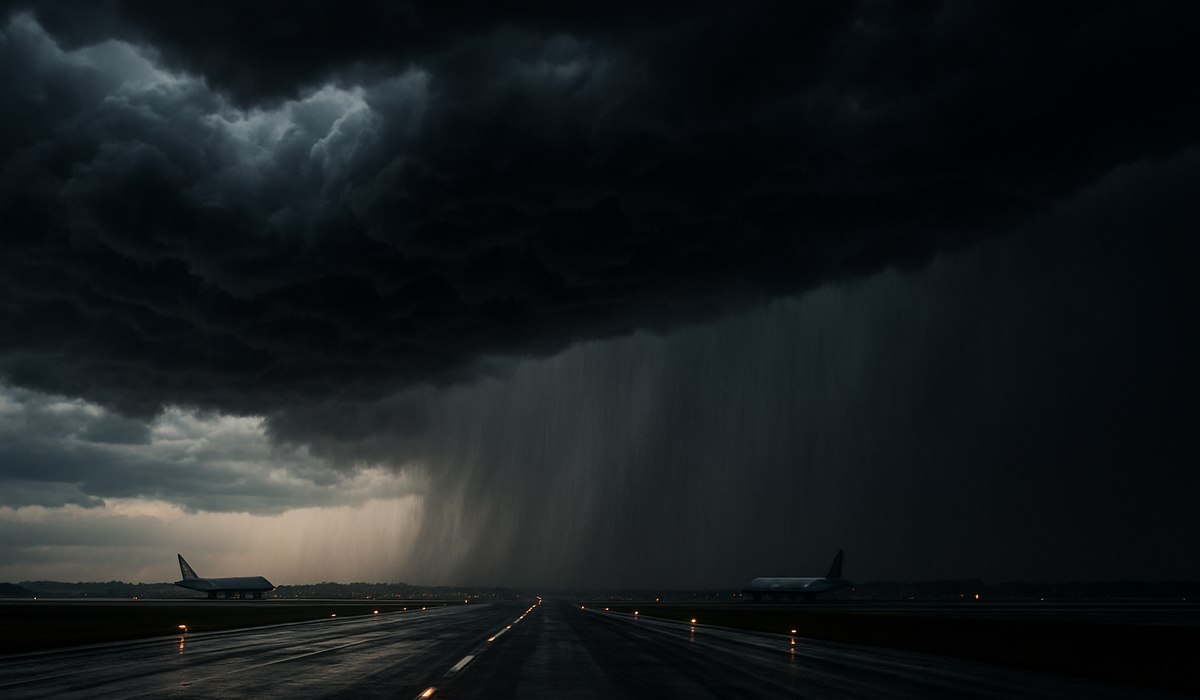
Image generated by AI
Nigeria's Aviation Authority Issues Critical Rainy Season Weather Alert
The Nigeria Civil Aviation Authority (NCAA) has issued formal guidance warning travelers to prepare for substantial flight delays and cancellations as the country's rainy season intensifies from April through December 2026. The regulatory body cited hazardous meteorological conditions—including thunderstorms, reduced visibility, and heavy rainfall—as primary threats to flight operations across Nigeria's busiest hubs. The NCAA warns that weather-related disruptions will likely extend beyond traditional peak disruption months, affecting travelers during the crucial year-end holiday period when booking demand peaks. Airlines operating domestic and international routes from Lagos, Abuja, and Port Harcourt face mounting operational pressure as convective storms become more frequent along major air corridors.
NCAA Issues Weather Disruption Alert for Nigerian Airports
The Nigerian Meteorological Agency's seasonal outlooks confirm that convective storms and intense rainfall will dominate weather patterns through late November and early December across southern Nigeria. The NCAA's formal advisory documents emphasize that pilots must prioritize safety margins over schedule adherence, meaning last-minute delays, diversions, and cancellations will become routine operational responses to deteriorating weather.
Historical flight operations data from 2024 revealed that nearly 50% of domestic flights experienced delays during peak rainy months, with dozens cancelled weekly. Consumer protection agencies documented sharp increases in refund claims and passenger complaints during these periods, particularly around December travel windows. The regulatory framework in Nigeria permits airlines to limit compensation when weather qualifies as a "force majeure" or safety-critical factor, shifting financial burden to passengers in many cases.
Current infrastructure projects at major terminals—including runway maintenance and taxiway upgrades—further constrain available capacity during the rainy season. When combined with reduced visibility conditions, these temporary limitations create compounding delays that ripple across multiple flight rotations and connected routes.
Which Major Hubs Face Greatest Risk During Rainy Season
Lagos's Murtala Muhammed International Airport (MMIA) handles over 60% of Nigeria's commercial traffic, making it the primary weather vulnerability point. Storm cells forming over the Lagos coastal zone frequently force holding patterns, pushing aircraft into fuel conservation patterns and missed departure slots.
Nnamdi Azikiwe International Airport in Abuja experiences particular challenges when low-cloud conditions develop, as reduced visibility forces increased separation standards between aircraft. Recent reports documented temporary slowdowns and extended ground processing times affecting both domestic and international operations.
Port Harcourt International Airport sits in Nigeria's most rainfall-intensive region, experiencing the longest rainy season extension. Aircraft diversions from Port Harcourt routinely redirect passengers to alternative airports 100+ kilometers away, creating multi-hour disruptions.
Secondary airports serving cities like Ibadan, Kano, and Enugu lack alternative routing infrastructure, meaning weather closures at these facilities leave passengers stranded without viable same-day alternatives. The NCAA warns that regional route disruptions cascade through hub-and-spoke networks, affecting travelers on completely different routes.
What Travelers Should Know About Safety Protocols and Delays
Nigerian aviation safety standards require pilots to maintain strict separation protocols during adverse weather, preventing schedule compression even when significant passenger backlogs develop. This safety-first approach means that delays in Nigerian airspace often exceed those in other West African nations, where weather thresholds differ.
The NCAA mandates that airlines provide passenger communication updates every 30 minutes during delays exceeding two hours, though real-time flight tracking remains inconsistent across carriers. Passengers should independently monitor conditions using resources like FlightAware, which provides real-time radar data and delay tracking for Nigerian airports.
Compensation eligibility under Nigerian aviation consumer protection rules depends on classifying the delay cause. Weather-related cancellations typically exempt airlines from €250–€600 compensation obligations required under international regulations, though passengers retain refund rights if they choose alternate transportation.
Travel insurance becomes critical during rainy season bookings, as standard policies often exclude weather-related cancellations. Premium travel insurance products specifically covering adverse weather conditions can recover ground accommodation costs, meal expenses, and rebooking fees when cancellations occur.
How Airlines Are Preparing for Extended Seasonal Disruptions
Major carriers operating in Nigeria—including Air Peace, Dana Air, and Arik Air—have announced pre-rainy-season scheduling adjustments designed to build buffer time into flight rotations. These conservative scheduling practices mean fewer daily frequencies on some routes, potentially creating earlier booking deadlines and higher seat prices.
Airlines have increased ground crew staffing during peak rainy season windows to accelerate turnaround times between flights. However, observers note these measures address only minor efficiency gains when weather forces complete flight cancellations.
The NCAA has coordinated with airport operators to prioritize de-icing and drainage infrastructure, particularly at runway approaches susceptible to standing water and hydroplaning hazards. These maintenance activities sometimes reduce available runway capacity by 20–30% during peak rainfall periods.
International carriers—including British Airways, Ethiopian Airlines, and Lufthansa—serving Nigerian gateways have added weather contingency aircraft to regional operations, enabling faster recovery from disruption cascades. Domestic carriers lack this flexibility due to limited fleet sizes, making their recovery times substantially longer.
Traveler Action Checklist
1. Book flights at least 3–4 weeks in advance during May–December to secure preferred departure times and understand full airline policies before purchasing.
2. Purchase comprehensive travel insurance explicitly covering adverse weather cancellations, baggage delays, and ground accommodation during involuntary overnight stays.
3. Select flight times departing before 2 PM local time when storm development is typically less advanced, increasing same-day completion probability.
4. Enable push notifications on your airline's mobile app and register with FlightAware alerts for real-time delay tracking.
5. Confirm flights 48 hours before departure directly with your airline, not through travel agents, to receive cancellation notices immediately.
6. Document all expenses related to delays exceeding four hours, including meals, communications, and accommodation, for potential compensation claims.
7. Keep alternative flight options identified before traveling, noting which airlines serve your destination and their typical weather response protocols.
8. Review your airline's compensation policy on their official website, as NCAA guidelines permit carriers to set varying standards for non-weather disruptions.
9. Arrive at airports 4 hours early for international flights and 3 hours for domestic flights, as rainy season weather occasionally forces rapid security screening increases.
10. Maintain contact information for your airline's customer service team and the NCAA's traveler hotline for real-time condition updates during your journey.
Rainy Season Impact on Regional Flight Networks
Weather disruptions at hub airports create cascade effects throughout Nigeria's regional network. A Lagos departure delay automatically triggers secondary delays for connecting passengers bound for Port Harcourt, Kano, Calabar, and international gateways. The NCAA acknowledges that weather-induced hub congestion sometimes affects 15–20 downstream flights within a single afternoon.
Abuja's position as Nigeria's secondary hub introduces additional vulnerability. When thunderstorm cells move from southern coastal regions northward, they create a compressed weather window where both Lagos and Abuja simultaneously experience operational challenges. Aircraft rerouting between these facilities becomes inefficient, creating passenger backlogs that take 24–48 hours to clear.
Cross-border regional routes—particularly Lagos to Accra, Abuja to Douala, and Port Harcourt to Libreville—experience disproportionate disruption risk because weather phenomena frequently span multiple West African nations simultaneously. Passengers on these routes should monitor regional meteorological forecasts, not just Nigeria-specific conditions.
| Airport | Annual Rainy Season Delay Rate | Peak Disruption Months | Average Delay Duration | Cancellation Frequency | Primary Weather Hazards |
|---|---|---|---|---|---|
| Lagos |
Disclaimer
This article is for informational and educational purposes only. It does not constitute legal, financial, or professional advice. While we strive to provide accurate and up-to-date information, travel policies, regulations, and conditions change rapidly. Always verify information with official sources before making travel decisions. Nomad Lawyer makes no representations about the accuracy, reliability, completeness, or suitability of the information provided. Readers should consult qualified professionals for advice specific to their circumstances. The views expressed in this article are those of the author and do not necessarily reflect the views of Nomad Lawyer.
Raushan Kumar
Founder & Lead Developer
Full-stack developer with 11+ years of experience and a passionate traveller. Raushan built Nomad Lawyer from the ground up with a vision to create the best travel and law experience on the web.
Learn more about our team →