
Navi Mumbai Airport Just Delayed International Flights — Here's Why
Navi Mumbai International Airport delays its highly anticipated international flight launch due to rising fuel costs and global geopolitical tensions.

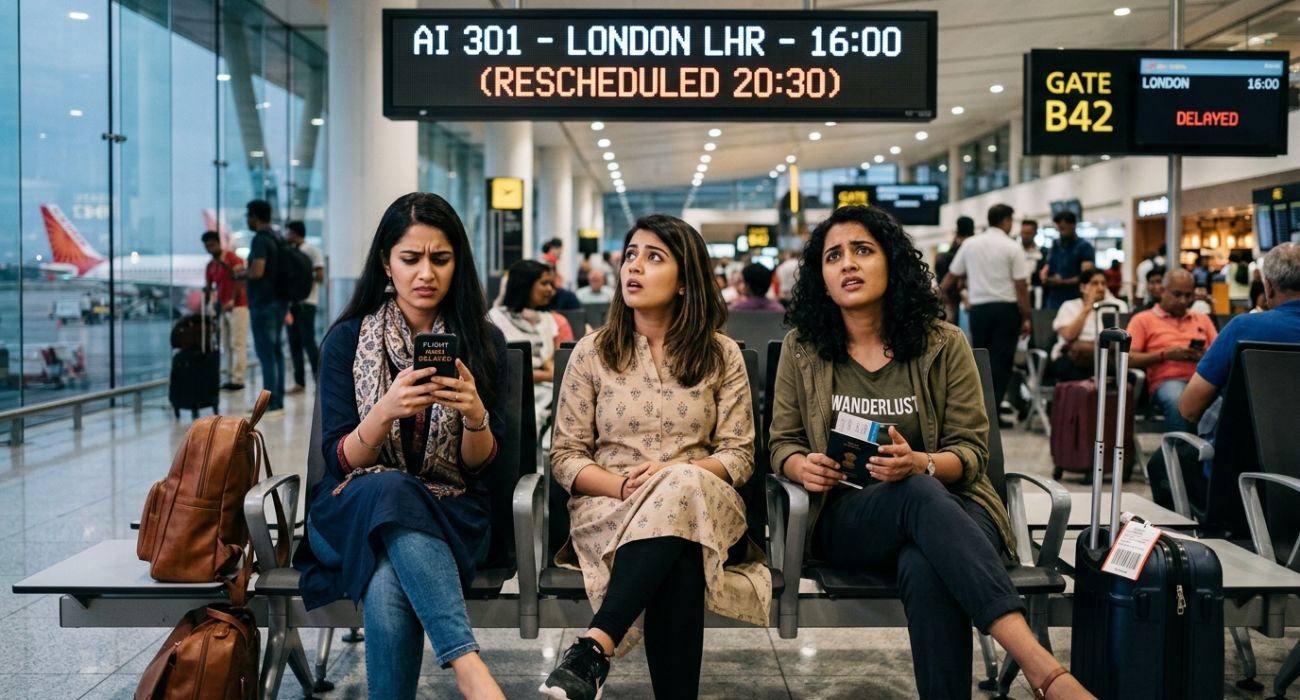
Image generated by AI
Quick Summary
- Navi Mumbai International Airport (NMI) has officially paused the launch of its much-anticipated international flights.
- Rising aviation turbine fuel costs, fueled by geopolitical tensions involving the United States and Iran, have disrupted airline profitability for long-haul routes.
- IndiGo’s planned international route rollout for late March has been deferred indefinitely.
- Domestic operations continue to break records, currently processing roughly 20,000 daily passengers with major infrastructure expansions underway.
Navi Mumbai International Airport (NMI) has unexpectedly delayed the launch of its international flight operations, temporarily grounding its global aviation ambitions. While the cutting-edge greenfield facility continues to shatter domestic passenger records, shifting global geopolitical dynamics—specifically escalating tensions involving India, the United States, and Iran—have sent aviation fuel prices soaring. This sharp increase in operating costs has forced major carriers to aggressively rethink their expansion strategies, leaving travelers eager for new international connections in a holding pattern.
Why Navi Mumbai Airport International Flights Are Grounded
The delay in launching Navi Mumbai Airport international flights is not due to domestic infrastructure shortcomings, but rather volatile global economic headwinds. Aviation turbine fuel (ATF) makes up a massive portion of any airline’s operating budget. Recent geopolitical friction in West Asia has caused a significant spike in these fuel costs, severely disrupting the financial viability of launching new cross-border routes.
Operating long-haul and short-haul international flights out of a developing airport requires a highly stable cost environment to mitigate financial risk. Without that stability, expanding into the global market is currently considered too high-risk for carriers actively establishing a presence at NMI. Authorities have urgently petitioned the Government of Maharashtra to slash the value-added tax (VAT) on aviation fuel from 18 percent to a mere 1 percent in an effort to restore airline competitiveness against Middle Eastern megahubs.
Key Facts & Highlights
- Delayed Launch: International operations planned for late March 2026 are deferred without a confirmed new timeline.
- Carrier Impacted: IndiGo (6E) was initially slated to kick off global routes starting March 29.
- Fuel Cost Crisis: Rising global energy prices, triggered by US-Iran tensions, are the primary culprit behind the pause.
- Domestic Volume: The airport is managing 156 daily domestic services, flying around 20,000 passengers daily.
- Passenger Loads: Average passenger volume per flight has steadily climbed from 155 to 170.
- Future Capacity: Multi-phase expansion strategies actively target a massive 90 million annual passengers.
- Massive Investment: The Adani Group has committed ₹80,000 crore toward infrastructure and terminal development.
How Rising Fuel Costs Altered IndiGo’s Launch Strategy
IndiGo (6E) had ambitious plans to position Navi Mumbai as a premier hub for its expanding global network, aggressively targeting a March 29 rollout for its inaugural international services. However, the unexpected spike in aviation turbine fuel prices fundamentally altered the airline's launch economics.
For Indian carriers operating on thin margins, launching unproven international routes from a new hub requires significant early investment and predictable overhead. The fluctuating energy market ultimately prompted IndiGo and other key operators to adopt a highly cautious approach, indefinitely deferring their global flight schedules until cost conditions stabilize.
Domestic Traffic Soars While Infrastructure Expands
Despite the international setback, the domestic narrative at Navi Mumbai International Airport remains overwhelmingly positive. Since launching operations during the Christmas holiday period, domestic traffic has surged. Congestion at Mumbai’s legacy primary airport has successfully driven massive traveler volume toward the modern Navi Mumbai facility. Aviation analysts project that daily passenger traffic at NMI could skyrocket to 50,000 by December.
Simultaneously, the Adani Group is pressing forward with its immense ₹80,000 crore infrastructure investment. Construction on a highly anticipated second terminal is slated to begin immediately following the monsoon season. Utilizing standardized equipment and precast materials for rapid assembly, this upcoming terminal is designed to drastically increase the airport's passenger handling capacity from 20 million to 50 million annually.
What This Means for Travelers
For travelers residing in western India, the wait for seamless international departures from Navi Mumbai will unfortunately continue. Passengers looking to fly abroad must continue utilizing Mumbai's primary international airport or route through other established national hubs. However, domestic travelers will benefit immensely in the short term, as airlines will likely reallocate aircraft and resources to strengthen regional connectivity within India, keeping domestic fares competitive and schedules robust.
Conclusion
The temporary suspension of Navi Mumbai Airport international flights powerfully illustrates how global economic shifts can directly impact local travel infrastructure. As the aviation industry waits for energy markets to stabilize, Navi Mumbai International Airport is smartly utilizing this holding period to aggressively scale its domestic network and construct a world-class second terminal. Once geopolitical tensions ease, NMI remains perfectly positioned to emerge as one of the most formidable international aviation hubs in the Asia-Pacific region.
Frequently Asked Questions (FAQ)
Why are international flights delayed at Navi Mumbai Airport? The launch of international flights has been paused primarily due to soaring aviation turbine fuel costs caused by geopolitical tensions involving the US and Iran.
When will international flights start from Navi Mumbai Airport? Currently, there is no confirmed timeline for the launch of international operations. Airlines are waiting for global fuel prices and market conditions to stabilize before proceeding.
Which airlines were planning to launch international routes? IndiGo (6E) was among the first major carriers slated to begin international routes from the airport, originally targeting a launch date of March 29.
Is Navi Mumbai Airport currently open for domestic travel? Yes, domestic operations are thriving. The airport currently manages 156 daily services and handles approximately 20,000 passengers each day, effectively easing congestion at Mumbai's primary airport.
Disclaimer
This article is for informational and educational purposes only. It does not constitute legal, financial, or professional advice. While we strive to provide accurate and up-to-date information, travel policies, regulations, and conditions change rapidly. Always verify information with official sources before making travel decisions. Nomad Lawyer makes no representations about the accuracy, reliability, completeness, or suitability of the information provided. Readers should consult qualified professionals for advice specific to their circumstances. The views expressed in this article are those of the author and do not necessarily reflect the views of Nomad Lawyer.
Kunal K Choudhary
Co-Founder & Contributor
A passionate traveller and tech enthusiast. Kunal contributes to the vision and growth of Nomad Lawyer, bringing fresh perspectives and driving the community forward.
Learn more about our team →