
Delays Cancellations Myrtle Beach: 16 Flights Disrupted March 29
Myrtle Beach International Airport (MYR) experienced significant delays and cancellations on March 29, 2026, affecting 13 delayed and 3 canceled flights across American, Delta, Spirit, and United Airlines. Coastal travel disrupted.

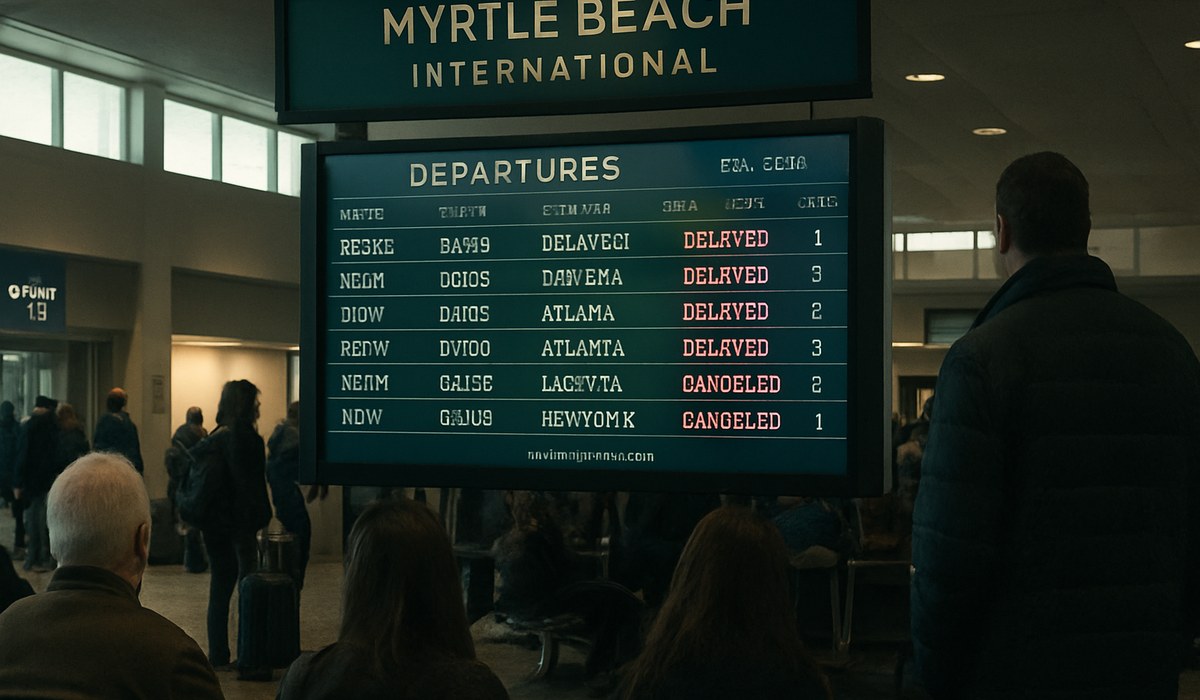
Image generated by AI
Myrtle Beach International Airport (MYR) ground operations to a near halt on March 29, 2026, when 13 flights were delayed and 3 canceled across major carriers. The disruption affected 16 total flight operations, catching travelers off guard during peak spring leisure travel season at South Carolina's primary beach gateway. American Airlines, Delta Air Lines, Spirit Airlines, and United Airlines all experienced significant schedule conflicts, leaving passengers scrambling to rebook connections or adjust vacation plans.
Root Causes Behind Myrtle Beach's March 29 Flight Disruptions
The delays and cancellations at MYR stemmed from a combination of system-wide network strain and weather-related cascading effects rippling from major U.S. hub airports. While Myrtle Beach itself did not experience severe local weather, the beach destination's flight schedule depends heavily on aircraft rotations and crew positioning from larger regional hubs including Charlotte (CLT), Atlanta (ATL), and Memphis (MEM). When delays accumulate at these upstream connections, secondary airports like MYR absorb the impact through compressed turnaround times and aircraft unavailability. The Federal Aviation Administration (FAA) reported elevated congestion across the Southeast on March 29, creating bottlenecks that filtered downstream to smaller leisure airports. Additionally, spring staffing constraints and operational recovery from winter weather events compounded the stress on carrier networks. According to FlightAware, delays and cancellations myrtle beach reflected broader national patterns affecting U.S. airline reliability that weekend.
American Airlines and Delta Air Lines: Major Carriers Hit Hard
American Airlines and Delta Air Lines, which operate year-round and seasonal service from MYR to East Coast and Midwest hubs, bore much of the operational burden on March 29. Both carriers maintain substantial frequencies connecting Myrtle Beach to Charlotte, Atlanta, and Philadelphia, making them dominant players at the coastal airport. When disruptions strike these two airlines, they automatically affect dozens of connecting passengers heading to international or domestic onward destinations. Delta's hub-and-spoke model meant that late-arriving aircraft from other regions could not depart MYR on schedule, creating a domino effect. American Airlines passengers bound for Northeast connections experienced particular strain, as rebooking options for same-day international flights grew scarce. The delays and cancellations myrtle beach operations exposed how tightly integrated secondary airports are with major carrier networks.
Spirit Airlines and United Airlines: Low-Cost and Midwest Impact
Spirit Airlines, operating primarily budget leisure routes from MYR to major metros, serves price-sensitive travelers and second-home owners commuting between the Grand Strand and regional hubs. Cancellations on Spirit flights have outsized consequences for these passenger segments, as fare-shopping alternatives fill quickly during peak season. United Airlines' connections to Midwest cities from Myrtle Beach faced similar disruptions, limiting access for travelers from markets where only a handful of daily frequencies operate during spring. The low-cost carrier's operational challenges meant many budget-conscious leisure travelers lacked viable same-day alternatives, forcing longer waits or multi-day rebookings. Together, Spirit and United represented critical capacity for value-conscious beach destination traffic.
Live Flight Tracking and Real-Time Information Resources
Travelers experiencing delays and cancellations at MYR on March 29 could access live updates via FlightAware, which provides real-time flight status, gate information, and historical delay data. The FAA's official website posted hourly traffic management initiatives affecting regional airports. Passengers also benefited from individual airline mobile apps, which typically push notifications to booked passengers when flights slip or cancel. Ground staff at MYR worked through the afternoon to manually rebook affected passengers, but digital tools proved essential for travelers navigating the chaotic schedule. Checking FlightAware or carrier apps every 15 minutes became critical for anyone trying to salvage connections or adjust ground transportation.
Passenger Rights and Compensation During Myrtle Beach Disruptions
The U.S. Department of Transportation (DOT) enforces strict airline passenger rights rules that apply to delays and cancellations at all U.S. airports, including MYR. Carriers must offer rebooking on the next available flight at no additional cost or provide a full refund if passengers choose not to travel. For delays exceeding 3+ hours on domestic flights, airlines must provide meal vouchers, hotel accommodations (if overnight delay), and ground transportation. Cancellations due to airline operational issues—rather than weather or security—mandate cash compensation of $250–$750 depending on flight length. However, weather-related cancellations typically exempt carriers from monetary compensation. On March 29, affected passengers should document all expenses and request written explanation from their airline regarding the disruption's cause. The U.S. DOT Aviation Consumer Protection Division handles complaints and oversees airline compliance with passenger protection rules. Travelers should file claims within 12 months of disruption, attaching receipts for meals, hotels, and transportation incurred due to delays or cancellations at MYR.
Recovery Timeline and Future Operations at Myrtle Beach
Myrtle Beach International Airport typically recovers from single-day disruptions within 24–48 hours, as the airport's moderate size and primarily domestic schedule lack the cascading complexity of major hubs. By March 30, flight operations returned to near-normal levels, though some passengers reboked on March 31 or April 1 flights remained affected. The airport's 10 million annual passengers rely on consistent spring and summer schedules, so rapid recovery is critical for the regional tourism economy. Airlines prioritize restoring aircraft and crew positioning to maintain momentum into the Easter and summer travel rush. However, lingering effects on international connections at upstream hubs could have created multi-day ripples for some beach-bound or beach-returning passengers. Future travel demand at MYR typically rebounds quickly, as leisure destination traffic is less price-elastic than business travel.
| Metric | Details | Impact |
|---|---|---|
| Total Affected Flights | 16 (13 delayed, 3 canceled) | ~2,000–2,500 passengers disrupted |
| Affected Carriers | American, Delta, Spirit, United | All major MYR operators impacted |
| Peak Disruption Window | Morning through late afternoon, March 29 | Compressed turnaround times across day |
| Primary Cause Factor | Hub network strain and crew rotation delays | Secondary airports absorb upstream congestion |
| Typical Recovery Time | 24–48 hours post-disruption | March 30 operations near-normal |
| Passenger Compensation Eligibility | Depends on disruption cause (weather vs. operational) | DOT rules apply to all U.S. carriers |
| Key Information Resource | FlightAware, FAA, airline mobile apps | Real-time status and rebooking options |
What This Means for Travelers Booking Myrtle Beach Flights
If you're planning a trip to Myrtle Beach or connecting through MYR, the March 29 disruptions underscore several practical lessons. First, book flights with adequate connection buffers—at least 2 hours for domestic connections at secondary airports, 3+ hours for international onward flights. Second, monitor your flight 24 hours before departure using FlightAware or your airline's app to catch early warnings. Third, purchase travel insurance that covers airline cancellations if your beach vacation dates are inflexible. Fourth, **arrive
Disclaimer
This article is for informational and educational purposes only. It does not constitute legal, financial, or professional advice. While we strive to provide accurate and up-to-date information, travel policies, regulations, and conditions change rapidly. Always verify information with official sources before making travel decisions. Nomad Lawyer makes no representations about the accuracy, reliability, completeness, or suitability of the information provided. Readers should consult qualified professionals for advice specific to their circumstances. The views expressed in this article are those of the author and do not necessarily reflect the views of Nomad Lawyer.
Preeti Gunjan
Contributor & Community Manager
A passionate traveller and community builder. Preeti helps grow the Nomad Lawyer community, fostering engagement and bringing the reader experience to life.
Learn more about our team →