
Morocco Shatters Tourism Records With 7.7 Million Visitors in First Five Months of 2026
Morocco welcomed 7.7 million tourists in the first five months of 2026, a 7% surge driven by strategic airport expansion and diversified tourism products positioning Africa's premier destination ahead of 2030 World Cup.

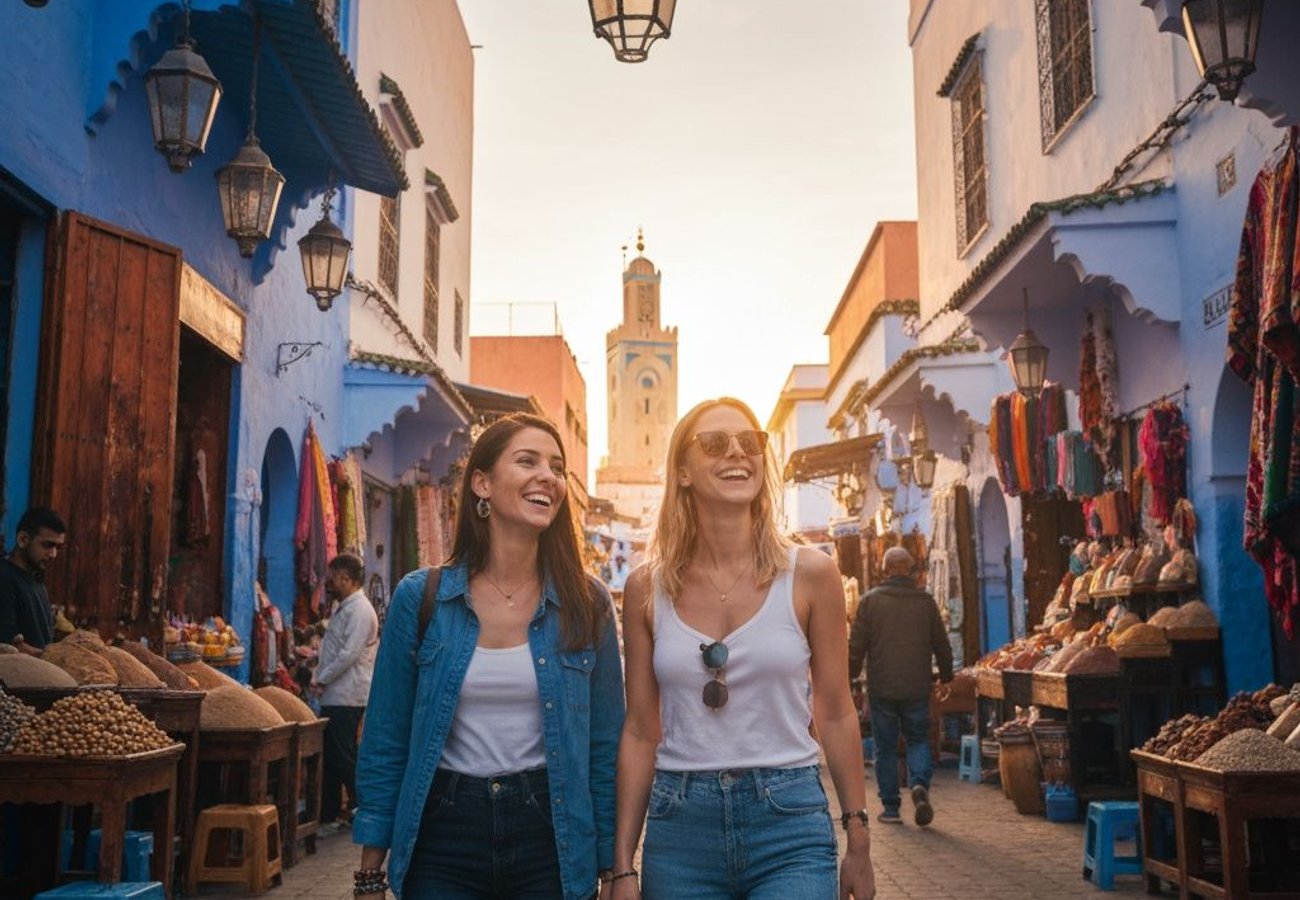
Image generated by AI
The Moroccan kingdom just achieved something extraordinary—and the numbers tell a story that will reshape how we think about African tourism for the next decade.
According to official figures released by the Ministry of Tourism, Handicrafts and the Social and Solidarity Economy, Morocco welcomed a staggering 7.7 million international visitors during the first five months of 2026. That's not just impressive—it represents a robust 7% year-on-year increase that has left global travel analysts scrambling to revise their forecasts.
This isn't a casual post-pandemic recovery. This is exponential growth.
The Engine Behind the Boom: Strategic Aviation Expansion
What makes this surge remarkable isn't just the raw numbers—it's the deliberate orchestration behind them. Tourism Minister Fatim-Zahra Ammor has championed a laser-focused strategy built on three pillars: maximizing global air connectivity, diversifying regional tourism products, and eliminating friction from the visitor journey.
The traditional model forced travelers into a bottleneck. Land in Casablanca, endure transfers, navigate transit delays. The new blueprint bypasses that entirely.
Morocco has aggressively expanded direct international flight routes into secondary cities and imperial hubs—Agadir, Fez, Ouarzazate, and Tangier. Instead of funneling all tourists through one congested gateway, the kingdom has deliberately distributed visitor flow across the country. The economic impact is immediate: tourism dollars now reach provincial economies that were previously dependent on trickle-down effects from major hubs.
To support this aviation strategy, the government has simultaneously invested enormous capital into modernizing the high-speed rail network and upgrading boutique hospitality infrastructure. The result? A seamless journey from luxury coastal resorts to sustainable eco-tourism lodges in remote regions.
Reddit: "Morocco just made it absurdly easy to get off the beaten path. Direct flights to Fez changed everything for my trip." — r/travel
May's Shock Performance: The 13% Acceleration
May 2026 was the month that shocked global travel markets.
During that single month, Morocco opened its borders to 1.7 million international visitors, marking a ferocious 13% year-on-year spike. But here's what matters more: tourism receipts reached a record-breaking 44.39 billion Moroccan dirhams ($4.83 billion USD) in just the first four months of the year—a massive 21% jump over previous baselines.
This sustained demand is pouring liquidity directly into the domestic economy. The source markets tell an equally compelling story: France claims the top position for visitor arrivals, followed by a massive influx of long-haul premium spenders from North America, the United Kingdom, and emerging high-value markets across the Middle East and Asia.
North American travelers, in particular, have discovered Morocco as the selective alternative to traditional Caribbean and beach resort destinations. Recent flight data shows Morocco now competing directly with established winter and summer destinations—and winning.
Pivoting From Volume Tourism to High-Value Segments
The kingdom's tourism operators have fundamentally shifted how they curate experiences. The old model—high-volume bus tours on a shoestring budget—is being methodically replaced by premium, niche travel sectors that attract travelers with genuine spending power.
Cultural and Gastronomy Tourism: Curated culinary journeys, olive oil press tours, and imperial architectural preservation protect generational handicraft economies while generating higher per-visitor revenue.
High-End Sports Tourism: Championship-grade golf courses and premium surf camps along the Atlantic coast encourage longer stays and boost off-season occupancy in traditionally slow months.
MICE and Business Travel: World-class convention center expansions in Rabat and Marrakech inject weekday business revenue into premium hotel sectors, stabilizing year-round occupancy.
This product diversification creates structural resilience. Morocco isn't betting on one market segment; it's building an ecosystem. The permanent presence of the Moroccan diaspora—who regularly return during holiday seasons—provides an additional safety net against global travel market fluctuations.
The Hidden Pressure: Maintaining Quality While Scaling
Not everyone is celebrating uncritically.
Leading industry professionals are raising important warnings about the structural pressures accompanying hyper-growth. Jamal Saadi, former president of the National Federation of Tourist Guides, emphasized that maintaining a premium brand identity requires strict, transparent urban regulation.
As visitor numbers skyrocket, cities are fighting an uphill battle against unregulated tourism practices, unaccredited street operators, and congestion in historic medinas. Industry leaders are urgently calling for closer coordination between municipal officials and the Tourism Ministry to implement regulatory checks, eliminate informal scams, and protect the authentic hospitality that makes Morocco famous.
The challenge is real: explosive growth without quality management destroys brand reputation faster than careful scaling ever could.
The 2030 World Cup Horizon: Rewriting the Roadmap
Morocco's trajectory is forcing economists to completely rewrite the nation's tourism roadmap.
Following a record-breaking year where the territory welcomed nearly 20 million visitors annually, the kingdom is now poised to hit its official goal of 26 million annual visitors two years ahead of schedule. The updated, highly ambitious scenario now targets an unbelievable 30 million international visitors and 200 billion dirhams ($20 billion USD) in direct revenue by 2030.
With Morocco preparing to co-host the legendary 2030 FIFA World Cup alongside Spain and Portugal, the current tourism boom isn't a temporary spike—it's the opening chapter of a historic global showcase. The updated infrastructure, expanded airports, and diversified tourism products being built today are the exact assets required to host a world-class sporting event.
The message to international hospitality markets is unmistakable: the future of African tourism has arrived, and it belongs to the Moroccan kingdom.
For travelers, this means unprecedented access to world-class infrastructure without the crowds of overexploited European destinations. For investors, it signals a once-in-a-generation opportunity. For Morocco, it represents the fulfillment of a strategic vision years ahead of schedule.
The kingdom isn't just welcoming the world—it's redefining what African tourism can be.
Related Travel Guides
Disclaimer
This article is for informational and educational purposes only. It does not constitute legal, financial, or professional advice. While we strive to provide accurate and up-to-date information, travel policies, regulations, and conditions change rapidly. Always verify information with official sources before making travel decisions. Nomad Lawyer makes no representations about the accuracy, reliability, completeness, or suitability of the information provided. Readers should consult qualified professionals for advice specific to their circumstances. The views expressed in this article are those of the author and do not necessarily reflect the views of Nomad Lawyer.
Kunal K Choudhary
Co-Founder & Contributor
A passionate traveller and tech enthusiast. Kunal contributes to the vision and growth of Nomad Lawyer, bringing fresh perspectives and driving the community forward.
Learn more about our team →