
Morocco Follows South Africa and Other Markets as Africa’s Luxury Hotels Gain Global Recognition and Travel Demand
Morocco Follows South Africa and Other Markets as Africa’s Luxury Hotels Gain Global Recognition and Travel Demand

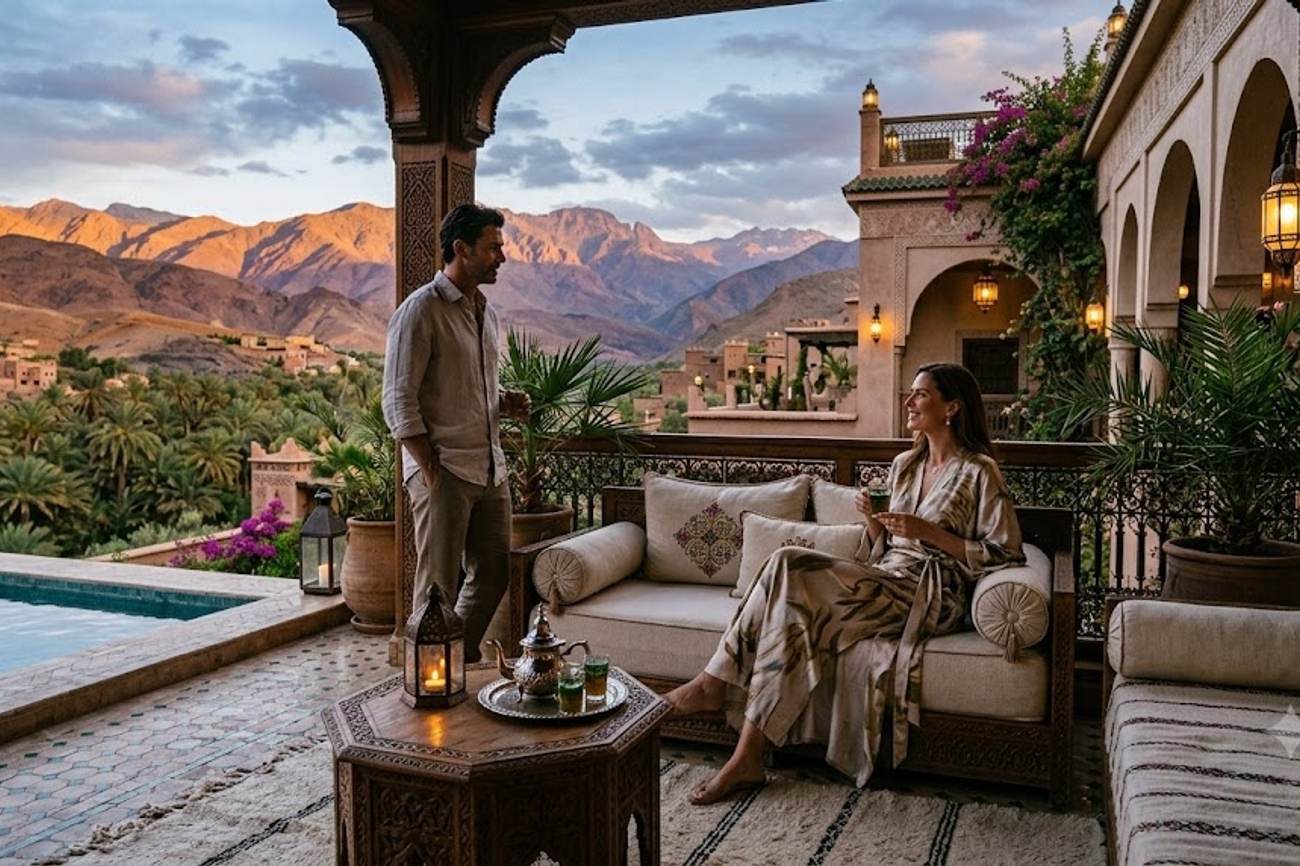
Image generated by AI
823,365 international tourists entered South Africa in June 2026 alone, representing a 9.8% increase over the previous year. This surge is not merely a recovery of volume but a fundamental shift in the composition of African travel, as the continent pivots from generic hospitality toward a high-margin, experiential luxury model. While the global travel market has long viewed Africa through the lens of niche safari circuits, a new corridor of luxury is emerging across Morocco and Tunisia, where heritage architecture and desert immersion are being leveraged to capture the highest-spending tier of global nomads and leisure travelers.
The Pivot to Heritage-Driven Hospitality
The current expansion of the African luxury sector is defined by a move away from the "Westernized" luxury of the past—standardized five-star amenities—toward "authenticity-based" prestige. In Morocco, this is manifesting as a strategic integration of ancient architectural forms into the premium guest experience. The shift is evident in the rise of ksar-style retreats, such as Le Jardin des Douars near Essaouira. By utilizing the ksar—a traditional fortified village structure—Morocco is effectively commodifying its architectural history to create a distinct competitive advantage.
This strategy is paying off in raw numbers. Morocco welcomed 19.8 million international tourists in 2025, surpassing its own aggressive growth targets and setting the stage for the 2026 expansion. This growth is not confined to the traditional hubs of Marrakech; instead, the development of high-end properties in regional areas is redistributing tourist spend and reducing the logistical pressure on primary urban centers. This decentralization is a key component of the World Tourism Organization goals for sustainable development, ensuring that luxury investment penetrates deeper into the local economy.
Quantifying the Luxury Surge: 2025-2026 Data
The growth in the luxury sector is mirrored by a sharp rise in overall international arrivals, particularly in South Africa, which remains the continent's most diversified luxury portfolio. The data indicates a strong preference for multi-modal luxury trips that combine urban, viticultural, and wildlife experiences.
| Market | Key Luxury Driver | 2026 Growth Metric | Signature Experience |
|---|---|---|---|
| South Africa | Diversified Portfolio | 12.3% increase in H1 2026 arrivals | Underground wildlife viewing (Mhondoro) |
| Morocco | Heritage Architecture | 19.8M visitors (2025) | Ksar-style fortified retreats |
| Tunisia | Sahara Immersion | Expanding beyond beach tourism | Private Sahara villas (Résidence Douz) |
South Africa's performance is particularly telling. Between January and June 2026, the country recorded 5,584,473 international tourists, a 12.3% jump compared to the first half of 2025. Notably, intra-continental travel—visitors arriving from other African nations—rose by 12.1% year-on-year in June 2026. This suggests that the luxury market is no longer solely dependent on North American or European capital, but is being fueled by a rising African middle and upper class.
Expert Analysis: The "Authenticity Premium" and Market Consolidation
For the high-net-worth traveler, the value proposition has shifted from what the hotel provides to where the hotel is situated and how it connects to the land. The success of properties like La Residence in Franschhoek or the desert villas of Tunisia suggests that "isolation" is now a luxury commodity. When a hotel like Mhondoro Safari Lodge builds an underground tunnel for elephant observation, they are not selling a room; they are selling an exclusive biological encounter.
The direct consequence for travelers booking these routes is a transition toward "slow travel" packages. Because these luxury properties are often located in remote regions—the Grand Erg Oriental in Tunisia or the Cape Winelands in South Africa—the logistical chain becomes part of the luxury. We are seeing a rise in integrated itineraries where the transport (private charters or luxury transfers) is bundled with the stay.
From a regulatory and investment perspective, this trend signals a move toward sustainable, low-impact, high-yield tourism. By focusing on fewer, higher-paying guests rather than mass tourism, these nations can protect the very nature and heritage that attract visitors. However, this creates a pricing pressure on the broader market. As luxury brands consolidate their hold on "authentic" sites, the cost of accessing these cultural landmarks will likely rise, potentially pricing out the mid-market traveler in favor of the ultra-wealthy. For those navigating this space, booking through specialized luxury consortia or directly via South African Tourism is becoming the only way to secure access to these limited-capacity heritage sites.
Key Takeaways
- Diversification of Luxury: Africa is moving beyond the "Safari Only" narrative, with Morocco and Tunisia establishing luxury benchmarks in heritage architecture and desert tourism.
- Strong Growth Metrics: South Africa saw a 12.3% increase in international arrivals in the first half of 2026, with June 2026 alone seeing 823,365 tourists.
- The Heritage Hook: Morocco’s success is tied to its ability to integrate traditional ksar-style designs into premium hospitality, supporting a record 19.8 million visitors in 2025.
- Intra-African Demand: A 12.1% year-on-year increase in African-origin arrivals to South Africa indicates a growing internal market for premium travel.
- Experiential Shift: Luxury is being redefined as "exclusive access" (e.g., underground wildlife tunnels and Sahara villas) rather than traditional five-star service.
FAQ: African Luxury Travel 2026
What are the best luxury destinations in Africa for culture seekers? Morocco is currently the leader in cultural luxury, specifically through its heritage-based hotels in Essaouira and Marrakech that utilize traditional ksar architecture to provide an immersive historical experience.
Is luxury travel in South Africa limited to safaris? No. While wildlife lodges like Mhondoro are popular, South Africa offers a diversified luxury mix including urban heritage hotels in Cape Town and premium vineyard estates in the Franschhoek Winelands.
How is Tunisia changing its tourism model? Tunisia is pivoting away from traditional Mediterranean beach resorts toward high-end desert tourism. Properties like Résidence Douz offer private villas and Berber-style experiences near the Grand Erg Oriental.
Are international arrival numbers increasing in Africa? Yes. South Africa recorded over 5.5 million international tourists in the first half of 2026, while Morocco exceeded its growth targets with 19.8 million visitors in 2025.
The era of the generic gold-plated lobby is over; the new African luxury is written in sandstone, vineyards, and the silence of the Sahara.
Tags: Morocco Tourism 2026, South Africa Luxury Hospitality, Tunisia Desert Tourism, Ksar Architecture, Cape Winelands Travel, African Premium Tourism Trends
Related Travel Guides
Disclaimer
This article is for informational and educational purposes only. It does not constitute legal, financial, or professional advice. While we strive to provide accurate and up-to-date information, travel policies, regulations, and conditions change rapidly. Always verify information with official sources before making travel decisions. Nomad Lawyer makes no representations about the accuracy, reliability, completeness, or suitability of the information provided. Readers should consult qualified professionals for advice specific to their circumstances. The views expressed in this article are those of the author and do not necessarily reflect the views of Nomad Lawyer.
Kunal K Choudhary
Co-Founder & Contributor
A passionate traveller and tech enthusiast. Kunal contributes to the vision and growth of Nomad Lawyer, bringing fresh perspectives and driving the community forward.
Learn more about our team →