
Montpelier Vermont Slow Travel Guide: Accessible Heritage, Maple Farms, and Foliage Routes for Multi-Generational Families
Montpelier delivers an unhurried Vermont getaway for mature travelers and families, featuring the gold-domed State House, maple creemees, and scenic valley drives.

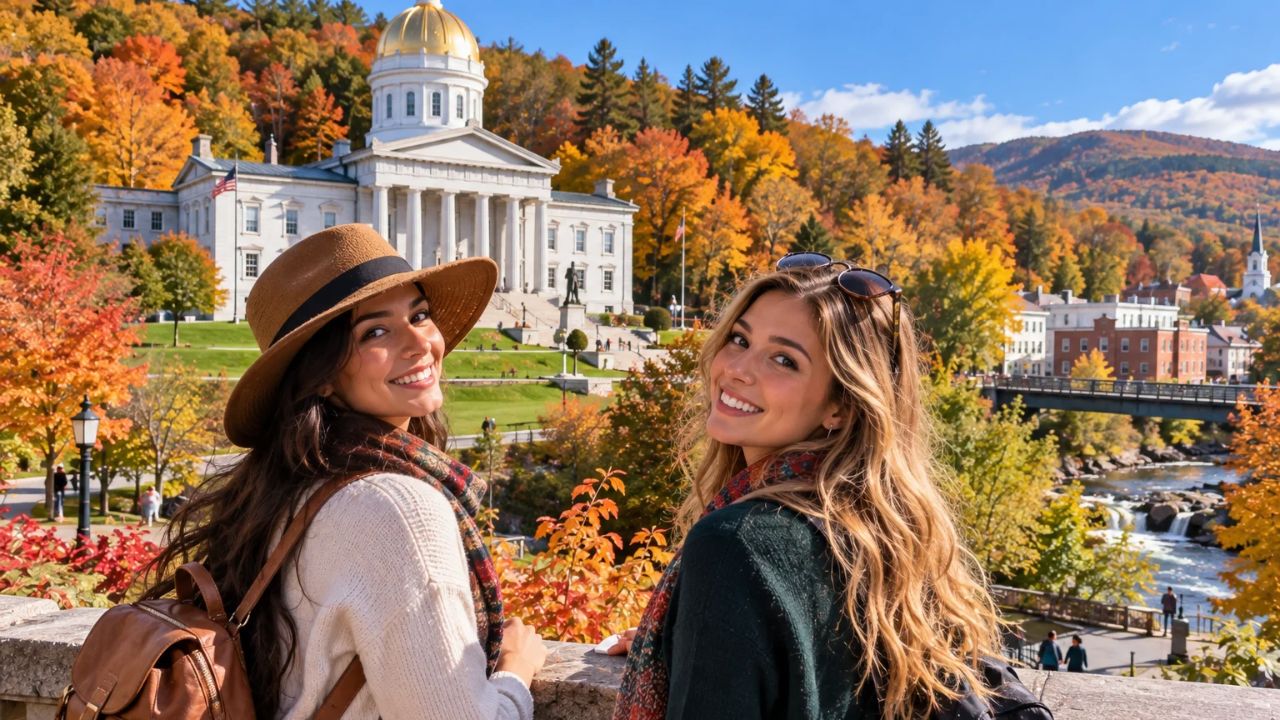
Image generated by AI
With fewer than 8,000 residents, Montpelier holds the distinction of being the smallest state capital in the United States, and it remains the only American capital without a single commercial fast-food chain. This intentional preservation makes the city an ideal refuge for multi-generational families and mature travelers who wish to swap crowded transit hubs for walkable historic avenues, working sugarhouses, and quiet river lookouts along the Winooski River.
The Capital's Shift Toward Gentle, Intergenerational Travel
Rather than marketing high-adrenaline mountain excursions, central Vermont is highlighting accessible cultural tourism that allows grandparents, parents, and grandchildren to explore together without physical exhaustion. Because Montpelier's historic downtown spans only a few walkable blocks, families can transition effortlessly from civic landmarks to riverside cafes without needing long car transfers or rigid schedules.
Autumn foliage season brings brilliant amber and crimson hues to the surrounding hillsides, yet the city's appeal lies in its unhurried rhythm. By centering itineraries around single-neighborhood walks, covered museum exhibits, and gentle scenic country drives, visitors can savor the Green Mountain State's distinctive heritage at a restorative pace.
What Makes Montpelier's Heritage and Culture Unique
Montpelier's compact civic district allows travelers to experience living state history up close. The prominent gold leaf dome of the Vermont State House anchors the western end of State Street. As one of the nation's oldest continuously operating state capitols, the building offers free public guided and self-guided weekday tours from 10:00 AM to 3:00 PM. Multi-generational groups can easily tour the Governor's Office, the Cedar Creek Reception Room, the Hall of Inscriptions, and active legislative chambers, utilizing elevator access and flat entry ramps.
Just steps away inside the historic Pavilion Building, the Vermont Historical Society operates the Vermont History Museum. Open Tuesday through Saturday from 10:00 AM to 4:00 PM, the museum provides interactive indoor exhibits tracing indigenous Abenaki roots, early agricultural settlements, and 19th-century trade networks, making it a comfortable educational refuge on rainy afternoons.
Culinary traditions form another cornerstone of local life. No visit is complete without stopping at an independent dairy bar or country store for a traditional maple creemee, a soft-serve ice cream infused with 100 percent pure Grade A Vermont maple syrup. Visiting nearby family-run sugarhouses allows guests to observe wood-fired evaporators in operation and purchase artisanal syrup directly from generational producers.
For gentle outdoor moments, the North Branch Nature Center offers level gravel paths through protected wetlands, while Hubbard Park provides shaded woodland drives up to its historic stone observation tower. Along the southern edge of town, the Victorian grounds of Green Mount Cemetery present a quiet open-air archive of regional sculpture and civic history, with self-guided trail pamphlets available at the entrance.
Visitor Insider Tips
- Timing State House Visits: Schedule your State House walkthrough for Tuesday or Thursday morning around 10:30 AM to avoid school field trip groups and secure intimate viewing in the legislative chambers.
- Foliage Dining Strategy: Autumn leaf season fills downtown dinner tables quickly. Make early reservations for restaurants along Main Street and State Street, and request ground-floor seating with step-free entry if traveling with seniors.
- Scenic Byway Driving: For panoramic valley vistas without hiking, take Route 12 north toward Worcester or drive Route 2 along the Winooski River. These paved corridors feature wide roadside turnouts with safe photo vantage points.
- Footwear Guidelines: Downtown sidewalks and government corridors are paved and flat, but cemetery paths and park grounds can have exposed tree roots. Wear supportive, non-slip walking shoes.
Cultural and Environmental Context
Montpelier's business community maintains a fierce commitment to local ownership, where independent bookstores, regional bakeries, and cooperative grocers thrive in place of corporate retailers. Spending tourism dollars at downtown merchants directly sustains Vermont craftspeople and organic agricultural producers.
Following severe river flooding in recent years, the community has invested heavily in floodplain restoration and riverbank stabilization along the Winooski basin. Visitors can learn about ongoing conservation efforts and state-wide park preservation through Vermont Vacation, the state's official tourism authority, as well as federal conservation initiatives mapped by the National Park Service.
FAQ: Visiting Montpelier in 2026
What is the peak foliage window for Montpelier?
Central Vermont typically experiences peak autumn foliage during the first two weeks of October, when mountain maples turn bright red and sugar orange before colors move southward.
Is Montpelier accessible for visitors using wheelchairs or walkers?
Yes. The Vermont State House, Vermont History Museum, and downtown sidewalks feature curb cuts, ramps, automatic doors, and designated accessible parking stalls.
How do travelers get to Montpelier from Burlington?
Montpelier is located 38 miles southeast of Burlington International Airport (BTV), reachable in approximately 40 minutes via Interstate 89.
Are Vermont State House tours free of charge?
Yes. Standard public tours and self-guided walkthroughs of the Vermont State House are free, though donations supporting building preservation are welcome.
Montpelier proves that the most rewarding family memories are found not in packed itineraries, but in shared maple treats, gold-domed history, and unhurried country roads.
Disclaimer
This article is for informational and educational purposes only. It does not constitute legal, financial, or professional advice. While we strive to provide accurate and up-to-date information, travel policies, regulations, and conditions change rapidly. Always verify information with official sources before making travel decisions. Nomad Lawyer makes no representations about the accuracy, reliability, completeness, or suitability of the information provided. Readers should consult qualified professionals for advice specific to their circumstances. The views expressed in this article are those of the author and do not necessarily reflect the views of Nomad Lawyer.
Preeti Gunjan
Contributor & Community Manager
A passionate traveller and community builder. Preeti helps grow the Nomad Lawyer community, fostering engagement and bringing the reader experience to life.
Learn more about our team →