
Mississippi Tourism Record Blues Gulf Coast Guide 2026

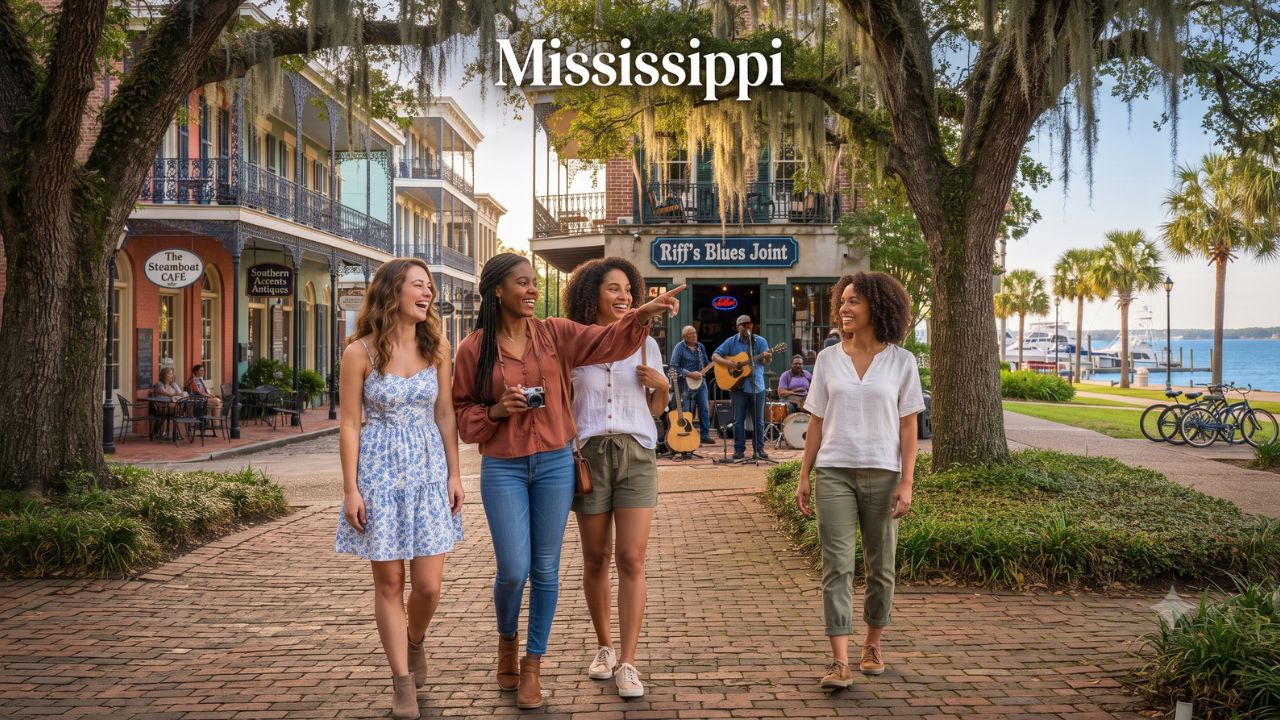
Mississippi welcomed a record-shattering 45.5 million visitors in 2025, generating $18.9 billion in total economic impact and $12.4 billion in direct traveler spending across all 82 counties. According to the state's latest Tourism Economic Contribution Report, the Magnolia State has established itself as one of America's fastest-growing cultural tourism destinations, supporting 137,728 hospitality jobs, $4.8 billion in worker wages, and $1.2 billion in state and local tax revenues.
Far from being confined to a single resort corridor, visitor spending radiates through legendary Mississippi Delta juke joints, literary college towns, historic antebellum bluffs, and white-sand Gulf Coast beaches. By anchoring regional itineraries in authentic music heritage, Civil Rights history, and Gulf seafood culture, travelers are discovering that Mississippi offers deep Southern hospitality paired with profound cultural storytelling.
Economic Scale of Mississippi's Record Tourism Milestone
The 2025 economic metrics illustrate how tourism has developed into a foundational driver of municipal prosperity and heritage preservation across both rural and urban districts.
| Economic / Travel Indicator | Metric Benchmark (2025 Report) | Statewide Impact & Distribution | Key Regional Beneficiaries |
|---|---|---|---|
| Total Annual Visitors | 45.5 Million Travelers | Record visitation across all 82 counties | Delta, Gulf Coast, Pine Belt, River Hills |
| Direct Traveler Spending | $12.4 Billion | Supports lodging, dining, retail, & transport | Family diners, boutique hotels, fishing charters |
| Total Economic Contribution | $18.9 Billion | Multiplier effect across state supply chains | Construction, agriculture, regional arts |
| Hospitality Employment | 137,728 Jobs | $4.8 Billion in direct worker payroll | Musicians, chefs, park rangers, tour guides |
| State & Local Tax Revenues | $1.2 Billion | Funds public infrastructure, schools, & parks | Municipal services across rural counties |
Four Distinctive Cultural Corridors in Mississippi
Understanding the regional contrasts across Mississippi enables travelers to create immersive driving routes connecting music history, coastal recreation, and literary hubs.
The Mississippi Delta: Birthplace of American Blues
The flat alluvial plains of the Mississippi Delta represent the sacred ground of American music. In Clarksdale, travelers can visit the historic Crossroads of Highways 61 and 49 where Robert Johnson legendarily forged his blues legacy. The town hosts authentic live performances seven nights a week at venues like Ground Zero Blues Club and the rustic Red's Lounge.
Following the historic Mississippi Blues Trail, travelers encounter interpretive markers honoring Muddy Waters, B.B. King, and Howlin' Wolf. In Indianola, the state-of-the-art B.B. King Museum and Delta Interpretive Center chronicles the guitarist's journey from cotton laborer to global music icon, providing vital socio-historical context on the sharecropping era and the Great Migration.
The Gulf Coast: Biloxi, Gulfport, and Barrier Islands
Stretching along 62 miles of scenic coastline, the Mississippi Gulf Coast pairs warm water recreation with maritime heritage. Biloxi and Gulfport feature waterfront casino resorts, championship golf, and fresh-off-the-boat Gulf shrimp, oysters, and blackened redfish.
Nature enthusiasts can take passenger ferries out to West Ship Island, part of Gulf Islands National Seashore. This federally protected barrier island offers pristine white-quartz sand dunes, historic Fort Massachusetts, and calm surf where Atlantic bottlenose dolphins feed along the shallows.
Historic River Towns and Literary Enclaves: Natchez and Oxford
Perched high on the loess bluffs overlooking the Mississippi River, Natchez boasts the highest concentration of preserved antebellum mansions in the nation, alongside a rich African American history preserved at the Natchez Museum of African American History and Culture. The city marks the southern terminus of the 444-mile Natchez Trace Parkway, an ancient forest road perfect for cycling and autumn foliage drives.
In the northern hills, Oxford serves as a premier literary capital. Home to the University of Mississippi, the town celebrates Nobel laureate William Faulkner, whose historic home, Rowan Oak, remains preserved beneath towering cedar trees. Independent bookstores like Square Books anchor a historic courthouse square filled with James Beard-recognized Southern dining.
The Capital City: Jackson's Civil Rights and Arts District
In Jackson, travelers explore profound historical narratives at the Mississippi Civil Rights Museum and Museum of Mississippi History. Interconnected museum galleries present unvarnished historical records of the Freedom Riders, Medgar Evers, and the voting rights movement, complemented by vibrant blues venues in the historic Farish Street district.
What Makes Mississippi's Cultural Heritage Distinctive
Mississippi's global influence far exceeds its geographic borders. As the cradle of the blues, gospel, and early rock 'n' roll, the state's artistic lineage laid the foundation for modern global music.
Supported by Visit Mississippi, regional tourism emphasizes authentic community encounters. Rather than viewing sanitized displays, visitors stand inside the actual wooden shotgun shack in Tupelo where Elvis Presley was born, taste hot tamales simmered according to century-old Mexican-African American fusion recipes along the Delta Tamale Trail, and listen to acoustic guitarists on porch stages.
Visitor Insider Tips
- Base in Clarksdale for Live Blues Seven Nights a Week: Unlike cities where live music is restricted to weekends, Clarksdale's authentic juke joints feature live performances every single night of the year. Check the online "Cat Head" music calendar before arriving.
- Drive the Natchez Trace Parkway at Leisurely Speeds: The 444-mile federal parkway enforces a strict 50 mph speed limit and prohibits commercial trucking. Plan for relaxed, unhurried driving with frequent stops at historic mounds, sunken trails, and waterfall pullouts.
- Sample Delta Hot Tamales from Roadside Shacks: Explore the Mississippi Delta Hot Tamale Trail in Greenville and Rosedale. These regional delicacies feature spiced cornmeal wrapped around seasoned pork, simmered in savory broth rather than steamed.
- Visit the Civil Rights Museum in Jackson Early: Allocate at least three to four hours to properly absorb the eight immersive galleries of the Mississippi Civil Rights Museum, arriving when doors open to avoid afternoon school groups.
- Time Coastal Seafood Feasts with Fall Festivals: Autumn brings lower humidity and peak oyster season along the Gulf Coast. Plan visits around annual seafood and heritage festivals in Biloxi and Ocean Springs.
Cultural and Environmental Context
Mississippi's tourism expansion carries a vital responsibility to honor and preserve complex cultural histories. Expanding heritage markers along the Civil Rights Trail and Freedom Trail ensures that the sacrifices of Black Mississippians are recognized with dignity, truth, and educational equity.
Simultaneously, coastal and river environments face ongoing ecological pressures. Preserving the delicate marshlands of the Mississippi Sound and protecting coastal estuaries from development ensures that generational shrimping families and local oyster reefs continue to thrive. By patronizing independent local businesses, tipping musicians generously in traditional juke joints, and respecting historical landmarks, travelers directly sustain the living heritage of Mississippi communities.
FAQ: Traveling in Mississippi 2026
What was the economic impact of Mississippi tourism in 2025?
Mississippi welcomed a record 45.5 million visitors in 2025, generating $18.9 billion in total economic impact and $12.4 billion in direct spending.
Where is the best place to experience authentic Delta blues?
Clarksdale offers live blues seven nights a week in authentic juke joints like Ground Zero Blues Club and Red's Lounge.
Is the Natchez Trace Parkway free to drive?
Yes, the 444-mile Natchez Trace Parkway is a toll-free National Park Service scenic roadway connecting Natchez, Mississippi to Nashville, Tennessee.
What are the main attractions on the Mississippi Gulf Coast?
Biloxi and Gulfport feature white-sand beaches, fresh seafood dining, casino resorts, and ferry access to West Ship Island within Gulf Islands National Seashore.
Related Travel Guides
- US Visa Rules Birth Tourism Facilitators Travel Alert 2026
- US Fossil Travel White Sands Dinosaur Badlands Guide 2026
- Delta One Wellness Lounges JFK LAX Boston Guide 2026
From the soulful chords echoing across Delta cotton fields to the gentle rhythm of Gulf Coast tides, Mississippi proves that true travel is measured by the depth of stories etched into your soul.
Disclaimer
This article is for informational and educational purposes only. It does not constitute legal, financial, or professional advice. While we strive to provide accurate and up-to-date information, travel policies, regulations, and conditions change rapidly. Always verify information with official sources before making travel decisions. Nomad Lawyer makes no representations about the accuracy, reliability, completeness, or suitability of the information provided. Readers should consult qualified professionals for advice specific to their circumstances. The views expressed in this article are those of the author and do not necessarily reflect the views of Nomad Lawyer.
Raushan Kumar
Founder & Lead Developer
Full-stack developer with 11+ years of experience and a passionate traveller. Raushan built Nomad Lawyer from the ground up with a vision to create the best travel and law experience on the web.
Learn more about our team →