
Jordan Joins UAE, Saudi Arabia, and Qatar in Devastating Tourism Crisis as US-Iran Conflict and Strait of Hormuz Tensions Leave Petra Struggling to Survive: How Global Energy Crisis and Shipping Disruptions Redefine Middle Eastern Stability
Jordan's Petra is facing a tourism collapse as the US-Iran conflict and Strait of Hormuz tensions trigger a regional crisis across the UAE, Saudi Arabia, and Qatar, fueled by the global energy crisis.

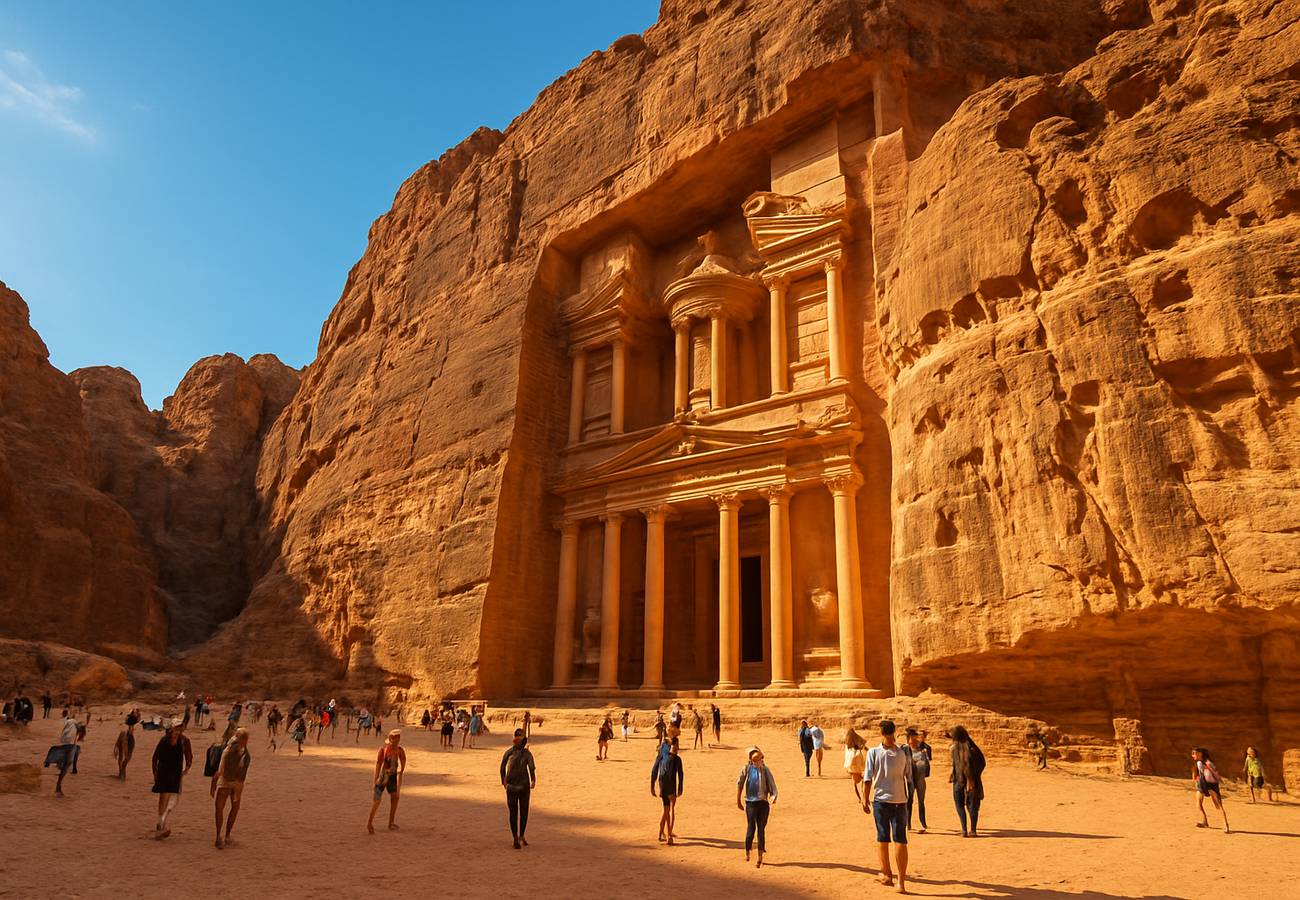
Image generated by AI
Quick Summary
- Petra Collapse: The ancient city of Petra in Jordan is witnessing a devastating tourism collapse, with international visitor numbers dropping to less than 30% of usual levels since February 2026.
- Regional Ripple: The crisis has engulfed Lebanon, UAE, Bahrain, Saudi Arabia, and Qatar, as regional instability driven by the US-Israel-Iran conflict shatters traveler confidence.
- Economic Blow: Tourism accounts for 14% of Jordan’s GDP and employs 60,000+ people; the current downturn represents a "Slow Death" for the local service economy.
- Geopolitical Squeeze: The crisis surmounts the global energy crisis precisely as Strait of Hormuz tensions and maritime shipping disruptions drive oil prices to record highs.
- Vision 2030 at Risk: Saudi Arabia’s NEOM and other high-profile developments are facing delays as international hotel chains and investors reconsider the regional "Stability Dividend."
- Aviation Impact: Missile threats and airspace closures near the Strait of Hormuz have discouraged travelers from using the major hubs of Dubai and Doha, impacting global flight connectivity.
- Source: Middle East Tourism Observatory / IAATO Strategic Conflict Analysis, May 8, 2026.
AMMAN / PETRA — In a monumental blow to the "Stability Dividend" of the Levant, the ancient rose-red city of Petra has officially fallen silent. According to breaking reports released on May 8, 2026, Jordan has joined a growing list of Middle Eastern nations—including the UAE, Saudi Arabia, and Qatar—in a devastating tourism crisis. This development is being analyzed by senior global affairs and energy journalists as a "Geopolitical Re-alignment" response, occurring precisely as Strait of Hormuz tensions and a severe US-Iran conflict drive oil prices to record highs, forcing the world’s most iconic travel hubs to surmount the risks of maritime volatility and safety fears.
Expanded Overview: The "Slow Death" of Petra and the Levant
The scale of the Middle Eastern tourism crisis has reached a catastrophic peak in 2026. In Jordan, where tourism provides a vital 14% of the national GDP, the absence of American and European travelers has left over 60,000 jobs in peril. Petra, normally a beacon of global exploration, is now a symbol of "Silent Sands." Local guides describe the situation as a "Slow Death," as the region surmounts the "Resourceful Risk" of the 2026 economic climate, only to be hit by a biological and geopolitical wave of instability that threatens the preservation of cultural heritage.
Geopolitical Context: Surmounting the Strait of Hormuz and the Security Shield
The broader geopolitical landscape in 2026 has been dominated by the standoff in the Strait of Hormuz. As Saudi Arabia, the UAE, and Qatar work to maintain their status as global leaders, the reliability of regional stability has become the ultimate benchmark for travel health. The US-Iran conflict has created a "geopolitical tax" on every flight and cruise booking, making the "Stability Shield" of the Gulf increasingly porous. By avoiding the region, international travelers are surmounting the threat of a "Security Vacuum," ensuring that their safety remains a priority even as Gulf tensions overshadow the global logistics sector.
Global Energy Impact: The Tourism Hedge Against Record Oil Prices
Rising oil prices have fundamentally redrawn the travel map for 2026.
- Aviation Surcharge: While fuel costs are at all-time highs due to the global energy crisis, the "Risk Premium" for flying over the Middle East has doubled, making travel to the region prohibitively expensive.
- Vision 2030 Delay: Saudi Arabia’s ambitious NEOM project and general tourism goals are facing considerable setbacks, as the energy required to power these "Cities of the Future" is diverted to regional security and stabilization efforts led by Saudi Arabia and the UAE.
Shipping and Trade Impact: Bypassing the Maritime Safety Squeeze
The ongoing shipping disruption in the Strait of Hormuz—a global chokepoint for 20% of the world’s oil—has made the delivery of luxury tourism supplies and construction hardware more difficult.
- Resourceful Service: Hubs like Dubai and Abu Dhabi are surmounting these delays through a shift toward "Sovereign Supply Chains," but the perception of missile threats and airspace closures continues to deter the high-end European and North American markets.
- Maritime Alert: Shipping companies and airlines are rerouting around the Strait of Hormuz, surmounting the record-high insurance premiums but adding thousands of miles and massive fuel costs to every journey.
Regional Impact: The Breakdown of Tourism Powerhouses
The fallout from the 2026 energy crisis is being countered by high-value regional anchors, but with mixed success:
- The UAE Squeeze: Once the undisputed leader, the UAE is facing a severe decline in arrivals from the West as security concerns mount, surmounting the "Resourceful Risk" through aggressive domestic marketing.
- Lebanon’s Battle: Compounded by a collapsing currency and political instability, Lebanese tourism spots like Beirut and Byblos are struggling to stay afloat as travelers reroute to safer destinations.
- The Qatar Standstill: High-profile sporting and cultural events in Doha have come to a near halt, surmounting the logistical fatigue of 2026 only to be hit by the shadow of war.
Industry / Expert Analysis: The Move Toward "Crisis Stewardship"
Logistics and tourism analysts suggest that the Middle East is facing its most severe challenge since the 2020 lockdowns. In an era where the global energy crisis makes every international movement an investment, the loss of the "Stability Dividend" is the only logical path for cautious travelers. By integrating security checks with "Geopolitical Resilience," the region is surmounting the logistical fatigue of 2026, but the path to recovery will require a monumental diplomatic breakthrough to restore international confidence.
What Happens Next: Toward a Regional Stability Framework
Following the May 8 report, several key developments are anticipated:
- Security Hardening: Implementation of advanced missile defense and maritime safety protocols in the Strait of Hormuz to surmount the "Resourceful Risk" of 2026.
- Diplomatic Pivot: Regional powers including Saudi Arabia, the UAE, and Qatar will seek a broader stability framework to surmount the US-Iran conflict and protect their $500 billion tourism investments.
- Market Realignment: A shift toward "Safe-Route" marketing for domestic and regional travelers as they surmount the geopolitical tax of the 2026 season.
Conclusion: Reinforcing the Regional Anchor Amid Global Risk
The devastating tourism crisis in Petra and across the Middle East is a testament to the power of "Resourceful Resilience" in a world of shipping disruptions and oil price volatility. By surmounting the challenges of the global energy crisis and the geopolitical shadow of the Strait of Hormuz, the region must prove that it can once again become a "stable sanctuary." As the world watches the US-Iran conflict, the message from Petra is clear: the architecture is timeless, but the hospitality is strictly protected by the hope for peace.
Key Takeaways: Middle East Tourism Crisis 2026
- Petra Crisis: Visitor numbers drop to <30%; 14% of Jordan’s GDP at risk.
- Conflict: US-Israel-Iran war driving regional instability and travel fears.
- Geopolitics: Strait of Hormuz tensions and maritime shipping disruptions inflating travel costs.
- Gulf Role: Saudi Arabia, UAE, and Qatar struggling to anchor their Vision 2030 tourism goals.
- Aviation: Hubs in Dubai and Doha facing decline as travelers avoid the "Conflict Zone."
- Outlook: $500 billion regional tourism sector faces "Slow Death" without diplomatic breakthrough.
Related Travel Alerts
Disclaimer
This article is for informational and educational purposes only. It does not constitute legal, financial, or professional advice. While we strive to provide accurate and up-to-date information, travel policies, regulations, and conditions change rapidly. Always verify information with official sources before making travel decisions. Nomad Lawyer makes no representations about the accuracy, reliability, completeness, or suitability of the information provided. Readers should consult qualified professionals for advice specific to their circumstances. The views expressed in this article are those of the author and do not necessarily reflect the views of Nomad Lawyer.
Kunal K Choudhary
Co-Founder & Contributor
A passionate traveller and tech enthusiast. Kunal contributes to the vision and growth of Nomad Lawyer, bringing fresh perspectives and driving the community forward.
Learn more about our team →