
Middle East Tourism Beyond Dubai: Ras Al Khaimah, Sharjah, and Five Nations Redefine Adventure and Heritage Travel in 2026
Travellers are abandoning Dubai's crowded streets for authentic adventures. Ras Al Khaimah, Sharjah, and emerging Middle East destinations now capture tourism growth through cultural immersion and outdoor exploration.

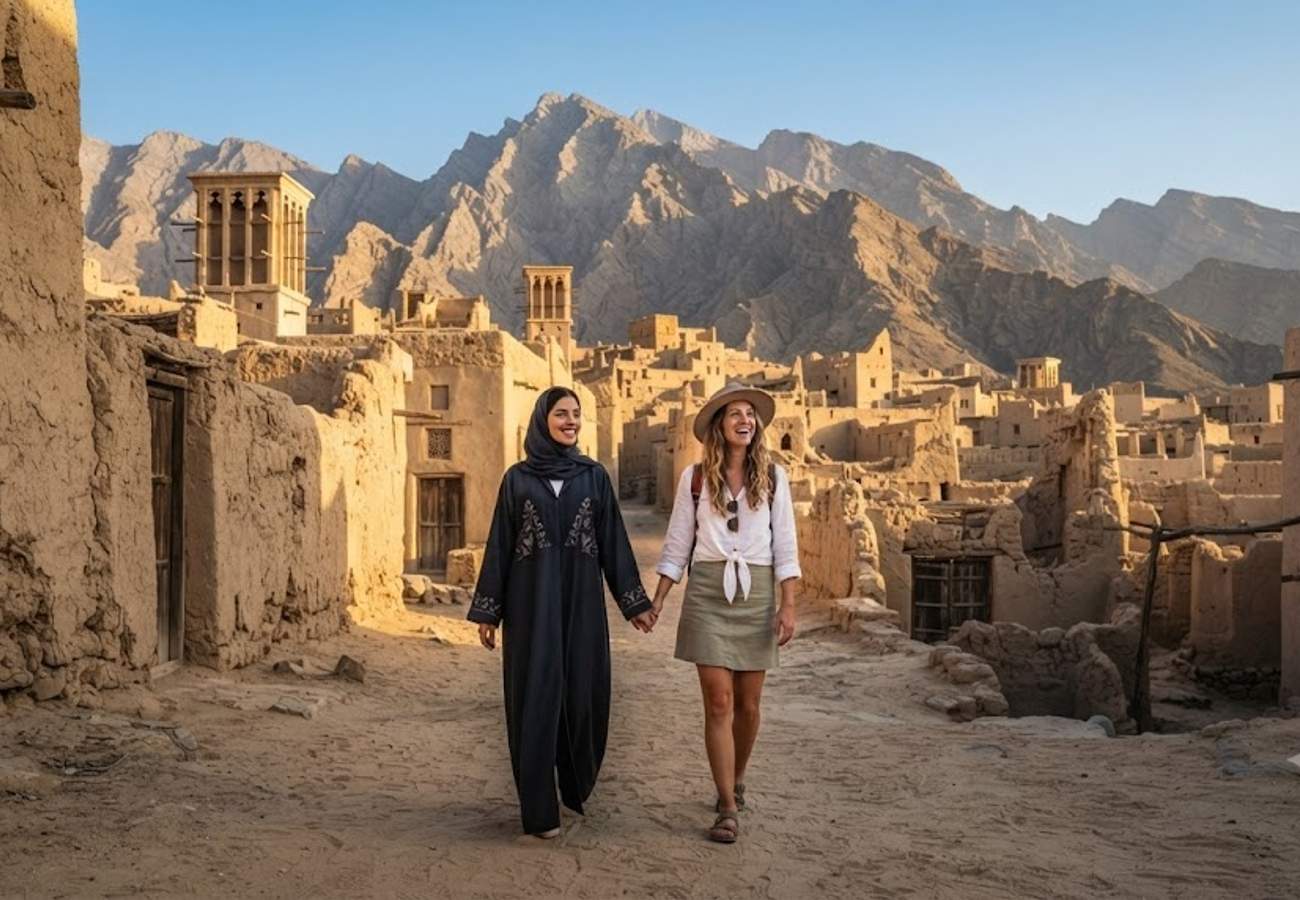
Image generated by AI
For nearly two decades, Dubai and Riyadh have monopolized Middle East tourism like fortress cities—glittering skylines, ultra-luxury hotels, and jaw-dropping mega-events pulling in the masses. But something fundamental shifted in 2026.
The narrative has changed. Travellers are leaving.
Not permanently. They're arriving at the same airports, but they're not staying. Instead, they're renting vehicles, heading north to mountain peaks, exploring heritage quarters, and chasing experiences that Instagram cannot commodify. The Middle East's tourism ecosystem is experiencing its most significant structural transformation in a decade, and the numbers don't lie.
The Quiet Rebellion: Why Travellers Are Abandoning the City Center
The Middle East welcomed approximately 95 million international tourists in 2024, surpassing pre-pandemic levels by a significant margin. Yet within that headline statistic lies a deeper truth: market share is fragmenting.
Dubai alone still attracts more than 18 million international overnight visitors annually, a figure that would make most global cities envious. Saudi Arabia pulled in more than 30 million international visitors in 2024 across leisure, religious, and business segments. But the growth trajectory matters more than the absolute numbers.
Reddit: "Dubai felt like a shopping mall with a desert backdrop. Went to Ras Al Khaimah on a whim—actually hiked a mountain, met locals, ate food that wasn't from a chain. That's when I understood the shift." — r/travel
The shift reflects a broader global consciousness. Affluent travellers—particularly Gen X and millennial nomads—are experiencing traveller's fatigue with standardized luxury. They want narrative. They want authenticity. They want to tell a story that doesn't begin with "I stayed at a five-star resort."
Ras Al Khaimah: The Mountain Rebellion
Nestled in the northern UAE, Ras Al Khaimah has executed one of the region's most compelling tourism pivots. The emirate isn't competing on shopping mall square footage or hotel thread counts. It's competing on vertical relief.
Jebel Jais, the UAE's highest mountain peak, has become the emirate's gravitational centre. Hikers ascend weathered trails. Mountain-bikers navigate serpentine roads. And then there's the main attraction: one of the world's longest zipline experiences that takes thrill-seekers across the peak in seconds of pure adrenaline.
But here's what makes this work: Ras Al Khaimah isn't trying to replicate Dubai. It's explicitly different. Hotels and resorts have expanded their presence deliberately—not to match competitor amenities, but to serve a specific guest profile: the outdoor enthusiast, the nature photographer, the family seeking non-urban activities.
This differentiation strategy has produced consecutive years of tourism growth. Overnight stays are rising. Visitor spending is climbing. The emirate has essentially carved out a defensible niche in a crowded regional market.
Sharjah: Heritage as Competitive Advantage
While Ras Al Khaimah built on mountains, Sharjah built on memory.
The emirate markets itself as the cultural capital of the UAE—a claim it reinforces through deliberate architectural and institutional strategies. The Heart of Sharjah heritage area, restored historic neighbourhoods, cultural museums, and art institutions create a tourism experience organized around preservation and historical narrative rather than consumption and entertainment.
This approach appeals to a specific demographic: educational travellers, families seeking cultural enrichment, and visitors interested in understanding Gulf history beyond oil wealth and real estate development.
According to tourism data, Sharjah continues to expand its cultural tourism sector through museum investments, heritage attraction curation, and family-focused programming. The strategy is counterintuitive in a region obsessed with newness—yet it works precisely because it's counterintuitive.
The Domino Effect Across Five Nations
The secondary-destination phenomenon extends far beyond the UAE borders.
Saudi Arabia has aggressively diversified its tourism portfolio beyond Riyadh. AlUla, a desert heritage destination, has emerged as one of the region's most prominent cultural tourism attractions, drawing visitors through archaeological sites, desert landscapes, and heritage experiences. The Red Sea region is expanding coastal tourism infrastructure to compete on beach and resort experiences.
Oman has long positioned itself for nature-based travel. Destinations like Muscat, Salalah, and Jebel Akhdar attract visitors seeking mountain tourism, eco-tourism, and heritage experiences—essentially the opposite of urban density.
Jordan continues capitalizing on iconic attractions like Petra and Wadi Rum, which combine heritage tourism with outdoor adventure in ways that major cities cannot replicate.
Qatar, beyond its FIFA World Cup infrastructure investment, has promoted cultural attractions and waterfront developments aimed at competing on unique travel experiences rather than event-driven tourism alone.
The Numbers Behind the Shift
The data reveals consistent patterns:
- The Middle East attracted 95 million international tourists in 2024, establishing post-pandemic recovery
- Saudi Arabia recorded more than 30 million international visitors in 2024 across all segments
- Dubai maintained its position with more than 18 million international overnight visitors
- Ras Al Khaimah reported consecutive years of adventure-tourism-driven growth
- Sharjah expanded cultural tourism offerings year-over-year
- Oman documented growing demand for nature-based and mountain experiences
The pattern is unmistakable: while major cities stabilize, secondary destinations accelerate. According to regional tourism authority data, this fragmentation reflects deliberate government strategy. Nations are investing in destination diversification to reduce over-reliance on single cities and create resilient tourism ecosystems.
Why This Matters for Nomads and Independent Travellers
For those of us planning extended Middle East stays—whether for work, nomadic lifestyle, or extended travel—this shift creates genuine opportunities.
Secondary destinations typically offer lower accommodation costs than Dubai flagship hotels. Cultural tourism requires longer engagement, reducing visa complexity for extended stays. Adventure tourism creates natural community networks with other travellers pursuing similar activities. Heritage-focused travel often provides legitimate visa categories for cultural and educational purposes across multiple Middle East nations.
The tourism transformation isn't subtle. It's a wholesale reorientation of how the Middle East sells itself to the world.
The Future Architecture of Middle East Travel
What we're witnessing is the professionalization of secondary tourism markets. These aren't accidental destinations capturing overflow. They're strategically positioned alternatives with distinct value propositions.
Ras Al Khaimah owns adventure. Sharjah owns heritage. AlUla owns archaeology. Oman owns nature. Jordan owns iconic landscapes. Qatar owns infrastructure.
Each destination competes not by replicating competitors but by deepening specialization. This is sound tourism economics: scarcity creates pricing power and visitor loyalty.
For travellers fatigued by standardized luxury and mass tourism, this transformation opens doors. The Middle East now offers genuine diversity—not in shopping mall brands, but in experiential architecture.
The Dubai-centric narrative of Middle East tourism has ended. What emerges is more interesting, more sustainable, and far more complex.
The best travel trends aren't what everyone's doing—they're what everyone's moving toward.
Related Travel Guides
Disclaimer
This article is for informational and educational purposes only. It does not constitute legal, financial, or professional advice. While we strive to provide accurate and up-to-date information, travel policies, regulations, and conditions change rapidly. Always verify information with official sources before making travel decisions. Nomad Lawyer makes no representations about the accuracy, reliability, completeness, or suitability of the information provided. Readers should consult qualified professionals for advice specific to their circumstances. The views expressed in this article are those of the author and do not necessarily reflect the views of Nomad Lawyer.
Kunal K Choudhary
Co-Founder & Contributor
A passionate traveller and tech enthusiast. Kunal contributes to the vision and growth of Nomad Lawyer, bringing fresh perspectives and driving the community forward.
Learn more about our team →