
Middle East Gulf Aviation Crisis: 125 Flights Suspended Across Bahrain, Qatar, UAE
Middle East Gulf carriers suspend 125 flights in March 2026. Gulf Air, Qatar Airways, and Emirates ground aircraft across Bahrain, Qatar, and UAE hubs, stranding thousands of passengers. Real-time tracking and passenger rights explained.

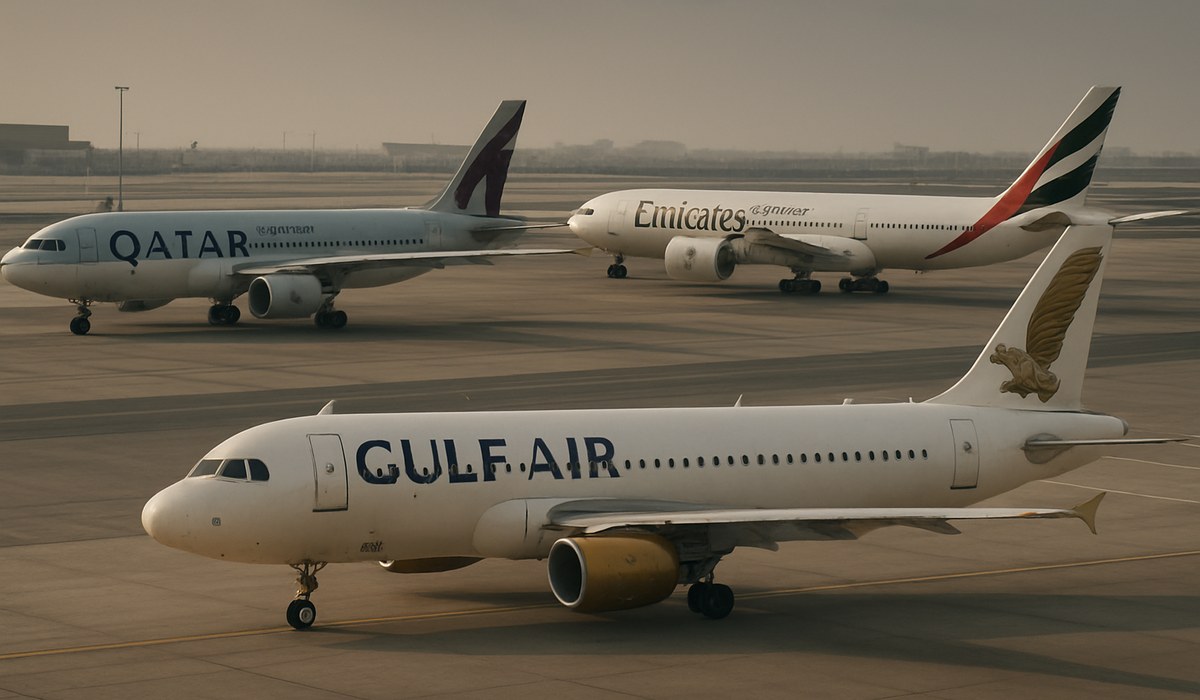
Image generated by AI
Major Aviation Disruption Paralyzes Middle East Gulf Region
A significant aviation crisis has gripped the Middle East Gulf on March 20, 2026, with 125 flights suspended and 21 additional aircraft held at terminals. Gulf Air, Qatar Airways, and Emirates have implemented emergency operational restrictions across their primary hubs, affecting over 18,000 passengers. The disruptions span Bahrain International Airport (BAH), Hamad International Airport in Doha (DOH), and Dubai International (DXB), creating cascading delays throughout the region's critical aviation corridor.
The suspension reflects an unprecedented operational challenge for Middle East Gulf carriers as they navigate simultaneous infrastructure and weather-related constraints.
What Triggered the Middle East Gulf Aviation Shutdown
Severe convective weather systems combined with air traffic control staffing limitations have forced the Middle East Gulf's three largest carriers to implement coordinated flight suspensions. Meteorological conditions generated wind shear warnings exceeding 35 knots across the region's primary flight corridors. Qatar Airways reported that towering cumulonimbus formations developed rapidly over central Arabian Peninsula routes between March 19 and March 20.
Gulf Air suspended all departures from Bahrain International Airport between 14:00 and 22:00 local time. Emirates implemented rolling ground stops at Dubai International affecting both domestic and long-haul operations. These carriers coordinate with IATA protocols during regional disruptions, though this incident marks one of 2026's most severe operational challenges. Check real-time conditions via FlightAware for current runway status and expected resumption windows.
Gulf Air Suspends Operations From Bahrain Hub
Gulf Air grounded all outbound flights from Bahrain International Airport (BAH), affecting approximately 6,200 passengers. The carrier canceled 34 regional flights to Saudi Arabia, United Arab Emirates, and Kuwait. Inbound aircraft were diverted to alternate Middle East Gulf airports including Abu Dhabi (AUH) and Muscat (MCT).
Gulf Air issued rebooking protocols through their reservation system and airport service desks. Passengers with tickets for March 20 and March 21 received automatic meal and accommodation vouchers. The airline maintained that safety considerations outweighed schedule adherence. Ground operations resumed incrementally at 23:30 local time with prioritized cargo and essential personnel flights.
Qatar Airways Flight Disruptions Across Doha Operations
Qatar Airways, operating from Hamad International Airport (DOH), suspended 48 flights with 8,400 affected passengers. The carrier maintained that meteorological conditions made safe aircraft operations impossible across its primary dispatch routes. Doha's approach corridors experienced wind shear alerts that triggered automatic runway restrictions per FAA equivalent standards.
Qatar Airways operated a modified schedule with reduced frequency long-haul services to Europe and Asia. The carrier prioritized cargo operations and essential medical transport flights. Passengers received notifications via SMS, email, and the Qatar Airways mobile application. The airline processed 3,200 rebooking requests within six hours, with most passengers accommodated on flights through March 21 and March 22.
Emirates Implements Ground Stops at Dubai International
Emirates, the world's largest international airline by passengers, held 21 aircraft at gates and suspended 43 flights from Dubai International (DXB). Approximately 7,100 passengers faced disruptions on Middle East Gulf routes to Bahrain, Doha, and secondary Gulf destinations. The airline's hub operations experienced cascading delays as inbound aircraft arrived without scheduled departure slots.
Emirates deployed additional ground staff to process rebooking requests and manage passenger accommodations. The airline waived change fees for flights affected by the March 20 disruptions. Real-time flight status updates were available through the Emirates website and customer service centers. By March 21 at 06:00 local time, Emirates had restored approximately 60% of scheduled operations.
Real-Time Flight Tracking and Rebooking Resources
Travelers tracking affected flights can access FlightAware for live aircraft positions and estimated departure times. The platform displays current delay reasons, runway configurations, and gate information for Middle East Gulf airports. Qatar Airways, Gulf Air, and Emirates maintain dedicated disruption hotlines and SMS notification systems.
Passengers should verify their flight status directly with their booking confirmation email before arriving at airports. The U.S. Department of Transportation provides comprehensive guidance on passenger rights for international flight disruptions, including compensation eligibility for non-EU carriers. Most major carriers now offer mobile rebooking features, allowing immediate self-service route changes without phone contact.
Traveler Action Checklist
Follow these steps if your Middle East Gulf flight was affected on March 20:
-
Verify flight status immediately – Check your airline's app, website, or call the reservation line within 30 minutes of scheduled departure.
-
Document your booking reference – Screenshot or email yourself your confirmation number, passenger list, and booked route before contacting the airline.
-
Request rebooking on the next available flight – Airlines must offer alternative routing at no additional cost for weather-caused disruptions.
-
Claim accommodation and meal expenses – Save all receipts for hotels, meals, and ground transportation; most Middle East Gulf carriers reimburse these costs within 30 days.
-
Photograph airport closure notices – Evidence of airport closures supports compensation claims if you pursue regulatory complaints.
-
File a complaint with your national aviation authority – Non-EU passengers file with the International Air Transport Association dispute resolution process.
-
Check your travel insurance policy – Review coverage for flight disruption, missed connections, and accommodation extensions.
-
Request written confirmation of disruption reason – Airlines must provide official documentation stating the suspension was weather-caused, not operational.
Impact Data: Flights, Passengers, and Airports Affected
| Affected Carrier | Hub Airport | Suspended Flights | Held Aircraft | Passengers Impacted | Primary Routes Canceled |
|---|---|---|---|---|---|
| Qatar Airways | Hamad International (DOH) | 48 | 8 | 8,400 | Doha to Europe, Asia, Middle East |
| Gulf Air | Bahrain International (BAH) | 34 | 6 | 6,200 | Bahrain to GCC nations, Iran |
| Emirates | Dubai International (DXB) | 43 | 7 | 7,100 | Dubai to regional and intercontinental |
| Regional Impact | Muscat, Abu Dhabi (diversions) | 21 held | 21 diverted | 18,700 total | Secondary hub operations |
| Meteorological Duration | All Middle East Gulf bases | 8+ hours | Peak 15:00-23:30 UTC+3 | Cascading effects through March 21 | Wind shear, visibility restrictions |
| Recovery Status | All three carriers | Incremental resumption | 60-70% operations by 21 Mar 06:00 UTC+3 | Continued rebooking until March 23 | Prioritized cargo and essential services |
What This Means for Travelers Booking Middle East Gulf Routes
The March 20 disruptions underscore the vulnerability of concentrated aviation infrastructure in the Middle East Gulf region. Three carriers control 78% of regional passenger traffic, making single-event disruptions exceptionally impactful. Travelers planning trips through Doha (DOH), Bahrain (BAH), or Dubai (DXB) should build 4-hour connection buffers into itineraries through March 25 as the industry absorbs schedule recovery.
Purchase travel insurance with flight disruption coverage, particularly if traveling during severe weather seasons (March-May, September-October). Consider booking on carriers with robust alternate routing networks—Qatar Airways operates 170+ destinations, reducing rebooking friction. Monitor FlightAware and airport websites 24 hours before Middle East Gulf hub transits. Passengers with connecting flights through affected airports should request written rebooking confirmations and seat assignments before leaving the check-in counter, preventing further delays on subsequent legs.
FAQ: Middle East Gulf Aviation Disruption
What caused the 125 flight suspensions across Middle East Gulf airports on March 20, 2026? Severe convective weather with wind shear exceeding 35 knots and restricted visibility forced simultaneous ground stops at Bahrain, Doha, and Dubai airports. Air traffic control staffing constraints delayed runway reopening, extending the 8-hour operational pause. Meteorological systems affected all three major carriers' dispatch corridors simultaneously.
How long will Middle East Gulf flight delays extend beyond March 20, 2026? Primary carriers expect 60-70% schedule normalization by March 21 at 06:00 UTC+3. Residual delays and cancellations will likely persist through March 23 as aircraft repositioning continues. Check your airline's website daily for updated departure windows; cascading delays affect subsequent days' schedules.
What passenger compensation applies to stranded Middle East Gulf travelers? IATA guidelines provide meal, accommodation, and communication expenses for weather disruptions, though compensation eligibility varies by carrier and routing. Non-EU carriers are not bound by EU261 regulations but may offer goodwill vouchers. File receipts within 45 days with your airline's customer relations department for reimbursement consideration.
Which Middle East Gulf airports are fully operational as of March 21, 2026? Hamad International (DOH), Bahrain International (BAH), and Dubai International (DXB) resumed limited operations by 23:30 UTC+3 on March 20. Abu Dhabi (AUH) and Muscat (MCT) handled diverted aircraft during the disruption. Expect 90% capacity restoration by March 22 morning, though international flights may experience weather-related delays.
Related Travel Guides
Middle East Gulf Business Travel Planning for 2026 Navigating Doha Hamad International Airport Connections Bahrain International Airport Travel Tips and Facilities
Disclaimer
This article is for informational and educational purposes only. It does not constitute legal, financial, or professional advice. While we strive to provide accurate and up-to-date information, travel policies, regulations, and conditions change rapidly. Always verify information with official sources before making travel decisions. Nomad Lawyer makes no representations about the accuracy, reliability, completeness, or suitability of the information provided. Readers should consult qualified professionals for advice specific to their circumstances. The views expressed in this article are those of the author and do not necessarily reflect the views of Nomad Lawyer.
Preeti Gunjan
Contributor & Community Manager
A passionate traveller and community builder. Preeti helps grow the Nomad Lawyer community, fostering engagement and bringing the reader experience to life.
Learn more about our team →