
Middle East Aviation Crisis 2026: Singapore Airlines Cancels Dubai Flights Amid Regional Flight Chaos
The Middle East aviation sector is in turmoil as Singapore Airlines suspends all Dubai services until August 2026, with Iran, Saudi Arabia, and Qatar facing massive airspace disruptions.

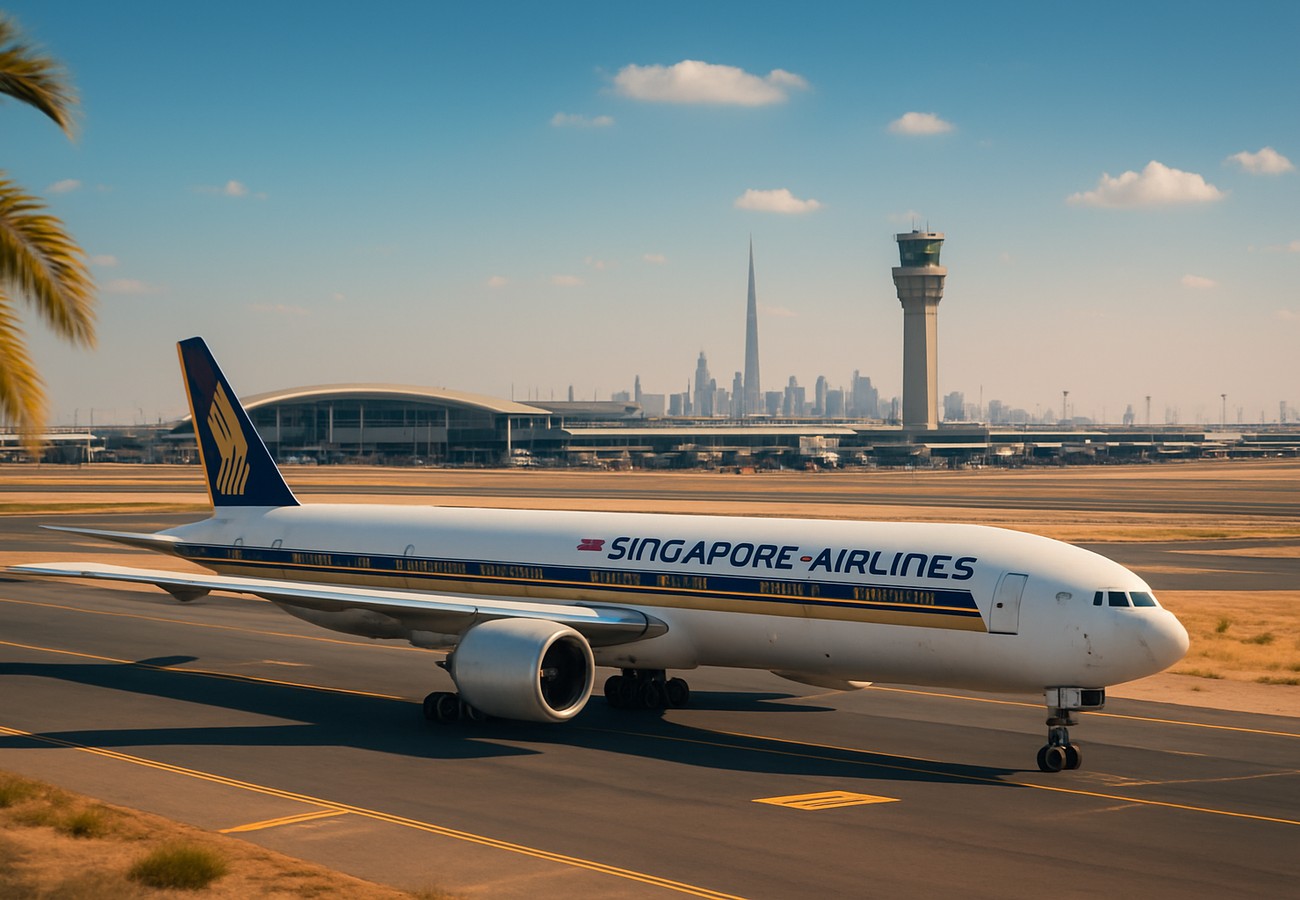
Image generated by AI
Quick Summary
- Headline Suspension: Singapore Airlines (SIA) has cancelled all flights between Singapore and Dubai until at least August 2, 2026.
- Impacted Rotations: Flights SQ494 and SQ495 are grounded, affecting thousands of passengers on the Asia–Middle East corridor.
- Regional Chaos: Airspace in Iran, Saudi Arabia, Qatar, Bahrain, Kuwait, Oman, Israel, and Jordan is facing catastrophic disruptions.
- Hub Status: Ben Gurion (Israel) and Queen Alia (Jordan) are operating at severely reduced capacity due to carrier suspensions.
- Aviation Rerouting: International flights between Europe and Asia are being rerouted, leading to surging fuel costs and longer flight times.
- Passenger Impact: Massive numbers of travelers are stranded, with airlines prioritizing refunds and ticket reissuances.
- Source: Singapore Airlines and International Air Transport Association (IATA) operational updates as of May 7, 2026.
The Middle East aviation sector is facing its most catastrophic operational collapse in decades as Singapore Airlines has suspended all Dubai-bound flights until August 2, 2026, citing systemic geopolitical instability. Released on May 7, 2026, the report details a region-wide flight chaos affecting Iran, Saudi Arabia, Qatar, Israel, and Jordan, with major carriers forced into emergency rerouting and airspace closures. As flight durations and fuel costs surge, the suspension of Flights SQ494 and SQ495 has left thousands of international passengers stranded across the Asia–Middle East corridor. With Ben Gurion, Hamad International, and Queen Alia Airport operating at significantly reduced capacities, the crisis underscores the fragility of global air bridges during periods of intense regional conflict, forcing a total recalibration of international flight schedules between Europe, Asia, and Africa.
Middle East Aviation Crisis 2026: National Airspace and Hub Impact Snapshot
The following table summarizes the operational status of key Middle Eastern aviation hubs and airspace as of May 7, 2026.
| Nation | Airspace / Hub Status | Impact on International Operations |
|---|---|---|
| Iran | High-Risk / Selective Closure | Widespread rerouting of European & Asian carriers |
| Saudi Arabia | Temporary Restrictions | Airlines avoiding specific military/conflict zones |
| Qatar | Open / Risk-Adjusted | Qatar Airways suspending select international routes |
| Israel | Ben Gurion (TLV) Disruptions | Mass cancellations by major European/Asian airlines |
| Jordan | Queen Alia (AMM) Reduced Capacity | Inbound/Outbound cancellations due to rerouting |
| Bahrain | Security Closures | Diversions and temporary hub shutdowns |
| Kuwait | Heavy Delays | Severe impact on UAE and Saudi-bound regional legs |
| Oman | Operational Uncertainty | Cancellations due to nearby surge in military activity |
Singapore Airlines Suspension: All Dubai Rotations Grounded Until August
Singapore Airlines’ decision marks a significant setback for the Asia–Middle East transit market:
- Route Termination: The complete suspension of the Singapore–Dubai sector (SQ494/SQ495) removes a primary hub-to-hub link.
- August Horizon: The suspension is currently set to last until August 2, 2026, though analysts suggest this may be extended if regional risks persist.
- Transit Ripple: Passengers using Singapore as a bridge to Africa and Europe via Dubai are being forced onto more expensive or longer alternative routes.
Iran Airspace Rerouting: The Center of Global Aviation Disruption
Iran’s geographic position as a cross-continental corridor is exacerbating the global crisis:
- Frontline Suspensions: Most major international carriers have suspended overflights through Iranian territory.
- The Levant Detour: Rerouting south of the conflict zone is increasing pressure on Saudi Arabian and Egyptian corridors.
- Safety Protocols: European and Asian aviation authorities have issued urgent bulletins advising total avoidance of Iranian airspace below specific flight levels.
Saudi Arabia and Qatar: Managing Regional Hub Instability and Risk
The region’s two largest airline players are navigating a volatile operational environment:
- Saudi Arabia: While King Abdulaziz Intl remains operational, many carriers are opting for wider detours, reducing the total volume of overflights.
- Qatar Airways: The carrier has adjusted schedules and suspended select international services to mitigate the risk of flight-path exposure.
- Doha Hub Status: Hamad International is seeing a decline in incoming international flights as airlines choose to bypass the region entirely.
Israel and Jordan: Ben Gurion and Queen Alia Hub Cancellations
Air travel to the Levant is currently restricted to essential and state-run services:
- Ben Gurion (TLV): Most international carriers from Asia and Europe have grounded their Tel Aviv rotations indefinitely.
- Queen Alia (AMM): Jordan’s primary hub is facing reduced capacity as transit routes are cut off by neighboring airspace closures.
- Travel Advisories: Multiple nations have issued Level 4 (Do Not Travel) warnings for the region, resulting in a total collapse of leisure and business tourism.
Gulf States (Bahrain, Kuwait, Oman): Localized Closures and Transit Delays
Connectivity between the GCC states is facing significant scheduling pressure:
- Bahrain Diversions: Temporary closures at Bahrain International have led to flights being diverted to more distant regional airports.
- Kuwait Delays: Travelers passing through Kuwait face major delays, particularly on high-frequency routes to Dubai and Abu Dhabi.
- Oman Safety Alerts: Oman Aviation has issued warnings as nearby military activity forces precautionary schedule adjustments.
Operational Consequences: Rising Fuel Consumption and Flight Duration Penalties
The rerouting is having a massive financial impact on the global aviation industry:
- Fuel Surcharge Pressure: Longer flight paths around the Middle East are resulting in significantly higher fuel consumption per flight.
- Crew Duty Limits: Longer flight durations are pushing crew duty times to their limits, forcing airlines to cancel rotations even when aircraft are available.
- Higher Costs: The increased operational expenses are expected to be passed on to passengers through higher ticket prices on Asia–Europe sectors.
Passenger Advisory: Managing SQ494/SQ495 Refunds and Rebookings
Singapore Airlines is implementing a comprehensive support program for affected travelers:
- Refund Policy: Full refunds are being offered for all unused portions of tickets on the Dubai route.
- Rebooking Support: SIA customer service teams are working to rebook passengers on alternative carriers, though seat availability is critically low.
- Communication: Travelers are urged to check the SIA official website for real-time status and wait for direct communication before heading to Changi Airport.
Conclusion: Navigating the Long-Term Impact of the Middle East Aviation Crisis
The May 7, 2026, aviation report confirms that the Middle East is currently a "No-Fly Zone" for many of the world's leading airlines. The decision by Singapore Airlines to ground its Dubai operations until August reflects the severity of the geopolitical risk profile across Iran, Israel, and the wider Gulf. As national hubs from Doha to Amman operate at reduced capacity and international carriers absorb the costs of massive rerouting, the global aviation map is being fundamentally redrawn. For the tourism and business sectors, the crisis represents a significant blockade between East and West, with no immediate resolution in sight. Travelers must prepare for extended flight times, higher fares, and continued scheduling uncertainty as the industry attempts to navigate the most volatile period in modern aviation history.
FAQ: Middle East Aviation Crisis May 2026
Has Singapore Airlines cancelled all flights to Dubai? Yes, Singapore Airlines has suspended all flights between Singapore and Dubai (SQ494/SQ495) until at least August 2, 2026.
Which countries are most affected by airspace closures? Iran, Israel, Jordan, and Lebanon are the primary areas of high-risk airspace, with Saudi Arabia and the UAE also seeing significant rerouting.
Can I get a refund for my cancelled Singapore Airlines flight? Yes, Singapore Airlines is offering full refunds for all passengers affected by the Dubai route suspension.
Related Middle East Aviation Alerts
- Middle East Flight Rerouting: Updated Maps and Asia–Europe Duration Impacts
- Changi Airport Support: Rebooking and Transit Assistance for SIA Passengers
- Levant Airspace Report: Ben Gurion and Queen Alia Hub Operational Status
Disclaimer: All flight cancellation data and hub operational statistics are manually obtained from Singapore Airlines and International Aviation Authorities as of May 7, 2026.
Kunal K Choudhary
Co-Founder & Contributor
A passionate traveller and tech enthusiast. Kunal contributes to the vision and growth of Nomad Lawyer, bringing fresh perspectives and driving the community forward.
Learn more about our team →