
Meghalaya's Underground Boom: Krem Liat Prah Reshapes Adventure Tourism
Krem Liat Prah, South Asia's longest cave at 34km, is triggering a tourism explosion in Meghalaya as travelers abandon crowded landmarks for authentic underground exploration.

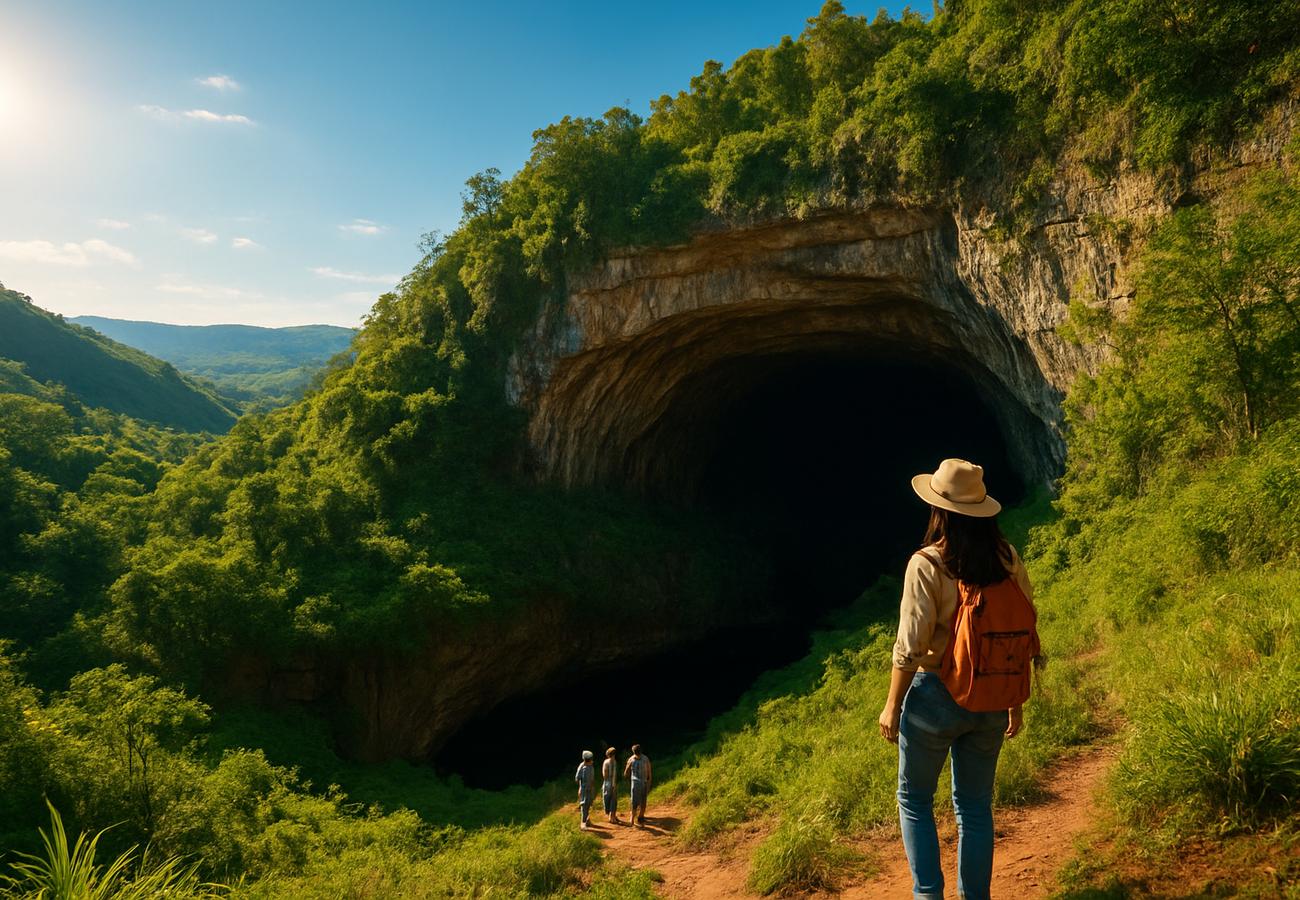
Image generated by AI
For generations, adventurers have chased legends across continents. They've climbed ice-capped peaks, trekked through rainforests, and sailed uncharted waters. Yet the most extraordinary discovery doesn't demand a passport to distant continents—it demands a headlamp and courage to descend 34 kilometers into darkness.
Krem Liat Prah, buried beneath Meghalaya's East Jaintia Hills, is South Asia's longest natural cave system. And it's about to trigger a tourism explosion that could redefine adventure travel across India.
The Hidden Giant Beneath Rolling Hills
Imagine limestone passages stretching longer than a marathon. Underground rivers carving silent paths. Chambers so vast they earned the nickname the Aircraft Hangar. This isn't fiction—this is what awaits explorers who venture into Krem Liat Prah.
For centuries, this geological marvel remained hidden beneath dense forests and rolling terrain. Local communities knew fragments of its existence. International explorers? Largely oblivious. As mapping expeditions gradually revealed the true scale—more than 34 kilometers of interconnected passages—the realization hit: Meghalaya didn't just have a cave. It had a continent-sized underground world.
Reddit: "Just heard about this cave. 34km seems insane for a single system. How is this not more famous?" — r/caving
The discovery transformed Meghalaya's identity overnight. The state, already recognized as India's caving capital, suddenly held a trophy attraction that could compete globally.
Why the World Is Finally Looking Underground
Here's what's changed in travel: authenticity now trumps Instagram-famous landmarks.
Modern travelers are exhausted by overcrowded monuments, luxury resorts with generic experiences, and destinations engineered for photo ops. They want discovery. They want stories. They want to stand in spaces few humans have ever seen.
Krem Liat Prah delivers exactly that.
The cave isn't a polished museum or a commercialized attraction with gift shops (yet). It's exploration in its rawest form. Every passage reveals another geological epoch. Every formation tells 300 million years of Earth's history. When you descend into the Aircraft Hangar—a chamber so enormous it dwarfs cathedrals—you're not consuming a curated experience. You're genuinely discovering something.
This shift mirrors a broader transformation in global adventure tourism, where travelers increasingly seek experiences that combine physical challenge, education, and environmental connection.
The Geological Marvel Nobody Expected
What makes Krem Liat Prah scientifically extraordinary is its complexity. Underground rivers didn't just carve one passage—they sculpted an entire labyrinth of interconnected chambers, siphons, and passages over millions of years.
The limestone formations preserve evidence of climate shifts spanning geological epochs. The underground waterways reveal hydrological patterns crucial for understanding regional water systems. The cave ecosystem supports life adapted to perpetual darkness—species that exist nowhere else on Earth.
Scientists now view Krem Liat Prah as more than a tourist draw. It's a living natural laboratory offering insights into geology, hydrology, paleoclimate, and extremophile biology.
This dual value—tourism plus scientific significance—positions Meghalaya as a destination capable of attracting both adventure seekers and researchers simultaneously.
The Tourism Tsunami Building
Here's the economic reality: one extraordinary cave system can reshape an entire region's tourism trajectory.
Currently, most adventure travelers heading to South Asia follow predictable routes: Nepal's trekking circuits, Thailand's limestone islands, Sri Lanka's tea country. Few have Meghalaya on their itinerary at all. This is about to change.
As awareness of Krem Liat Prah spreads through adventure tourism communities, the state will become a mandatory stop on Asia's exploration circuit. Visitors spending days underground will extend stays, support local hospitality services, hire local guides, and purchase regional products.
For Meghalaya's economy, this represents transformative opportunity. For travelers, it represents access to something genuine—a place where exploration still means discovery.
What This Means for Your Travel Plans
If you're considering an adventure destination for 2026-2027, Meghalaya should be on your shortlist. The infrastructure is still developing, meaning you're visiting before mass tourism arrives.
Book with experienced caving guides. Bring proper equipment. Respect the underground ecosystem. The experience will rewrite your understanding of what natural wonders remain unexplored on this planet.
The era of safe, sanitized tourism is ending. The era of genuine discovery—happening right now in the depths of Meghalaya—is beginning.
The greatest adventures aren't found on Instagram; they're found in the darkness beneath your feet.
Related Travel Guides
Lufthansa Strike Weather Chaos Snarls 1,100+ European Flights
Qatar Airways Restores Nagpur-Doha Route: A Game-Changer for Central India's Global Travel
Disclaimer
This article is for informational and educational purposes only. It does not constitute legal, financial, or professional advice. While we strive to provide accurate and up-to-date information, travel policies, regulations, and conditions change rapidly. Always verify information with official sources before making travel decisions. Nomad Lawyer makes no representations about the accuracy, reliability, completeness, or suitability of the information provided. Readers should consult qualified professionals for advice specific to their circumstances. The views expressed in this article are those of the author and do not necessarily reflect the views of Nomad Lawyer.
Kunal K Choudhary
Co-Founder & Contributor
A passionate traveller and tech enthusiast. Kunal contributes to the vision and growth of Nomad Lawyer, bringing fresh perspectives and driving the community forward.
Learn more about our team →