
McDonnell Douglas MD-11 landing speed: Why pilots demanded specialized training
The McDonnell Douglas MD-11's exceptional landing speed challenged aviation safety in 2026. Pilots demanded specialized training protocols as the trijet aircraft's demanding approach characteristics reshaped industry standards for decades.

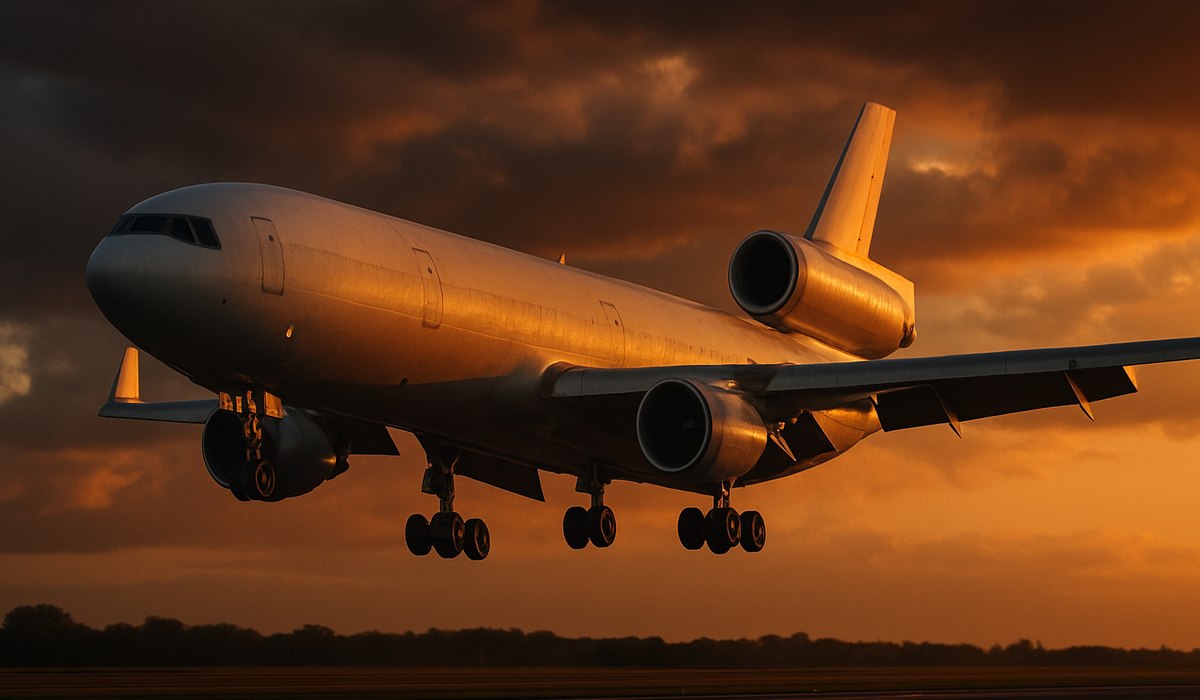
Image generated by AI
The McDonnell Douglas MD-11's Notorious Landing Characteristics
The McDonnell Douglas MD-11 remains one of aviation's most technically demanding aircraft, distinguished by its elongated fuselage and unconventional trijet configuration. Among professional pilots and aviation engineers, one characteristic dominates discussion: its infamously high McDonnell Douglas MD-11 landing speed, which exceeded comparable widebody aircraft and fundamentally shaped how carriers trained flight crews worldwide.
This elegant yet unforgiving machine presented unique operational challenges that persisted throughout its service life. Its landing speed demanded exceptional precision, superior runway infrastructure, and pilot expertise that transcended standard commercial training protocols. The aircraft's design legacy continues influencing modern aviation safety standards and aircraft development philosophy in 2026.
The MD-11's Unusual Trijet Design
The trijet architecture that defined the McDonnell Douglas MD-11 fundamentally altered its aerodynamic behavior compared to conventional twin-engine widebodies. Engineers positioned a third engine mounted on the vertical stabilizer, creating weight distribution challenges that directly impacted landing performance characteristics.
This distinctive configuration affected fuel distribution, center-of-gravity calculations, and aircraft balance during critical descent phases. The extra engine added complexity to approach planning and descent management. Pilots operating trijet aircraft needed enhanced understanding of weight-and-balance procedures that differed significantly from twin-engine competitors. The design required continual monitoring of fuel transfer systems, adding cognitive workload during already-demanding landing phases.
Airlines embraced the trijet concept for trans-Pacific range capabilities and cargo capacity advantages. However, these benefits came bundled with operational penalties that experienced captains couldn't ignore or minimize.
Why Landing Speed Was Exceptionally High
The McDonnell Douglas MD-11 landing speed exceeded industry expectations due to several interconnected engineering factors. The aircraft's substantial weight—even in lightened configurations—demanded higher approach velocities to maintain safe aerodynamic margins during descent.
Weight distribution challenges inherent to trijet design compromised lift efficiency during landing flare phases. The center-of-gravity envelope shifted unpredictably based on fuel quantity and cargo distribution, forcing pilots to maintain speed buffers that conventional widebodies didn't require. Aerodynamic characteristics of the fuselage, combined with engine placement dynamics, created pitch control sensitivities that demanded cautious speed management.
Runway surface conditions amplified these challenges. Contaminated runways—whether wet, icy, or debris-laden—required extended braking distances that only high-quality infrastructure could safely accommodate. This constraint effectively limited the McDonnell Douglas MD-11 to major hub airports with extended, state-of-the-art facilities.
Pilots reported that landing this trijet aircraft demanded split-second timing, precise throttle management, and intimate knowledge of individual aircraft quirks that varied between production batches.
Pilot Training and Safety Implications
The demanding landing characteristics spawned an entirely new training paradigm across major carriers. Pilot demands for specialized certification reflected genuine safety concerns, not mere operational inconvenience. Airlines operating the McDonnell Douglas MD-11 landing speed requirements invested substantially in simulator time, exceeding standard widebody training allocations.
Training curriculums emphasized approach stabilization, go-around procedures, and crosswind landing limitations. Captains required minimum flight-hour thresholds before transitioning to the MD-11, typically 5,000 hours compared to 3,000 hours for conventional widebodies. First officers needed mandatory right-seat experience before advancing to command positions.
The Federal Aviation Administration, along with international aviation authorities, developed enhanced operational directives specific to trijet aircraft. These protocols addressed crosswind limitations, runway surface requirements, and maximum landing weight restrictions. Carriers maintained detailed performance databases documenting landing distances across hundreds of airport-condition combinations.
Safety outcomes improved dramatically as training protocols matured. Incident rates decreased substantially once industry consensus solidified around best practices. The MD-11's challenging characteristics actually elevated overall airline safety standards by forcing systematic training improvements.
The MD-11's Legacy in Modern Aviation
Although retired from most major carriers by the mid-2020s, the McDonnell Douglas MD-11 continues influencing aircraft certification standards and pilot training requirements. Engineers studying the trijet's landing speed challenges incorporate those lessons into modern widebody development programs.
Contemporary aircraft design increasingly prioritizes landing performance optimization, weight distribution efficiency, and aerodynamic predictability—lessons learned through decades of MD-11 operations. Flight training organizations maintain specialized curricula that reference the trijet's unique characteristics as teaching tools.
Cargo operators continued operating MD-11 aircraft well into 2026, valuing the aircraft's exceptional range and payload capacity despite landing speed challenges. Airlines like FedEx and UPS maintained dedicated MD-11 fleets, retaining experienced pilot bases specialized in trijet operations. These carriers' commitment to the aircraft demonstrated that proper training and infrastructure investment effectively managed even demanding landing characteristics.
The aircraft's reputation evolved from "problem child" to "highly specialized tool," respected by pilots who understood its requirements and limitations. Aviation schools worldwide reference the MD-11 landing speed phenomenon when explaining aerodynamic principles to new flight crews.
Key Performance Data
| Metric | Value | Impact |
|---|---|---|
| Landing Speed (Approach) | 160-170 knots (1,000 ft AGL) | Required extended runways vs. twin-engine widebodies |
| Maximum Landing Weight | 285,990 kg | Fuel dump procedures often necessary before approach |
| Crosswind Limitation | 25 knots | Significantly restricted operations in adverse weather |
| Minimum Runway Length | 9,500-10,500 feet | Limited to major international hub airports |
| Pilot Recurrent Training | 24 months | More frequent than comparable aircraft types |
| Trijet Configuration | 2 core engines + 1 tail engine | Unique weight distribution challenges |
What This Means for Travelers
If you're researching historical flight operations or considering cargo charter services utilizing remaining MD-11 aircraft in 2026, understanding landing speed implications remains relevant for informed travel planning.
Traveler Action Checklist:
- Verify aircraft type before booking charter flights—contact operators directly through official websites rather than third-party services
- Review runway capabilities at your destination airport; major international hubs guarantee appropriate infrastructure for specialized aircraft
- Check weather forecasts when flying via carriers operating legacy widebody aircraft; crosswind restrictions may trigger schedule changes
- Confirm cancellation policies when selecting flights on specialized aircraft types; weather diversions occur more frequently
- Register with airlines for real-time notifications of operational changes or schedule modifications related to your flight
- Consult travel insurance providers regarding coverage for weather-related cancellations on specialized aircraft routes
Frequently Asked Questions
What made the McDonnell Douglas MD-11 landing speed so much higher than competing widebodies?
The trijet configuration, combined with substantial structural weight and aerodynamic characteristics unique to the aircraft's design, required higher approach velocities to maintain safe lift margins. Weight distribution challenges created pitch control sensitivities that demanded cautious speed management throughout descent and landing phases.
Were MD-11 landing speed requirements a significant safety concern?
Initial operations generated incidents and operational challenges. However, comprehensive pilot training programs, enhanced maintenance protocols, and strict runway selection criteria effectively addressed safety concerns. Incident rates declined substantially once industry training standards matured and became standardized across carriers.
Why do airlines still operate the MD-11 despite its landing speed challenges?
Cargo operators continue valuing the aircraft's exceptional trans-Pacific range and payload capacity. FedEx and UPS maintain MD-11 fleets because those operational advantages justify training investments and runway requirements. Proper infrastructure and experienced pilot bases make economically viable continued operations.
How does the MD-11 landing speed compare to modern aircraft?
Contemporary widebodies achieve significantly lower approach speeds through advanced aerodynamic design
Disclaimer
This article is for informational and educational purposes only. It does not constitute legal, financial, or professional advice. While we strive to provide accurate and up-to-date information, travel policies, regulations, and conditions change rapidly. Always verify information with official sources before making travel decisions. Nomad Lawyer makes no representations about the accuracy, reliability, completeness, or suitability of the information provided. Readers should consult qualified professionals for advice specific to their circumstances. The views expressed in this article are those of the author and do not necessarily reflect the views of Nomad Lawyer.
Preeti Gunjan
Contributor & Community Manager
A passionate traveller and community builder. Preeti helps grow the Nomad Lawyer community, fostering engagement and bringing the reader experience to life.
Learn more about our team →