
McDonnell Douglas Inside: The MD-11's Legendary Flight Deck in 2026
Explore the McDonnell Douglas MD-11's iconic flight deck design as aviation enthusiasts celebrate its legacy amid modern aircraft innovations in 2026. A deep dive into cockpit history.

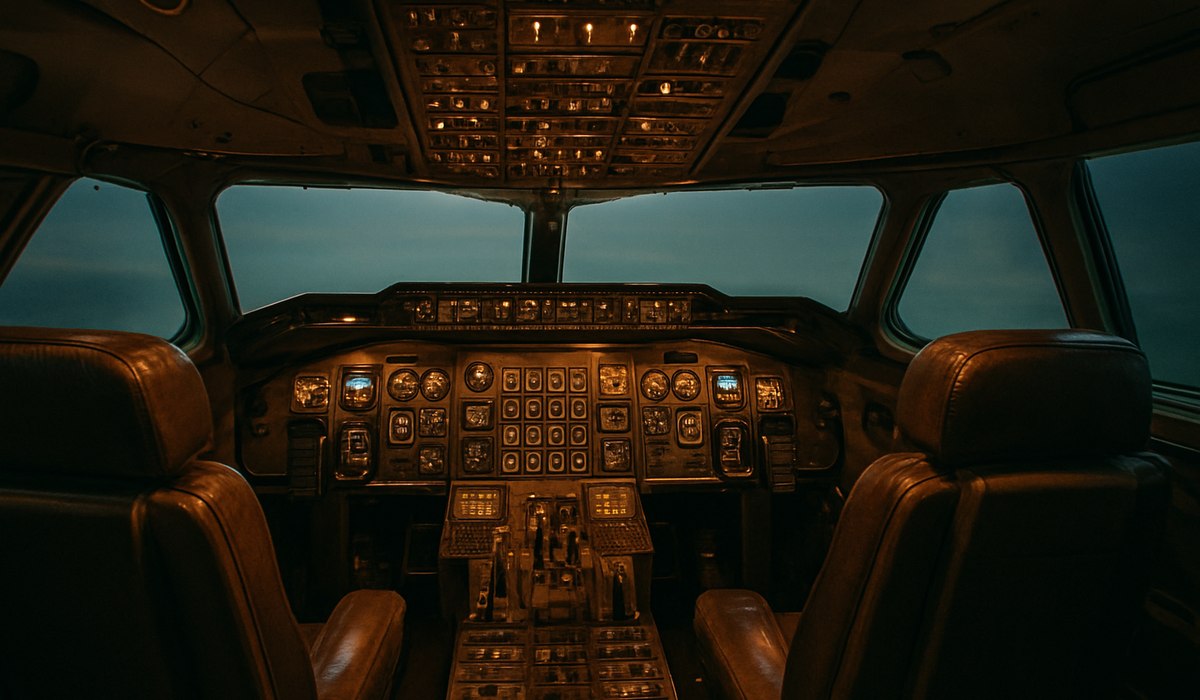
Image generated by AI
The McDonnell Douglas MD-11's Iconic Flight Deck Enters Aviation History
The McDonnell Douglas MD-11 represents a defining moment in commercial aviation, bridging the gap between analog cockpit instrumentation and digital flight systems. While modern aircraft now feature folding wingtips, advanced composite structures, and AI-assisted navigation, aviation enthusiasts and veteran pilots continue to celebrate the MD-11's legendary trijet configuration. The mcdonnell douglas inside perspective reveals why this aircraft's flight deck design remains unforgettable—even as the industry embraces futuristic innovations that would have seemed impossible during the MD-11's development in the 1990s.
The trijet's sophisticated flight deck established standards that influenced cockpit design for decades. Today's next-generation aircraft may boast glass cockpits and autonomous systems, yet the MD-11's ergonomic layout and engineering philosophy still merit study in aviation academies worldwide. Understanding the mcdonnell douglas inside cockpit configuration offers travelers and aviation professionals valuable context about how aircraft design evolution shapes the flying experience.
The MD-11's Legendary Trijet Legacy
The McDonnell Douglas MD-11 first took flight in 1990, representing the company's final commercial aircraft before merging with Boeing. Its trijet design—featuring three engines with one mounted on the tail fin—proved revolutionary for long-range international routes. The aircraft could accommodate 323 passengers across three cabin decks while maintaining fuel efficiency that competitors struggled to match.
The mcdonnell douglas inside configuration prioritized crew comfort and operational efficiency. Flight engineers could monitor three independent engine systems from a dedicated station, providing redundancy that trans-Pacific flights demanded. Airlines including Lufthansa, Japan Airlines, and Federal Express operated fleets exceeding 200 aircraft combined, cementing the MD-11's status as a workhorse for premium cargo and passenger services.
This trijet lineage descended from the successful DC-10, though the MD-11 introduced lighter materials, improved engines, and enhanced avionics. The aircraft's nickname—"the last of the analog giants"—captures its transitional position between mechanical instrumentation and digital systems. Modern aircraft designers still reference the MD-11's cabin pressurization and electrical architecture when training new engineers.
Inside the Flight Deck: Avionics and Design Philosophy
Stepping inside the MD-11's flight deck reveals a masterclass in practical cockpit engineering. The flight engineer's station occupied the entire right wall, with redundant systems for hydraulics, pneumatics, and electrical distribution. Glass panels displaying engine parameters, fuel management, and system status provided real-time data that pilots used for continuous operational decisions.
The instrument panel featured a conventional "T" arrangement—primary flight instruments centered above the yoke, navigation aids to the left, and engine monitoring systems to the right. This layout proved so intuitive that modern glass cockpits maintain similar logical groupings despite digital displays. The mcdonnell douglas inside avionics suite integrated inertial reference systems, weather radar, and ground proximity warning systems that set safety benchmarks.
Approximately 2,100 cubic feet of pressurized flight deck space allowed pilots, flight engineers, and two jumpseat observers to operate comfortably during 12-hour transpacific missions. Environmental control systems maintained precise temperatures and humidity levels, reducing crew fatigue on extended operations. The main deck galley positioned immediately below the flight deck enabled quick access to refreshments during cruise flight, a thoughtful design element that influenced subsequent aircraft.
Modern commercial aircraft have eliminated the dedicated flight engineer position entirely, consolidating all monitoring functions onto dual flight decks. The MD-11's three-person crew model reflected 1990s operational philosophy, whereas today's aircraft achieve equivalent safety with pilots managing automated systems. However, pilots trained on the mcdonnell douglas inside configuration demonstrate superior manual aircraft handling skills—a fact that airlines value during emergency scenarios.
Comparing Classic to Modern Cockpit Technology
The evolution from MD-11 flight decks to contemporary aircraft represents a fundamental transformation in how aviators interact with their machines. The MD-11 featured approximately 300 individual switches, dials, and indicators requiring conscious pilot attention. Modern aircraft like the Boeing 787 Dreamliner consolidate equivalent functions into touchscreen interfaces and automated logic systems.
Conventional instrument flying in the MD-11 demanded continuous cross-referencing across multiple instruments. Pilots scanned attitudes indicators, altimeters, vertical speed indicators, and heading references simultaneously—a cognitive load that shaped their training protocols. The mcdonnell douglas inside approach required intimate knowledge of each system's mechanical operation, electrical architecture, and manual override procedures.
Today's glass cockpits synthesize this data into integrated displays, presenting only information relevant to current flight phases. Automation handles cruise-altitude maintenance, descent planning, and approach sequencing that once demanded active pilot calculation. Yet aviation safety records indicate that pilots trained on classical mcdonnell douglas inside cockpit philosophy maintain sharper manual flying skills when automation malfunctions.
Engine monitoring exemplifies this technological transition. MD-11 flight engineers watched mechanical engine temperature gauges, oil pressure needles, and fuel flow indicators with constant vigilance. Modern systems continuously log 4,000+ parameters per engine, with artificial intelligence algorithms detecting anomalies invisible to human observation. However, understanding the MD-11's basic engine operating principles provides fundamental knowledge that supports modern systems thinking.
Why Aviation Enthusiasts Revere the McDonnell Douglas MD-11
Aviation enthusiasts and professional pilots celebrate the mcdonnell douglas inside experience as representing aviation's final chapter of mechanical elegance before complete digitization. Flight deck tours reveal sophisticated engineering that solved real operational challenges without computer assistance. The trijet's three independent engine systems, each monitored by dedicated instruments, demonstrated engineering thoughtfulness that modern pilots find instructive.
Spotting MD-11 aircraft at major international airports attracts photography enthusiasts seeking to document the "last generation" trijets. The aircraft's distinctive silhouette—particularly the distinctive tail engine configuration—makes identification easy even for casual observers. Air cargo operators including FedEx and UPS still operate modified MD-11F freight variants, keeping the type airborne on profitable long-distance routes.
The mcdonnell douglas inside narrative resonates strongly with aviation historians examining how human factors engineering evolved. Flight deck ergonomics established during MD-11 development influenced regulatory standards that govern all subsequent cockpit designs. Understanding the trijet's spatial layout, control placement, and instrument clustering provides valuable perspectives on why modern cockpits maintain certain conventions despite digital transformation.
Restoration communities and aviation museums preserve static MD-11 examples, enabling public visitors to appreciate the flight deck complexity firsthand. These exhibits contextualize how aviation transitioned from steam-era propulsion through jet-age innovation into contemporary automation—a journey embodied perfectly in the mcdonnell douglas inside design philosophy.
Key Data Table: McDonnell Douglas MD-11 Specifications and Historical Impact
| Specification | Detail |
|---|---|
| First Flight | November 10, 1990 |
| Production Run | 200 aircraft manufactured (1991–2000) |
| Crew Configuration | Captain, First Officer, Flight Engineer (3-person cockpit) |
| Passenger Capacity | 323 maximum (typically 290 in three-class configuration) |
| Flight Deck Dimensions | Approximately 2,100 cubic feet pressurized space |
| Engine Configuration | Three General Electric CF6-80C2 turbofan engines |
| Range | 7,650 nautical miles (maximum certified) |
| Cruise Altitude | Maximum 43,000 feet |
| Retirement Status | Passenger service ended 2014; cargo operations continue (2026) |
| Active Operators | FedEx, UPS, select international cargo carriers |
Disclaimer
This article is for informational and educational purposes only. It does not constitute legal, financial, or professional advice. While we strive to provide accurate and up-to-date information, travel policies, regulations, and conditions change rapidly. Always verify information with official sources before making travel decisions. Nomad Lawyer makes no representations about the accuracy, reliability, completeness, or suitability of the information provided. Readers should consult qualified professionals for advice specific to their circumstances. The views expressed in this article are those of the author and do not necessarily reflect the views of Nomad Lawyer.
Raushan Kumar
Founder & Lead Developer
Full-stack developer with 11+ years of experience and a passionate traveller. Raushan built Nomad Lawyer from the ground up with a vision to create the best travel and law experience on the web.
Learn more about our team →