
Maryland Ignites Nighttime Heritage Travel Across Seven Historic Cities, Transforming Annapolis, Baltimore, and Chestertown with Immersive Mid-Century Illumination: New Travel Alert
Maryland's new nighttime heritage travel corridor connects Annapolis, Baltimore, Chestertown, and more in an illuminated network of historic landmarks.

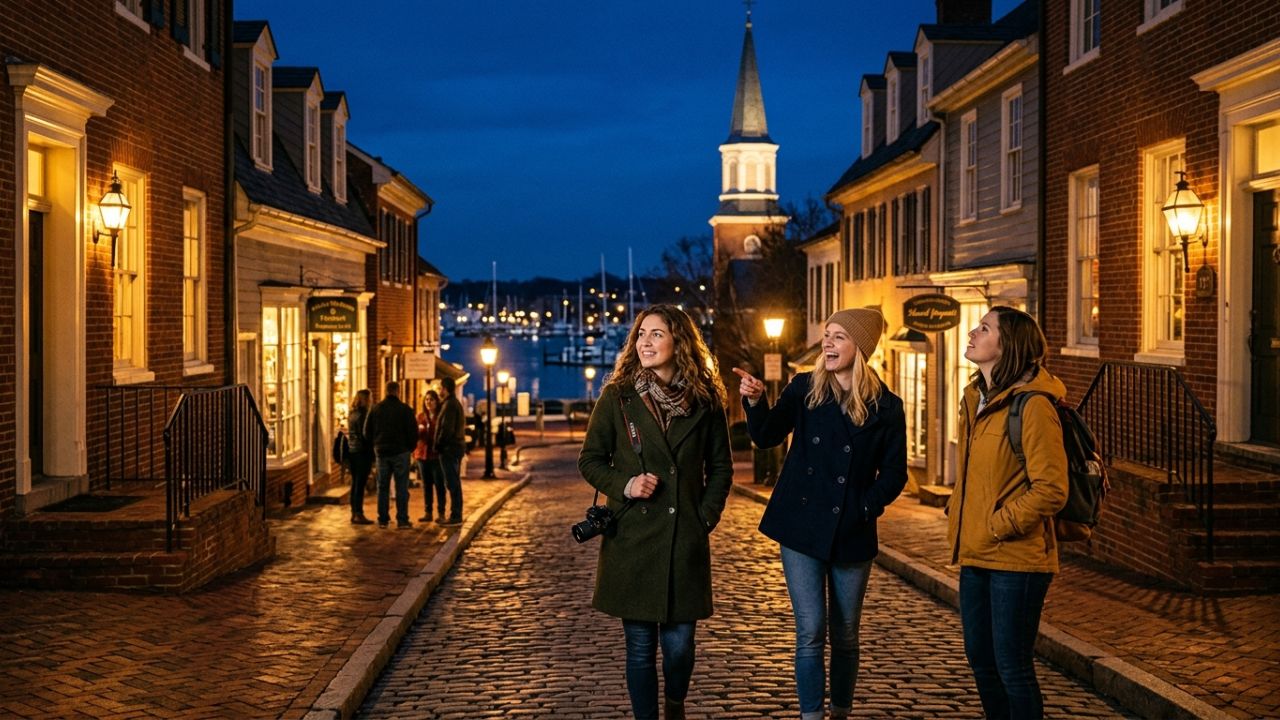
Image generated by AI
Published on June 24, 2026
A coordinated tourism shift is reshaping Maryland's leisure landscape, as the state connects seven historic hubs into a unified network for nighttime heritage travel. The project combines modern eco-friendly illumination with historic preservation, allowing travelers to explore landmarks in Annapolis, Baltimore, Frederick, St. Mary’s City, Cumberland, Havre de Grace, and Chestertown after dark. Visitors looking to experience these illuminated walking paths are urged to plan routes and review safety tips to make the most of this nighttime wonderland: New Travel Alert.
Quick Summary
- Seven-City Illumination Corridor: Maryland has linked Chestertown, Baltimore, Frederick, Annapolis, St. Mary's City, Havre de Grace, and Cumberland in a noctourism network.
- Colonial and Maritime Anchors: Major landmarks like the Maryland State House dome, the USS Constellation, and the Concord Point Lighthouse are illuminated nightly.
- Sustainable Eco-Friendly Lighting: The initiative utilizes energy-efficient LED technology to reduce environmental footprints while preventing light pollution.
- Sensory and Slow Travel Focus: The project targets the growing global appetite for noctourism, offering curated nighttime walks that connect travelers emotionally with history.
- Local Business Integration: By extending visitor dwell time after sunset, the corridor boosts local economies, benefiting restaurants and shops near illuminated routes.
The expansion of nighttime heritage travel in Maryland is driven by the state's efforts to balance tourism growth with environmental preservation. Coordinated by regional authorities, including the Maryland Historical Trust and local heritage areas like the Chesapeake Crossroads, this strategy addresses the global rise in noctourism and slow travel. By shifting visitor traffic to evening hours, the initiative reduces daytime trail wear and spreads economic activity across the day without overwhelming fragile historic sites.
Context and Background: Illuminating the Past for Sustainable Tourism
Historically celebrated for its colonial history and maritime gateways, Maryland is enhancing its visitor economy by showcasing its historical assets after dark. The concept of heritage lighting goes beyond basic decoration, serving as a structured approach to draw visitors to architectural landmarks during off-peak hours. By focusing on noctourism, municipal planners can decrease daytime crowding at popular sites, providing a more balanced and sustainable visitor distribution.
This nighttime corridor also reflects changes in traveler habits, as modern tourists look for visually immersive, story-rich experiences rather than traditional sightseeing. By linking separate historic cities into a cohesive trail, the state has created a unified tourism brand that highlights both local identity and shared regional history. This coordination helps local businesses extend their operational hours and capture additional visitor spending.
Event and Incident Details: A Massive Surge in Nighttime Heritage Travel
Maryland's nighttime heritage travel corridor connects seven key cities, each offering a distinct historical layer from colonial governance to maritime trade:
- Annapolis (Colonial Capital): As the heart of the Chesapeake Crossroads Heritage Area, the city features the Maryland State House (oldest capitol in continuous legislative use with an illuminated dome), the historic City Dock (Ego Alley), the William Paca House & Garden (National Historic Landmark), St. Anne's Church (with its radiant spire), and the Banneker-Douglass-Tubman Museum along Franklin Street.
- Baltimore (Industrial & Maritime Hub): Managed by the Baltimore National Heritage Area (BNHA), the city features a 3.2-mile Heritage Walk connecting the Inner Harbor Waterfront Promenade, the Civil War-era USS Constellation, the Phoenix Shot Tower (constructed in 1828), the cobblestone streets of the Fell’s Point Historic District, and The Peale storytelling center.
- Frederick (Civil War History): Anchoring the Heart of the Civil War Heritage Area, the city's 'Walktober' program leads visitors through Carroll Creek Park, the Museum of Civil War Medicine on E. Patrick St., Culler Lake & Baker Park, the Greek Revival architecture of Winchester Hall, and the historic Barbara Fritchie House.
- St. Mary’s City (Colonial Settlement): Serving as an open-air museum, this site features stargazing walks, the Maryland Dove ship replica, the reconstructed Town Center, the archaeological St. John’s Site Museum, the Brick Chapel of 1667, and the reconstructed State House of 1676.
- Cumberland (C&O Canal Gateway): Located at the terminus of the C&O Canal National Historical Park, the route highlights Canal Place Heritage Park, the brick Western Maryland Railway Station, George Washington's Headquarters in Riverside Park, the Emmanuel Episcopal Church (built on Fort Cumberland ruins with Underground Railroad tunnels), and the C&O Canal Towpath at Mile 184.5.
- Havre de Grace (Susquehanna Shoreline): Situated at the confluence of the Susquehanna River and Chesapeake Bay, this trail includes the nightly-lit Concord Point Lighthouse (oldest in continuous use in Maryland), the Havre de Grace Maritime Museum, a Waterfront Promenade detailing the War of 1812, the Lock House Museum (Susquehanna and Tidewater Canal), and St. John's Episcopal Church.
- Chestertown (Eastern Shore Colonial Port): Part of the Stories of the Chesapeake Heritage Area, this colonial port features the 18th-century Custom House, historic homes along High Street, the Sumner Hall Grand Army of the Republic hall, the Chestertown Waterfront (highlighting the Atlantic slave trade), and the Hynson-Ringgold House merchant mansion.
To help travelers compare the key features and regional history of these destinations, the table below provides a structured overview of the seven-city corridor:
| Historic Maryland City | Primary Heritage Area & Key Venues | Iconic Illuminated Landmarks | Key Historical Theme |
|---|---|---|---|
| Annapolis | Chesapeake Crossroads (William Paca House) | Maryland State House dome, St. Anne’s Church spire | Colonial capital and civic governance |
| Baltimore | Baltimore National Heritage Area (BNHA) | USS Constellation, Phoenix Shot Tower (1828) | Industrial growth and maritime defense |
| Frederick | Heart of the Civil War (Carroll Creek Park) | Winchester Hall, Barbara Fritchie House | Civil War medicine and local legends |
| St. Mary’s City | Colonial Outdoor Museum (Town Center) | Brick Chapel of 1667, State House of 1676 | State beginnings and religious freedom |
| Cumberland | C&O Canal National Historical Park | Western Maryland Railway, George Washington's Cabin | Canal, railway, and Underground Railroad |
| Havre de Grace | Susquehanna Shoreline (Maritime Museum) | Concord Point Lighthouse, Lock House Museum | War of 1812 and canal engineering |
| Chestertown | Stories of the Chesapeake (Waterfront) | Custom House, High Street, Sumner Hall | Eastern Shore trade and African American veterans |
Risk and Impact: Challenges Facing Nighttime Heritage Travel in Historic Districts
Expanding tourism operations into the nighttime hours presents several management challenges and operational risks:
- Light Pollution: Inappropriate lighting can disrupt local ecosystems and stargazing programs, especially in rural areas like St. Mary's City.
- Structural Wear and Tear: High visitor foot traffic along historic brick walks and cobblestones can accelerate physical deterioration.
- Pedestrian Safety Risks: Walking along historic streets at night requires adequate pathway illumination without sacrificing historical accuracy.
- Operational Energy Costs: Maintaining decorative lighting networks across seven cities can strain municipal budgets unless energy-efficient technologies are used.
- Impact on Local Residents: Increased noise and pedestrian traffic in historic residential areas, such as Fell's Point or Chestertown, can lead to neighborhood friction.
Addressing these risks is essential to protect local neighborhoods and ensure the long-term success of the nighttime tourism initiative.
What Authorities Are Saying About Nighttime Heritage Tourism
Maryland's tourism planners and preservation organizations emphasize that nighttime programs must prioritize sustainability to protect the state's historical assets. Officials from the Maryland Historical Trust note that curated heritage walks must balance visitor engagement with conservation. They recommend implementing energy-efficient LED technology to highlight architectural details while reducing energy consumption.
Additionally, representatives from the Baltimore National Heritage Area (BNHA) highlight that expanding nighttime walkways helps distribute the economic benefits of tourism. By extending visitor dwell time after sunset, local businesses such as restaurants and shops benefit from increased foot traffic. Authorities encourage travelers to use public transit and follow pedestrian-friendly routes to minimize environmental impacts on local communities.
Practical Traveler Advice: Planning Your Illuminated Heritage Tour
For travelers planning to explore Maryland's illuminated heritage corridors, experts recommend the following actionable tips to ensure a safe and enjoyable journey:
- Schedule Walks Around Illumination Events: Verify lighting schedules for landmarks like the William Paca House & Garden or St. Mary's stargazing tours before departing.
- Wear Appropriate Footwear: Historic pathways, cobblestone streets in Fell's Point, and towpaths in Cumberland require sturdy shoes to prevent slips.
- Utilize Eco-Friendly Transportation: Use public transit or bike trails to move between historic districts to reduce congestion and carbon emissions.
- Respect Historic Neighborhoods: Remain quiet when walking near private residential areas along Chestertown's High Street or Annapolis' historic alleys.
- Carry Real-Time Navigation Tools: Keep digital maps active, especially when walking the 3.2-mile Baltimore Heritage Walk or Cumberland's towpath at night.
Broader Context: Noctourism and the Evolution of Slow Travel
The growth of nighttime travel across Maryland reflects a broader global shift toward noctourism and slow travel. Modern travelers are moving away from passive sightseeing in favor of sensory, story-rich experiences that allow for a deeper connection with history. By integrating modern lighting technology with historic preservation, Maryland's cities are creating a stronger tourism identity that highlights the state's diverse legacy, from colonial assembly halls to African American heritage museums.
Additionally, the cooperative structure of this seven-city network sets a leading example for other historical regions in the United States. Rather than competing for the same visitors, these destinations coordinate their promotions to highlight a shared regional identity. This collaborative strategy supports sustainable tourism while ensuring that multiple communities benefit from visitor arrivals.
What to Expect Next / Looking Ahead: The Growth of Pedestrian Corridors
Travelers can expect continued upgrades to pedestrian pathways and lighting networks as cities expand their nighttime programs. Local authorities plan to increase the integration of digital storytelling tools, such as mobile audio guides, to accompany the illuminated walking routes. Additionally, the state will monitor the environmental impact of heritage lighting, refining energy-efficient guidelines ahead of peak travel seasons.
As noctourism becomes more established, other historic cities in the region may seek to join the illumination trail. The expansion of these pedestrian corridors will likely lead to closer partnerships between local historical societies and municipal planners. Over time, these efforts will create a fully connected network of illuminated pathways that makes the state's heritage highly accessible to a global audience.
Conclusion: Emphasizing Safety, Preparedness, and Conservation
Maryland's illuminated heritage walks show how history and modern technology can intersect to create a mesmerizing travel experience. By connecting seven historic cities under a unified nighttime corridor, the state has established a unique model for sustainable heritage tourism. Travelers who plan ahead, practice safety, and respect local historic sites will find a rich, glowing legacy that brings the past to life under the stars.
Related Travel Guides
- Sacramento Tourism Breaks Records Across California as Visit Sacramento Expands Global Sports Tournaments and Farm-to-Fork Food Festivals to Ignite Economic Surge: New Travel Alert
- JetBlue Vacations Launches Specialized Theme Park Experts to Assist Travelers with Orlando Holiday Bundles Near Disney and Universal Resorts: What Every Traveller Must Know
- The 10 Best Historic Tours in Maryland, According to Reddit
FAQ: Maryland Luminous Heritage Walks and Nighttime Tourism
What is Maryland's new nighttime heritage travel corridor?
The corridor is an illuminated network connecting seven historic cities—Annapolis, Baltimore, Frederick, St. Mary’s City, Cumberland, Havre de Grace, and Chestertown—featuring curated nighttime heritage walks.
Which landmarks are illuminated as part of the Maryland network?
Key illuminated sites include the dome of the Maryland State House, the USS Constellation in Baltimore's Inner Harbor, and the Concord Point Lighthouse in Havre de Grace.
How does the nighttime corridor support sustainable tourism?
By shifting visitor flows to evening hours, the program reduces daytime overcrowding at fragile historic sites, while utilizing energy-efficient LED technology to minimize energy consumption and light pollution.
What is the Frederick 'Walktober' program?
The 'Walktober' program is a seasonal initiative in Frederick that offers structured evening strolls through Civil War-era historic sites, parks, and downtown corridors after dark.
Are the nighttime walks suitable for all visitors?
Yes, the walks are pedestrian-friendly, but visitors are advised to wear sturdy footwear due to historic cobblestone and brick pathways, and to carry real-time navigation tools.
Disclaimer
This article is for informational and educational purposes only. It does not constitute legal, financial, or professional advice. While we strive to provide accurate and up-to-date information, travel policies, regulations, and conditions change rapidly. Always verify information with official sources before making travel decisions. Nomad Lawyer makes no representations about the accuracy, reliability, completeness, or suitability of the information provided. Readers should consult qualified professionals for advice specific to their circumstances. The views expressed in this article are those of the author and do not necessarily reflect the views of Nomad Lawyer.
Kunal K Choudhary
Co-Founder & Contributor
A passionate traveller and tech enthusiast. Kunal contributes to the vision and growth of Nomad Lawyer, bringing fresh perspectives and driving the community forward.
Learn more about our team →