
Maldives Tourism Plummets 5% as Geopolitical Turmoil Grounds Flights: China Emerges as Economic Lifeline
Official data reveals the Maldives experienced a shocking 5% decline in visitor numbers compared to 2025, with Middle East geopolitical disruptions crippling flight schedules. China's 169,798 arrivals keep the archipelago afloat.

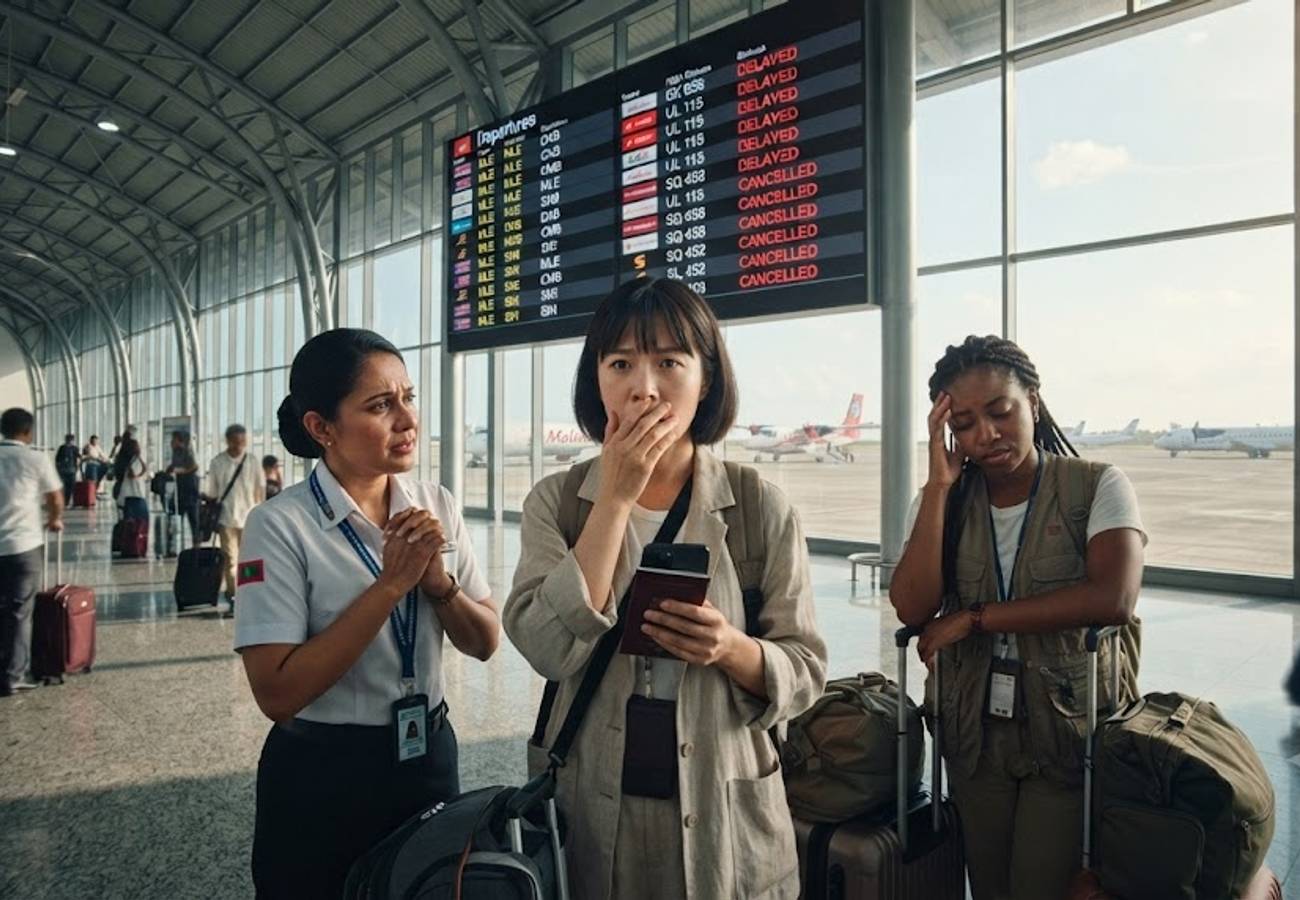
Image generated by AI
Paradise Under Pressure: The Maldives Confronts An Unexpected Tourism Crisis
The Maldivian Ministry of Tourism just released numbers that should worry resort operators across the Indian Ocean archipelago. Visitor arrivals have declined by a jarring 5% compared to the same period in 2025—a stunning reversal for a destination long synonymous with uninterrupted luxury tourism growth.
What's more alarming? The archipelago crossed its one-millionth visitor milestone on June 20, 2026, noticeably later than it reached the same benchmark in 2025. This temporal shift signals a troubling trend: holidaymakers aren't arriving on schedule, and flight disruptions are directly to blame.
The Middle East Geopolitical Time Bomb Decimating Flight Schedules
The culprit behind the slowdown isn't a economic recession or pandemic resurgence. It's Middle East geopolitical volatility creating cascading flight disruptions across international aviation networks.
Airlines have been forced into complex rerouting patterns that add hours to journey times and spike ticket prices. European travelers—traditionally the Maldives' most reliable market—are increasingly reconsidering long-haul bookings altogether. Budget constraints amplified by global inflation compound the problem: fewer westerners are willing to pay premium airfares for tropical escapes.
Velana International Airport now welcomes an average of 5,700 holidaymakers daily—a respectable figure, but one that falls short of pre-disruption projections. Analysts argue that rising flight costs have fundamentally altered the calculus for cost-conscious leisure travelers.
Reddit: "Flight prices to the Maldives have become absolutely mental. I was planning a honeymoon there but ended up rebooking to Thailand. Same luxury, half the airfare." — r/travel
China Becomes The Economic Firewall Preventing Total Collapse
While European markets falter, China has emerged as the archipelago's unlikely economic savior.
Fresh statistical briefings reveal that Chinese travelers contributed 169,798 successful arrivals to the islands—commanding a dominant 16.2% market share of total international visitor volume. This isn't merely a statistical footnote; it's the difference between manageable decline and economic catastrophe.
Chinese tourists possess an insatiable appetite for luxury overwater villa experiences, keeping high-end properties occupied throughout the shoulder season. Local authorities have responded strategically by strengthening bilateral transport agreements, ensuring steady commercial flight flows from mainland China.
The composition of Chinese visitor preferences reveals a fascinating market evolution. According to ministerial statistics:
- 65% of Chinese arrivals opt for high-end luxury resort stays
- 30% choose modern guesthouse accommodation on inhabited local islands
- The remaining percentage splits between mid-range and boutique properties
This 30% guesthouse adoption rate demonstrates that even wealthy Chinese travelers increasingly crave authentic cultural immersion rather than isolation in exclusive bubbles. Island communities are directly benefiting from foreign expenditure distribution like never before.
Europe Still Fighting For Market Position Despite Headwinds
Western Europe maintains competitive relevance despite the overarching 5% decline shadow.
Russia claims the second-largest contributor position with 150,978 arrivals—a solid 14% market share—proving that Eastern European demand remains remarkably resilient despite banking restrictions. The United Kingdom holds third place with 86,795 British travelers, whose preference for extended stays helps stabilize average booking lengths.
Italy secured fourth position by dispatching 74,049 sun-seekers (representing 7.1% of total market share), while Germany followed closely with 67,379 arrivals commanding 6.4% market share. Western Europe's diverse source markets provide stable foundational demand, even as geopolitical turbulence rattles higher-margin segments.
The accommodation split reveals intriguing diversification:
- 72% of all international tourists selected traditional luxury resorts
- 23% opted for boutique guesthouses
- The remaining percentage distributed across mid-range and specialty accommodations
The New Face Of Maldivian Tourism: Young, Female, And Digitally Native
Demographic tracking by immigration authorities reveals a seismic shift in traveler composition.
The archetypal sun-seeking retiree has been displaced by a new power demographic: young women aged 25-34 now form the single largest visitor block. This millennial cohort is driven overwhelmingly by social media trends, seeking visually stunning backdrops for content creation and digital influence building.
Solo female travel is surging, supported by the destination's stellar safety reputation and world-class hospitality infrastructure. Travel agencies have pivoted their packaging strategies explicitly toward this independent, high-spending demographic.
Modern travelers reject the vacation stereotype of passive beach lounging. This generation actively demands wellness packages and sustainable eco-tourism excursions. They prioritize coral reef restoration projects and authentic culinary interactions with indigenous islanders. Progressive properties are hiring wellness experts and digital creator liaisons to meet these contemporary expectations.
The industry-wide evolution reflects a broader cultural pivot toward experiential luxury, where personal growth and authentic connection matter equally alongside relaxation and aesthetic pleasure.
Can The Government Still Salvage Its 2.5 Million Visitor Target?
The Maldivian administration has ambitiously targeted 2.5 million international tourist arrivals before 2026 concludes. This lofty goal now faces intense scrutiny from economic experts who doubt feasibility amid global travel uncertainty.
Minister of Tourism and Civil Aviation Mohamed Ameen has publicly addressed mounting concerns with pragmatic realism. His immediate, crucial objective has shifted: ensuring total arrivals don't fall below 2025's baseline figures. This recalibration highlights the unpredictability of contemporary international travel patterns.
The archipelago currently operates 67,868 tourist beds scattered across 1,297 registered tourism establishments. Infrastructure capacity is decidedly not the constraint. The critical bottleneck remains resolving international flight disruptions.
Officials are working closely with major carriers to establish new direct routes from underserved cities across India and Southeast Asia. These emergency diplomatic efforts represent the government's best hope for reversing the current 5% deficit.
Resort Operators Pivot Strategies As Occupancy Pressures Mount
The current visitor slump forces luxury island properties to fundamentally re-evaluate long-term operational strategies.
Resorts can no longer rely on passive bookings generated through brand recognition alone. They're pivoting toward highly customized guest experiences and lowering minimum stay requirements to attract wealthy regional travelers seeking weekend getaways rather than week-long vacations.
There's renewed focus on holistic health retreats and world-class fine dining collaborations to justify premium room rates. Sustainability has transformed from marketing catchphrase into genuine financial necessity. Forward-thinking properties are investing heavily in solar energy grids and localized desalination plants to dramatically reduce overhead costs.
By cutting fossil fuel imports, eco-conscious resorts can better weather demand fluctuation periods. Travelers are visibly rewarding these green initiatives, frequently selecting certified sustainable brands over traditional luxury competitors when prices prove comparable.
The Maldives' tourism trajectory will ultimately depend on whether global flight disruptions stabilize before the critical winter peak season arrives.
The sun may still shine on tropical islands, but geopolitical storms cast surprisingly long shadows.
Related Travel Guides
Disclaimer
This article is for informational and educational purposes only. It does not constitute legal, financial, or professional advice. While we strive to provide accurate and up-to-date information, travel policies, regulations, and conditions change rapidly. Always verify information with official sources before making travel decisions. Nomad Lawyer makes no representations about the accuracy, reliability, completeness, or suitability of the information provided. Readers should consult qualified professionals for advice specific to their circumstances. The views expressed in this article are those of the author and do not necessarily reflect the views of Nomad Lawyer.
Preeti Gunjan
Contributor & Community Manager
A passionate traveller and community builder. Preeti helps grow the Nomad Lawyer community, fostering engagement and bringing the reader experience to life.
Learn more about our team →