
Malaysia Airlines Flight MH079 Suffers Shocking Tyre Burst at Hong Kong International Airport: Pre-Takeoff Emergency Triggers Travel Chaos and Major Disruptions at HKG Hub
Malaysia Airlines Flight MH079, bound for Kuala Lumpur from Hong Kong (HKG), was forced to abort its takeoff on May 11, 2026, after a high-intensity tyre burst on the runway. The incident, which triggered a rapid-response emergency deployment, left passengers stranded on the tarmac and caused a ripple effect of delays for Cathay Pacific and other major carriers. While all travelers were safely evacuated, the event has raised critical questions regarding runway safety and maintenance at Asia’s premier aviation gateway.

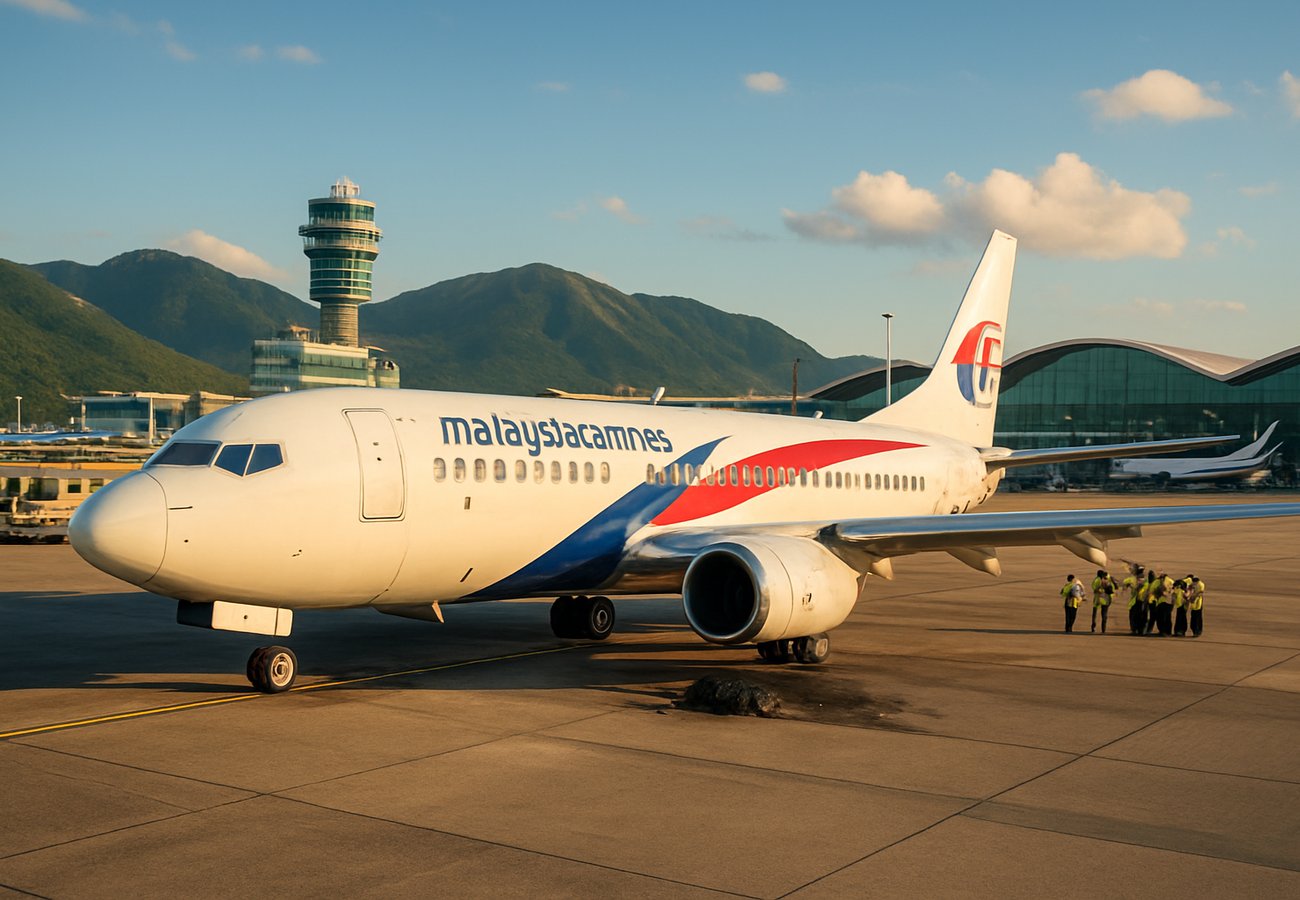
Runway Emergency: Malaysia Airlines Flight MH079 grounded at HKG following a pre-takeoff tyre failure.
Malaysia Airlines High-Speed Abort at HKG: Flight MH079 Tyre Burst Sparks "Alpha-Response" and Multi-Carrier Gridlock; Major News for Kuala Lumpur Travelers
In a terrifying moment for the 200+ passengers aboard Malaysia Airlines Flight MH079, a routine departure from Hong Kong International Airport (HKG) turned into a high-stakes emergency today. This airline news update, confirmed on May 11, 2026, reports that the aircraft suffered a violent tyre burst just seconds before its scheduled rotation for takeoff. Bound for Kuala Lumpur (KUL), the flight was forced to execute a high-speed abort, bringing the heavy wide-body jet to a shuddering halt on the main runway and triggering an immediate deployment of airport emergency services.
The incident, while resolved without injuries, has plunged HKG into a state of travel chaos. As the disabled aircraft occupied a critical section of the runway, airport authorities were forced to divert and delay dozens of other services, including those from home-carrier Cathay Pacific. While passengers were eventually safely disembarked via shuttle buses and returned to the terminal, the airport disruptions have sent shockwaves through the regional aviation network, highlighting the precarious nature of high-speed runway operations.
Expanded Overview: The "Violent Shudder" on Runway 07R
The emergency involving Flight MH079 is being described by aviation analysts as a "Critical Runway Abort." This aviation update highlights that the tyre failure occurred during the most vulnerable phase of the takeoff roll—when the aircraft is at its maximum weight and high speed. The resulting vibration was reportedly felt throughout the cabin, with passengers describing a "violent shudder" followed by the smell of burning rubber as the pilots applied maximum braking force.
Emergency teams at HKG, widely recognized for their world-class safety record, arrived at the aircraft’s side within four minutes. The decision was made to evacuate the aircraft directly onto the tarmac using shuttle buses rather than risking a long taxi with a compromised landing gear. This "Safety-First" approach, while necessary, effectively paralyzed the runway for over an hour, leading to a cascade of flight cancellations and rescheduling for carriers operating in the Southeast Asian corridor.
Section-Wise Breakdown: Tarmac Evacuations and Hub Gridlock
The Incident: A High-Intensity Abort at HKG
As MH079 accelerated toward its V1 speed (the point of no return for takeoff), the sudden disintegration of a main landing gear tyre forced the cockpit crew into a split-second decision. By aborting the takeoff, the pilots prevented a potential catastrophe during the landing phase in Kuala Lumpur, but the sheer friction generated by the emergency stop caused the wheel well to reach extreme temperatures, requiring immediate dousing by airport fire crews.
Hong Kong Gridlock: The Multi-Carrier Ripple Effect
Hong Kong International Airport is a finely tuned machine where even a five-minute delay can have global consequences. The grounding of MH079 on the active runway forced Cathay Pacific to delay multiple global departures by 10-15 minutes, while other carriers like Singapore Airlines and Emirates were forced to adjust their landing patterns. The logistical hurdle of clearing a wide-body jet with a shredded tyre is a multi-hour process that has left thousands of travelers facing "Airport Gridlock."
Malaysia Airlines Response: Tarmac Recovery and Rebooking
Following the disembarkation, Malaysia Airlines officials at HKG prioritized the "Human Element." Passengers were transported back to the terminal where they were provided with meal vouchers and rebooking options. While the airline has praised the crew’s "Cool-Headed Execution" of the abort procedure, the aircraft remains grounded at HKG for a deep-safety audit and structural inspection of the landing gear assembly.
Hong Kong International (HKG) Disruption Metrics: May 11, 2026
The following table outlines the specific impacts on major carriers following the MH079 tyre burst incident.
HKG: Carrier Impact & Delay Matrix (Source: FlightAware)
| Airline | Route | Current Status | Recorded Delay |
|---|---|---|---|
| Malaysia Airlines | HKG to Kuala Lumpur (KUL) | Grounded / Safety Audit | 1 Hour + (Abort) |
| Cathay Pacific | HKG to Multiple Global | Operational Ripple | 10–15 Minutes |
| Singapore Airlines | HKG to Singapore (SIN) | On Schedule | No Disruption |
| Emirates | Dubai (DXB) to HKG | Landed on Schedule | No Impact |
| Airport Status | HKG Main Runway | Temporary Closure | 1 Hour Shutdown |
Data compiled via FlightAware and HKG Operational Logs as of May 11, 2026.
Passenger Impact: Stranded on the Tarmac
For the travelers aboard MH079, the experience was a mixture of terror and frustration:
- Tarmac Isolation: Passengers spent nearly 45 minutes on the hot tarmac awaiting shuttle buses, a situation that tested the "Atmospheric Resilience" of the travelers.
- Missed Connections: Kuala Lumpur serves as a major transit hub for Australia and India; the 1-hour delay in Hong Kong has already caused hundreds of missed connections in KUL.
- Maintenance Anxiety: The "Violent Abort" has left many passengers questioning the maintenance standards of the A330 fleet, despite the airline’s reassurance that tyre bursts are often caused by external factors like runway debris.
Industry Analysis: FOD vs. Maintenance Fatigue
Aviation experts are debating whether the MH079 incident was a result of Foreign Object Debris (FOD) on the HKG runway or a sign of Maintenance Fatigue within the airline’s landing gear rotation cycle. Hong Kong International is known for its rigorous runway sweeping protocols, making a debris-related burst less likely. However, the high-temperature environment of Hong Kong in May can also exacerbate pre-existing tyre wear. The CAAN and Hong Kong’s CAD will likely conduct a joint forensic analysis of the tyre remnants to determine if a structural flaw was to blame.
Conclusion: A Lucky Escape at the Gateway to Asia
As Malaysia Airlines and HKG authorities work to clear the final backlog of the day's flights, the MH079 incident stands as a powerful reminder of why "Safety-First" protocols exist. A high-speed abort is a violent and stressful maneuver, but it is infinitely preferable to a landing gear failure during the arrival phase. While the travel chaos at Hong Kong will likely dissipate by the evening, the incident serves as a stark warning to all carriers operating wide-body jets in high-heat, high-traffic environments.
Key Takeaways
- Malaysia Airlines MH079 aborted takeoff at Hong Kong (HKG) due to a tyre burst.
- Flight bound for Kuala Lumpur was forced into a high-speed emergency stop.
- Passengers evacuated via shuttle buses on the active tarmac; no injuries reported.
- Cathay Pacific and other major carriers faced 10-15 minute ripple delays.
- HKG main runway was temporarily closed, causing significant airport disruptions.
- Malaysia Airlines prioritizing safety with a full ground audit of the aircraft.
- Incident highlights the risks of pre-takeoff malfunctions at high-volume hubs.
/article-footer-standard
Related Travel Guides:
Disclaimer
This article is for informational and educational purposes only. It does not constitute legal, financial, or professional advice. While we strive to provide accurate and up-to-date information, travel policies, regulations, and conditions change rapidly. Always verify information with official sources before making travel decisions. Nomad Lawyer makes no representations about the accuracy, reliability, completeness, or suitability of the information provided. Readers should consult qualified professionals for advice specific to their circumstances. The views expressed in this article are those of the author and do not necessarily reflect the views of Nomad Lawyer.
Kunal K Choudhary
Co-Founder & Contributor
A passionate traveller and tech enthusiast. Kunal contributes to the vision and growth of Nomad Lawyer, bringing fresh perspectives and driving the community forward.
Learn more about our team →