
Malaysia Airlines Hits Record Heights as Australian Routes Soar Past 90% Load Factor, Fleet Expansion and New Asian Routes Signal Bold Growth Through 2028
Malaysia Airlines flights to Sydney, Melbourne, Perth, Brisbane, and Adelaide consistently exceed 90% load factor. Fleet expands from 10 to 20 A330-900neo aircraft by 2028, with new routes to Fukuoka, Shenzhen, and Changsha launching July–September 2026.

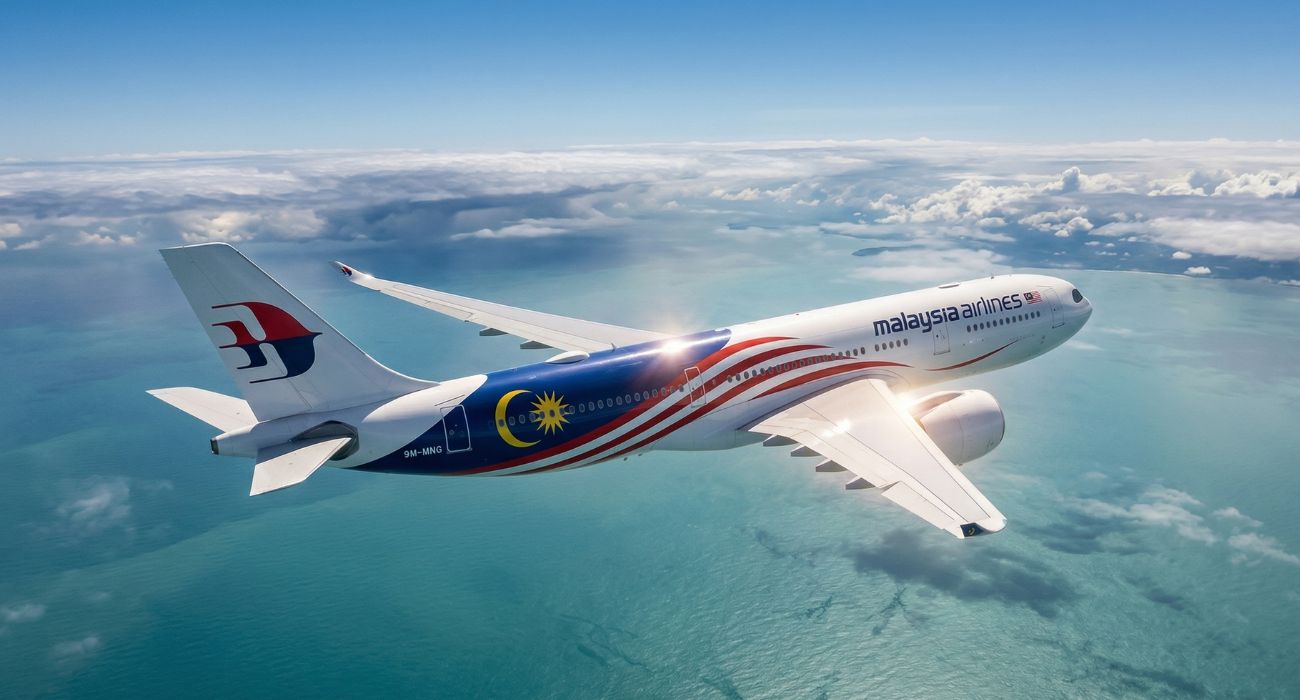
Image generated by AI
Quick Summary
- Malaysia Airlines flights to Sydney, Melbourne, Perth, Brisbane, and Adelaide consistently exceed 90% load factor
- Current fleet of 10 A330-900neo aircraft expanding to 20 by 2028
- Brisbane frequency increasing from 6x weekly to daily by October 2026
- Over 70 weekly flights between Australia and Malaysia currently operating
- New routes to Fukuoka, Shenzhen, and Changsha launching July–September 2026
Malaysia Airlines Hits Record Heights as Australian Routes Soar Past 90% Load Factor
KUALA LUMPUR — Malaysia Airlines is riding an extraordinary wave of passenger demand on its Australian network, with flights now consistently operating above 90% capacity — a performance benchmark that few airlines achieve on long-haul routes. The surge, driven by surging post-pandemic travel appetite and growing economic ties between Australia and Malaysia, has pushed the carrier to accelerate its fleet modernization program and expand its route network into new Asian markets. With over 70 weekly services connecting the two countries, Malaysia Airlines is no longer just a carrier — it is rapidly becoming the dominant bridge between the Asia-Pacific's two fastest-growing travel markets.
The carrier's success reflects deliberate, multi-year investments in fleet quality, network design, and hub positioning at Kuala Lumpur International Airport. As the airline grows its A330-900neo fleet toward 20 aircraft, adds daily Brisbane flights, and launches into new East Asian markets, it is building the infrastructure of a truly regional powerhouse. For Australian travelers, that means more choices, better aircraft, and a carrier increasingly capable of competing with the Gulf giants on quality, frequency, and value.
Demand Surge Across Five Australian Gateways
The numbers tell a compelling story. Across Malaysia Airlines' five Australian gateways — Sydney, Melbourne, Perth, Brisbane, and Adelaide — the airline is regularly filling more than nine out of every ten seats. This level of demand, sustained over months rather than weeks, signals a structural shift in travel patterns rather than a seasonal spike.
The surge reflects two converging forces: the continued rebound of international leisure travel among Australian families and holidaymakers choosing Kuala Lumpur and Malaysia's broader tourism network as a destination, and a strong uptick in business travel between the two economies. Malaysia Airlines' strategic positioning at Kuala Lumpur International Airport — one of Asia's most efficient transit hubs — has also made it a preferred choice for Australian travelers connecting onward to Europe, the Middle East, and South Asia.
Load factors exceeding 90 percent on these routes demonstrate genuine demand at sustainable yield levels, not capacity dumping or aggressive discounting. The airline's leadership has confirmed that high load factors are being achieved while maintaining competitive but commercially viable pricing — a combination that points to a healthy, demand-led recovery rather than a temporary promotional exercise.
Fleet Modernization: The A330-900neo at the Core
To match its ambitions with operational reality, Malaysia Airlines is betting heavily on the Airbus A330-900neo, one of the most fuel-efficient widebody aircraft in the skies today. The airline currently operates 10 A330-900neo aircraft, with a firm plan to grow that number to 20 by 2028 as older A330-300 models are progressively retired.
The A330-900neo is not simply a newer plane — it represents a generational leap in passenger experience and operating economics. The aircraft delivers superior fuel efficiency, significantly reduced carbon emissions per seat, and a redesigned cabin featuring wider seats, improved lighting, and enhanced in-flight entertainment systems. For passengers on the Sydney–Kuala Lumpur or Melbourne–Kuala Lumpur sectors, the shift to neo-powered services means a noticeably quieter, smoother, and more comfortable journey.
Malaysia Airlines has already deployed the A330-900neo on its highest-demand Australian routes, with Sydney and Melbourne among the first to benefit from the new fleet. As additional deliveries arrive through 2026, 2027, and 2028, the carrier plans to cascade the neo models across all Australian sectors, ensuring that fleet quality is consistent regardless of departure city.
The retirement of older, less efficient A330-300 aircraft also improves unit economics significantly. Lower fuel burn per seat on the neo-powered fleet means that Malaysia Airlines can sustain high-frequency operations on Australian routes without the cost pressures that plagued widebody operations on older aircraft types.
Brisbane Gets Daily Flights
One of the most passenger-friendly announcements in Malaysia Airlines' expansion plan is the upgrade of its Brisbane service from six flights per week to a full daily operation by October 2026. For Queensland's growing population of leisure and business travelers, this means an extra weekly departure and, crucially, far greater flexibility in trip planning.
Brisbane has emerged as one of Australia's fastest-growing international aviation markets, buoyed by strong interstate migration, Queensland's booming tourism sector, and increasing trade links with Southeast Asia. Malaysia Airlines' decision to commit to daily Brisbane services underscores its confidence in the route's long-term commercial potential and its determination to be the airline of choice for Queensland-based travelers heading to Asia.
Combined with the airline's existing strong performance in Sydney, Melbourne, and Perth, the Brisbane upgrade brings Malaysia Airlines' total Australian weekly capacity to a level that makes it one of the most connected foreign carriers operating in the Australian market today.
East Asia Expansion: Fukuoka, Shenzhen, and Changsha
While Australia commands the headlines, Malaysia Airlines is simultaneously executing a broader network diversification strategy in East Asia. Between July and September 2026, the airline is set to launch new routes to three cities: Fukuoka in Japan, Shenzhen in China, and Changsha in China.
These three additions are strategically well-chosen. Fukuoka is Japan's fourth-largest city and a gateway to Kyushu, a region that has seen explosive growth in inbound tourism. Shenzhen, bordering Hong Kong, is one of China's most dynamic economic centres with a vast tech industry workforce that generates significant corporate travel. Changsha, the capital of Hunan province, taps into one of China's fastest-growing tier-two city markets, where demand for international connections is outpacing supply.
For Malaysia Airlines, these routes serve a dual purpose: they attract new origin passengers from Northeast Asia onto its Kuala Lumpur hub, and they create natural connections for Australian travelers seeking less congested pathways into Japan and China's interior.
Why This Momentum Is Sustainable
Unlike some airline growth stories that are built on aggressive discounting or short-term promotional fares, Malaysia Airlines' Australian load factor performance is being driven by genuine demand at sustainable yield levels. The airline's leadership has been clear that the 90%-plus load factors are being achieved while maintaining competitive but commercially viable pricing — a combination that points to a healthy, demand-led recovery rather than a capacity-dumping exercise.
The retirement of older, less efficient A330-300 aircraft also improves unit economics significantly. Lower fuel burn per seat on the neo-powered fleet means that Malaysia Airlines can sustain high-frequency operations on Australian routes without the cost pressures that plagued widebody operations on older aircraft types.
What Australian Passengers Can Expect
For travelers booking Malaysia Airlines out of Australia in 2026 and beyond, the outlook is genuinely positive:
- More seat availability — As the fleet grows to 20 A330-900neos by 2028, capacity constraints on peak routes will ease
- Better onboard experience — New aircraft bring redesigned cabins, better seats, improved entertainment, and a quieter flight environment
- More Brisbane options — Daily Brisbane services from October 2026 give Queensland travelers a full seven-day-a-week schedule
- Easier Asia connections — New Fukuoka, Shenzhen, and Changsha routes open fresh one-stop pathways from Australia into Japan and China
- Competitive fares — High load factors and fleet efficiency give Malaysia Airlines room to maintain attractive pricing without sacrificing service quality
A Carrier Built for the Next Decade
Malaysia Airlines' Australian success story is not an accident — it is the result of deliberate, multi-year investments in fleet quality, network design, and hub positioning. As the airline grows its A330-900neo fleet toward 20 aircraft, adds daily Brisbane flights, and launches into new East Asian markets, it is building the infrastructure of a truly regional powerhouse.
For Australian travelers, that means more choices, better aircraft, and a carrier increasingly capable of competing with the Gulf giants on quality, frequency, and value. Malaysia Airlines is not just recovering — it is redefining its place in Asia-Pacific aviation.
Frequently Asked Questions
What is Malaysia Airlines' current load factor on Australian routes? Flights to Sydney, Melbourne, Perth, Brisbane, and Adelaide consistently operate above 90% load factor, demonstrating sustained demand rather than temporary promotional spikes.
How many A330-900neo aircraft does Malaysia Airlines currently operate? The airline currently operates 10 A330-900neo aircraft, with plans to expand to 20 by 2028 as older A330-300 models are retired.
When will Brisbane receive daily flights? Brisbane frequency increases from 6x weekly to daily by October 2026, providing Queensland travelers with full seven-day-a-week service options.
What new routes is Malaysia Airlines launching in 2026? New routes to Fukuoka, Japan; Shenzhen, China; and Changsha, China are launching between July and September 2026, expanding the carrier's East Asian network.
How many weekly flights operate between Australia and Malaysia? Over 70 weekly flights currently operate between Australia and Malaysia, with capacity expanding as the fleet modernization program progresses through 2026-2028.
Conclusion
Malaysia Airlines' Australian success story is not an accident — it is the result of deliberate, multi-year investments in fleet quality, network design, and hub positioning. As the airline grows its A330-900neo fleet toward 20 aircraft, adds daily Brisbane flights, and launches into new East Asian markets, it is building the infrastructure of a truly regional powerhouse. For Australian travelers, that means more choices, better aircraft, and a carrier increasingly capable of competing with the Gulf giants on quality, frequency, and value. Malaysia Airlines is not just recovering — it is redefining its place in Asia-Pacific aviation.
Tags: Australia, Malaysia Airlines, Flight, Load Factor, A330-900neo, Brisbane, Fukuoka, Shenzhen, Changsha, Asia-Pacific aviation
Disclaimer
This article is for informational and educational purposes only. It does not constitute legal, financial, or professional advice. While we strive to provide accurate and up-to-date information, travel policies, regulations, and conditions change rapidly. Always verify information with official sources before making travel decisions. Nomad Lawyer makes no representations about the accuracy, reliability, completeness, or suitability of the information provided. Readers should consult qualified professionals for advice specific to their circumstances. The views expressed in this article are those of the author and do not necessarily reflect the views of Nomad Lawyer.
Raushan Kumar
Founder & Lead Developer
Full-stack developer with 11+ years of experience and a passionate traveller. Raushan built Nomad Lawyer from the ground up with a vision to create the best travel and law experience on the web.
Learn more about our team →