
M1E3 Abrams Military Tank Faces Drone Warfare Test in 2026
The U.S. Army's M1E3 Abrams military tank unveiling raises critical questions about its drone-warfare capabilities in 2026. Despite design innovations, experts question whether the next-generation platform can withstand modern combat lessons from Ukraine.

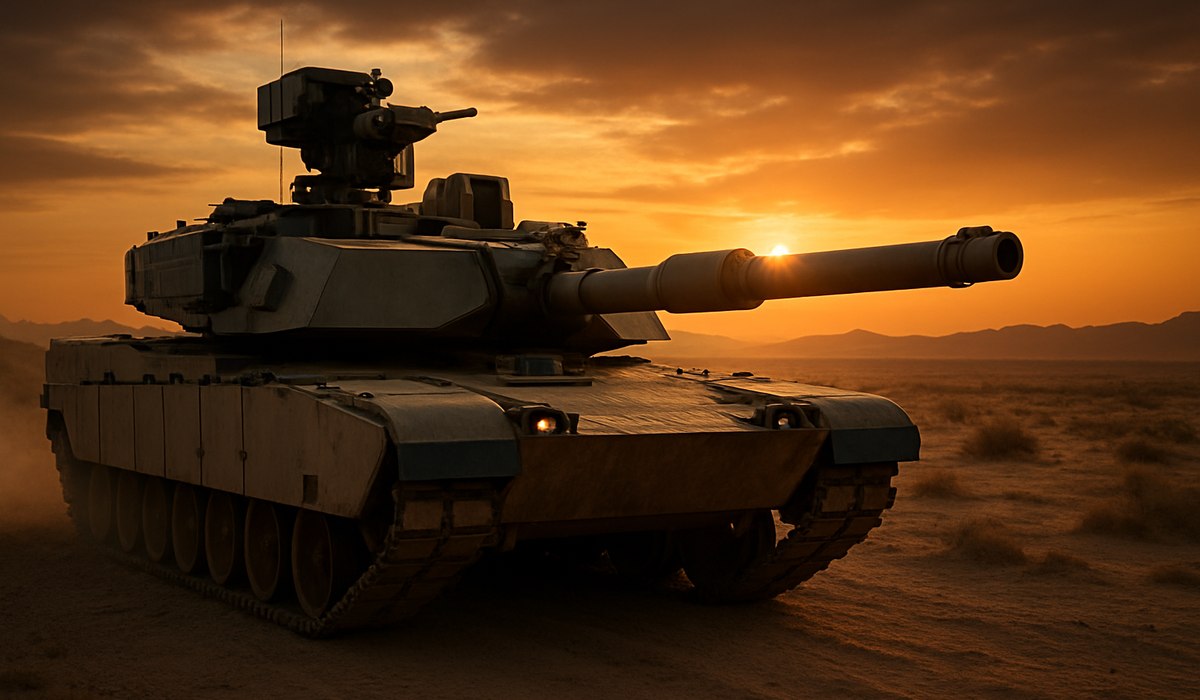
Image generated by AI
The Army's Next-Generation M1E3 Abrams Military Tank Unveiled—But Can It Survive Drone Combat?
The U.S. Army introduced a pre-prototype M1E3 Abrams military platform in January 2026, revealing a fundamentally redesigned main battle tank featuring an unmanned turret, hybrid power systems, and streamlined crew controls. The demonstrator vehicle showcases technological advances while maintaining proven capabilities from earlier Abrams generations. However, nearly three months after its public debut, a pressing question emerges: Will this next-generation M1E3 Abrams military design withstand drone-dominated warfare environments, or will it face the same vulnerabilities experienced by armored vehicles throughout the Ukraine conflict?
The new platform was ostensibly engineered incorporating operational lessons from Eastern European battlefields. Yet military analysts remain cautious about whether these innovations adequately address the realities of modern drone warfare, where coordinated unmanned systems frequently target vehicles simultaneously across distributed theater areas.
The M1E3's Design Evolution: What Changed From Previous Models
The M1E3 Abrams military represents a significant departure from prior Abrams configurations. The unmanned turret system reduces crew complement to three personnel, comparable to Russia's T-14 Armata design, though the M1 TTB prototype offers a closer reference point. Critically, this crew positioning relocates operators within an armored capsule deep inside the hull, physically separating them from live ammunition storage and eliminating historical cook-off risks that plagued earlier variants.
This architectural shift enhances crew survivability substantially. Traditional Abrams designs, despite robust layered armor and blowout panel safeguards, retained inherent ammunition detonation hazards that could incapacitate or kill occupants. The M1E3 Abrams military hull configuration effectively mitigates this threat vector.
However, uncertainty persists regarding armor distribution across the new platform. Army officials have indicated that overall armor specifications remain consistent with previous-generation tanks, yet clarification remains absent on whether turret protection equivalently matches hull crew-capsule strengthening. This seemingly technical distinction carries significant practical implications—armor placement fundamentally influences survivability outcomes during sustained combat operations.
The platform also incorporates a hybrid power system designed to reduce fuel consumption while improving operational range. Simplified control architecture streamlines crew training requirements, addressing personnel readiness challenges across modern military branches.
Defensive Systems Against Modern Drone Threats
The M1E3 Abrams military tank integrates active protection systems directly into hull architecture rather than employing add-on kit configurations. This approach eliminates additional weight penalties that plagued earlier retrofit installations on M1A2 variants using Israeli-manufactured Rafael Trophy systems.
The integrated system derives from Elbit Systems' Iron Fist technology, designated XM251 in U.S. military nomenclature. This hard-kill mechanism intercepts anti-tank guided missiles, kinetic penetrators, and small unmanned systems. Each launcher pod fires two projectiles before requiring reload cycles, positioning total defensive capacity at approximately four engagement opportunities per system cycle.
This limitation proves increasingly problematic in contested drone environments. Ukrainian combat experience conclusively demonstrates that unmanned systems rarely operate in isolation—coordinated swarms distributing across battle areas represent standard operational doctrine. Defending forces frequently target single armored vehicles multiple times sequentially to ensure mission completion.
The XM251 active protection system, while militarily valuable, cannot independently guarantee comprehensive drone defense. Its finite intercept capacity falls dramatically short of protection requirements when facing coordinated multi-drone attacks characteristic of 2026 battlefield conditions. Defense analysts universally acknowledge that active systems function as single protective layers rather than standalone solutions.
Ukraine's Tank Lessons: Did the Army Learn Enough?
The Ukraine conflict provided unprecedented real-world insights into modern armored warfare vulnerabilities. Tanks operating across Eastern European theaters experienced systematic losses from coordinated drone operations, artillery strikes, and anti-tank weaponry. The M1E3 Abrams military platform supposedly incorporated these operational lessons into its design specifications.
Yet critical gaps persist between theoretical protections and battlefield realities. Passive detection-reduction systems reportedly receiving integration into the M1E3 Abrams military design remain publicly undisclosed, leaving substantial uncertainty regarding actual protective effectiveness. Speculation suggests electronic warfare suites capable of disrupting drone communications, alongside infrared signature reduction technologies, may enhance platform survivability.
Reinforced top armor theoretically provides protection against drone-delivered ordnance and top-attack munitions. However, protection standards remain unverified against contemporary threat profiles. The continuing absence of detailed performance specifications undermines confidence that design innovations adequately address lessons thoroughly documented throughout the Ukraine campaign.
The pre-prototype status explains partial information availability, yet the timeline for comprehensive final specifications remains unclear. Production variants may address current concerns substantially, though this represents hope rather than confirmed capability.
The Uncomfortable Truth About Armored Vehicles in Drone Warfare
Modern drone warfare fundamentally challenges traditional tank doctrine. The M1E3 Abrams military platform, regardless of technological sophistication, confronts an uncomfortable reality: coordinated unmanned systems can overwhelm conventional defensive architectures through numerical superiority and distributed targeting approaches.
Historical tank survival depended primarily on armor thickness, firepower superiority, and mobility advantages. Contemporary warfare introduces adversaries capable of degrading these advantages through low-cost unmanned platforms operating at standoff distances. A single drone costs fractionally compared to a main battle tank's acquisition expense, yet one successful strike renders the armored platform combat-ineffective or destroyed.
The M1E3 Abrams military design attempts mitigating these vulnerabilities through integrated protection systems and crew survivability enhancements. However, technological solutions cannot completely overcome numerical asymmetries inherent in drone-centric operational environments. Military doctrine, tactical employment strategies, and combined-arms coordination ultimately determine platform survival rates more significantly than individual vehicle specifications.
This presents uncomfortable strategic implications: single-platform technological advancement cannot independently solve multidimensional modern warfare challenges. The M1E3 Abrams military tank may prove substantially superior to predecessor variants while remaining vulnerable to coordinated drone swarms—both conditions can simultaneously exist.
Key Data Table: M1E3 Abrams Military Specifications vs. Threat Environment
| Specification | M1E3 Configuration | Ukraine Threat Assessment | Threat Mitigation Effectiveness |
|---|---|---|---|
| Crew Size | 3 personnel (hull capsule) | Coordinated multi-drone attacks | Moderate (crew protection improved) |
| Active Protection Launchers | 4 total engagement rounds | Swarms of 6+ simultaneous drones | Limited (insufficient intercept capacity) |
| Armor Distribution | Hull-prioritized; turret parity | Top-attack and standoff munitions | Incomplete (specifications undisclosed) |
| Passive Detection Systems | Electronic warfare + IR reduction | Advanced thermal imaging drones | Unknown (details classified) |
| Power System | Hybrid configuration | Extended operational endurance | Improved (range enhancement confirmed) |
| Deployment Timeline | Pre-prototype (production TBD) | Active battlefield requirements | Delayed (final specs 2027+ realistic) |
What This Means for Travelers: Global Defense Industry Implications
While direct traveler impact from M1E3 Abrams military platform development remains indirect, defense industry dynamics significantly influence regional security stability—a primary travel safety consideration:
-
Regional Stability Monitoring: Defense technology advancement timelines affect conflict trajectory predictions. Travelers planning trips to geopolitically sensitive areas should monitor defense announcements as secondary stability indicators alongside traditional travel advisories.
-
Defense Industry Tourism: Several U.S. locations host military technology exhibitions and defense contracting headquarters. Understanding platform development cycles helps travelers anticipate major events, expo schedules, and industry conference timing affecting local accommodation availability.
-
**Geopolitical
Raushan Kumar
Founder & Lead Developer
Full-stack developer with 11+ years of experience and a passionate traveller. Raushan built Nomad Lawyer from the ground up with a vision to create the best travel and law experience on the web.
Learn more about our team →