
Luxury Castle Hotels and Sustainable Tourism Trends: Royal Stays and Dubrovnik's 2026 Green Pioneer Status
Luxury travelers are shifting toward heritage tourism, utilizing royal castle hotels and smart destinations like Dubrovnik to combine high-end hospitality with cultural preservation and sustainable travel.

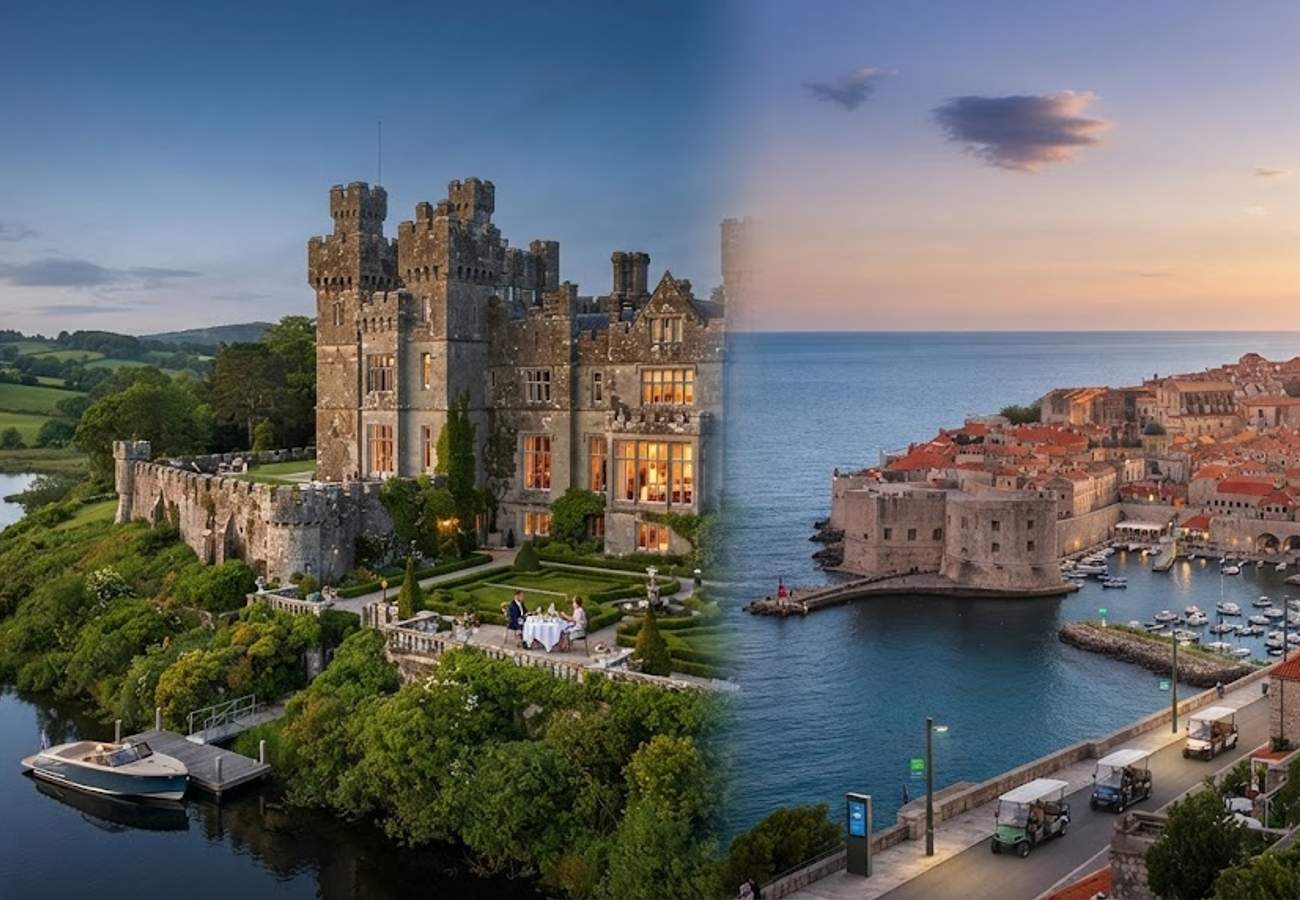
Image generated by AI
High-net-worth travelers are increasingly abandoning generic luxury resorts in favor of "living monuments," driving a surge in the conversion of royal fortifications and legacy estates into ultra-luxury hotels.
The global hospitality sector is witnessing a pivot toward heritage tourism, where the value proposition shifts from standard amenities to emotional and historical connectivity. This trend is most evident in the adaptive reuse of royal residences in Europe and India, where ancestral estates are being repositioned as exclusive inns.
The Rise of Royal Heritage Hospitality
Luxury castle hotels are no longer mere accommodations; they function as cultural conduits. By integrating modern hospitality standards into ancient architecture, these properties attract a demographic of "cultural explorers" who prioritize authenticity over conventional opulence.
Prominent examples of this shift include:
- Ashford Castle (Ireland): A benchmark for converting royal estates into world-class tourism assets.
- Thornbury Castle (England): A primary example of how historical fortifications maintain royal prestige while operating as commercial hotels.
- Rajasthan Fort Palaces (India): Former royal residences and fort palaces that have transitioned into luxury hotels, blending traditional architecture with regional hospitality.
These properties leverage exclusive access to centuries-old halls, private towers, and royal gardens to create a sense of exclusivity that modern builds cannot replicate.
Strategic Tourism Management in Dubrovnik
Parallel to the rise of heritage stays is the evolution of "smart tourism." Dubrovnik, Croatia, has emerged as a global case study in balancing high visitor volume with the preservation of UNESCO-listed assets.
The European Commission has officially designated Dubrovnik as the 2026 European Green Pioneer of Smart Tourism. This recognition is based on the city's integration of digitalization, accessibility, and environmental sustainability to protect its Old Town and Adriatic coastline.
Dubrovnik's Smart Tourism Focus Areas
- Visitor Flow Management: Using technology to prevent excessive pressure on cultural landmarks.
- Sustainability: Implementing eco-friendly travel projects to reduce the carbon footprint of tourism.
- Heritage Protection: Ensuring the long-term viability of the UNESCO Old Town and city walls.
Planning Heritage-Based Itineraries
From a logistical perspective, heritage travel requires a different planning cycle than standard luxury trips. Due to the architectural constraints of castles and forts, room inventory is strictly limited.
Critical Planning Factors:
- Lead Time: Bookings should be secured several months in advance, particularly for summer and festive peaks.
- Package Optimization: Many properties offer seasonal bundles that combine dining and local cultural activities.
- Strategic Pairing: Market trends suggest pairing a stay at a heritage property with a visit to a "smart city" destination like Dubrovnik to experience the full spectrum of modern heritage tourism.
Heritage Tourism Performance Metrics
| Feature | Standard Luxury Hotel | Royal Castle/Heritage Hotel |
|---|---|---|
| Primary Appeal | Modern Amenities | Historical Narrative & Architecture |
| Inventory | High Volume/Scalable | Limited/Exclusive |
| Market Driver | Comfort & Brand | Authenticity & Identity |
| Economic Impact | Concentrated in Hotel | Distributed to Local Artisans/Towns |
| Sustainability | Standard Green Certs | Adaptive Reuse of Existing Structures |
Why This Matters: Industry Analysis
The shift toward castle hotels and smart destinations indicates a fundamental change in the luxury consumer's psychology. We are seeing a transition from "conspicuous consumption" (owning or staying in the most expensive room) to "conspicuous experience" (staying in a place with a unique story).
For the aviation and travel industry, this means a shift in demand toward secondary cities and rural regions where these castles are located. From a logistical standpoint, this decentralizes tourism, moving crowds away from primary hubs and into regional economies. The "Dubrovnik Model" is particularly significant; it proves that digitalization can be used not just for profit, but as a shield to protect physical heritage from the destructive effects of over-tourism.
Industry Outlook
Heritage tourism is entering a phase of "Responsible Luxury." The next 24 months will likely see an increase in the following:
- Hyper-Personalization: Castle hotels will move beyond luxury rooms toward "curated history" experiences, such as private archival tours.
- Tech-Enabled Preservation: More cities will follow Dubrovnik’s lead, using AI and real-time data to manage tourist densities in historical zones.
- Diversification of Heritage: Expect a rise in the conversion of non-royal legacy structures (industrial heritage, ancient monasteries) into luxury boutique stays.
The future of travel lies in the intersection of ancient stone and smart silicon.
Related Travel Guides
Disclaimer
This article is for informational and educational purposes only. It does not constitute legal, financial, or professional advice. While we strive to provide accurate and up-to-date information, travel policies, regulations, and conditions change rapidly. Always verify information with official sources before making travel decisions. Nomad Lawyer makes no representations about the accuracy, reliability, completeness, or suitability of the information provided. Readers should consult qualified professionals for advice specific to their circumstances. The views expressed in this article are those of the author and do not necessarily reflect the views of Nomad Lawyer.
Raushan Kumar
Founder & Lead Developer
Full-stack developer with 11+ years of experience and a passionate traveller. Raushan built Nomad Lawyer from the ground up with a vision to create the best travel and law experience on the web.
Learn more about our team →