
Luxair Expands 2026 Global Network Across Greece, Mediterranean, Africa and Middle East to Boost Premium Tourism and European Connectivity
Luxembourg carrier Luxair strengthens premium leisure and business network across Mediterranean, Africa, and Middle East with new routes to Zakynthos, Rhodes, Santorini, Dubai, Cape Verde, and Dakar.

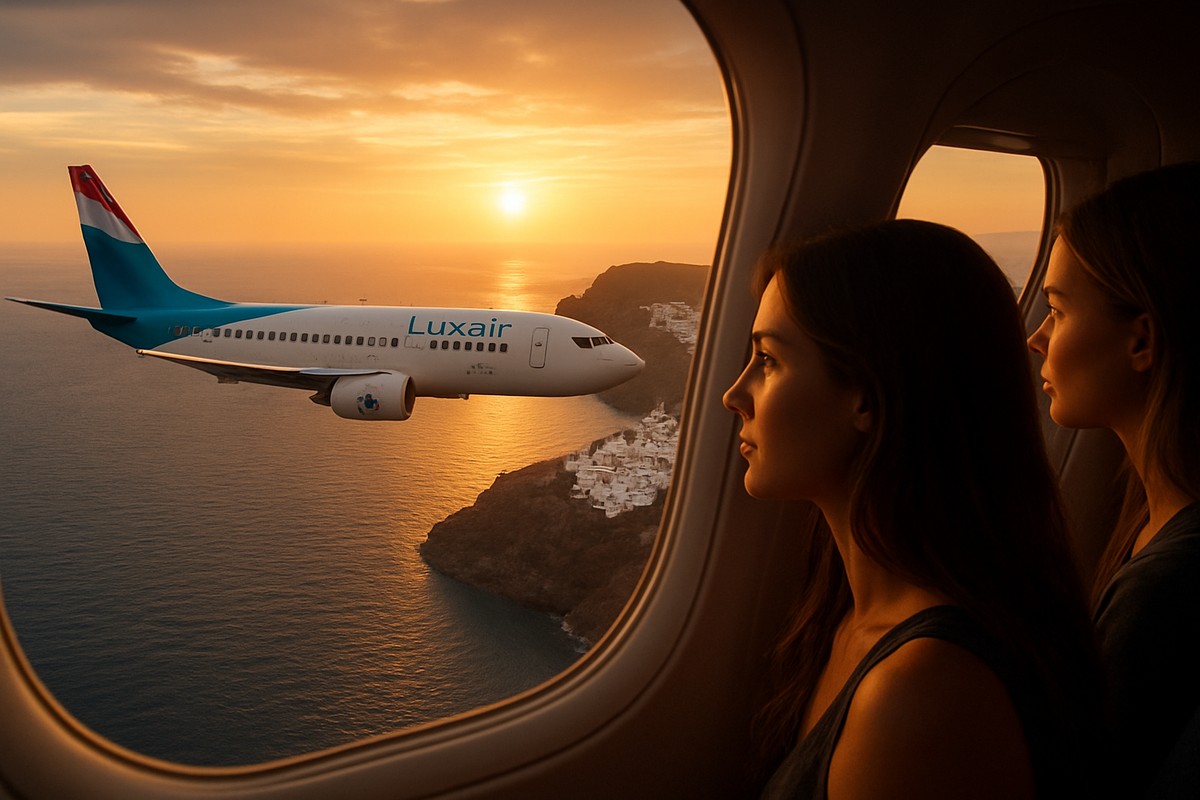
Image generated by AI
Luxembourg-based carrier Luxair is executing an ambitious 2026 expansion strategy that positions the airline as a critical gateway connecting European financial hubs with high-demand Mediterranean leisure destinations and emerging African markets. Operating from Luxembourg Airport (LUX), the carrier is deploying its modernized Boeing 737 fleet to capture growing demand across nine new and expanded markets spanning Greece, Italy, Spain, Portugal, Dubai, Cape Verde, and Senegal—signaling a strategic pivot toward balanced premium leisure and corporate travel.
Strategic Network Expansion: From Greek Islands to West Africa
Luxair's 2026 trajectory reflects a calculated response to post-pandemic leisure travel recovery and corporate mobility demands. The airline is targeting what industry analysts call "dual-demand routes"—destinations that attract both premium leisure travellers and business passengers seeking efficient connectivity.
The carrier is now operating or expanding services to nine key destinations: Zakynthos, Rhodes, Santorini, Dubai, London, Milan, Cape Verde, Dakar, and an expanded presence across Spain, Portugal, and Italy. This geographic diversity—spanning Mediterranean tourism hotspots, African Atlantic resorts, and Middle Eastern shopping destinations—positions Luxair as a niche player in Europe's premium leisure segment while maintaining critical business connectivity into major financial centres.
With approximately 90 destinations across its network and a fleet of roughly 20 aircraft (comprising Boeing 737-800, Boeing 737 MAX 8, and Dash 8-Q400 turboprops), Luxair operates at a scale that allows agility in route planning while maintaining profitability across seasonal demand cycles.
Greece: The Mediterranean Crown Jewel of Luxair's Leisure Strategy
Greece has emerged as the cornerstone of Luxair's 2026 tourism expansion. The airline operates what it brands as "Sun & Sea" seasonal services to multiple Greek island destinations, with Zakynthos functioning as a flagship leisure route for May 2026 onward.
Luxembourg–Zakynthos Route: Summer Leisure Demand Engine
Luxair's Zakynthos service operates at 1–2 weekly frequency, typically departing Tuesdays or Saturdays, with flight durations of approximately 2 hours 45 minutes. The airline employs both Boeing 737-800 and newer Boeing 737 MAX 8 aircraft on this route, generating estimated round-trip fares between €240–€420 per passenger.
Demand drivers on this route include luxury leisure tourism, family vacations, Mediterranean beach holidays, honeymoon travel, and island-hopping itineraries. May marks the beginning of peak Greek island season, with many flights bundled into all-inclusive package holidays featuring beachfront hotels and luxury resort stays through LuxairTours.
Expanded Greek Island Network
Luxair's Greece strategy extends across multiple islands:
| Destination | Tourism Focus | Market Position |
|---|---|---|
| Zakynthos (ZTH) | Island leisure travel | Core summer route |
| Rhodes (RHO) | Resort tourism | Family holidays |
| Heraklion (HER) | Crete beach holidays | European summer season |
| Kos (KGS) | Beach tourism | Mediterranean resorts |
| Santorini (JTR) | Luxury and honeymoon travel | Premium segment leader |
Santorini's position as a luxury honeymoon destination—driven by its iconic caldera views and five-star hospitality offerings—makes it particularly valuable to Luxair's premium positioning strategy. Rhodes and Heraklion continue attracting substantial family tourism volumes during the European summer holiday peak.
Southern Europe Leisure Portfolio: Spain, Portugal, and Italy Drive Volume
Beyond Greece, Luxair maintains extensive Mediterranean and Atlantic leisure operations connecting Luxembourg-based travellers to beach destinations across southern Europe—a strategy that accounts for significant seasonal traffic.
Spain and Portugal Operations
Spain and Portugal remain among Luxair's strongest tourism markets. The carrier operates seasonal services to:
| Destination | Travel Segment | Seasonal Demand |
|---|---|---|
| Palma de Mallorca (PMI) | Summer tourism | Peak June–August |
| Ibiza (IBZ) | Leisure and nightlife | Summer season |
| Faro (FAO) | Algarve beach holidays | Spring and summer |
| Tenerife (TFS) | Canary Islands tourism | Year-round |
| Lanzarote (ACE) | Winter-sun travel | October–April |
| Gran Canaria (LPA) | Resort tourism | Year-round |
The Canary Islands represent a critical revenue stream during winter and spring travel seasons, with their year-round warm weather generating steady demand during periods when Mediterranean destinations experience reduced appeal. This geographic diversification protects Luxair's revenue stability across seasonal cycles.
Italy's Emerging Importance
Italy has become another key expansion focus for Luxair in 2026. The airline is increasing seasonal and year-round capacity to southern Italian leisure destinations that blend beach tourism with cultural heritage experiences. Service focuses on Bari, Lamezia Terme, and Catania—gateways to Sicily and southern Calabria. These routes tap into growing European demand for food tourism, wine heritage experiences, and coastal vacations that combine leisure with cultural immersion.
London City: The Corporate Revenue Anchor
While Mediterranean tourism drives seasonal growth, Luxair's business network remains equally critical to overall profitability. The Luxembourg to London City route functions as the airline's flagship corporate connection, operating at 4–6 daily frequencies and serving as a direct gateway to the UK's financial district.
Business Connectivity Hub Routes
| Destination | Service Frequency | Market Focus |
|---|---|---|
| London City (LCY) | 4–6 daily | Financial services, corporate |
| Paris CDG | High-frequency | European hub connectivity |
| Berlin BER | Regular service | Corporate travel |
| Munich MUC | Regular service | Lufthansa connectivity and banking |
| Milan LIN | Regular service | Banking and business sectors |
| Geneva GVA | Regular service | Luxury and finance sector |
London City Airport's premium positioning—offering direct access to the City of London financial district and Canary Wharf—makes it exceptionally valuable for corporate time-sensitive travellers. The route generates high-yield fares and attracts business travellers willing to pay premium prices for direct connectivity and time efficiency.
Luxair's partnership with Lufthansa further amplifies this strategy, enabling seamless global connectivity through Frankfurt and Munich hubs for onward long-haul travel.
Long-Haul Expansion: Dubai, Cape Verde, and Dakar Enter Strategic Focus
Beyond Europe, Luxair operates select niche long-haul routes designed to capture premium winter-sun leisure demand and emerging African business opportunities.
Extended-Range Network Positioning
| Destination | Travel Focus | Market Opportunity |
|---|---|---|
| Dubai (DXB) | Seasonal luxury and shopping tourism | Premium leisure segment |
| Sal, Cape Verde (SID) | Winter-sun resort tourism | Atlantic island holidays |
| Boa Vista, Cape Verde (BVC) | Beach resort holidays | Winter escape market |
| Dakar (DSS) | Business and leisure mixed | West African gateway |
Cape Verde has emerged as one of LuxairTours' best-selling winter and spring destinations, driven by Atlantic island resort appeal and year-round warm weather. The carrier's focus on Sal and Boa Vista taps into an underserved market of European travellers seeking authentic island experiences outside traditional Mediterranean routes.
Dubai continues attracting premium leisure and shopping tourism traffic from Luxembourg and neighbouring European markets, with seasonal frequencies responding to winter escape demand.
Dakar represents Luxair's strategic positioning in West Africa—combining leisure tourism with business travel to Senegal's capital, reflecting the airline's broader expansion into emerging African markets.
Fleet Modernization: Infrastructure for Sustainable Growth
Luxair's capacity to execute this ambitious network expansion relies on significant fleet modernization initiatives. The airline has introduced newer Boeing 737 MAX 8 aircraft while preparing for arrival of Boeing 737 MAX 10 aircraft for higher-capacity routes.
Operational Footprint
| Metric | 2026 Projection |
|---|---|
| Total Destinations | 90+ |
| Fleet Size | Approximately 20 aircraft |
| Primary Fleet Types | Boeing 737-800, Boeing 737 MAX 8 |
| Next-Generation Aircraft | Boeing 737 MAX 10 (incoming) |
| Main Hub | Luxembourg Airport (LUX) |
The Boeing 737 MAX 10 introduction carries strategic significance—the aircraft's increased payload capacity (up to 210 passengers in high-density configuration) enables higher-density seasonal leisure flights while maintaining the fuel efficiency that sustains profitability on European leisure routes. This fleet transition supports Luxair's ability to scale seasonal routes without proportionally increasing flight frequencies, thereby reducing airport congestion and operational costs.
Luxair consistently ranks among Europe's more punctual mid-sized carriers—a competitive advantage that reinforces its appeal to corporate and premium leisure passengers seeking reliability.
Global Tourism Implications and Competitive Positioning
Luxair's 2026 expansion reflects broader structural shifts in European leisure travel. The airline's strategy addresses a fundamental travel industry trend: the emergence of "experiential premium travel," where mid-to-upper-income European travellers demand curated packages combining luxury accommodation, cultural immersion, and convenience.
The carrier's balanced approach—operating both leisure and business routes from a single hub—positions Luxembourg Airport as an alternative to larger hubs like Frankfurt, Munich, and Paris CDG for specific high-value markets. This "hub-lite" strategy appeals to travellers who prioritize convenience and direct connectivity over the breadth of service offered by mega-hubs.
The expansion also signals competitive confidence in Luxair's ability to compete against larger carriers (Lufthansa, Air France, KLM, Ryanair) in specific niche segments where brand positioning, schedule reliability, and premium service justify premium pricing.
What Happens Next: Scaling and Sustainability
Luxair's 2026 expansion will face three critical operational tests:
-
Seasonal Demand Volatility: Mediterranean leisure routes depend heavily on summer weather conditions, school holiday calendars, and consumer confidence. Economic slowdowns or unforeseen disruptions (geopolitical tensions, health crises) could compress yields on leisure routes.
-
African Market Development: Dakar and Cape Verde routes depend on emerging tourism infrastructure development and consumer awareness. Success requires sustained marketing investment and partnerships with African tourism authorities.
-
Fleet Transition Execution: The Boeing 737 MAX 10 introduction must occur on schedule to support higher-capacity seasonal routes. Aircraft delivery delays would constrain growth plans.
Long-term sustainability depends on Luxair's ability to maintain premium positioning while defending against low-cost carrier competition on high-traffic leisure routes.
Conclusion: Luxembourg as Premium European Gateway
Luxair's 2026 network expansion positions Luxembourg Airport as a premium European travel hub balancing leisure tourism with corporate connectivity. Through expanded Greek island services, intensified Mediterranean leisure operations, emerging African market positioning, and sustained business route emphasis, the airline is constructing a profitable network that serves both luxury travellers and time-sensitive corporate passengers.
The fleet modernization strategy—anchored on Boeing 737 MAX aircraft—provides the operational foundation for this expansion while maintaining fuel efficiency and environmental positioning. With new aircraft, broadening partnerships, and an expanding global footprint spanning 90+ destinations, Luxair is entering a transformative phase focused on premium tourism growth and efficient international connectivity.
For European travellers seeking high-quality leisure experiences with seamless business connectivity, Luxair's expanded 2026 network offers a compelling alternative to larger carriers—one backed by Luxembourg's financial-sector credibility and a carrier positioned squarely within Europe's premium travel ecosystem.
Key Takeaways
- Luxair operates 1–2 weekly Zakynthos service with €240–€420 round-trip fares, anchoring the airline's Mediterranean leisure strategy
- Greece dominates leisure expansion with services to Zakynthos, Rhodes, Santorini, Heraklion, and Kos targeting summer tourism
- London City maintains 4–6 daily frequencies, functioning as the airline's flagship corporate revenue driver
- Spain and Portugal leisure routes (Palma, Ibiza, Faro, Canary Islands) generate significant seasonal volume through winter-sun demand
- Cape Verde and Dubai long-haul services extend Luxair's reach into premium winter-escape and shopping tourism markets
- Fleet modernization with Boeing 737 MAX aircraft supports higher-capacity seasonal routes and operational efficiency
- 90+ destinations across Europe, Mediterranean, Africa, and Middle East position Luxembourg Airport as a premium connectivity hub
- Balanced leisure-business strategy differentiates Luxair from both mega-carriers and ultra-low-cost competitors
Related Travel Guides
Disclaimer
This article is for informational and educational purposes only. It does not constitute legal, financial, or professional advice. While we strive to provide accurate and up-to-date information, travel policies, regulations, and conditions change rapidly. Always verify information with official sources before making travel decisions. Nomad Lawyer makes no representations about the accuracy, reliability, completeness, or suitability of the information provided. Readers should consult qualified professionals for advice specific to their circumstances. The views expressed in this article are those of the author and do not necessarily reflect the views of Nomad Lawyer.
Kunal K Choudhary
Co-Founder & Contributor
A passionate traveller and tech enthusiast. Kunal contributes to the vision and growth of Nomad Lawyer, bringing fresh perspectives and driving the community forward.
Learn more about our team →