
Lufthansa Walkout Sparks Major Disruptions at German Hubs in April 2026
Lufthansa walkout sparks cancellations of 850+ flights across Frankfurt and Munich as pilots strike enters day two. Escalating labor disputes over pay and pensions disrupt spring travel during peak season.

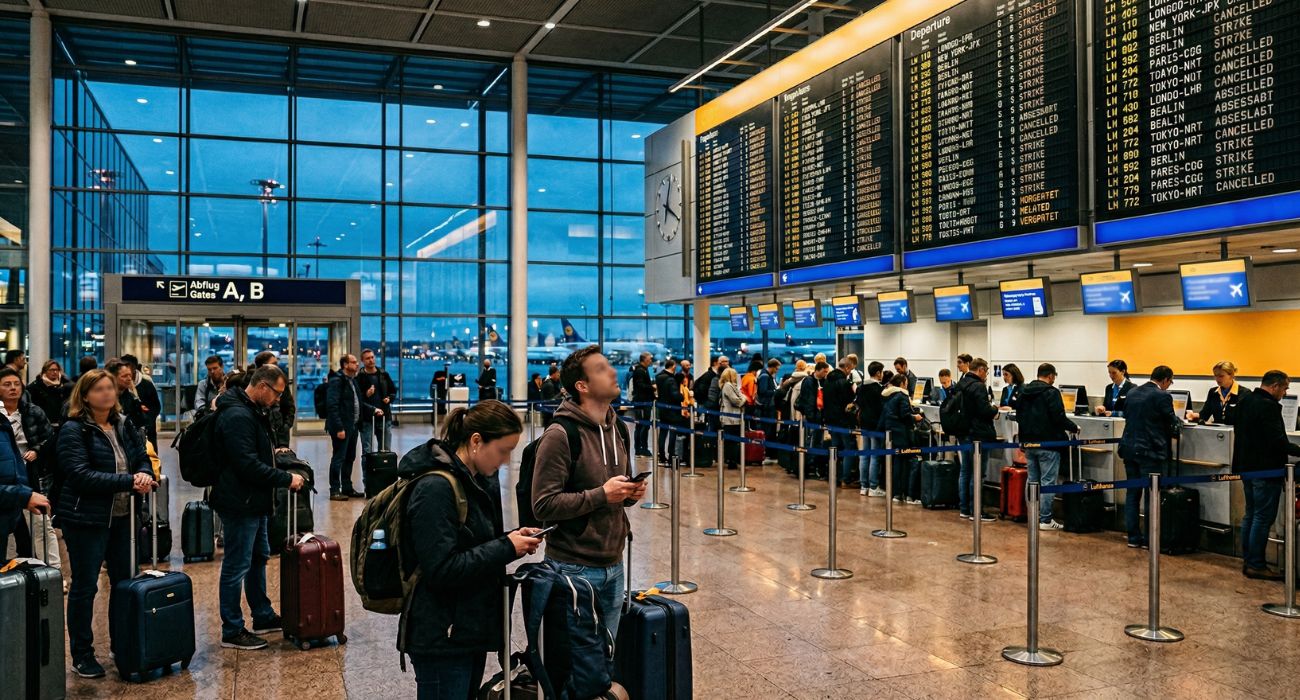
Image generated by AI
Lufthansa Walkout Sparks Historic Disruption at German Aviation Hubs
Lufthansa's second consecutive day of pilot strikes has cascaded into one of the airline's largest operational disruptions in recent years. On April 14, 2026, the Vereinigung Cockpit union's 48-hour walkout eliminated more than 850 flights across Germany's two busiest aviation centers. Frankfurt and Munich airports, which serve as Lufthansa's primary European hubs, ground to a halt as crews remained off-duty. The industrial action stems from a deepening labor dispute centered on pilot compensation, pension arrangements, and working conditions. Transatlantic routes, regional services, and subsidiary operations all face cascade cancellations during peak spring travel season, leaving tens of thousands of passengers stranded and forcing rebooking onto flights weeks away.
Hundreds of Flights Canceled at Frankfurt and Munich
The scale of disruption underscores just how dependent European aviation is on Lufthansa's two main operational bases. Frankfurt reported approximately 550 flight cancellations on April 14, while Munich saw over 300 services withdrawn from departure boards. Additional cascading cancellations rippled through Berlin and smaller regional airports as aircraft and crews fell severely out of position.
Departure halls filled with frustrated passengers as service counters were overwhelmed. Long queues stretched across terminal floors as travelers sought rebooking options or refund information. Airport operators confirmed that operations had been reduced to skeleton schedules, with only essential maintenance flights and limited cargo services continuing.
The Lufthansa walkout sparks particular challenges for connecting passengers. Many travelers booked through Frankfurt or Munich for onward journeys across Europe, Africa, and Asia found themselves stranded. Long-haul transatlantic flights to North America were disproportionately affected, leaving business travelers and leisure passengers facing overnight hotel accommodations and schedule disruptions extending days beyond their original booking dates.
Subsidiaries including Lufthansa Cargo and Lufthansa CityLine also experienced service interruptions, though to varying degrees. The airline's scheduled maintenance operations proceeded, but commercial passenger service remained severely curtailed as the Lufthansa walkout sparks cascading effects throughout its entire network structure.
For current travel information, consult Lufthansa's official passenger advisories before heading to the airport.
Ripple Effects Across European Network
What began as localized strike action at Germany's two largest hubs quickly spread throughout Lufthansa's broader European operation. Flights departing from secondary airports in Berlin, Cologne, Dusseldorf, and Hamburg all experienced significant delays or cancellations as aircraft scheduled to operate from Frankfurt and Munich remained grounded.
The interconnected nature of modern aviation means that a single disruption point cascades rapidly. An aircraft positioned overnight in Frankfurt for a morning departure cannot reach its intended gate if no pilots are available. Crews on multi-leg rotations found themselves unable to complete their scheduled sequences. This domino effect meant that even airports minimally involved in the strike felt its reverberations.
European destinations like Amsterdam, Paris, and London experienced higher-than-normal loads as Lufthansa passengers scrambled to book alternative carriers. Rail operators across Germany reported surge bookings on Frankfurt-to-Munich and Frankfurt-to-Berlin routes as stranded travelers sought surface transportation alternatives.
The timing coincided with Easter holiday travel planning. Spring break schedules meant many families had advance bookings that became impossible to honor. Tour operators and travel agencies reported phone lines overwhelmed with rebooking requests as the Lufthansa walkout sparks widespread itinerary changes.
Industry analysts predict the disruption effects could extend into the following week even after the 48-hour walkout concludes. Aircraft and crew scheduling normalizes slowly after strikes, meaning irregular operations and subsequent delays likely persist through the weekend.
Escalating Labor Dispute Over Pay and Pensions
The Lufthansa walkout sparks larger questions about labor relations within Europe's aviation sector. The underlying dispute centers on pilot compensation that the Vereinigung Cockpit union argues has failed to keep pace with inflation. Since 2023, the cost of living in Germany has risen significantly, yet pilot salary increases have lagged behind economic realities.
Pension arrangements represent equally contentious territory. Lufthansa proposed modifications to defined-benefit pension schemes that pilots view as substantial reductions in lifetime security benefits. Union representatives characterize these changes as shifting long-term risk from the company to individual employees, a position management disputes in internal statements.
Working conditions and mandatory rest periods also feature prominently in negotiations. Pilots argue that increased workload and network complexity demand better scheduling flexibility and compensation adjustments. Lufthansa's management counters that European aviation operates within highly competitive cost environments where major carriers face pressure from low-cost rivals and economic headwinds.
The airline continues servicing pandemic-related debt while simultaneously investing in fleet modernization and digital infrastructure. Management has characterized pilot demands as difficult to reconcile with these financial constraints. However, union leadership remains skeptical of the company's claims regarding financial limitations.
Multiple mediation attempts have yielded only incremental progress. Earlier negotiating rounds produced modest wage offers that union membership rejected. The current Lufthansa walkout sparks what union officials characterize as a necessary escalation to demonstrate serious intent behind crew demands.
For broader perspective on aviation labor issues, see the International Air Transport Association's analysis of regional labor developments.
Cabin Crew Action Set to Extend Disruption
As pilots' strike action concluded around midnight on April 14, fresh disruption loomed immediately ahead. The Independent Flight Attendants' Organization (UFO) announced a separate two-day cabin crew walkout scheduled for April 15-16, affecting the same Frankfurt and Munich hubs plus Lufthansa CityLine operations.
This sequential strike pattern creates a compounding disruption scenario. Even as pilots return to normal operations, cabin crews withdraw services, preventing any meaningful network recovery. Passengers holding rebookings for April 15 or 16 flights face high likelihood of further cancellations rather than smooth reboarding.
The timing amplifies labor movement effectiveness. Sequential strikes maintain service disruption continuously, preventing operational normalization between industrial actions. This strategy pressures management to concede to union demands rather than endure rolling labor conflict throughout spring travel season.
Industry observers note the particular irony of strike timing. Lufthansa was planning centennial celebrations in Frankfurt during the week, marking the airline's 100-year history. Cabin crew leaders have publicly stated that their action deliberately draws attention to working conditions at a moment when company leadership celebrates corporate milestones.
The Lufthansa walkout sparks serious concerns about further labor action. Both pilot and cabin crew negotiations remain deadlocked. Analysts warn that if management and unions fail to reach agreement by mid-April, additional walkouts are probable, potentially extending operational disruption throughout spring.
What This Means for Travelers Now
The Lufthansa walkout sparks immediate consequences for anyone holding Lufthansa bookings during April 2026. Here's what you should know:
-
Check Booking Status Immediately: Visit Lufthansa's website or call their customer service line to verify whether your scheduled flight operates or faces cancellation. Mobile app notifications may lag behind actual operational changes.
-
Know Your Rebooking Rights: Lufthansa must rebook affected passengers on alternative flights at no additional charge. You're entitled to the next available Lufthansa flight or reasonable alternatives via partner carriers. Demand written confirmation of new booking details before leaving the airport.
-
Claim Compensation Eligiously: EU261 regulation entitles you to compensation between €250-€600 depending on flight distance when strikes cause delays exceeding three hours. Submit claims through Lufthansa's official channels or through travel claim specialists.
-
Document Everything: Keep boarding passes, booking confirmations, and receipts for any accommodation or meals you purchase due to
Disclaimer
This article is for informational and educational purposes only. It does not constitute legal, financial, or professional advice. While we strive to provide accurate and up-to-date information, travel policies, regulations, and conditions change rapidly. Always verify information with official sources before making travel decisions. Nomad Lawyer makes no representations about the accuracy, reliability, completeness, or suitability of the information provided. Readers should consult qualified professionals for advice specific to their circumstances. The views expressed in this article are those of the author and do not necessarily reflect the views of Nomad Lawyer.
Raushan Kumar
Founder & Lead Developer
Full-stack developer with 11+ years of experience and a passionate traveller. Raushan built Nomad Lawyer from the ground up with a vision to create the best travel and law experience on the web.
Learn more about our team →