
Breaking Airline News: Lufthansa, United, and Delta Execute Massive Fleet Overhaul to Combat Transatlantic Travel Chaos
Breaking airline news: Amidst a terrifying era of severe operational fragility, Lufthansa, United, and Delta aggressively deploy ultra-modern fleets to combat transatlantic travel chaos and handle historic passenger surges.

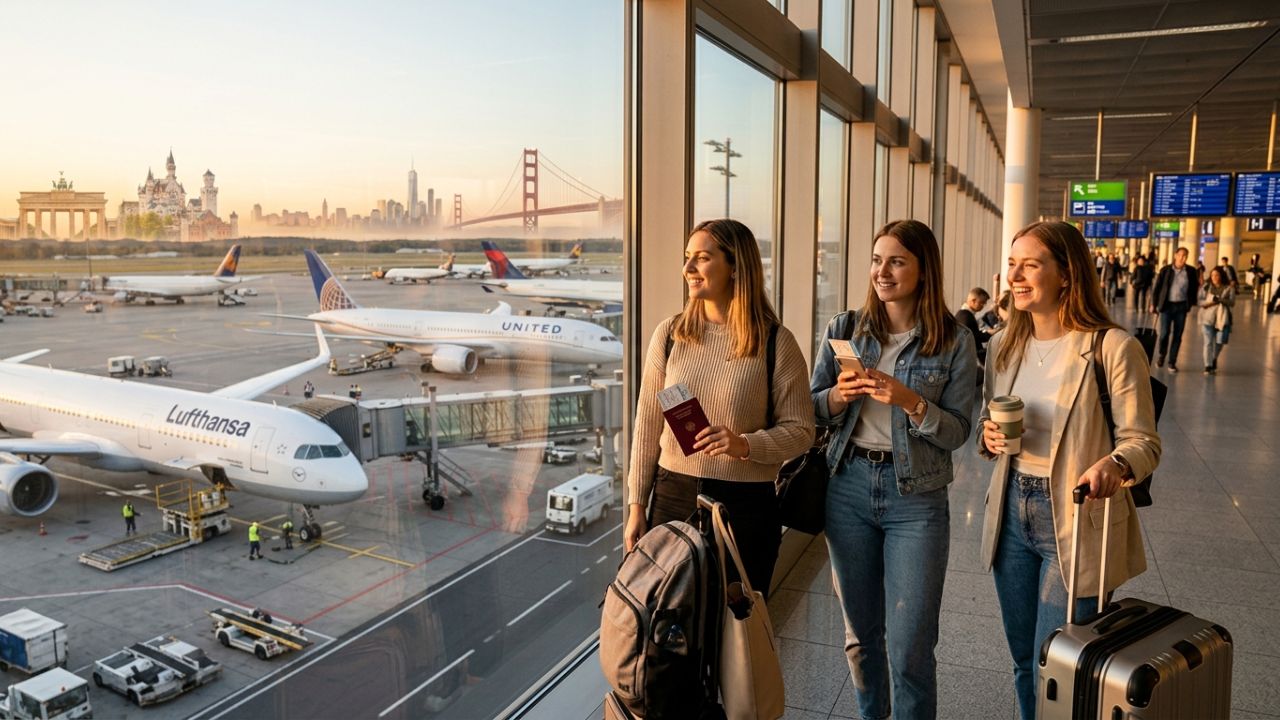
Image representing the intense strategic battle as legacy aviation giants desperately deploy ultra-modern fleets across the transatlantic corridor, aggressively combating the severe threat of extreme travel chaos.
Breaking Airline News: Lufthansa, United, and Delta Execute Massive Fleet Overhaul to Combat Transatlantic Travel Chaos
As paralyzing terminal bottlenecks, terrifying capacity limits, and severe operational fragility violently threaten to completely shatter the transatlantic aviation corridor, global aviation is executing a massive reset. In a harrowing battle against the looming threat of extreme, paralyzing travel chaos, major legacy carriers including Lufthansa, United Airlines, Delta Air Lines, American Airlines, and Condor have launched a high-stakes race to supercharge their long-haul fleets. Driven by a historic, post-pandemic explosion in urban city-breaks and natural wilderness tourism, these aviation giants are aggressively deploying ultra-modern aircraft to absorb terrifying passenger volumes. Because the sudden influx of international wealth threatens to overwhelm legacy infrastructure, this multi-billion-dollar fleet overhaul is the only viable defense to prevent catastrophic airport disruptions and massive flight cancellations across the United States and Germany.
In a brutal demonstration of how aggressively modern airlines must adapt to survive surging demand, this massive structural realignment promises to permanently transform how passengers navigate intercontinental routing. By aggressively deploying ultra-fuel-efficient, high-capacity hardware—such as Lufthansa’s Boeing 747-8i and Airbus A350-900, alongside Condor's distinctively striped Airbus A330-900neo—airlines are attempting to fortify the skies. This strategic transatlantic realignment ensures that carriers can seamlessly absorb historic passenger volumes without triggering systemic delays, securing long-term profitability while actively shielding vulnerable travelers from the severe physical toll of modern aviation gridlock.
Expanded Overview: The Macroeconomic Tourism Crisis
The terrifying crisis of overwhelming passenger stress currently testing global gateways brutally exposes the severe limitations of legacy air corridors. The United States and the Federal Republic of Germany currently serve as the dual, massive epicenters of this explosive growth. The underlying economics reveal two fundamentally divergent models: the US desperately seeks to maximize high-yield, long-haul spend-per-visitor, while Germany maximizes high-volume, high-frequency regional occupancy. To survive the extreme congestion, airlines must continuously pipeline wealth from diverse global feeder markets through fortified aviation alliances.
Shattering the Capacity Bottleneck: United States Feeder Markets
The United States National Travel and Tourism Office (NTTO) indicates that the resilience of American inbound tourism relies upon massive border influxes and high-spending intercontinental partners. Because extreme airport disruptions often devastate these long-haul routes, ensuring stable connectivity is critical.
- The Border Bedrocks (Canada & Mexico): Generating tens of millions of arrivals, these markets are the absolute highest-volume feeders, injecting billions into state economies across Florida, Texas, and California.
- The Transatlantic Anchor (United Kingdom): The UK remains the most critical long-haul leisure market. Heavily saturated aviation corridors connecting London Heathrow (LHR) to US coastal gateways demand massive widebody deployment to prevent flight cancellations.
- The Transpacific Pioneer (Japan): Providing premium-tier expenditure into Hawaii, Los Angeles, San Francisco, Seattle, and New York City.
- The Eurozone Spenders (Germany & France): High-value leisure tourists favoring long-duration fly-drive packages into the American interior.
- The Expanding Giants (India & China): Representing the fastest-growing source markets, driven by multi-generational family visits and lucrative higher-education student traffic.
The Continental Fortress: Germany’s Regional Integration
Conversely, Germany’s tourism model relies on hyper-integrated, high-frequency regional mobility, heavily buffering against localized airport disruptions.
- The Unrivaled Leader (Netherlands): The absolute top source of foreign arrivals, heavily utilizing Germany’s extensive autobahn network.
- The Alpine Pipeline (Switzerland & Austria): Relying heavily on the Intercity Express (ICE) high-speed rail to funnel corporate travel into Munich, Stuttgart, and Frankfurt.
- The Short-Haul Urban Driver (United Kingdom): Utilizing low-cost carriers to access German metropolitan areas for weekend city-break tourism.
- The Premier Long-Haul Market (United States): American tourists represent Germany's most critical intercontinental source, highly focused on heritage tourism, Rhine river cruising, and Bavarian tours.
Inbound Tourism Infrastructure Matrix
To fully comprehend the massive logistical differences driving this transatlantic fleet reset, corporate travel managers must review the exact operational metrics defining these tourism models.
| Strategic Metric | United States Tourism Sector | Germany Tourism Sector |
|---|---|---|
| Primary Economic Catalyst | High-spending long-haul intercontinental traffic & North American border agreements. | Intra-European regional open-border travel, rail integration, and global corporate trade fairs. |
| Top 5 Inbound Source Markets | 1. Canada 2. Mexico 3. United Kingdom 4. Japan 5. Germany / India |
1. The Netherlands 2. Switzerland 3. United States 4. United Kingdom 5. Austria |
| Average Length of Stay | Long (9 to 18 days average for overseas arrivals). | Short-to-Medium (2 to 5 days for regional; 7 to 12 days for long-haul). |
| Primary Entry Mode | Aviation-heavy (overseas markets) alongside extensive land border check-points. | Highly diversified across High-Speed Rail (ICE), automotive highways (Autobahn), and short-haul aviation. |
| Core Value-Add Segment | Premium coastal urban retail, long-distance car rentals, and luxury theme-park resorts. | Cultural city breaks, historic heritage trails, premium river cruising, and business conventions (MICE). |
| Mutual Economic Synergy | Germany consistently ranks as a top-five European spender within the US domestic economy. | The US stands firmly as Germany’s number one, highest-spending long-haul inbound market globally. |
The Global Aviation Corridors: Deploying the Alliance Armor
The routes violently pumping travelers between the US and Germany are governed by three massive global airline alliances. These alliances execute aggressive code-sharing to funnel passengers out of regional nodes and into primary hubs, heavily reducing the terrifying risk of missed connections and localized travel chaos.
Global Airline Alliance Corridors Matrix
| Star Alliance (Premium Trunk) | SkyTeam (Transatlantic Mega) | oneworld (Oneworld Gridlock) |
|---|---|---|
| • Lufthansa Group | • Delta Air Lines | • American Airlines |
| • United Airlines | • Air France / KLM | • British Airways |
| • Singapore Airlines | • Virgin Atlantic | • Finnair |
- The Star Alliance Trunk: Lufthansa operates out of Frankfurt (FRA) and Munich (MUC), deploying the Boeing 747-8i and Airbus A350-900. United Airlines anchors the US side via Newark (EWR), Chicago (ORD), Washington Dulles (IAD), and San Francisco (SFO).
- The SkyTeam Challengers: Delta Air Lines aggressively deploys capacity from Atlanta (ATL), Detroit (DTW), and New York (JFK), while Air France and KLM route passengers violently through Paris (CDG) and Amsterdam (AMS).
- The oneworld Network: American Airlines defends its massive market share via Dallas/Fort Worth (DFW) and Charlotte (CLT), alongside British Airways via London Heathrow (LHR).
- The Leisure Disruptors: Condor bypasses traditional hub pricing, linking US markets directly to Frankfurt via A330-900neos. European LCCs like Eurowings, Ryanair, and EasyJet, alongside US domestic carriers like Southwest, JetBlue, and Alaska Airlines, execute the final regional distribution.
- The Gulf Mega-Carriers: Emirates (DXB), Qatar Airways (DOH), and Etihad (AUH), alongside Asian legacy carriers like ANA, Cathay Pacific, and Air India, heavily funnel eastern wealth into these transatlantic endpoints.
Industry Analysis: Defending the Urban and Wilderness Ecosystems
From a strategic aviation perspective, the travel turmoil threatening global networks highlights the intense pressure placed on legendary destinations. To survive, airlines must ensure uninterrupted flow into these massive structural epicenters.
United States Destinations Matrix
| Urban Landmarks | Natural Eclipse |
|---|---|
| • New York City (Metropolis) | • The Grand Canyon (Geology) |
| • Los Angeles (Entertainment) | • Yellowstone (Volcanic Geysers) |
| • Orlando (Theme Resorts) | • Yosemite Valley (Granite Cliffs) |
The US focuses on hyper-scaled urban centers (JFK into Manhattan, LA, Orlando managed leisure, Las Vegas) and massive protected wilderness parks.
Germany Destinations Matrix
| Cultural / Urban | Historic Landscapes |
|---|---|
| • Berlin (Subculture/History) | • Neuschwanstein (Bavarian Alpine) |
| • Munich (Tradition/Bier) | • The Romantic Rhine (Castles) |
| • Hamburg (Maritime Center) | • The Black Forest (Cuckoo/Nature) |
Germany focuses on historic capitals (Berlin, Munich, Hamburg, Cologne) and highly curated cultural landscapes (Rhine Valley, Black Forest).
Comparative Destination Typology Matrix
| Destination Category | United States Structural Profile | Germany Structural Profile |
|---|---|---|
| Urban Topography | Sky-scraping, vertical megacities characterized by high-density commercial centers. | Mid-rise, sprawling historic capitals with strict architectural preservation laws. |
| Historical & Heritage Tourism | Modern cultural history focused on 20th-century entertainment, cinema, civil rights, and architectural engineering. | Deep medieval, Roman, and Cold War history told through ancient castles, cathedrals, and preserved ruins. |
| Transportation Infrastructure | Heavily reliant on domestic aviation hubs and extensive automotive highway systems for long-distance road trips. | Dominated by high-frequency, clean-energy electric rail networks (Deutsche Bahn) connecting downtown cores seamlessly. |
| Natural Tourism Profile | Massive, hyper-scaled wilderness parks containing active volcanoes, colossal canyons, and dramatic climate variance. | Intimate, curated cultural landscapes featuring managed river valleys, rolling highland forests, and alpine hiking trails. |
| Seasonal Event Tourism | Summer theme-park rushes, coastal beach migrations, and global mega-sporting events. | Winter Christmas Markets (Weihnachtsmärkte), autumn beer festivals (Oktoberfest), and massive corporate trade fairs. |
"The US and Germany masterfully showcase two distinct pathways to global tourism dominance. While the US thrives on maximizing premium, long-haul intercontinental yield, Germany excels at hyper-integrated, high-frequency regional mobility via open borders and rail infrastructure. As global aviation resets, the deep economic synergy and shared traveler pipelines between these two powerhouses will continue to set the benchmark for international tourism growth." — Anup Kumar Keshan, Founder, CEO & Editor-in-Chief, Travel and Tour World
Conclusion: A Strategic Offensive to Ensure Aviation Dominance
As the extremely critical transatlantic network continues to face terrifying strain from unprecedented passenger demand, the massive fleet modernization executed by Lufthansa, United, Delta, and Condor represents an absolute requirement for survival. By violently injecting widebody capacity into the skies, these carriers are aggressively minimizing the threat of extreme airport disruptions and severe flight cancellations. The continuous exchange of travelers, capital, and aviation capacity between the United States and Germany remains the foundational anchor keeping the global travel economy resilient against total operational collapse.
Key Takeaways
- Massive Tactical Deployment: Lufthansa, United, Delta, American, and Condor are executing a massive fleet reset to handle historic surges in global tourism.
- Total Architectural Defense: The deployment of Boeing 747-8i, A350-900, and A330-900neo aircraft acts as a direct shield against transatlantic travel chaos.
- Dual Market Synergies: The US relies on 9-18 day long-haul stays, while Germany weaponizes its regional rail and 2-5 day urban city-breaks.
- Strategic Hub Alignment: Operations run aggressively through fortress hubs including FRA, MUC, EWR, ORD, ATL, and DFW to avoid paralyzing terminal bottlenecks.
- Traveler Advisory: To survive surging global crowds, passengers must secure itineraries on ultra-modern aircraft operated by core alliance members, reducing exposure to catastrophic scheduling failures.
Related Travel Guides
Disclaimer
This article is for informational and educational purposes only. It does not constitute legal, financial, or professional advice. While we strive to provide accurate and up-to-date information, travel policies, regulations, and conditions change rapidly. Always verify information with official sources before making travel decisions. Nomad Lawyer makes no representations about the accuracy, reliability, completeness, or suitability of the information provided. Readers should consult qualified professionals for advice specific to their circumstances. The views expressed in this article are those of the author and do not necessarily reflect the views of Nomad Lawyer.
Kunal K Choudhary
Co-Founder & Contributor
A passionate traveller and tech enthusiast. Kunal contributes to the vision and growth of Nomad Lawyer, bringing fresh perspectives and driving the community forward.
Learn more about our team →