
Lufthansa Navigates Fuel Crisis With Modern Aircraft, Route Optimisation and Global Connectivity Focus
Lufthansa Navigates Fuel Crisis With Modern Aircraft, Route Optimisation and Global Connectivity Focus

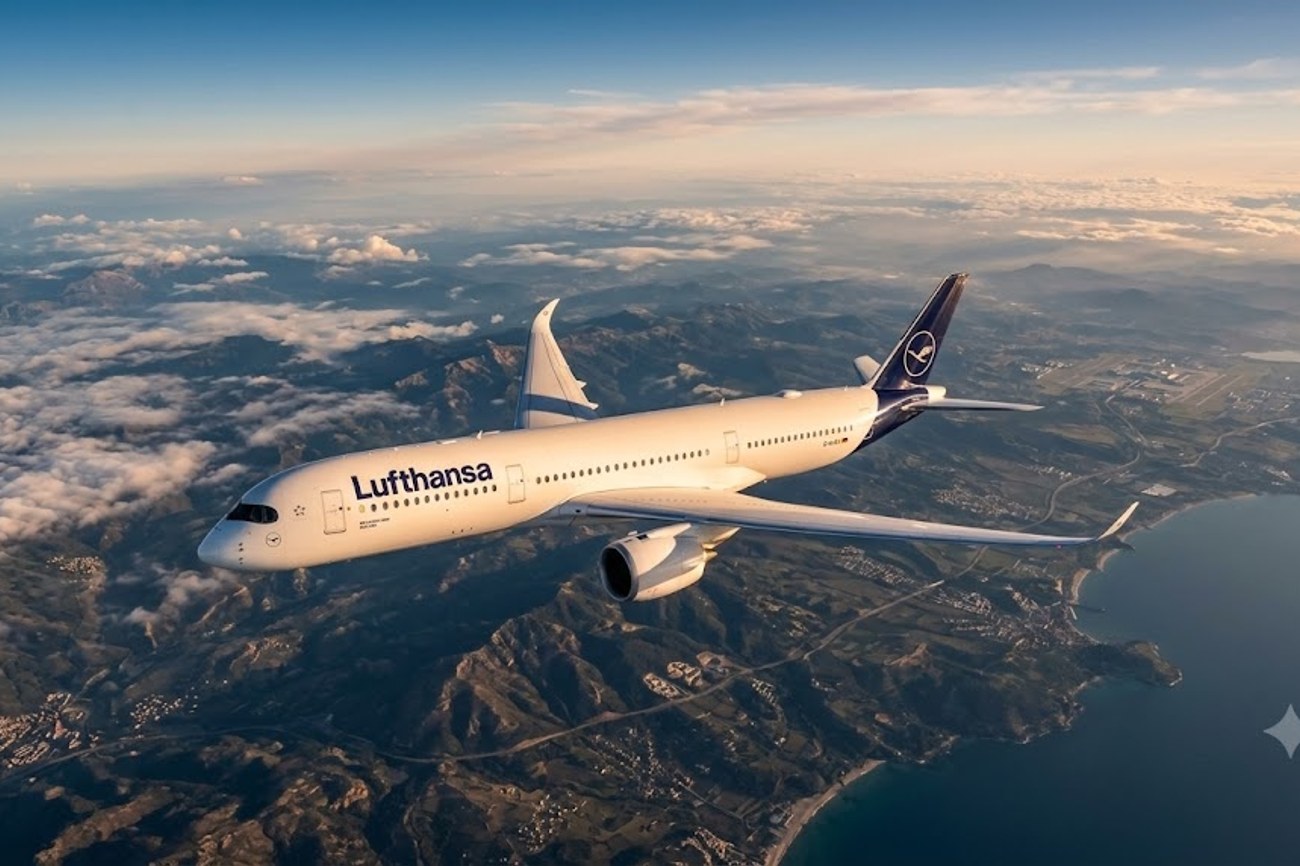
Image generated by AI
The operational pivot of Europe’s largest aviation group is defined by a ruthless prioritization of fleet efficiency over raw expansion. By aggressively phasing out older airframes and consolidating capacity around the Frankfurt and Munich hubs, Lufthansa is attempting to decouple its profitability from the volatility of global fuel markets. This shift represents a transition from a growth-at-all-costs model to a precision-engineered network where aircraft allocation is dictated strictly by route profitability and fuel burn metrics.
The Logistics of Hub-and-Spoke Consolidation
Lufthansa’s current strategic posture is centered on the optimization of its two primary gateways: Frankfurt, the primary connecting hub, and Munich, the superior interconnecting hub. Rather than pursuing a decentralized point-to-point model, the group is doubling down on these centers to maximize the "multiplier effect" of its network. By funneling European traffic through these two points, the airline can maintain high load factors on long-haul flights while using a tiered fleet of regional and short-haul aircraft to feed the hubs.
This concentration of power allows for a more surgical approach to route management. The airline is no longer viewing hubs as isolated silos but is adopting a holistic, group-oriented perspective. This means that if a route from a secondary European city is underperforming, it is not merely evaluated on its own revenue, but on how much high-value traffic it contributes to the wider global network. This shift in accounting—from route-profitability to network-contribution—is a hallmark of mature aviation groups facing stagnating margins.
Fleet Transition and Capacity Metrics
The battle against rising fuel costs is being fought primarily in the hangars. Lufthansa is executing a deliberate transition toward the Airbus Neo (New Engine Option) family, which offers significant reductions in fuel consumption and carbon emissions compared to previous generations. The current European deployment relies heavily on a mix of A319, A320, and A321 models, with a strategic pivot toward the A320neo and A321neo.
A critical component of this cost-containment strategy is the aggressive removal of inefficient assets. The group has phased out the CR9 Bombardier jets following the closure of CityLine operations, reflecting a broader trend of eliminating regional aircraft that do not meet modern fuel-efficiency benchmarks. To fill the gap in regional connectivity, the airline continues to utilize the E90 and E95 regional jets, which provide the necessary capacity for thinner routes without the overhead of a full-sized narrow-body aircraft.
| Fleet Segment | Primary Aircraft Models | Strategic Objective |
|---|---|---|
| Short-Haul/Medium-Haul | Airbus A319, A320, A321 | Baseline European Connectivity |
| Next-Gen Efficiency | Airbus A320neo, A321neo | Fuel Cost Reduction & Profitability |
| Regional Feeders | Embraer E90, E95 | Right-sizing Capacity for Low-Demand Routes |
| Phased Out | Bombardier CR9 | Elimination of High-Cost/Low-Efficiency Assets |
Expert Analysis: The "Profitability over Presence" Doctrine
For the modern traveler, the direct consequence of Lufthansa's strategy is a shrinking of the map. The airline is explicitly canceling routes that are "less profitable" or "not performing so well." This is a calculated risk: by reducing its footprint in marginal markets, Lufthansa is avoiding the "empty seat" syndrome that plagues airlines attempting to maintain prestige through wide-reaching but underutilized networks.
The pricing pressure created by this consolidation is twofold. First, by reducing capacity on weaker routes, Lufthansa creates a supply-demand imbalance that allows for higher yields on the remaining "strong" routes. Second, the investment in Neo aircraft lowers the break-even load factor for every flight. When an airline reduces its fuel burn per seat-kilometer, it gains a competitive advantage that can be used either to lower prices to squeeze out low-cost carriers or to increase margins to offset rising labor and airport fees.
Furthermore, the cautious approach to integrations—such as the ambiguity surrounding the status of TAP—suggests that Lufthansa is avoiding the "integration indigestion" that often follows rapid acquisitions. By focusing on internal efficiency and hub coordination before pursuing further external expansion, the group is prioritizing a lean balance sheet over a larger market share. This is a defensive posture designed to survive a high-fuel-cost environment rather than an offensive play for dominance.
Key Takeaways
- Fleet Modernization: The transition to A320neo and A321neo aircraft is the primary lever for reducing fuel expenditure and increasing route profitability.
- Strategic Retrenchment: Unprofitable routes are being systematically canceled to focus resources on high-performing markets.
- Hub Centrality: Frankfurt and Munich remain the non-negotiable anchors of the network, with all regional planning designed to feed these two centers.
- Regional Shift: The closure of CityLine and the removal of Bombardier CR9 jets signal a move away from older regional aircraft in favor of more efficient Embraer E-jets.
- Holistic Management: Network decisions are now made from a group-wide perspective rather than individual hub performance, prioritizing total network value.
FAQ: Lufthansa Network Shifts 2024
Why are some of my usual Lufthansa flights being canceled? Lufthansa is currently phasing out routes that are not meeting profitability benchmarks. This is part of a broader strategy to allocate aircraft to stronger markets to offset rising fuel and operational costs.
How does the "Neo" aircraft affect my travel experience? The A320neo and A321neo are more fuel-efficient and generally quieter than older models. For the airline, these planes lower the cost of the flight; for the passenger, they often mean a more modern cabin environment.
Will Lufthansa continue to fly to smaller European cities? Yes, but primarily through regional jets like the E90 and E95. The airline is "right-sizing" its capacity, meaning smaller planes will serve smaller cities to ensure flights remain profitable.
Are Frankfurt and Munich still the best hubs for international connections? Yes. Lufthansa is doubling down on these two cities as its primary connecting points to ensure maximum efficiency and better transfer opportunities for global travelers.
As fuel volatility becomes the permanent state of aviation, the winner will not be the airline that flies everywhere, but the one that flies the most efficiently.
Tags: Lufthansa Group, Frankfurt Airport, Munich Airport, Airbus A321neo, European Aviation Policy 2024, Fuel Cost Management
Related Travel Guides
- Journey Expands Spa Technology With New Experience Management System for Hotels and Resorts
- Solomon Islands Expands Munda Noro Access as Travel Technology Supports eVisa and Digital Border Processing
- Singapore Quick Getaways Rise As Extended Stays Slide To Spark A Breathtaking New Travel Era Across Asia, Find Out Now
Disclaimer
This article is for informational and educational purposes only. It does not constitute legal, financial, or professional advice. While we strive to provide accurate and up-to-date information, travel policies, regulations, and conditions change rapidly. Always verify information with official sources before making travel decisions. Nomad Lawyer makes no representations about the accuracy, reliability, completeness, or suitability of the information provided. Readers should consult qualified professionals for advice specific to their circumstances. The views expressed in this article are those of the author and do not necessarily reflect the views of Nomad Lawyer.
Raushan Kumar
Founder & Lead Developer
Full-stack developer with 11+ years of experience and a passionate traveller. Raushan built Nomad Lawyer from the ground up with a vision to create the best travel and law experience on the web.
Learn more about our team →